Hello. This is Yonsei U-Line Dental Clinic, Sillim Branch, located in Sillim-dong, Gwanak-gu.
Some of you may have gone to the dentist for scaling, only to suddenly hear:
“Instead of just scaling, you need gum treatment.”

Or perhaps you heard an explanation such as:
“You need gum treatment,”
after having a health checkup.
That naturally makes you curious. What exactly is the difference between scaling and gum treatment?


First, you can think of scaling as the first step of gum treatment.
All gum treatment begins with scaling.
After that, additional treatment is provided based on the condition of your gums.
In fact, this treatment method is also described that way in dental textbooks.

There is also our national health insurance system.
Under this system, gum treatment begins with scaling as the first step. For gum disease that cannot be resolved through scaling alone, additional treatment is provided.

For your reference, the treatments covered by national health insurance are not decided arbitrarily by dental clinics. There are standards established by the government.
Personally, I think Korea’s national health insurance system is quite well designed compared with those in other countries. Among the treatments covered, I especially think gum treatment offers considerable benefits to patients.

That is because the amount patients pay out of pocket is small, while the treatment can be highly effective. Scaling is included as well.
In the past, many people thought scaling was performed simply for cosmetic purposes.

Of course, tartar can make your teeth look somewhat unattractive. More importantly, however, tartar gradually expands its territory.
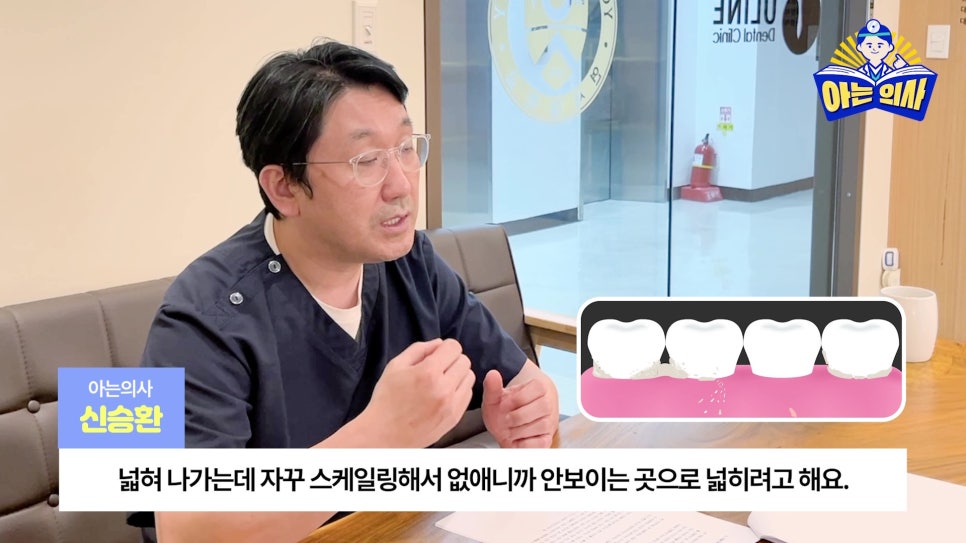
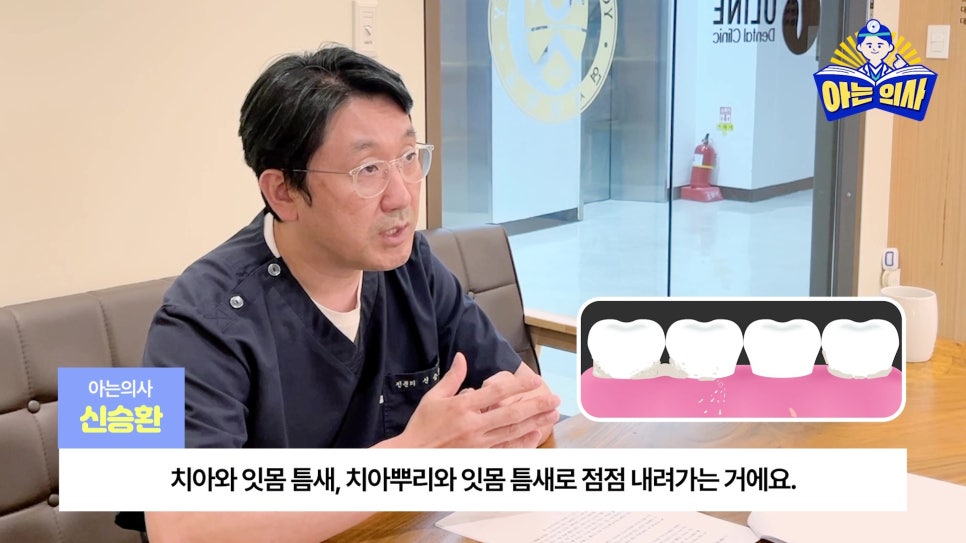
When it expands outward, the dentist removes it through scaling, so it then tries to hide in places that cannot be seen.
Where are those hidden areas? Under the gums.
Tartar gradually moves down into the space between the tooth roots and the gums.
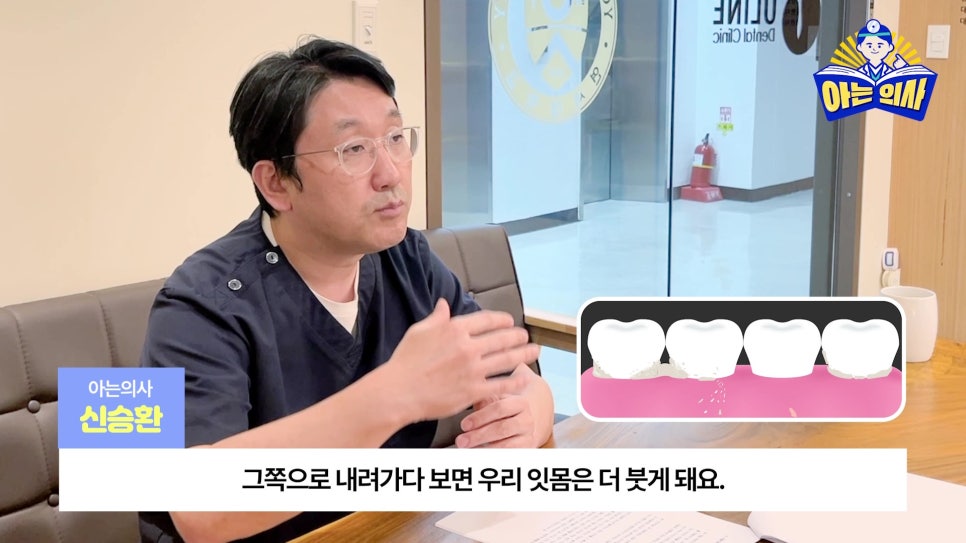
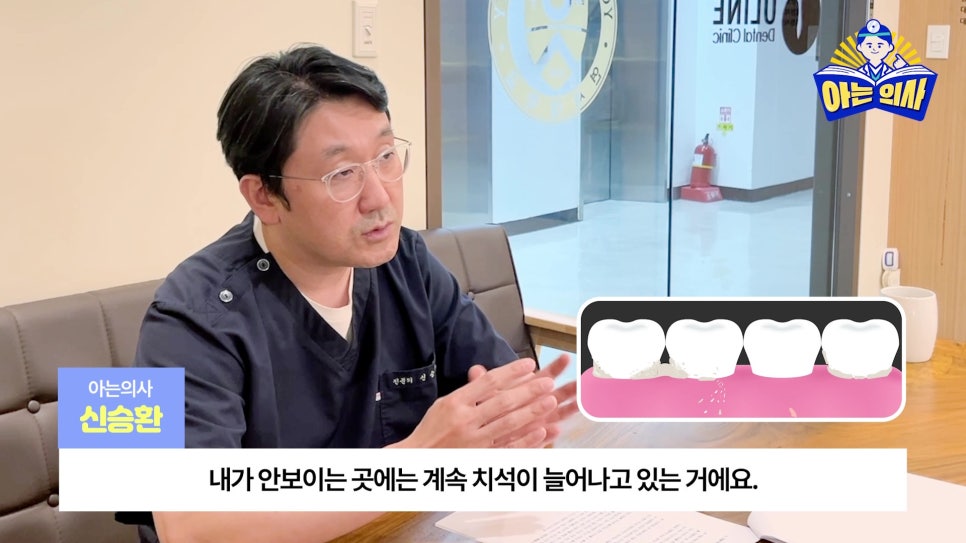
The problem is that when tartar moves down into that area, the gums swell as they increasingly surround it.
As a result, the tartar becomes even more difficult to see and hides away.
But inside, the tartar continues to build up.


That is why scaling is not simply a cosmetic procedure; it is a necessary treatment for gum health.
It has been nearly 10 years since national health insurance coverage for scaling began.
I think it is an excellent system for public health.


To summarize, scaling removes tartar from the outer surface of the gums—tartar that can be seen.
Gum treatment removes tartar that cannot be seen because it is located deep beneath the gums.


You may wonder:
“Can’t the tartar deep beneath the gums simply be removed during scaling as well?”
In fact, if this were done without anesthesia, most patients would find the treatment too painful to tolerate.

The process is similar, but because gum treatment involves working at a greater depth, anesthesia is essential.

Scaling can be performed not only by dentists but also by dental hygienists.
Gum treatment, however, involves anesthesia and requires instruments to reach deep beneath the gums, so it should be performed by a dentist.


There is one more point. After gum treatment, patients sometimes say:
“After my gum treatment, the spaces between my gums became too wide, and it’s uncomfortable.”
“After my gum treatment, I don’t like the spaces between my teeth, and they feel sensitive.”
We hear comments like these very often.
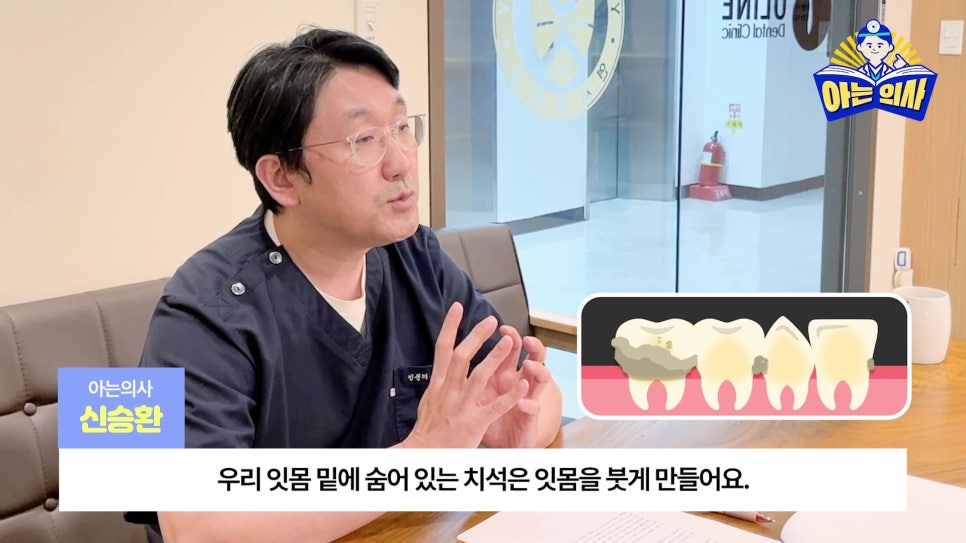
But you need to understand why this happens.
Tartar hidden beneath the gums causes the gums to swell.
When the gums swell, the spaces between the gums may appear to disappear.
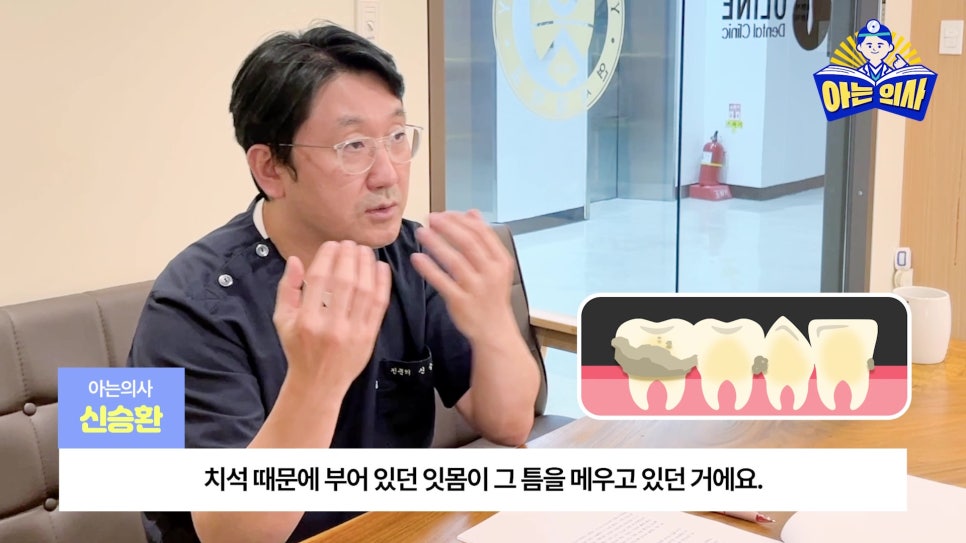

There are naturally spaces between the teeth, but swelling had filled those spaces.
After treatment, when the swelling subsides, the spaces that were originally there become visible again.

Because spaces that were not visible before suddenly appear, some people misunderstand and think:
“Didn’t you cut away my gums?”
The gums were not actually cut. The original spaces simply became visible as the swollen gums subsided.

People who are somewhat older—for example, those in their 30s or 40s and above—often say that even after scaling, they feel air passing between their teeth.

Some people find this refreshing, while others find it uncomfortable because their teeth feel sensitive.
In fact, these spaces are a natural phenomenon that develops in everyone as the supporting bone around the teeth gradually recedes with age.

People with a lot of tartar, in particular, may not have noticed these spaces because the tartar itself was filling them or because the resulting gum swelling concealed them.

However, if swollen gums are left untreated, gum disease may eventually progress more rapidly, and the supporting bone may recede faster, potentially leading to tooth loss. This is how periodontal disease can develop.


So, postponing gum treatment because you are afraid of spaces developing is not advisable.
Even if some spaces appear, creating healthy gums is more important.
That is how you can keep using your natural teeth well for a long time.


Therefore, if your gums frequently swell or bleed, you should receive gum treatment rather than worry about spaces developing.
That is the best way to protect your teeth.