Hello. I am Shin Seung-hwan, director of 연세유라인치과의원 가락점, located in Garak-dong, Songpa-gu, near Garak Market Station.
Today, I would like to discuss a procedure called a “sinus lift.”
This is one of the methods used when there is not enough bone to place a dental implant.
It is particularly often needed in the upper molar area.


This situation can occur when the bone is naturally thin,
but it can also develop when a tooth is left missing for a long time after extraction.
The upper and lower jawbones have different structures.

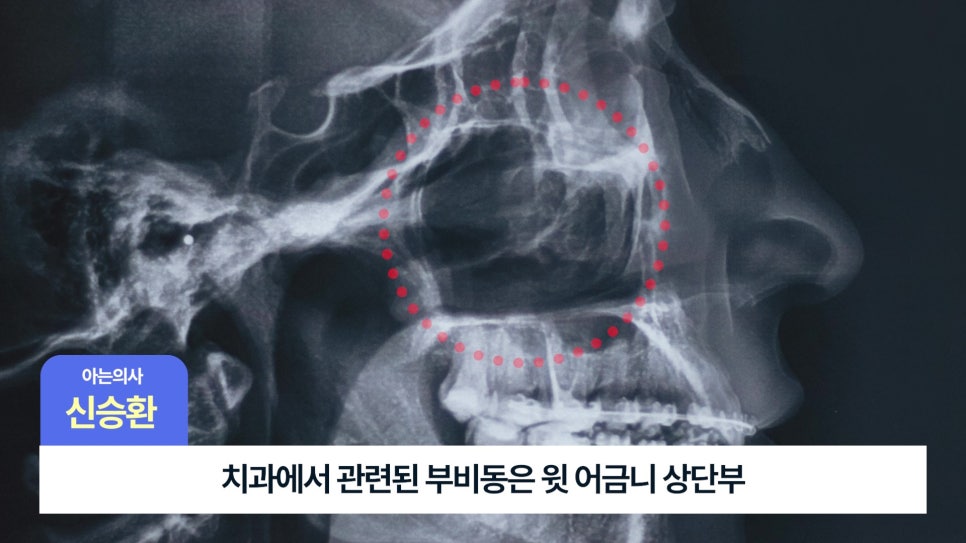
The lower jawbone is hard and contains very little empty space,
whereas the upper jawbone contains several air-filled structures called the “sinuses.”
Of these, the space that is mainly relevant in dentistry
is the “maxillary sinus,” located above the molars.


The maxillary sinus helps reduce the weight of the skull
and regulates temperature and humidity as air passes through.
However, if this space is very large or extends far downward,
there may not be enough bone height beneath it
to place an implant.
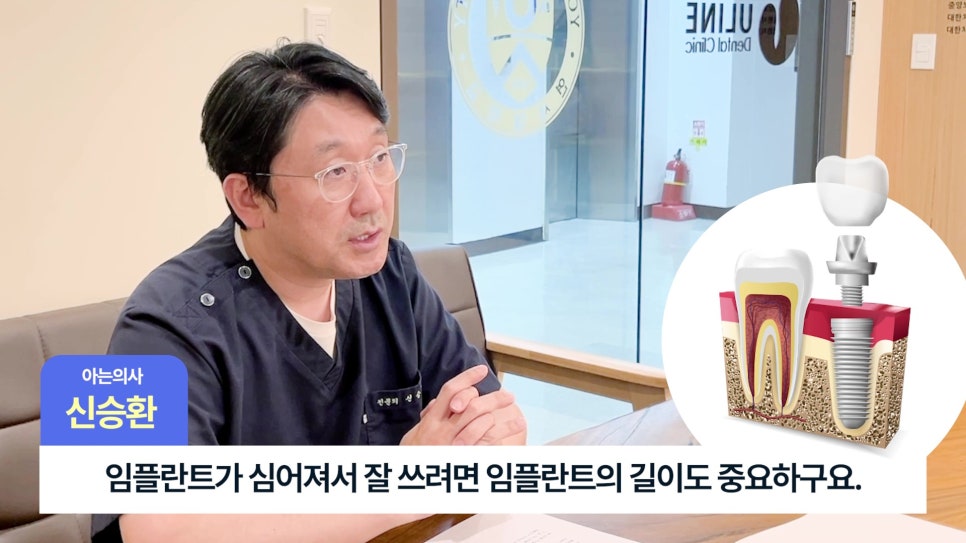

An implant needs sufficient length and width
to settle properly and remain usable for a long time.
The molar area is subjected to strong chewing forces,
so the implant needs to be secured to the bone over a broad surface area.


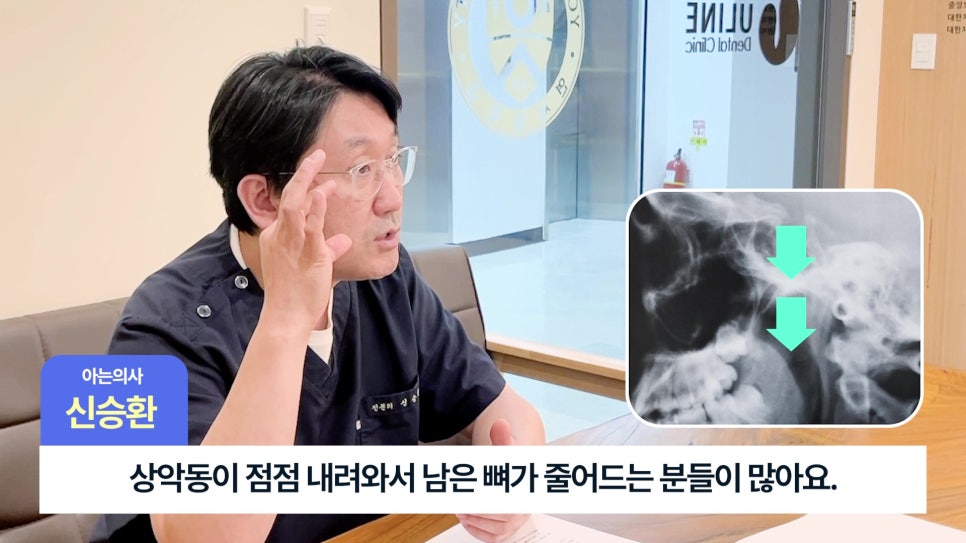
In the upper jaw, however, the width may be adequate
while the height is often insufficient.
This can sometimes be a natural condition, but in most cases,
it occurs because the maxillary sinus gradually moves downward
over time after a tooth is removed.

In such cases, the reduced bone must be rebuilt
so that an implant of sufficient length can be placed.
The maxillary sinus can be thought of as a structure
that resembles a small balloon.


During surgery, this balloon-like membrane is gently lifted,
and bone graft material is placed inside to supplement the missing bone.
Once the area is carefully covered with gum tissue,
the grafted bone gradually becomes hard over time,
changing to resemble the patient’s own bone.


A certain amount of time is needed for this new bone to form.
If a large amount of graft material is used or very little bone was originally present,
it may be necessary to wait six months or longer.
In typical cases, however, about four to six months
is usually enough to reach a condition suitable for implant placement.


Depending on the amount of bone that remains, the implant
and sinus lift may be performed at the same time.
Alternatively, the bone may need to be rebuilt first,
with the implant placed later.


When possible, having both procedures performed at once is more convenient for the patient,
and it is more efficient for the dental clinic because a second surgery is not needed.
However, this is not possible in every case.


The graft material is initially somewhat soft,
with a consistency similar to concrete before it hardens.
If almost no bone remains, placing an implant at the same time
may be unstable.


However, if enough bone remains to support the implant,
the two procedures can be performed at once,
which can shorten the overall treatment period
and reduce discomfort.

Therefore, it is generally preferable to perform them simultaneously when possible,
but depending on the condition, treatment may need to be divided into two stages.
In that case, the treatment period may be somewhat longer.

Some patients also ask, “I only had a molar removed,
so why do I need sinus surgery as well?”
The reason is the difference between the structure of a natural tooth
and that of a dental implant.

The molars in the upper jaw usually have three to four roots:
two on the outer side and one on the palate side,
forming a tripod-like structure.
Therefore, even when the maxillary sinus has descended somewhat,
the individual roots are distributed throughout the bone,
allowing them to share the force of chewing.

An implant, however, acts as a single root
through one post.
In addition, it is usually placed in the central area,
where the bone is most lacking.
Without sufficient bone, the implant may not withstand the forces,
increasing the risk of loosening or failure.



That is why a sinus lift may be needed
even when only a tooth extraction has been performed.
To ensure that the implant settles securely,
sufficient bone length and width must be 확보ed.


In summary, a sinus lift is not necessary for everyone,
but it is an essential step when the bone height is insufficient.
By creating strong alveolar bone through this process,
the implant can then be placed and firmly secured,
allowing it to be used reliably for a long time.