Gwanak-gu Dental Clinic - Full-Mouth Implants, Complete Guide to Treatment Time, Visits · Number of Implants
Hello. I am Dong-ho Kang, the director of Yonsei U-Line Dental Clinic, Sillim Branch, located near Exit 7 of Sillim Station in Sillim-dong, Gwanak-gu.
Today, I would like to talk about full-mouth implant treatment.

Patients preparing for full-mouth implant treatment usually have three main questions:
“How many times do I need to visit the clinic?”
“How long does the treatment take?”
“How many implants will I need?”
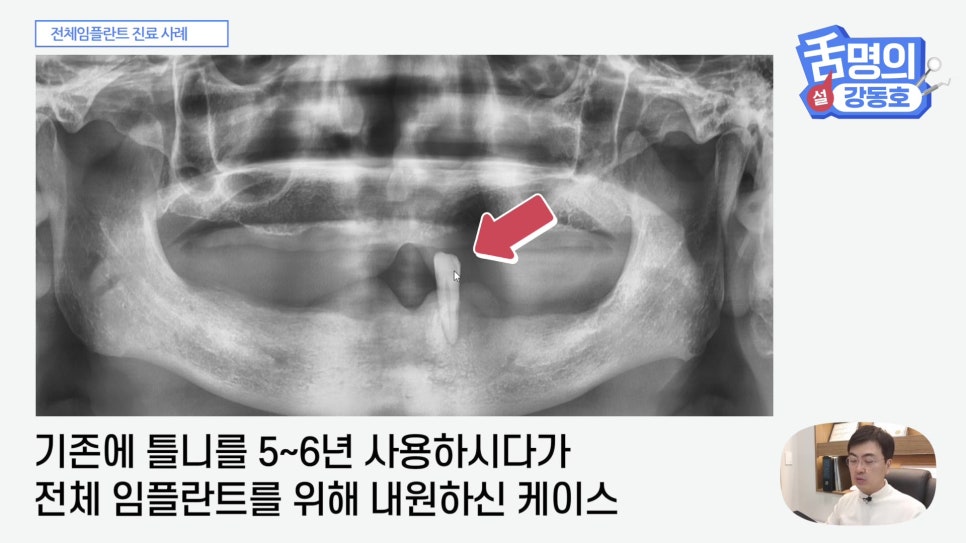
Let me answer these three questions based on an actual case.
One patient had been using dentures for a long time.
After using them for nearly five to six years, they gradually became uncomfortable, and the patient eventually visited us hoping to switch to full-mouth implants.
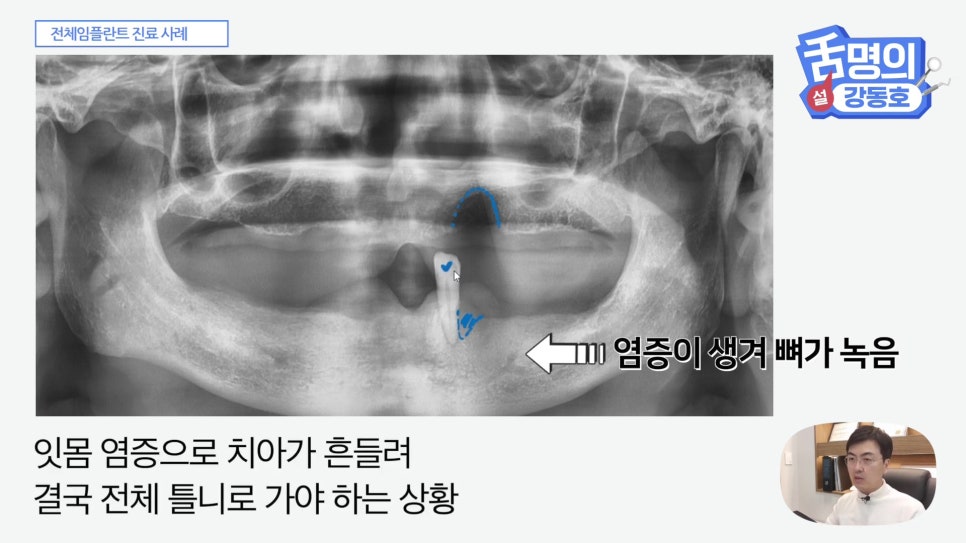
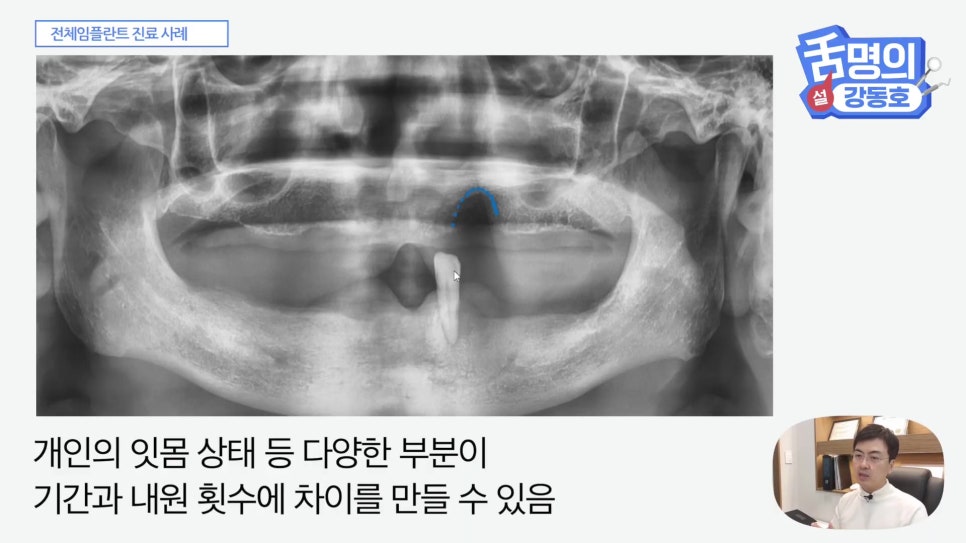
The bone in the upper gum had resorbed significantly due to long-term denture use, and the condition of the lower gums was also poor enough that the remaining teeth were loose.
Some areas had also experienced bone loss due to inflammation.
In this situation, rebuilding the dental structure with full-mouth implants was a better option than trying to preserve the existing teeth.
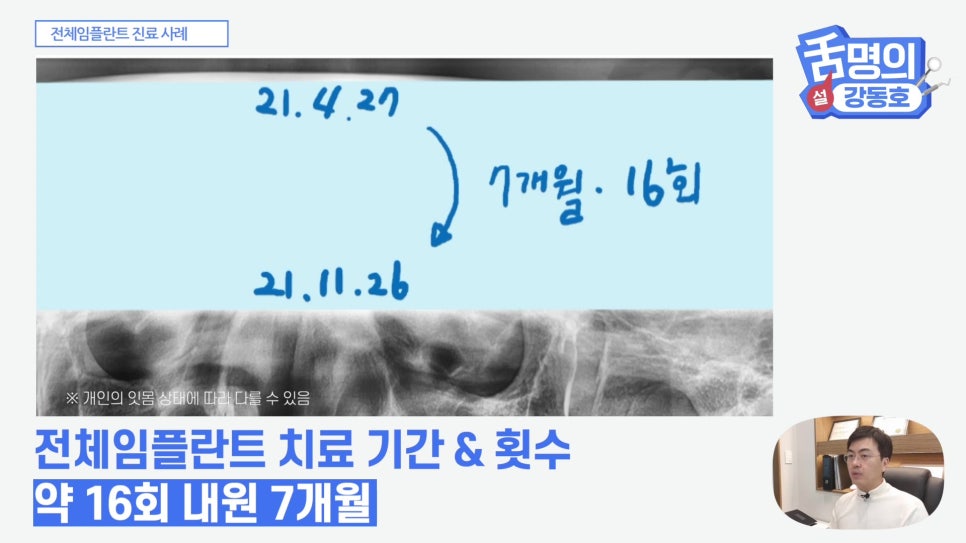
This patient’s treatment took a total of seven months, with approximately 16 clinic visits.
Of course, this varies from person to person.

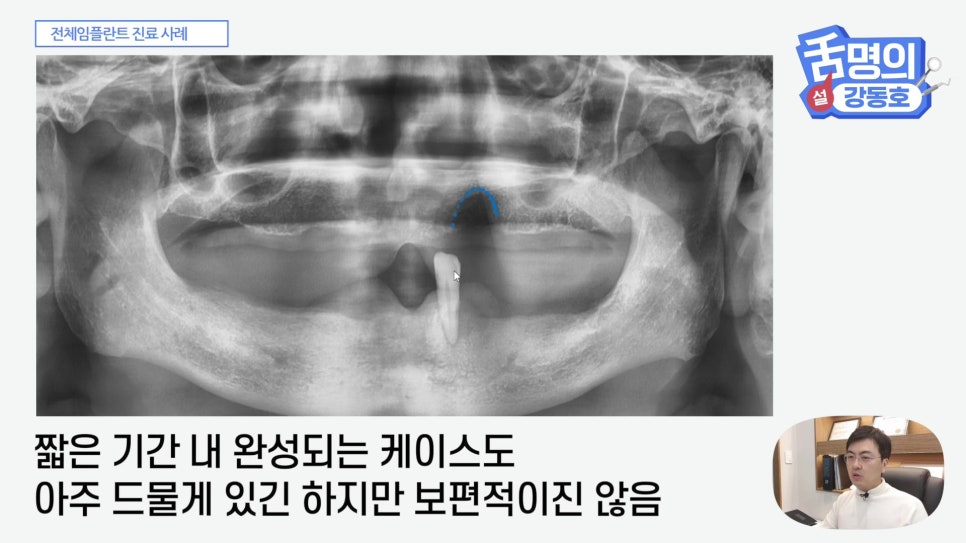
These days, some clinics place teeth in just one day, while others say the treatment can be completed in two months.
However, such cases are limited to a small number of patients with particularly favorable conditions.
That type of treatment is not necessarily better, and a shorter treatment period does not automatically mean greater expertise.
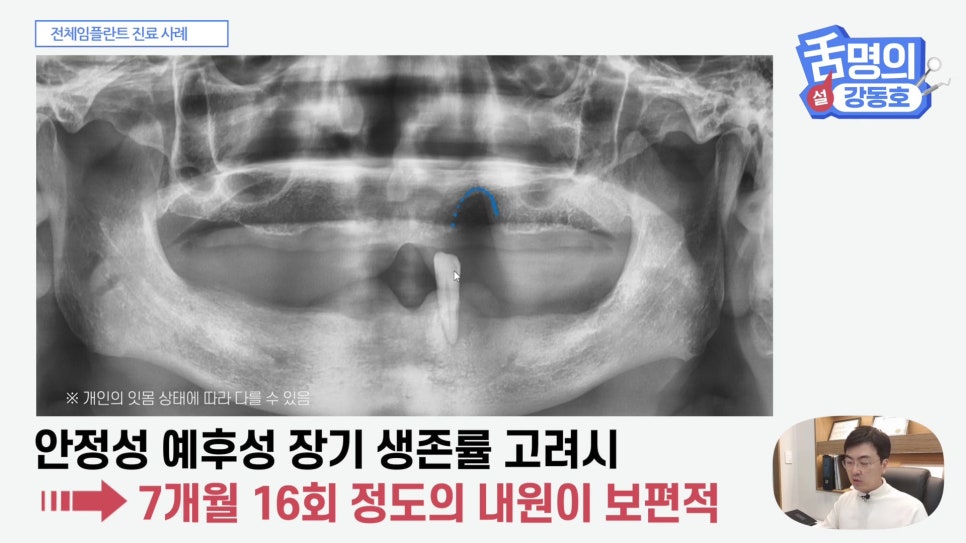
Even when implant treatment takes time, the most important thing is for the implants to heal stably and last for a long time.
In other words, the treatment plan should be tailored individually to the patient’s condition and goals.
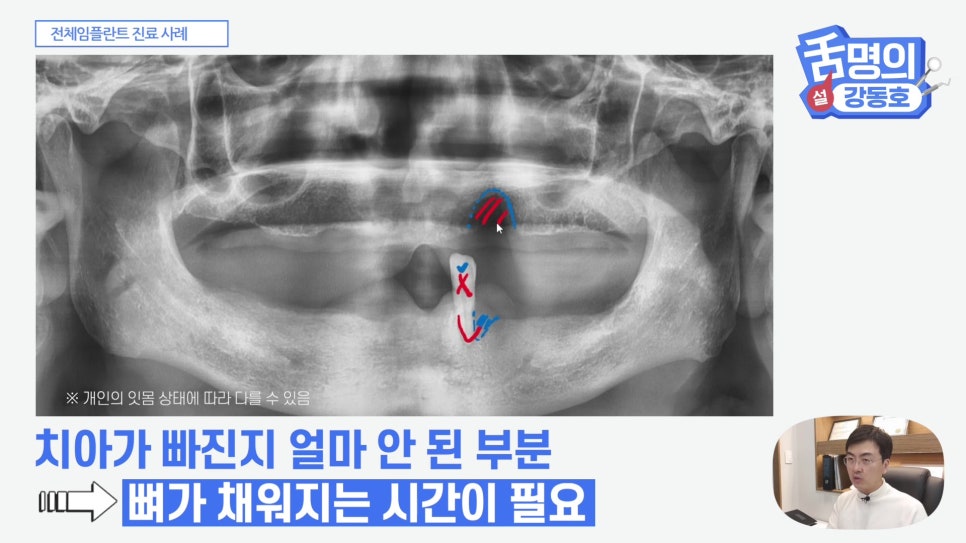
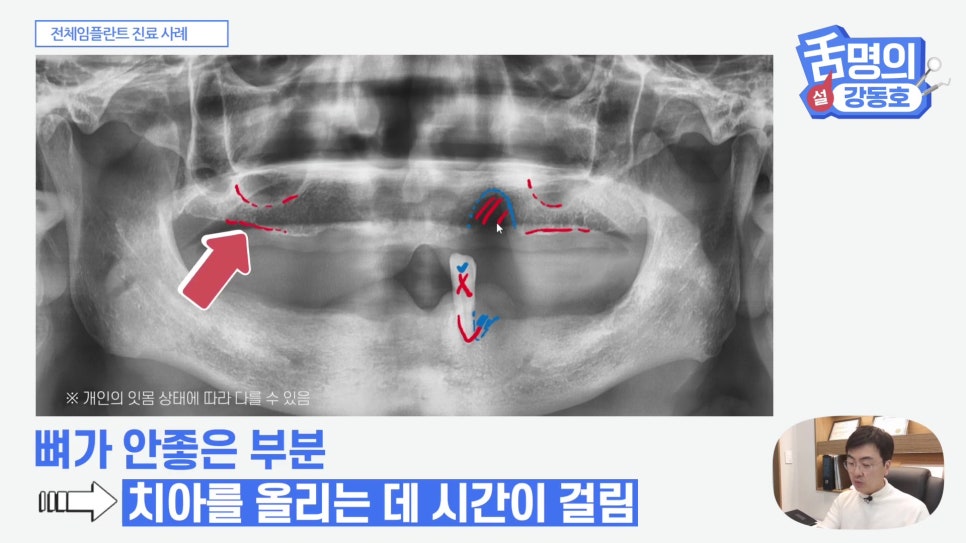
For example, when some older teeth need to be extracted and bone grafting is required, as in this patient’s case, additional time is needed to allow for recovery.
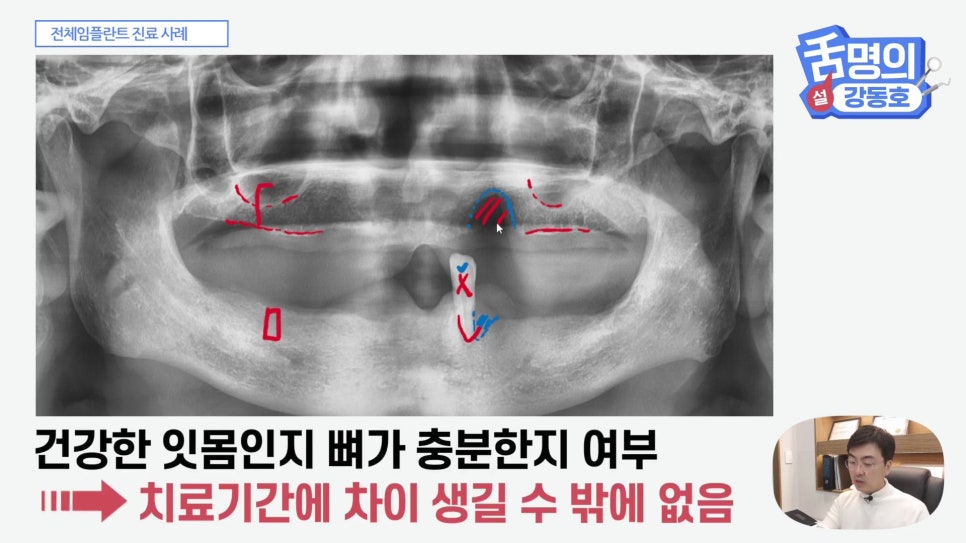
Implants can be placed relatively quickly in areas where teeth were lost some time ago, but areas with inflammation or areas where teeth were just extracted require time to fill the bone and wait for healing.
When the upper gum has receded significantly, additional procedures such as a sinus lift may also be performed along with bone grafting, so treatment inevitably takes longer.
As you can see, the treatment period may differ depending on the area, even within the same mouth.
The lower jaw may be completed in two months, while the upper jaw may take up to six months.
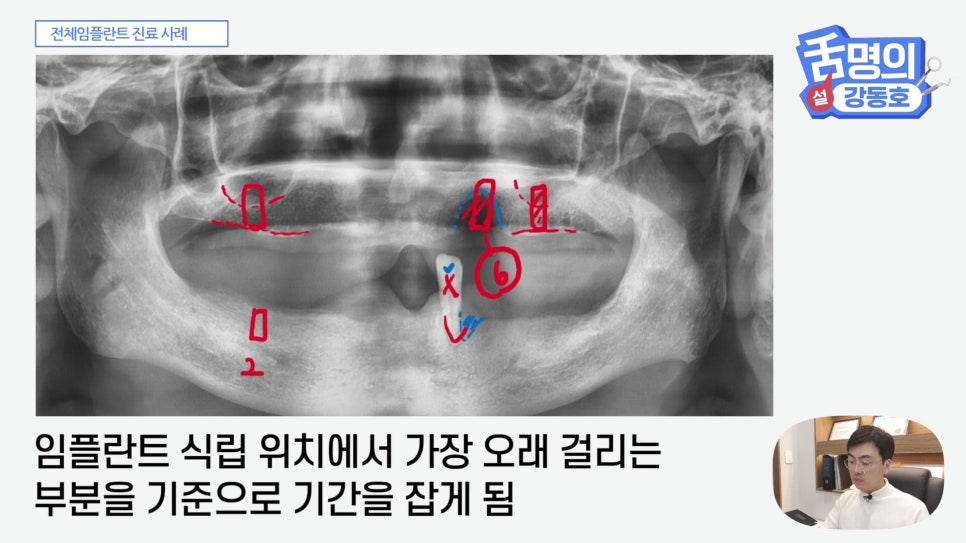
That is why the total treatment period is determined by the area that takes the longest.
If the teeth in even one area have not been fully placed, the overall treatment is not yet complete.
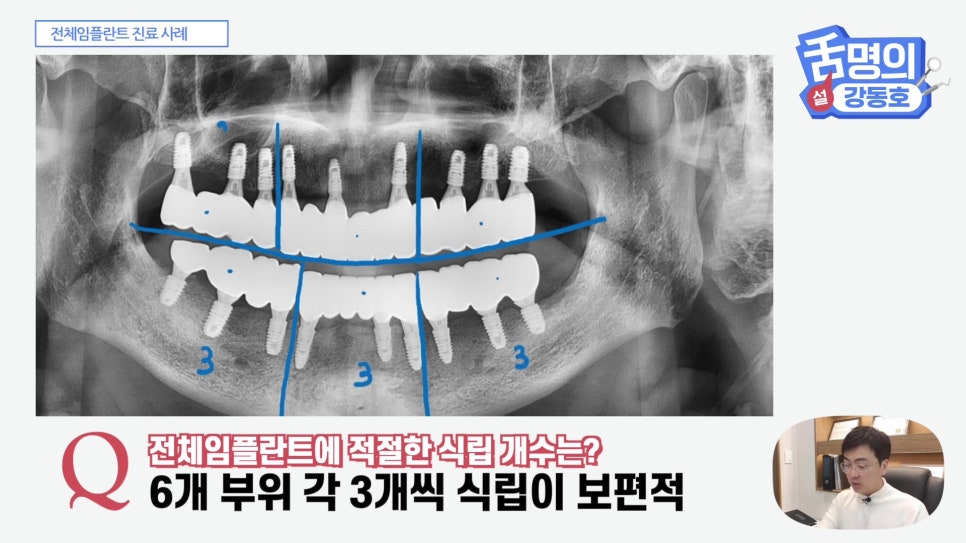
Then how many implants are needed?
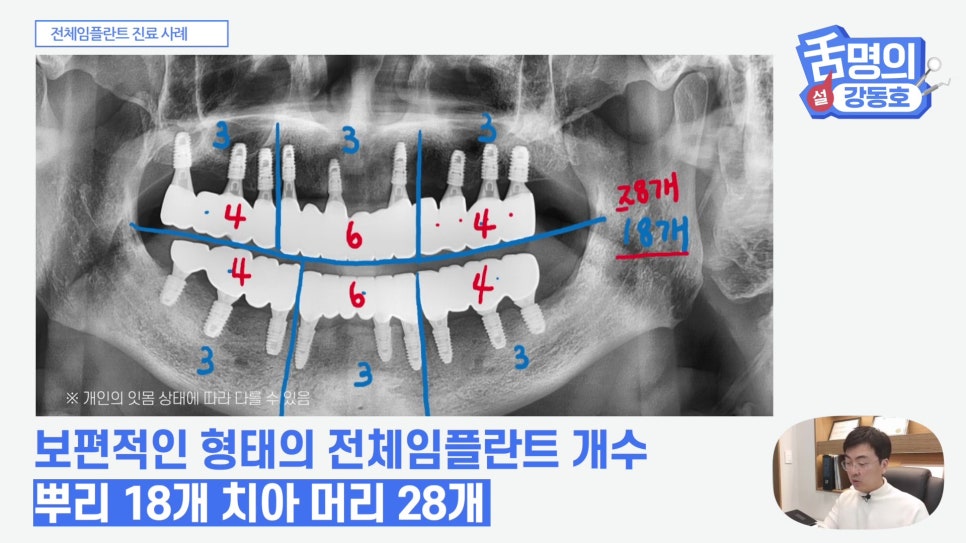
For full-mouth implant treatment, the usual standard is approximately 18 implants.
They are divided evenly between the upper and lower jaws, with nine in each, distributed from the front teeth to the molars. However, this also varies depending on the situation.
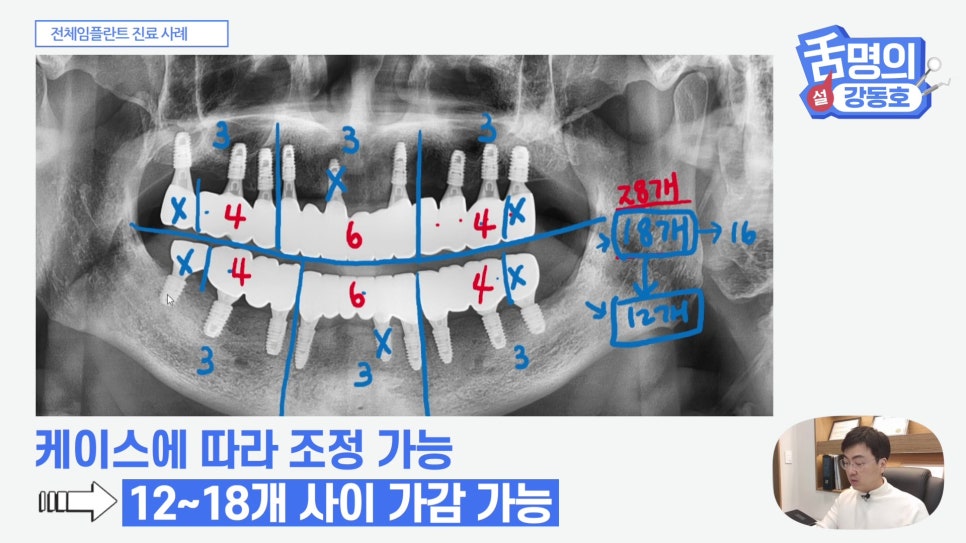
For example, by omitting implants in the very back molar areas or using connected prostheses in the middle sections, the structure can be adjusted so that full-mouth implants may be completed with approximately 12 implants.
However, this decision must be made by considering the individual’s bone condition, chewing function, aesthetic needs, and other factors together.
It is not possible to make a simple comparison based only on whether one clinic recommends 12 implants and another recommends 18. The key is to place an appropriate number of implants according to the patient’s oral condition.

To summarize, full-mouth implant treatment generally takes approximately three to seven months, requires around 10 to 16 clinic visits, and involves about 18 implants on average, although the number may be reduced depending on the circumstances.
Claims that treatment can be completed in an extremely short period may instead lead to an unstable result.
Stability is more important than speed, and a structure that can be used comfortably for a long time is more important than simply focusing on the number of implants.