Hello. I am Shin Seung-hwan, the director of Yonsei U-Line Dental Clinic, Garak-dong Branch, located near Exit 4 of Garak Market Station in Garak-dong, Songpa-gu.
Do you have a tooth that feels sensitive or gives you a sharp twinge when you chew?
One possible cause is a cracked tooth—in other words, a tooth with a fracture. As the name suggests, this means that a fine crack has developed in the tooth.
If you take it lightly and leave it untreated, it can lead to more complicated problems than you might expect.
Teeth may look hard on the outside, but they are made up of several layers.
The outermost layer is called enamel, and it serves as a very hard protective shell.
When you are young, this enamel is strong and does not crack easily.

The problem is the aging of the teeth that comes with getting older.
Just as wrinkles develop on the face, teeth naturally wear down and weaken after being used for a long time.
For example, if a molar that emerged around the age of 10 is used for 30 or 40 years, its outer layer will gradually wear away, no matter how well it is brushed and cared for.
As this happens, cracks can more easily develop in areas that have become weakened.
At first, a crack is extremely fine and difficult to see with the naked eye.
However, it may appear as a sharp, electric-like sensation when you bite into something hard.
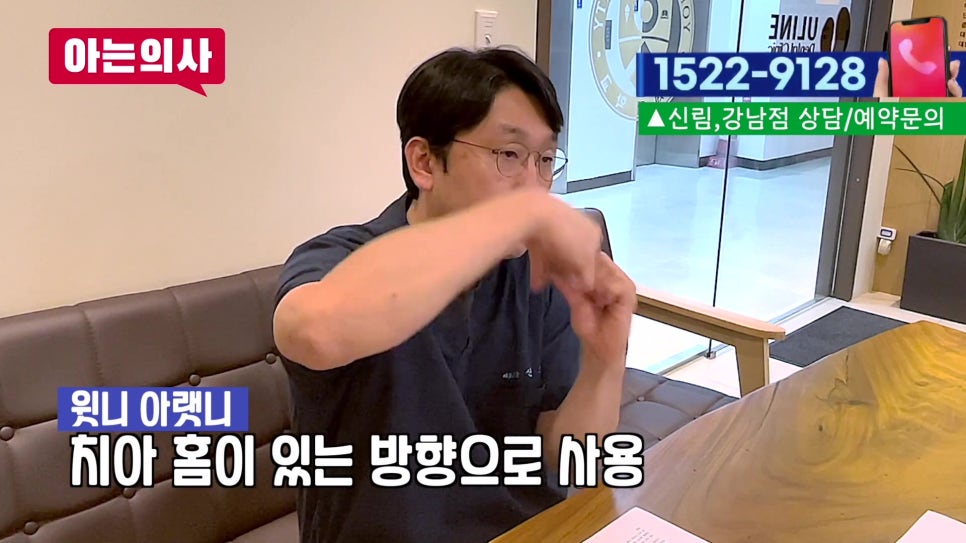
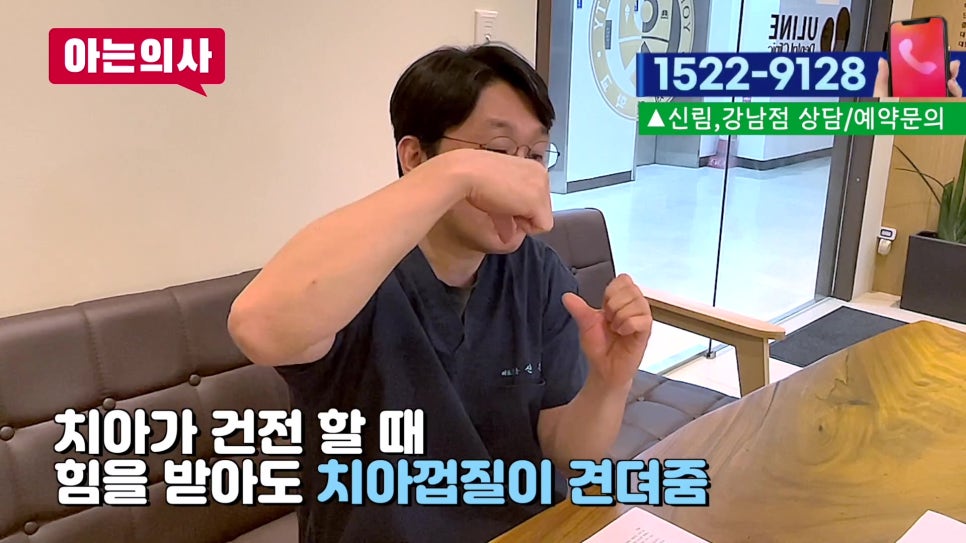
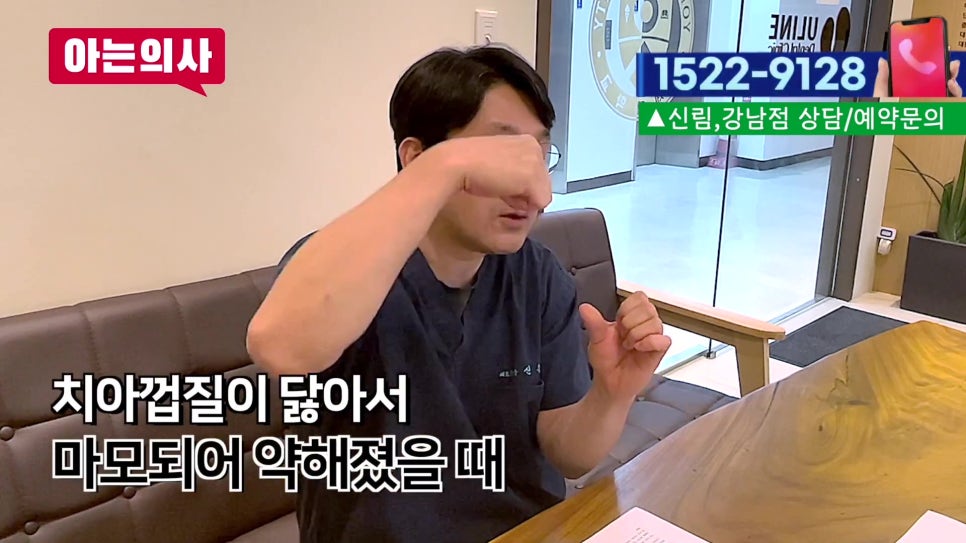
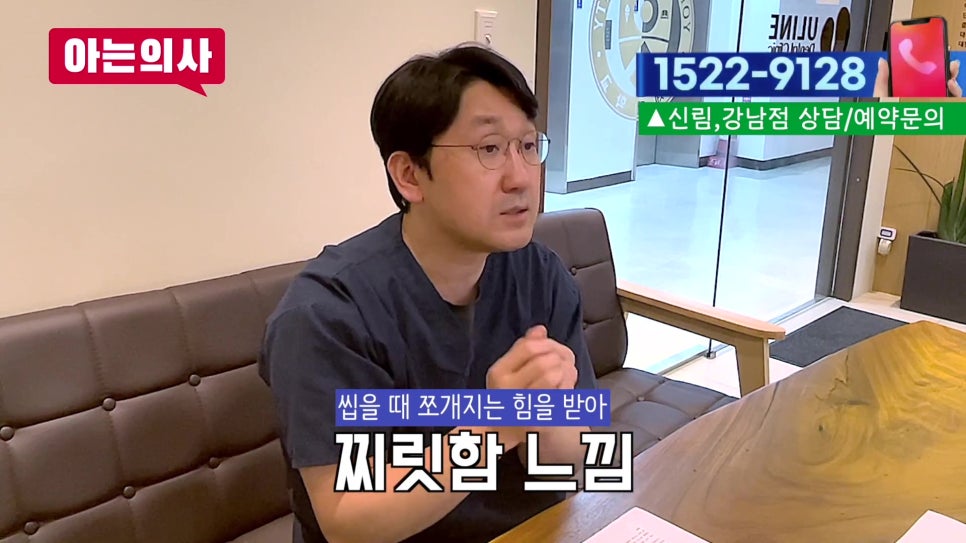
Teeth do not meet as completely flat surfaces. Instead, the upper and lower teeth fit together through fine grooves between them.
Because of this structure, when chewing forces become concentrated in a particular area, they can cause a fine crack, as if the tooth were being split apart.
The problem is that if you are unaware of this condition and simply endure it, the crack can gradually deepen and extend into the inside of the tooth or toward the root.
When that happens, treatment becomes increasingly difficult.
When there is only a simple crack, it may be possible to cover the tooth with a crown. However, if the crack deepens and causes severe pain, root canal treatment may also be necessary.
In serious cases, it may even be difficult to preserve the tooth itself.
Some people should be especially careful.
These include people with misaligned teeth and those who grind their teeth.
When teeth are misaligned, the points where they collide can continually change, causing excessive force to become concentrated on certain teeth.
People who grind their teeth also unconsciously grind them throughout the night, exerting considerably greater force.
For these people, prevention is important.
Using a night guard to prevent teeth grinding can help reduce the force placed on the teeth.
While you can control the force when you are awake, it is difficult to do so while asleep, which is why a night guard can be helpful.
To summarize:
If your teeth feel sensitive or give you a sharp twinge when chewing, consider the possibility of a cracked tooth.
A crack can deepen over time, making treatment more complicated.
If you have misaligned teeth or grind your teeth, wearing an appropriate appliance can help prevent problems.
If you have even the slightest suspicion, be sure to visit a dentist for an examination.
Remember that it is most important to address the problem while it is still only a minor discomfort.