Hello, I’m Kang Dong-ho, the director of Yonsei U-Line Dental Clinic, Sillim Station Branch, located near Sillim Station in Sillim-dong, Gwanak-gu.
Today, I’ll talk about why your teeth may hurt when chewing and the treatments available depending on the cause.
Many people feel pain when chewing but have difficulty distinguishing whether the pain is coming from their gums or the tooth itself.
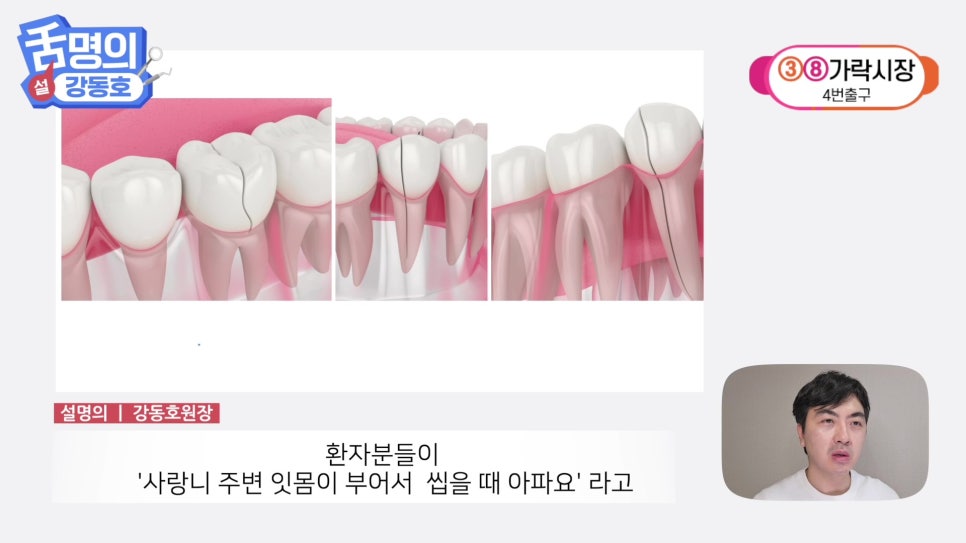
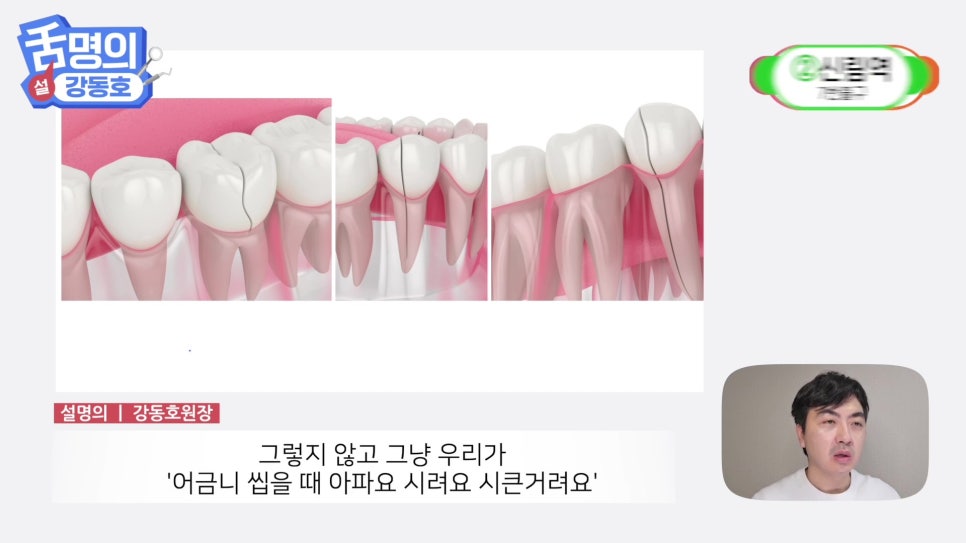
For example, when a wisdom tooth hurts, many people feel that their gums are swollen. On the other hand, when there is a dull ache, sensitivity, or pain around the molars, it can often be difficult to determine whether the cause is the tooth or the gums.
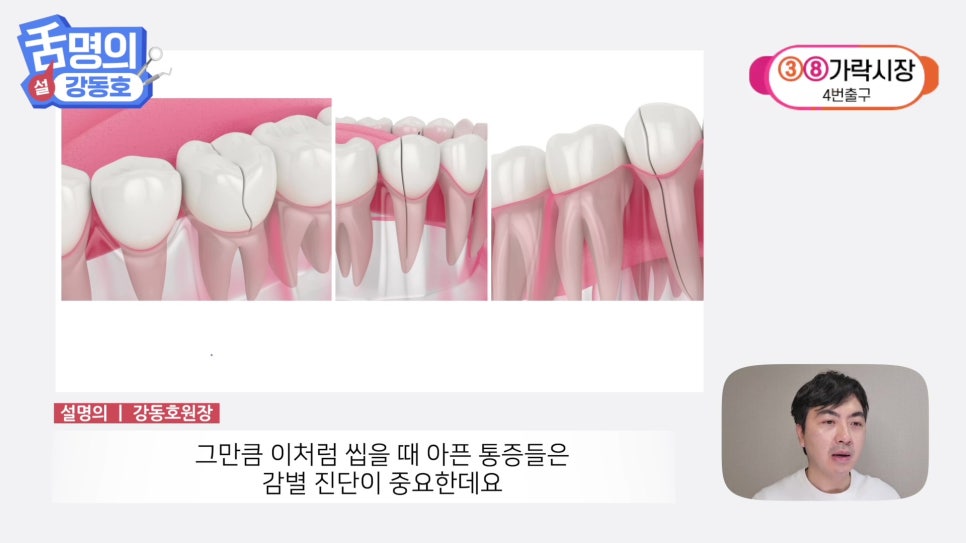
That is why differential diagnosis is important when pain occurs while chewing.
Broadly speaking, there are three possible causes of this pain.
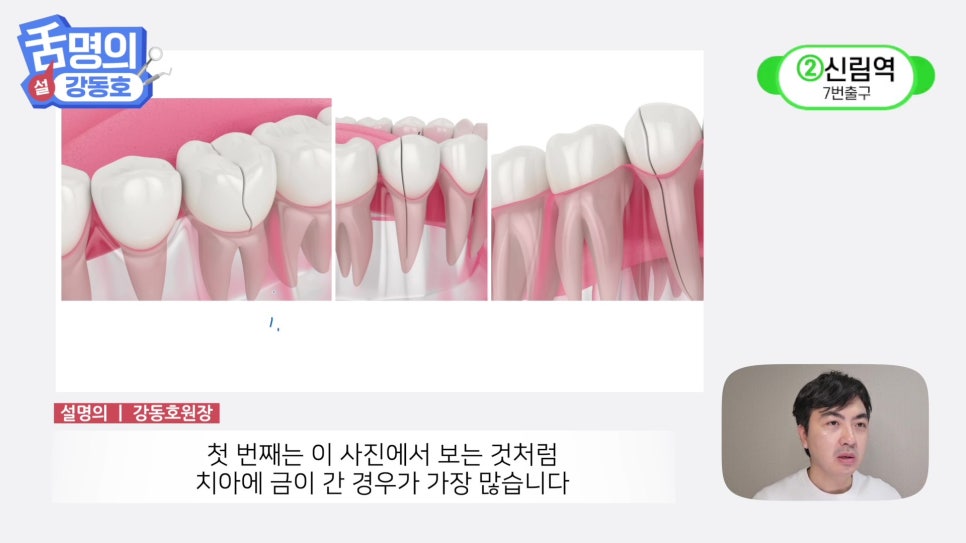
- When the tooth is cracked
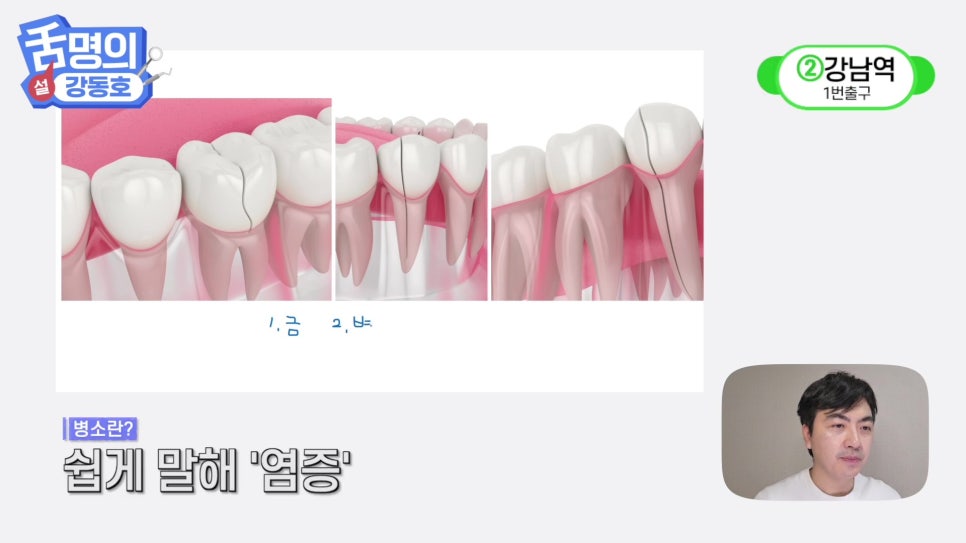
This is the first possible cause to consider, although it is not extremely common. When a tooth is cracked, the crack opens during chewing, stimulating the nerve inside and causing pain. The pain often occurs repeatedly when chewing in a particular direction.
- When there is inflammation around the tooth root (a lesion)
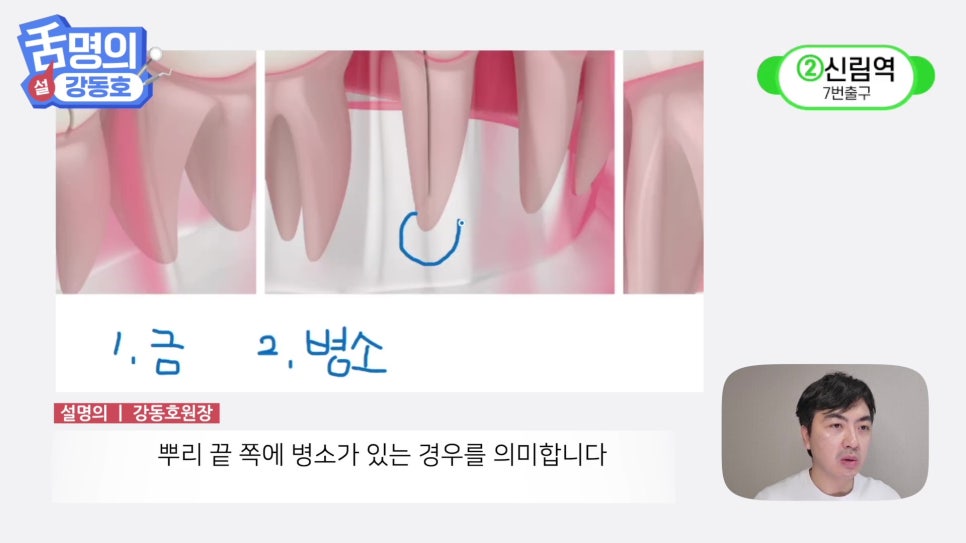
Simply put, this means that inflammation has developed at the tip or along the side of the tooth root. In this case, chewing may cause discomfort or a dull ache. Depending on the case, a lesion may also be visible around the root on an X-ray.
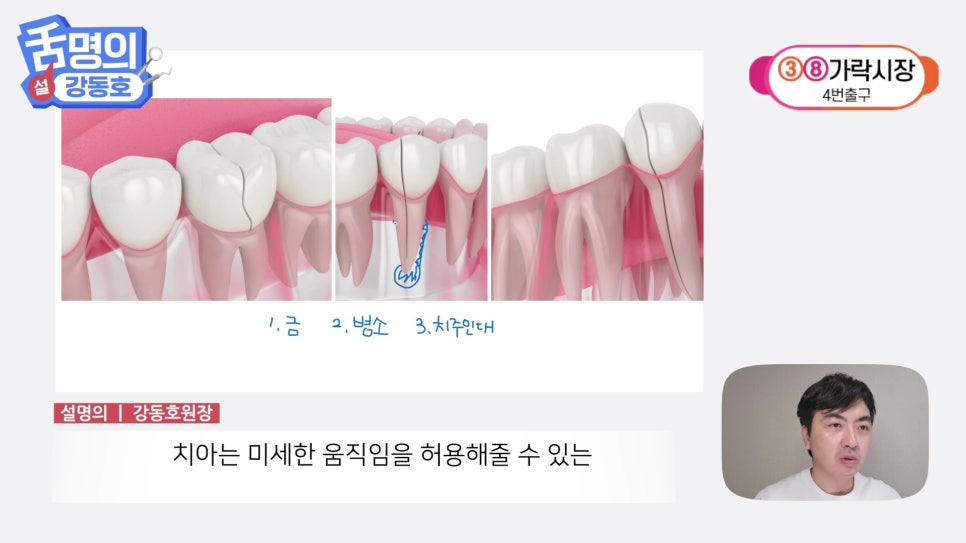
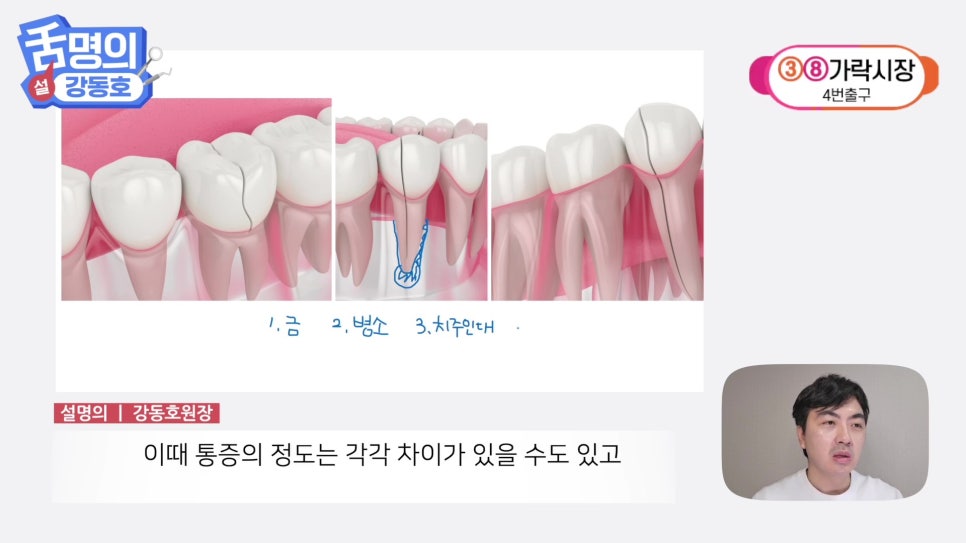
This is more common than you might expect. Although teeth may seem to be firmly embedded in the bone, ligaments surrounding the roots hold them in place. These ligaments allow the teeth to move slightly. When this area becomes inflamed or is irritated, pain can occur when chewing.
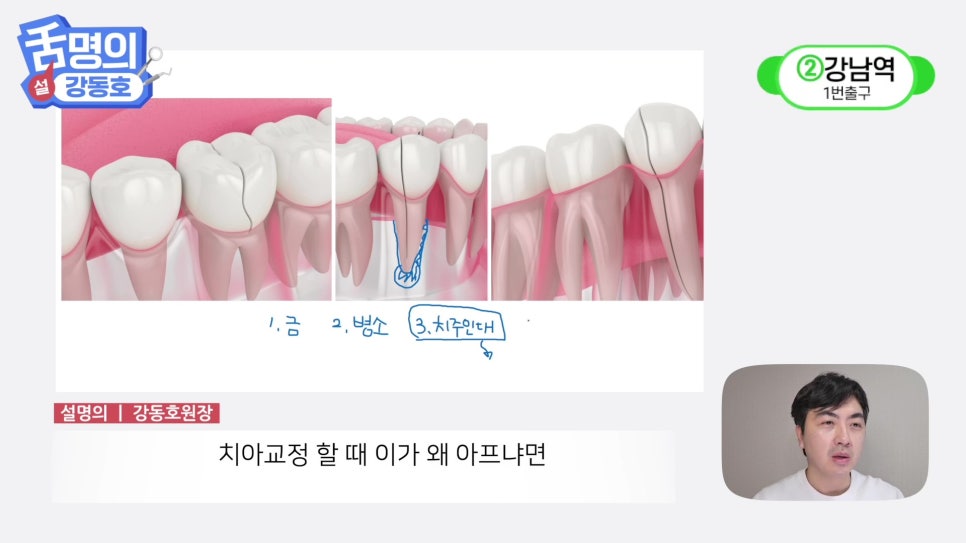
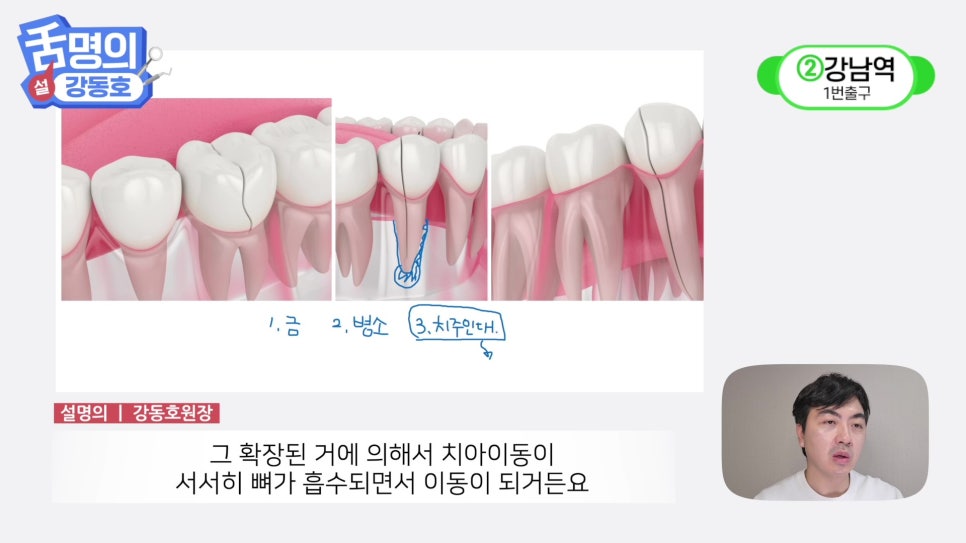
Pain in the periodontal ligament can occur due to habits such as clenching your teeth, grinding your teeth, or the continuous force placed on the teeth during orthodontic treatment. For example, the reason a tooth may hurt during orthodontic treatment is that the continuous force applied to the tooth irritates the ligament.
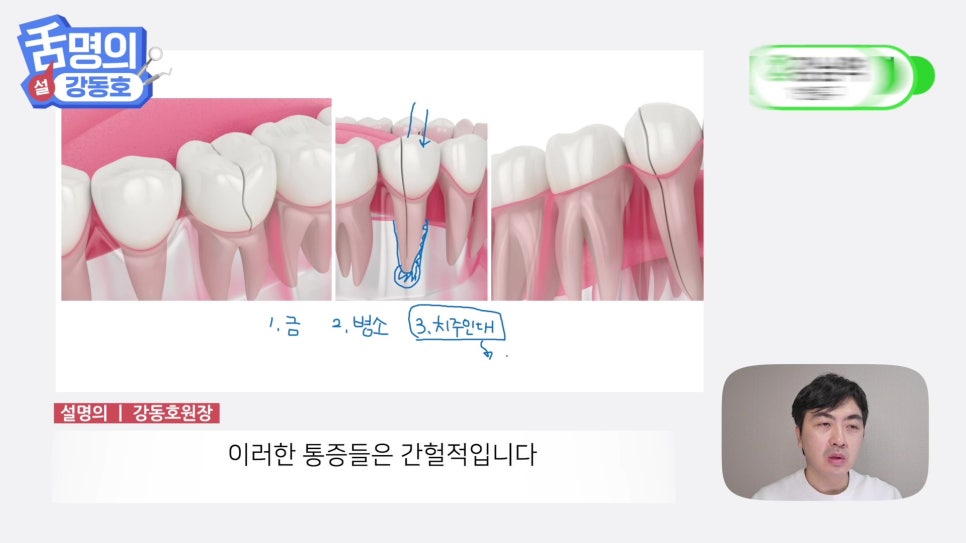
Periodontal ligament problems characteristically cause intermittent pain. The pain may last for a few days, then subside, only to return several weeks or months later. The pain may also seem to move from one area to another rather than being limited to a single tooth.
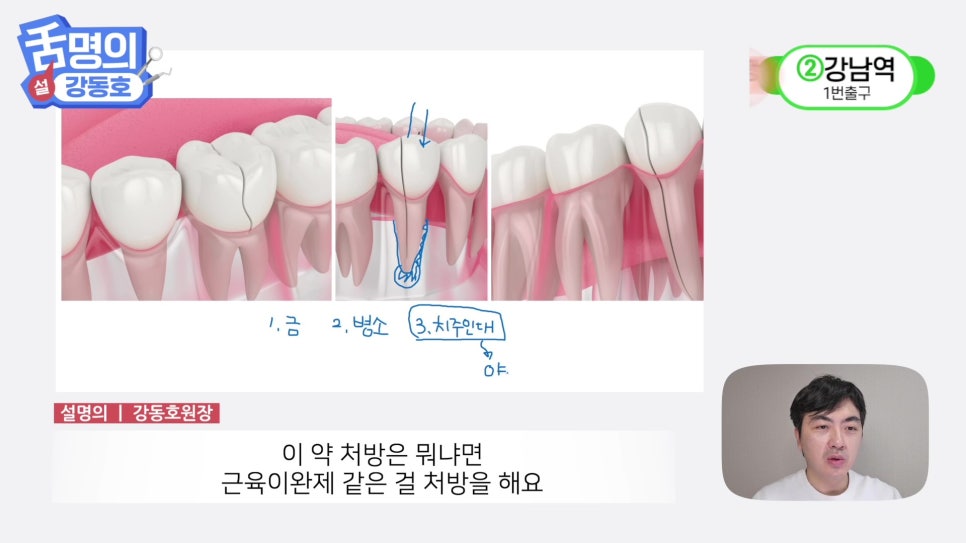
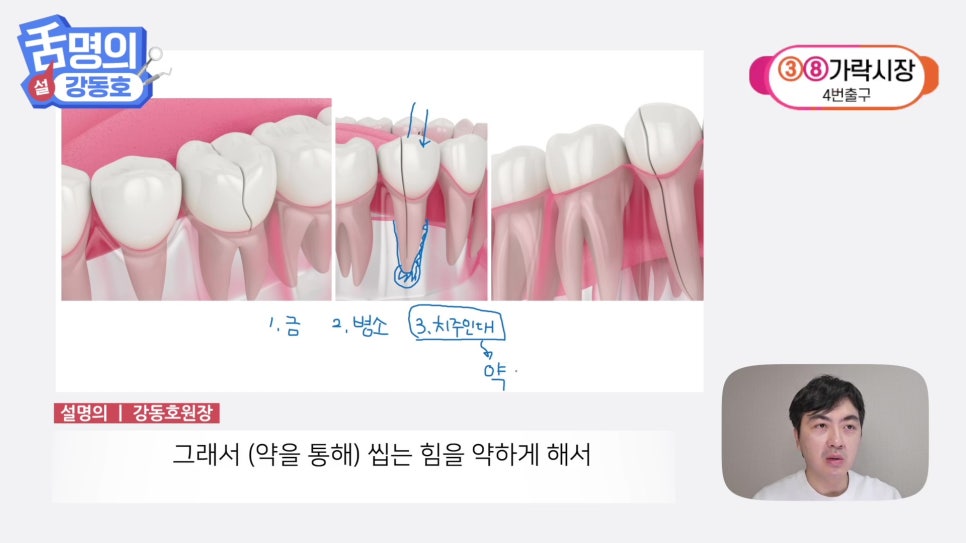
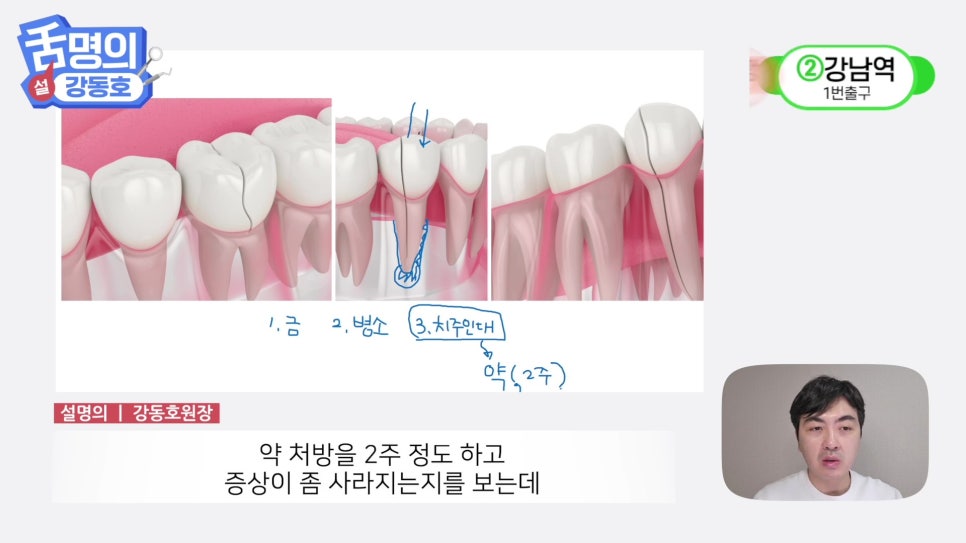
So, how is this treated?
As a first step, medication may be prescribed. Anti-inflammatory pain relievers or muscle relaxants are usually taken for about two weeks. These medications help relieve symptoms by reducing the force used when chewing.
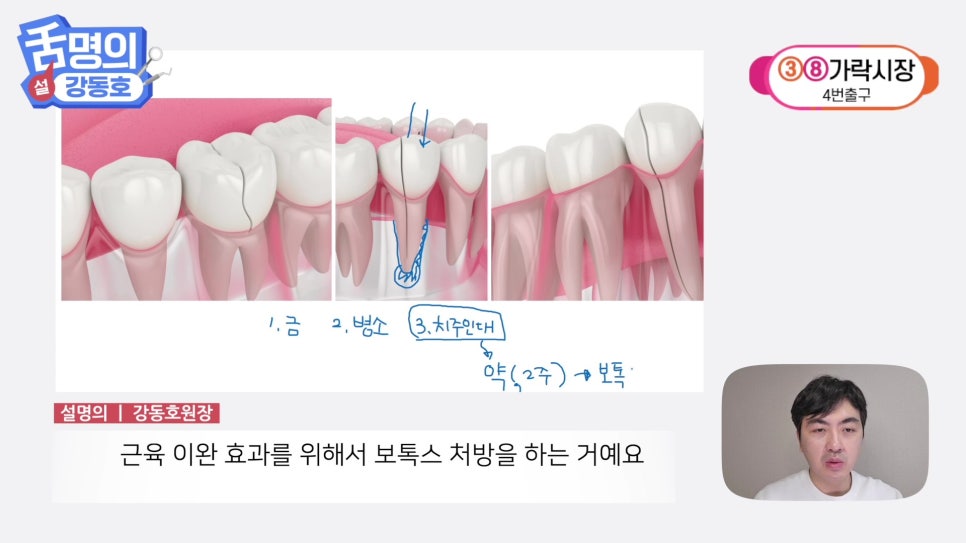
If the symptoms continue, Botox treatment may also be considered. Botox weakens the jaw muscles, helping prevent excessive force from being transferred to the teeth.
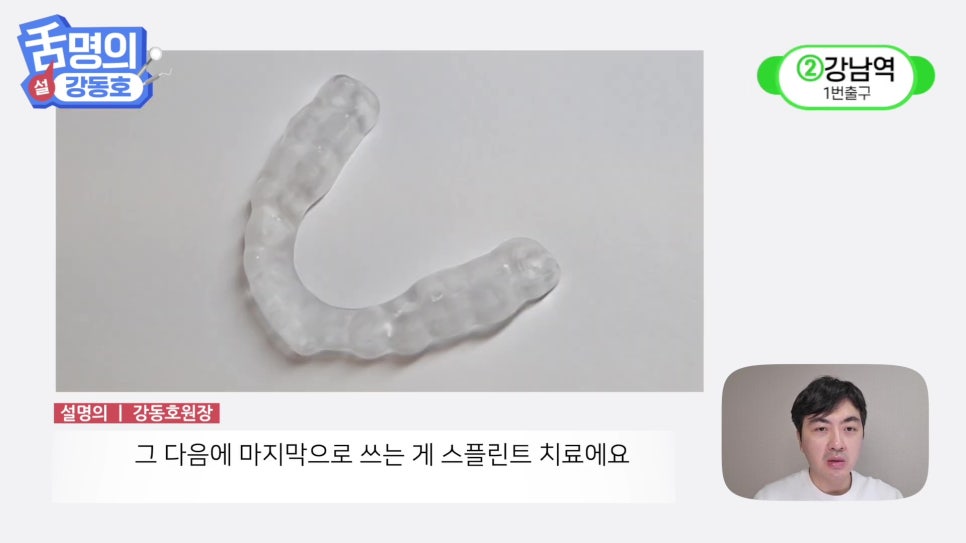
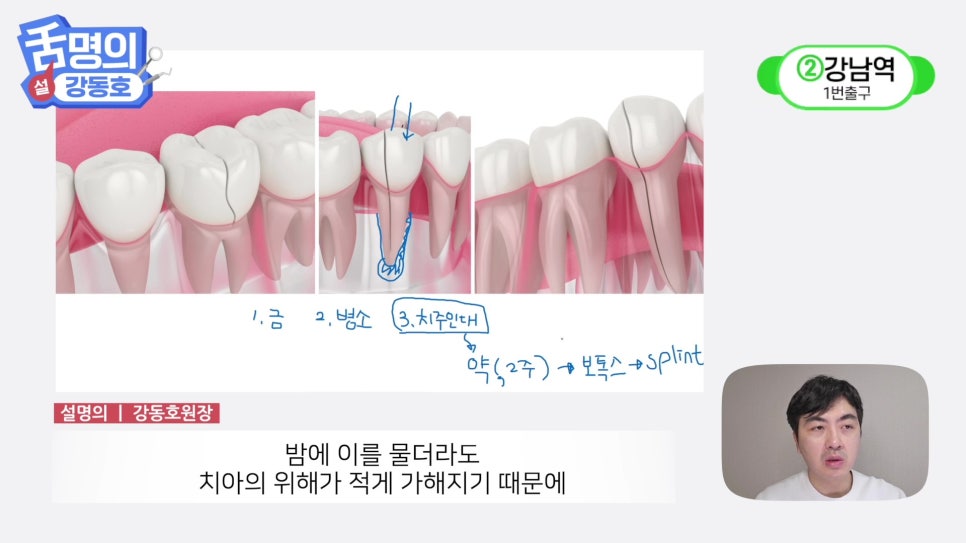
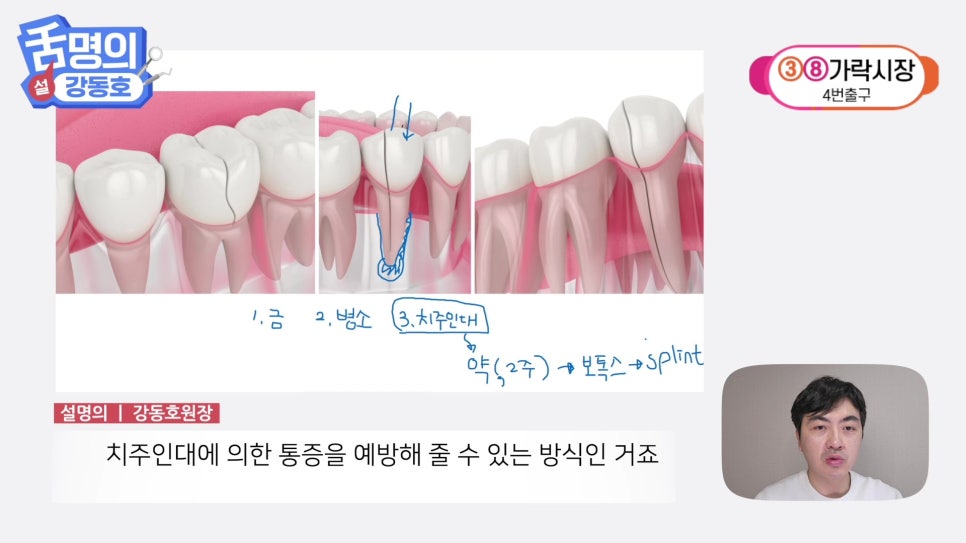
Finally, a splint, or night guard, may be used. This device is worn while sleeping. Even if you clench your teeth unconsciously while wearing it, it reduces the damage to the teeth and therefore places less irritation on the ligament.
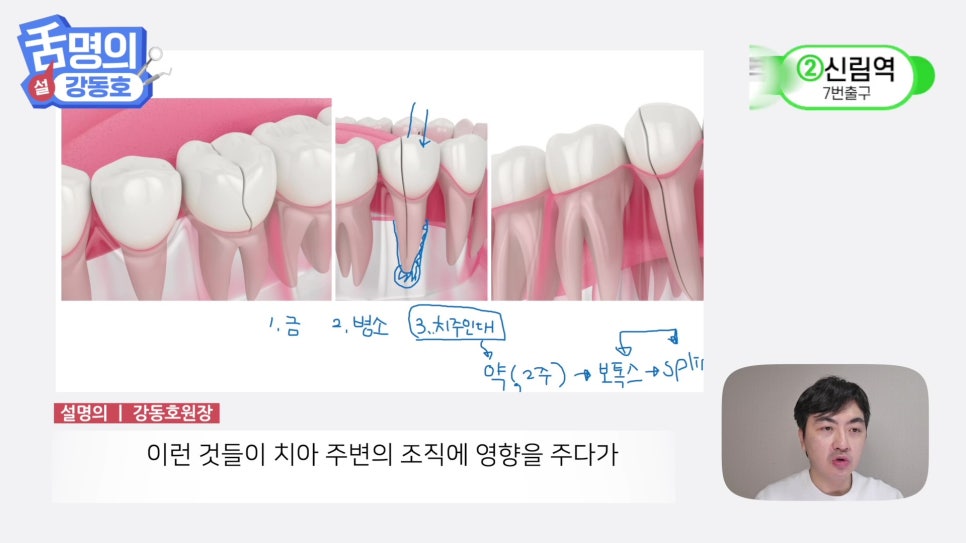
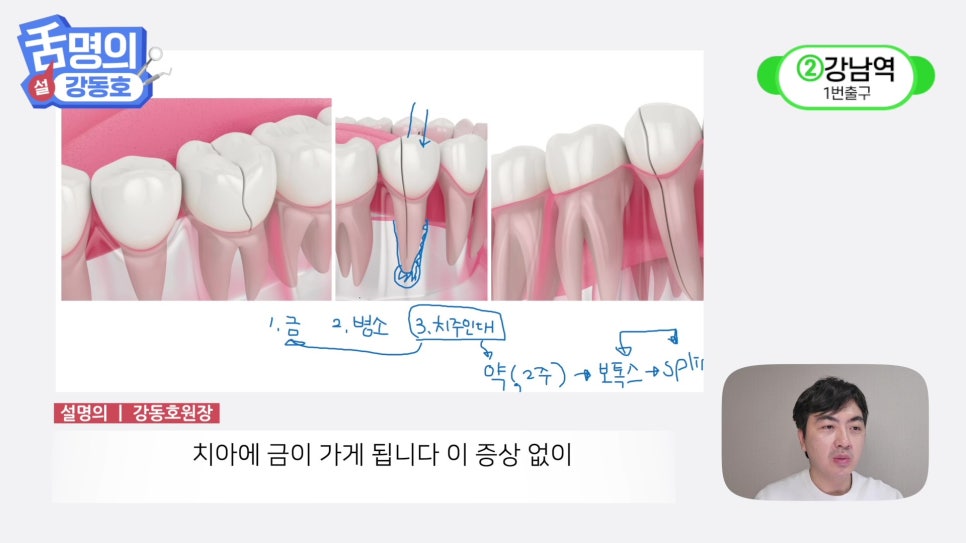
If periodontal ligament pain continues for a long time, it may eventually contribute to the tooth developing a crack. In some cases, the pain begins after the tooth has already cracked.
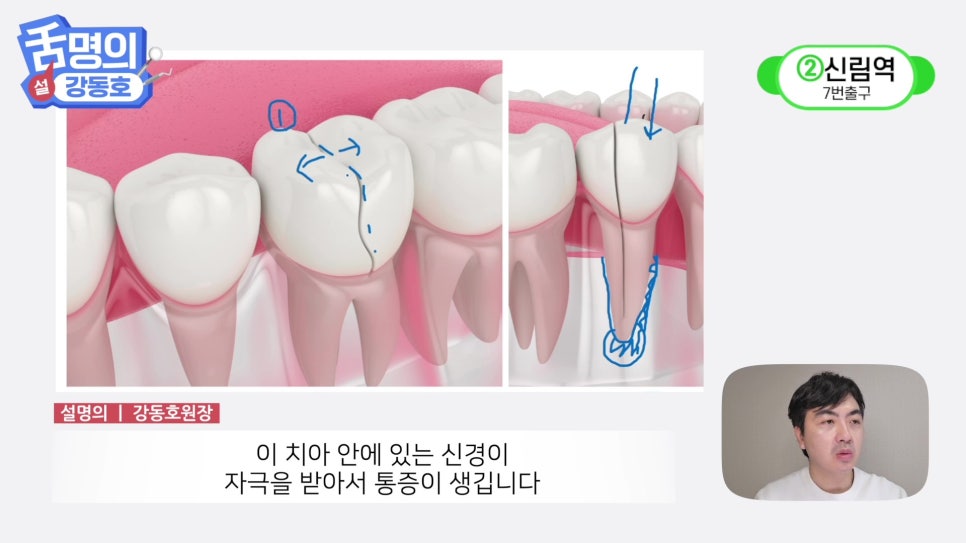
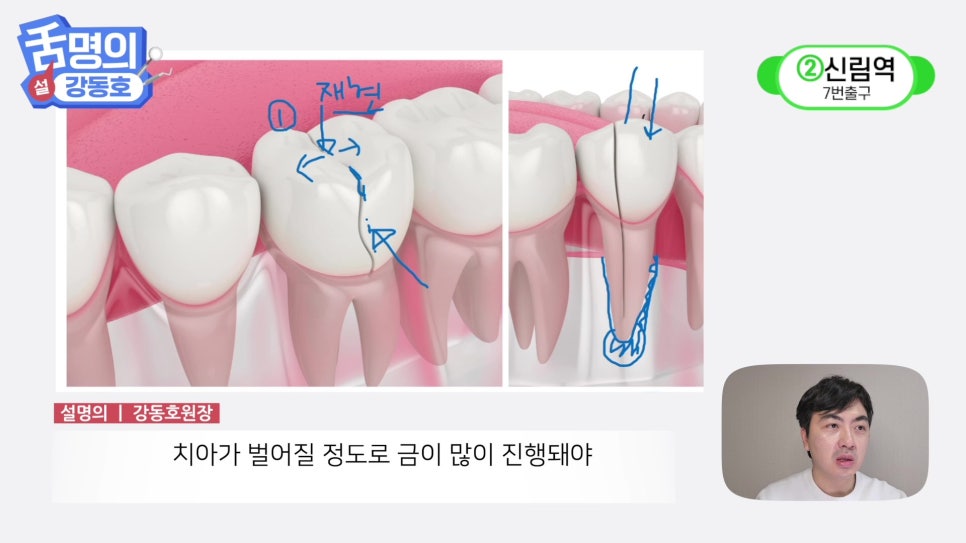
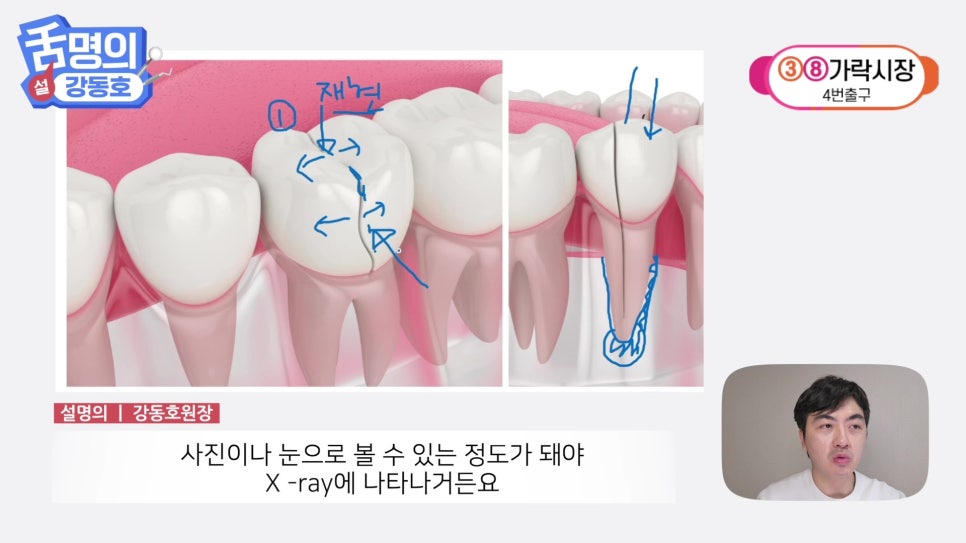
When a tooth is cracked, it often cannot be identified immediately by visual examination or X-ray. In particular, cracks limited to the surface or very fine cracks may not be visible in images, so taking a detailed history is very important.
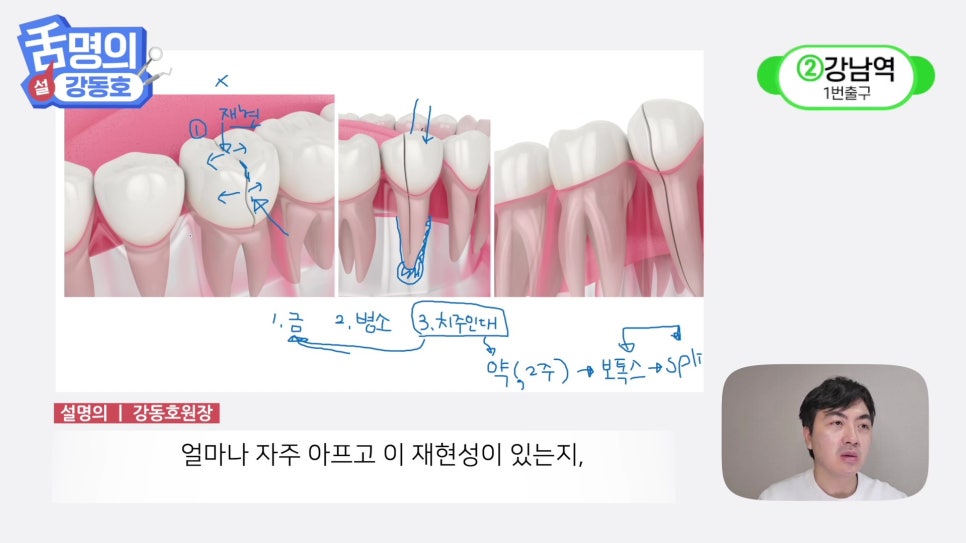
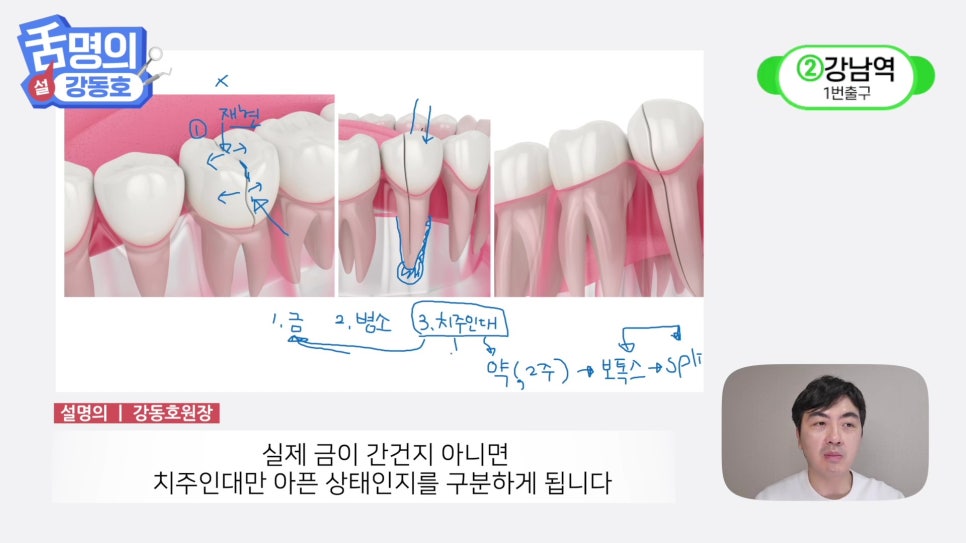
The diagnosis is made by considering when the pain began, the situations in which it occurs, how often it recurs, whether the pain is sharp or dull, and whether there is spontaneous pain, among other factors.
Once a crack is confirmed, treatment is carried out accordingly.
Ultimately, pain when chewing can result from various causes, including not only a tooth problem but also the periodontal ligament, inflammation, or a crack. That is why an accurate diagnosis is important.
If your symptoms recur or worsen, we recommend visiting a dentist for a thorough examination.