Hello. I’m Kang Dong-ho, the director of Yonsei U-Line Dental Clinic, Sillim Branch, located in Sillim-dong, Gwanak-gu, near Sillim Station.
Today, I’d like to talk about secondary tooth decay that develops after prosthetic treatment.
In fact, it is difficult for patients to tell on their own whether decay has developed underneath a metal crown or bridge.
Even if an X-ray is taken, the metal blocks the radiation, so the condition inside cannot be seen clearly.
That does not mean that replacing it unconditionally every seven or ten years is the right answer, either.
Removing a prosthesis that looks perfectly fine may be unnecessary, and from the patient’s perspective, it may feel like excessive treatment.
So how can it be checked?
The most basic examination performed at a dental clinic is a probing examination.
The dentist carefully probes the boundary between the crown and the tooth to check whether there is a gap that suggests decay.
If there are no particular abnormalities when probing and no significant changes around the area are visible on an X-ray, we explain, “It looks fine for now, so you should be able to continue using it a little longer.”
On the other hand, if a gap has opened or the crown has become loose enough for food to enter, the inside may decay at any time. In that case, it is necessary to remove it and undergo treatment again.
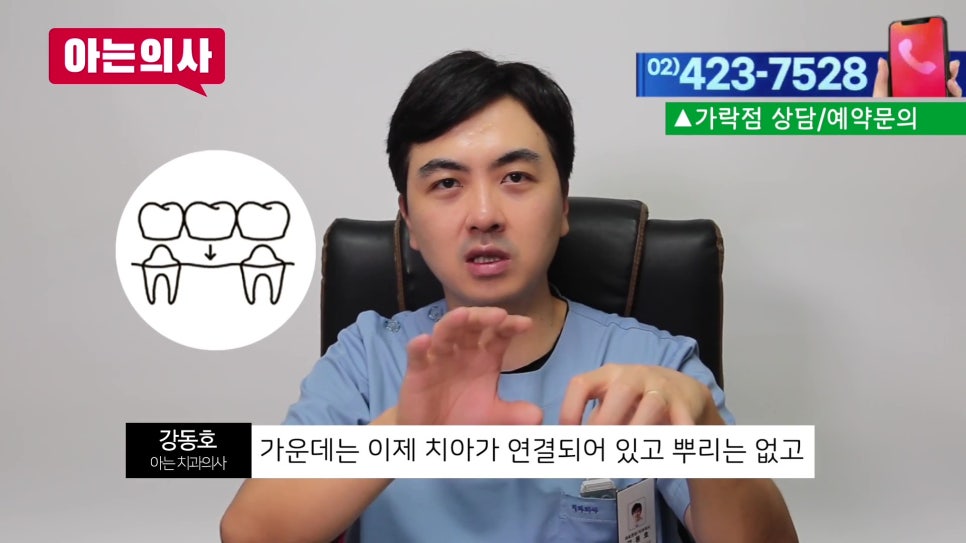
Bridges are particularly prone to problems.
Because a bridge is made by connecting two or more teeth, it is often difficult to see from the outside even if the adhesive on one side has come loose.
If food or bacteria enter through the gap, the inside gradually decays. In many cases, the problem is discovered only when the patient notices an odor, looseness in the tooth, or some other discomfort.
By then, it may already have progressed considerably.
That is why regular checkups are especially important for people with bridges.
The question is, “Then can’t you remove it in advance just to check underneath?” At present, there is no adhesive that allows a crown or bridge to be removed and reattached without damage.
Once it is removed, it must be newly fabricated, so it is difficult to recommend this approach for every patient in practice.
Ultimately, the most important things are regular checkups and carefully monitoring any sensations the patient experiences.

In fact, when a patient says, “It was fine last time, but something feels strange lately,” the dentist will take that comment as a basis for examining the area again with renewed suspicion.

By considering the patient’s history, probing findings, and X-ray findings together, we decide whether to “monitor it a little longer” or whether “treatment is now necessary.”
Ultimately, it is not possible to determine an exact lifespan for a prosthesis, and there are many aspects that patients themselves may find difficult to recognize.
That is why regular checkups are so important.
Visiting the dentist consistently, even just once a year, and checking for small changes is the most reliable approach.