Hello, I’m Shin Seung-hwan, the chief director of Yonsei Uline Dental Clinic, Garak-dong Branch, located near Garak Market Station in Garak-dong, Songpa-gu.
Today, I’d like to talk about a representative problem that many people experience but tend to brush off until they actually come to the hospital and think, “What is this?”
That is temporomandibular joint disorder.
Patients often use various terms such as jaw disc, jaw joint abnormality, or temporomandibular joint problem,
but in general, you can understand it as temporomandibular joint disorder.
The early symptom of a jaw joint problem is usually sound.
You may hear clicking or popping sounds,
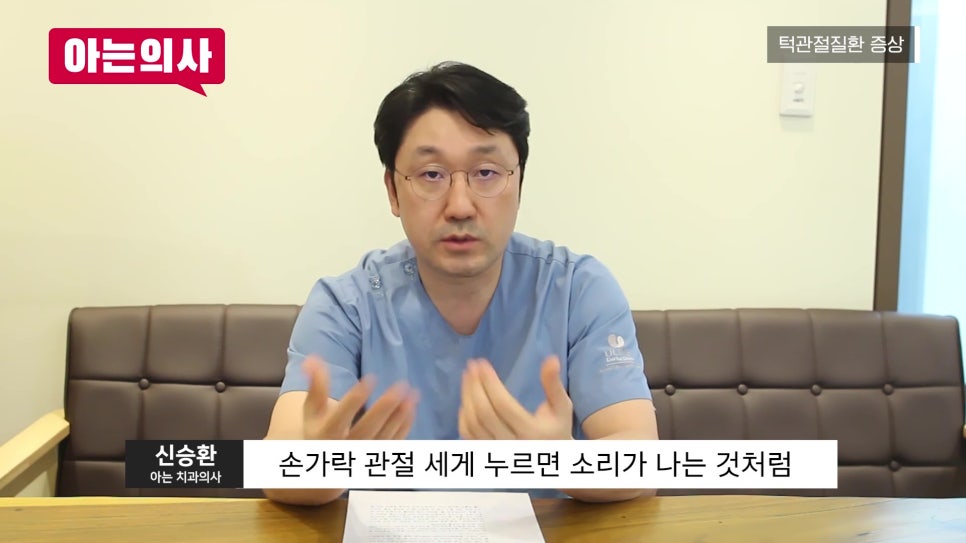
like the “click” you feel when pressing on a finger joint,
and then a sound starts to come from the jaw.
At this stage, there are many cases where only the sound appears without pain,
so it is easy to dismiss it as not a big deal.
However, as time passes, it becomes not just a sound,
but also difficult to open the mouth wide, pain when opening,
and in severe cases, even a feeling that the jaw has come out when opening the mouth
and does not go back in easily.
When pain appears suddenly, it usually happens
when the jaw is opened beyond its movable range.
For example, when you open too wide to take a big bite of a hamburger,
when you yawn too much, or when you open your mouth wide while singing.
Just as our wrists or ankles can get sprained when used beyond their range of motion,
the jaw is also a structure where the ligaments or muscles
become stressed and cause pain.
The problem is that the jaw cannot be put in a cast.
You have to speak, you have to eat,
and it is a part of the body that has to keep moving all day long.
That is why self-care at home is very important.
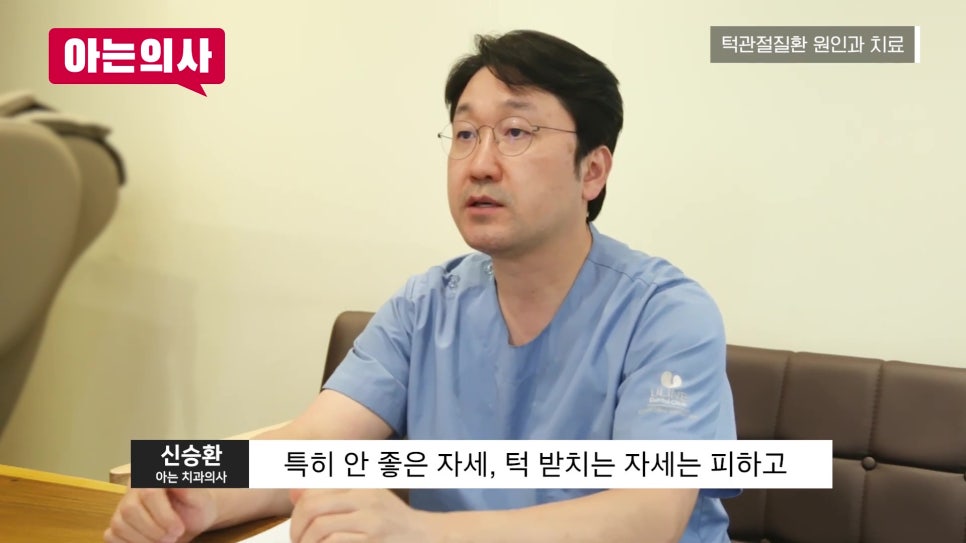
First, avoid actions that open the mouth wide,
and when yawning, support the jaw slightly and open carefully.
Bad posture such as resting your chin on your hand or leaning to one side can also worsen the pain,
so it is best to avoid them.
It also helps to focus on soft foods for meals
and minimize jaw movement.
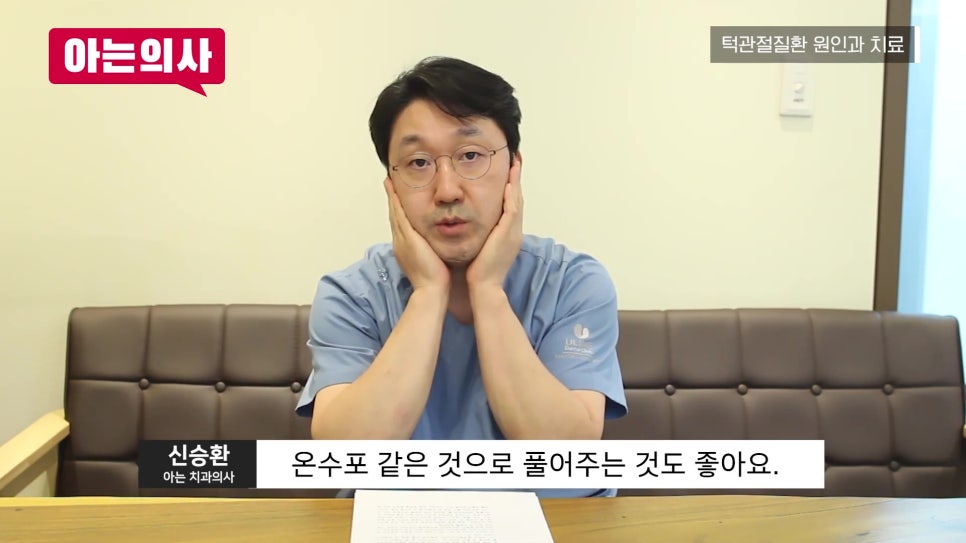
Warm compresses are also a good method.
Because the muscles around the jaw are often tense,
warming them can be effective in relieving pain.
If these basic measures do not improve the condition,
or if the pain is fairly strong, visiting a dental clinic
and taking pain relievers or muscle relaxants for about 1 to 2 weeks
can often make things much more comfortable.
If there is still no improvement, you should consider it not just a simple sprain,
but a condition that has moved into the full stage of temporomandibular joint disorder.
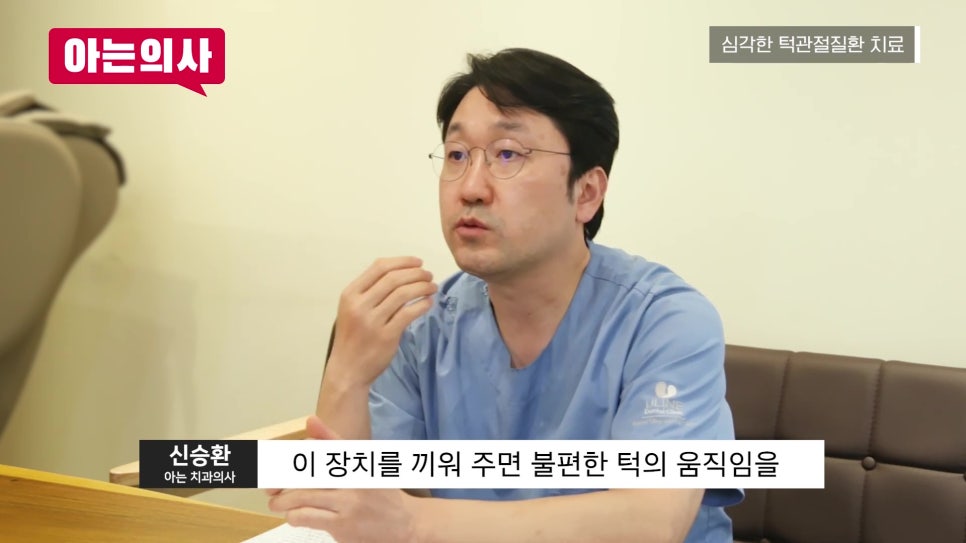
There are two major active treatments for temporomandibular joint disorder.
The first is splint therapy, commonly known as a night guard or bruxism device.
There are various types depending on the purpose,
but in common, they help relieve jaw tension while sleeping
and reduce the burden on the joint.
Through this, they help create a stable state around the jaw,
and are very useful for relaxing overly tense muscles.
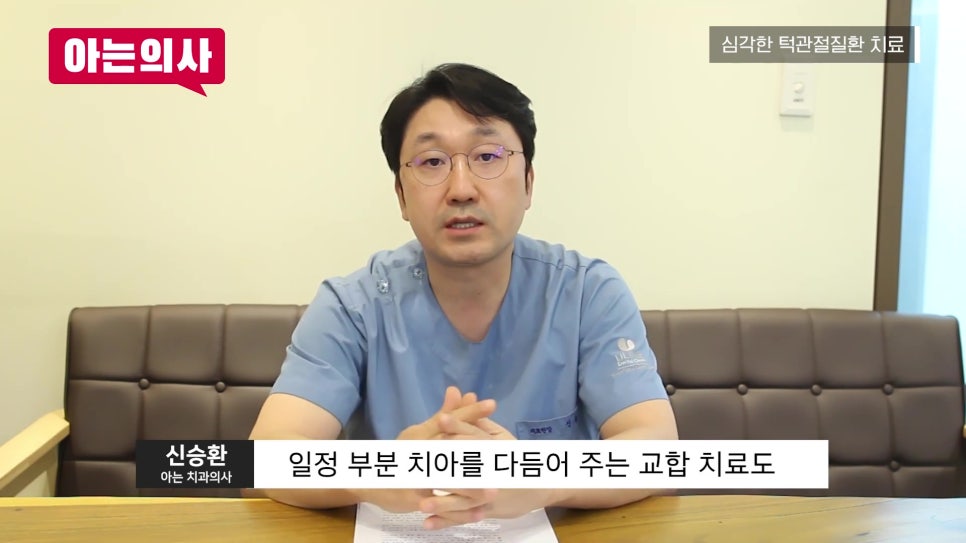
The second is occlusal treatment.
Some people have their bite shifted to one side,
or their tooth condition blocks natural jaw movement.
The same applies when pain in the teeth or missing teeth makes proper chewing difficult.
In such cases, it is necessary to carry out occlusal adjustment treatment,
which finely reshapes the teeth to reduce the load on the jaw,
in order to achieve a fundamental improvement in temporomandibular joint problems.
Temporomandibular joint disorder is not simply a problem of jaw pain,
but a condition in which lifestyle habits, dental conditions,
and the way the jaw is used all interact in a complex way.
If it is in the early stage, it may improve with light care,
but if it recurs and continues, accurate evaluation and treatment are definitely needed.
If you hear a sound from the jaw or feel pain when opening it,
don’t just think, “It will get better if I rest a little,”
and I recommend getting a professional evaluation at least once.
This has been Yonsei Uline Dental Clinic, located in Garak-dong, Songpa-gu.