Hello. Near Exit 4 of Garak Market Station in Garak-dong, Songpa-gu,
this is Garak Market Station Branch of Yonsei Uline Dental Clinic.
Today, I’d like to talk about periodontitis, that is, gum disease.
Periodontitis is often confused with cavities,
but it is a completely different disease from the very location where it develops.
Cavities occur on the crown of the tooth,
that is, the part that is visible from the outside,
so they are relatively easy to notice.


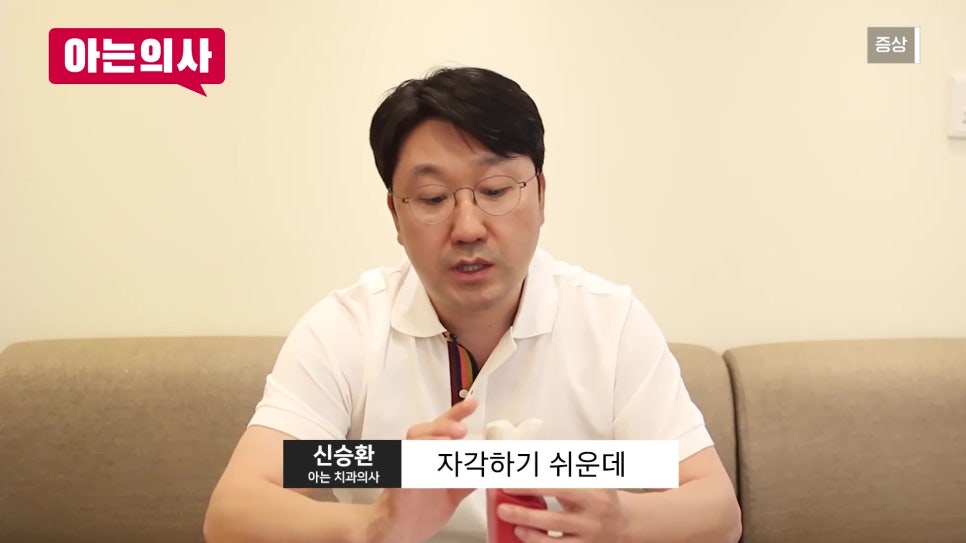
Because the tooth looks dark, or because you feel sensitivity and pain
right away when eating something cold or sweet.
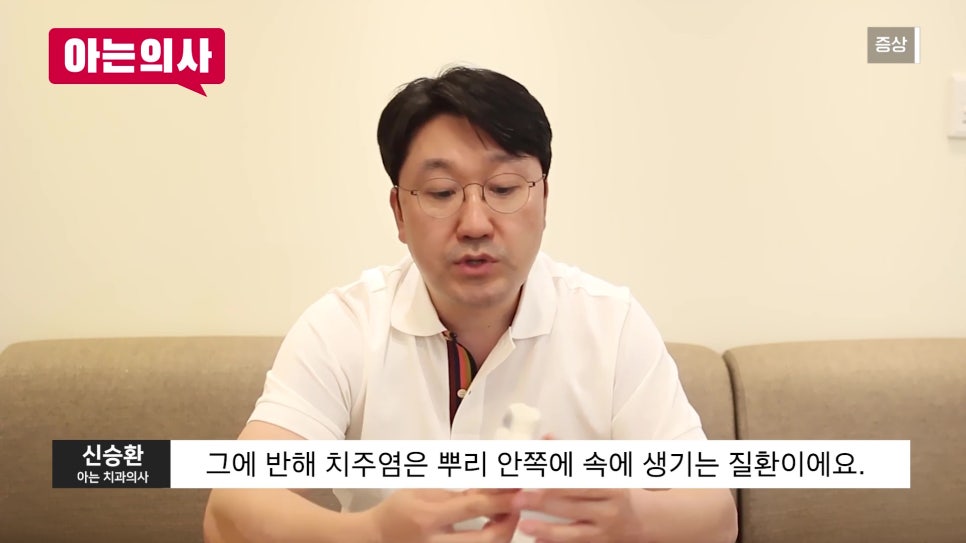
In contrast, periodontitis develops around the tooth root,
inside the gums.
So in the early stages, it is very hard to notice on your own.
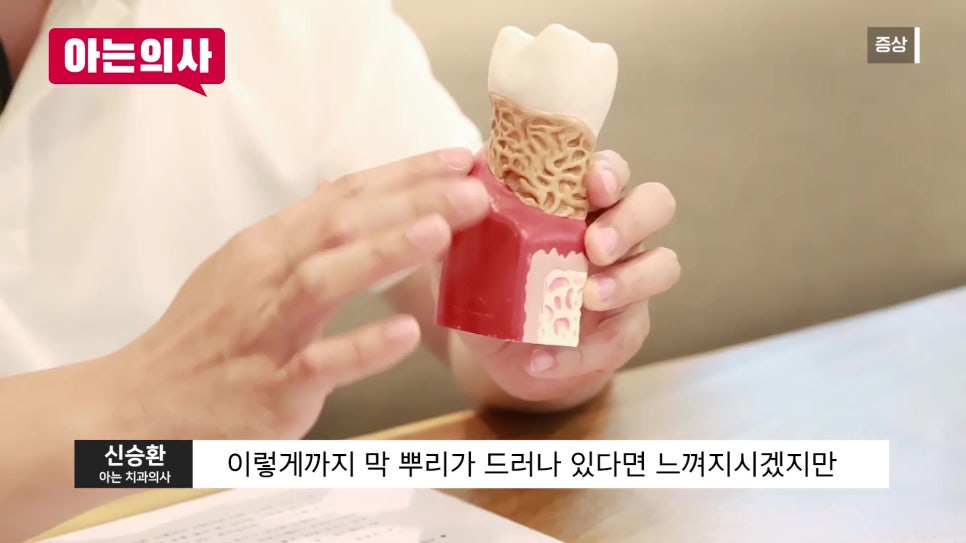
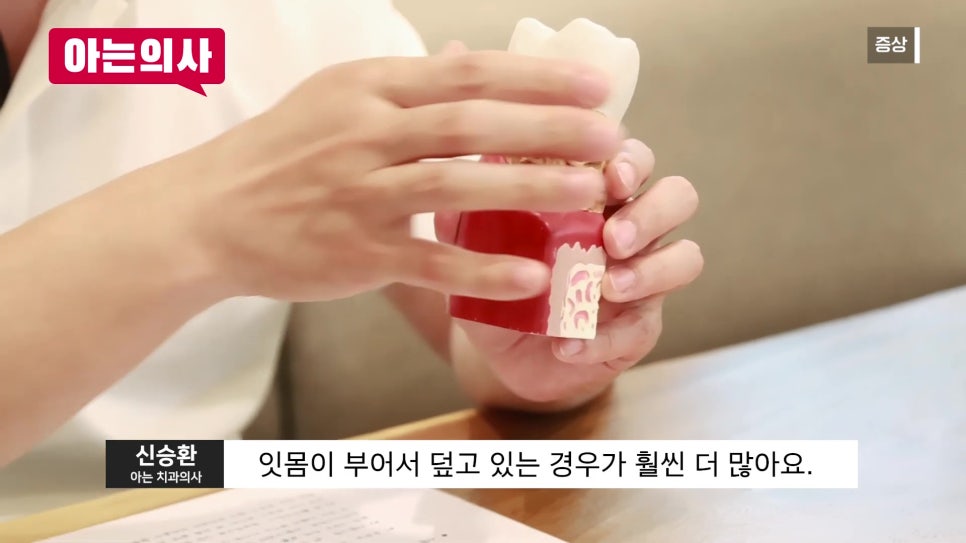
Many people brush it off as, “I think my gums are a little swollen…,”
and in reality, there are many more cases where inflammation is progressing inside the gums
before the root is exposed.
Because it is a disease that cannot be seen from the outside, it is often discovered late.



So how can you tell if you have periodontitis?
The symptoms commonly called “pyongchi” are exactly periodontitis.
The most typical symptom is loose teeth,
and the next most common is bleeding from the gums when brushing.

Because the gums are swollen, they bleed easily
even with a toothbrush touching them.
If you have these symptoms,
it is a sign that the condition is not good,
so you should definitely visit a dental clinic and get examined.

The biggest cause of periodontitis is ultimately
poor care and maintenance.
Of course, the same is true for cavities,
but the areas that need to be cleaned are a little different.


Even if you clean only the top surface of the tooth well, cavities can be
prevented to some extent,
but for periodontitis, the key is how well you manage the space between the tooth and the gums.

No matter how diligently you brush, there is inevitably a tiny gap between the tooth and
the gums,
and tartar builds up in that gap.



Tartar visible on the outside of the gums
can be removed with regular scaling,
but the problem is tartar that forms deep under the gums.
This tartar is not visible,
and as time passes, it gradually moves deeper down.

From the bacteria’s point of view, it goes deeper down
to survive.
If it stays on the outside, it keeps getting removed by brushing or scaling,
so it hides inside the gums.


When bacteria create inflammation inside the gums like that,
they begin to dissolve the jawbone in the process.
As the bone dissolves and creates space, tartar builds up there again,
it goes deeper again,
and this process repeats.

In the end, only after a lot of bone has been lost
do the teeth start to become loose.
That is why it is often regrettable.

By the time a patient says, “I came because my teeth are loose,”
the condition is usually already advanced to the point
where extraction has to be considered.
In fact, if it had been found and managed earlier,
these are teeth that could have been saved.

For this reason, regular
dental checkups are truly important.


Please make sure to get scaling at least once a year,
and especially if there is an area that bleeds a lot when you brush,
that area needs periodontitis treatment, in other words, gum treatment.
Simply put, you can think of it as a treatment that performs
deep scaling below the gums.


During this process, many people worry,
“Won’t it hurt a lot?”
Because treatment has to go deep under the gums,
there can be discomfort, but if needed,
the procedure is carried out carefully under anesthesia.
This is periodontitis treatment.


If the gums are very swollen and pus has built up,
draining procedures may also be performed.
Sometimes the gums are incised to drain the pus,
and if the jawbone has significantly dissolved, periodontal surgery such as artificial bone grafting
may be necessary.

In the past, these kinds of surgeries were often performed
at university hospitals,
and the cost burden was quite significant.


These days, as implants have become more common,
treatments aimed at saving natural teeth are sometimes not carried out as actively as before.

As implant costs have fallen a lot,
many people no longer choose to spend more time and money
to save their natural teeth.
That is the reality.


So how should teeth with gum disease be managed?
First, the most basic step is to try to stop the inflammation
through scaling and gum treatment.


If that reduces looseness and bleeding,
then the condition can be monitored regularly every 3 months, 6 months, or 1 year.


However, if swelling and inflammation continue to recur,
or if the jawbone is dissolving too quickly,
the story changes.
If the bone is completely lost all the way to the end of the tooth root,
further treatment becomes much more difficult,
and even with time and money spent, the result is often not good.
So if the teeth keep getting loose, there is pain,
and bone loss is progressing rapidly,
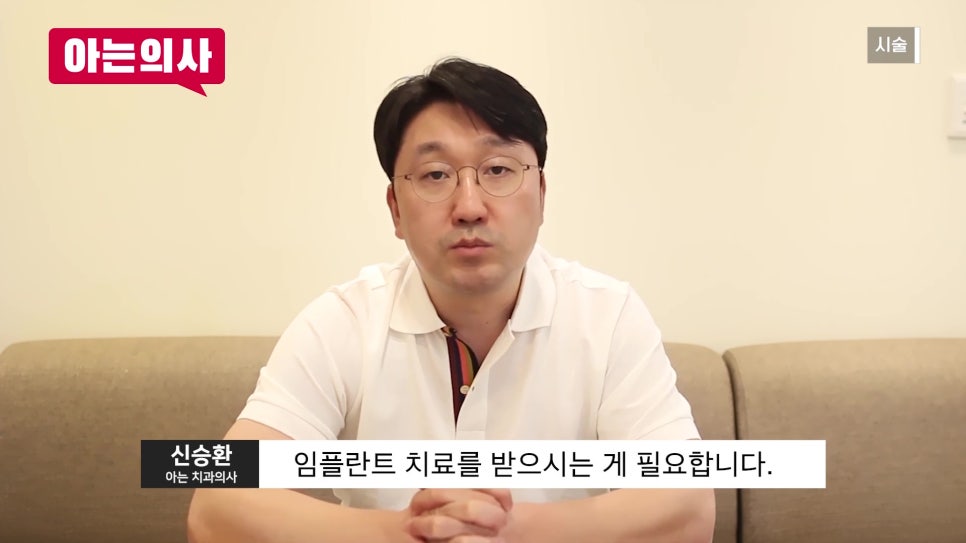
then unfortunately, extraction and choosing implant treatment
may actually be the better option in terms of prognosis.
What matters most is getting an accurate diagnosis of the condition
before it is too late and not missing the right time for treatment
that suits you.
This has been Yonsei Uline Dental Clinic near Garak Market Station in Garak-dong, Songpa-gu.