Hello everyone, I’m Shin Seung-hwan, the lead director of Yonsei Uline Dental Clinic Garak-dong branch, near Exit 4 of Garak Market Station in Garak-dong, Songpa-gu.
Many people visit us after suddenly breaking a tooth while eating,
or waking up in the morning after grinding their teeth at night
and feeling a piece of tooth or a rough edge.

Because dental fractures require completely different treatment methods depending on the extent and depth of the break,
today I’ll explain the structure and treatment direction in an easy-to-understand way.

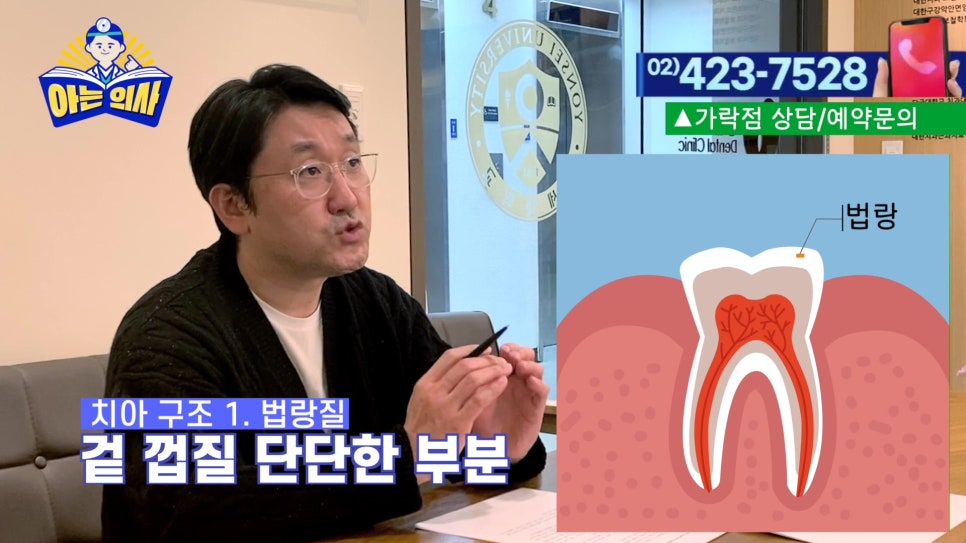
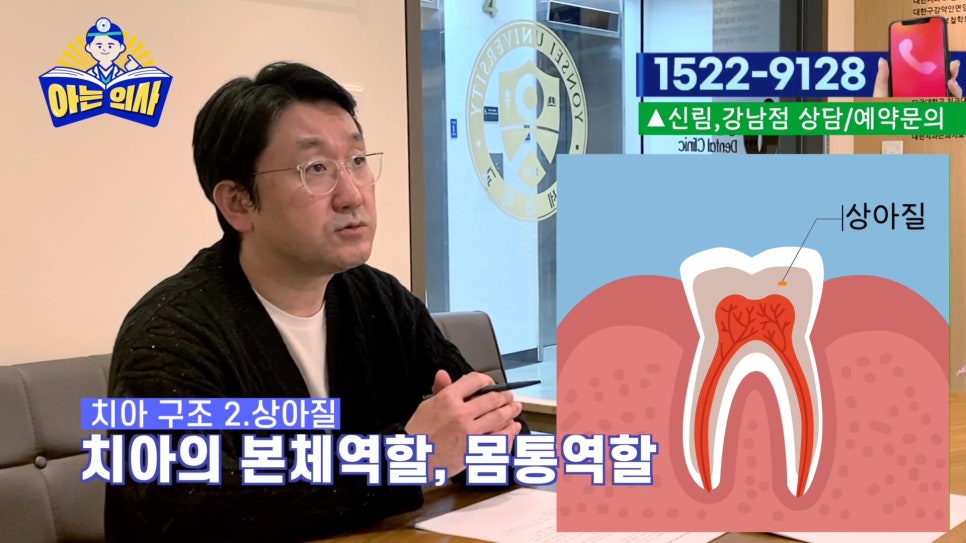
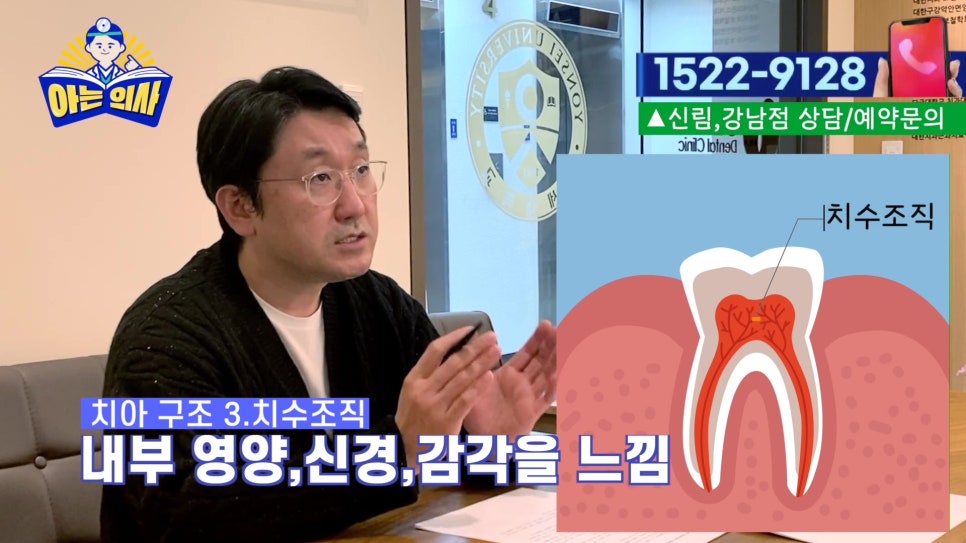
A tooth is broadly divided into three structures:
the enamel, which is the hard outer shell;
the dentin, which forms the body of the tooth inside;
and the living pulp tissue, which is responsible for nerves and sensation.



Treatment changes depending on how far the damage extends.
If only the outermost layer, the enamel, is slightly chipped,
the broken edge can be smoothed and used as is,
or if it is in a visible area like the front teeth, the shape can be restored with resin.



But some people ask, “Why do you just smooth it instead of filling it with resin right away?”
When a tooth breaks, it is often because that area originally bore a lot of force during chewing.

Enamel is strongly bonded to the tooth, so it is durable,
but while resin is fine for areas used carefully, like the front teeth,
it can come off more easily than expected in the molars,
which receive a lot of force.

So if a small fracture occurs in a molar that bears a lot of force,
and there is no major esthetic concern,
smoothing it and using it as is can be one option,
while for areas that look like front teeth, resin repair is preferable.


If the crack or break extends beyond the enamel into the dentin,
more active treatment is needed.
Once the dentin is exposed, sensitivity is likely to occur,
and if left untreated, there is a risk of decay
or a larger break.



If the broken area is small, it can be treated with resin or an inlay,
but if the area is large or there is a high chance of further cracking,
a crown should be considered.


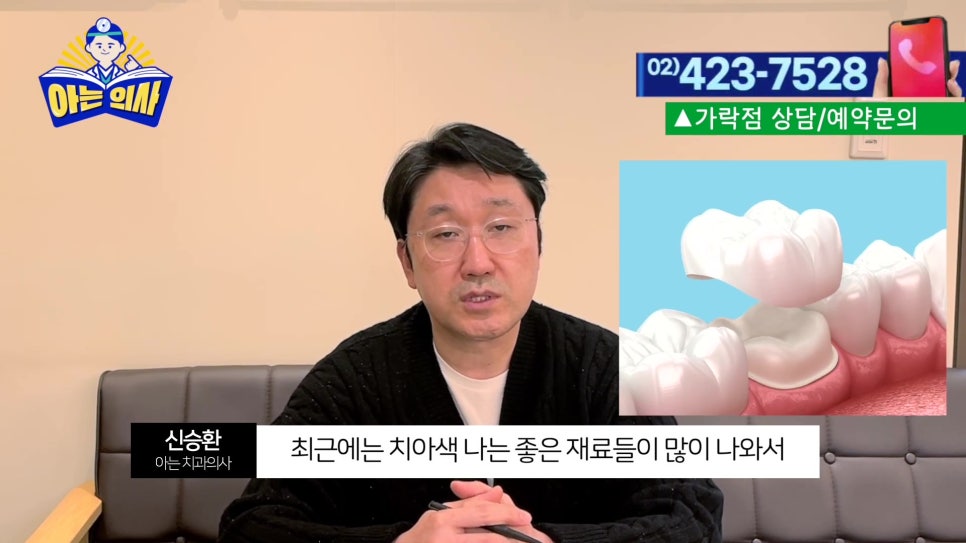
In the past, when people thought of crowns or inlays,
gold materials came to mind, which created some esthetic 부담.
But these days, tooth-colored materials such as ceramic
and zirconia have high strength and a natural color,
so they are much better.

These days, there is no need to use gold;
tooth-colored materials can provide a treatment result that is both strong
and esthetically pleasing.
If the broken area is larger and the pulp, meaning the nerve,
is also damaged, it is often accompanied by pain,
and in such cases root canal treatment is necessary.

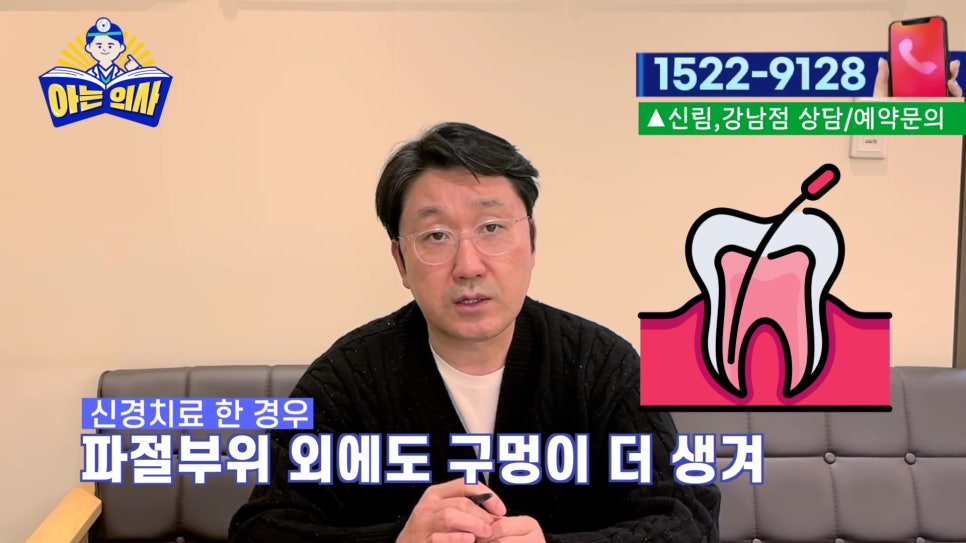
Root canal treatment is the process of removing the contaminated nerve,
filling the space with medication, and sealing it,
but the problem is that during this process,
a straight access path must be created for the instruments to enter the inside of the tooth,
which means another hole is made in the tooth.



Because a tooth that is already broken and weakened becomes even more fragile
after being hollowed out internally through root canal treatment,
a crown must be placed afterward to protect it
if it is to be used for a long time.
If you leave a tooth that has only a small chip untreated, thinking
“it’s only a little bit, so it should be fine,”
over time food debris or hard fragments can get trapped in the gap,
causing it to break even more.
Rough edges can also lead you to unconsciously grind your teeth,
or the tongue may rub against them and cause an injury.
That is why, even for a small fracture, the earlier it is treated,
the simpler it is and the higher the success rate.
If a tooth has broken, the safest thing is not to leave it for long and to
have it checked promptly at a dental clinic.
This has been Yonsei Uline Dental Clinic Garak-dong branch,
located in Garak-dong, Songpa-gu.