Hello, I’m Shin Seung-hwan, the chief director of Yonsei Uline Dental Clinic, Garak Market Station Branch, near Garak Market Station in Garak-dong, Songpa-gu.
Today, I’d like to talk about jaw joint sounds, pain, and symptoms such as difficulty opening the mouth that many people experience.
When the jaw makes a “clicking” sound, people often call it all a jaw disc problem,
but the correct term is “temporomandibular disorder (TMD).”
There are several specific diagnoses, but in everyday use,
the easiest way to understand it is as a general term for temporomandibular disorders.
In the early stages, the main symptom is usually a clicking sound first.
It’s similar to the sound you hear when cracking your finger joints.
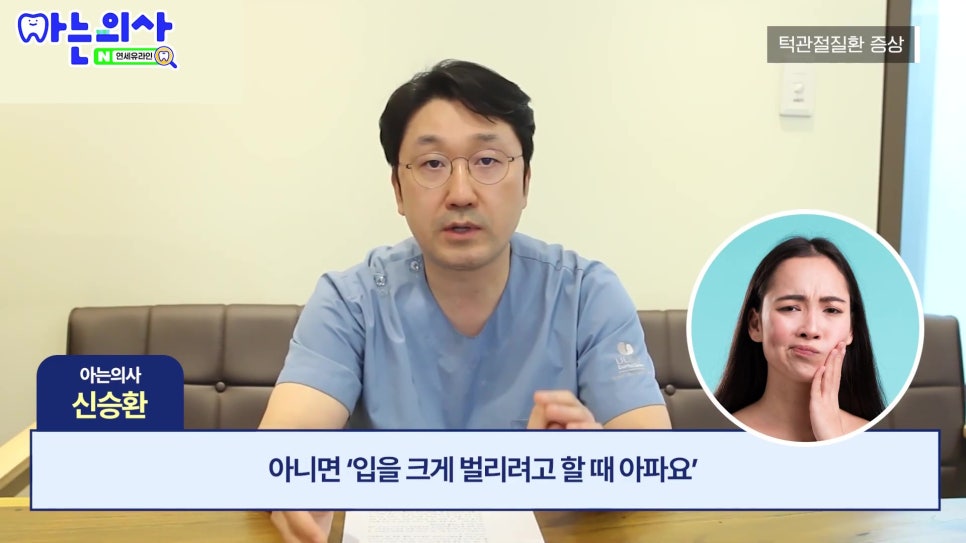
As time passes, pain may occur when opening the mouth wide,
or it may become painful and difficult to open the mouth,
and in rare cases, the jaw may dislocate while the mouth is open
and not go back into place.
These symptoms usually occur when the jaw joint is opened forcefully
beyond its movable range.
Typical examples include opening too wide to eat a big hamburger,
opening widely while yawning,
or opening the mouth wide while singing.
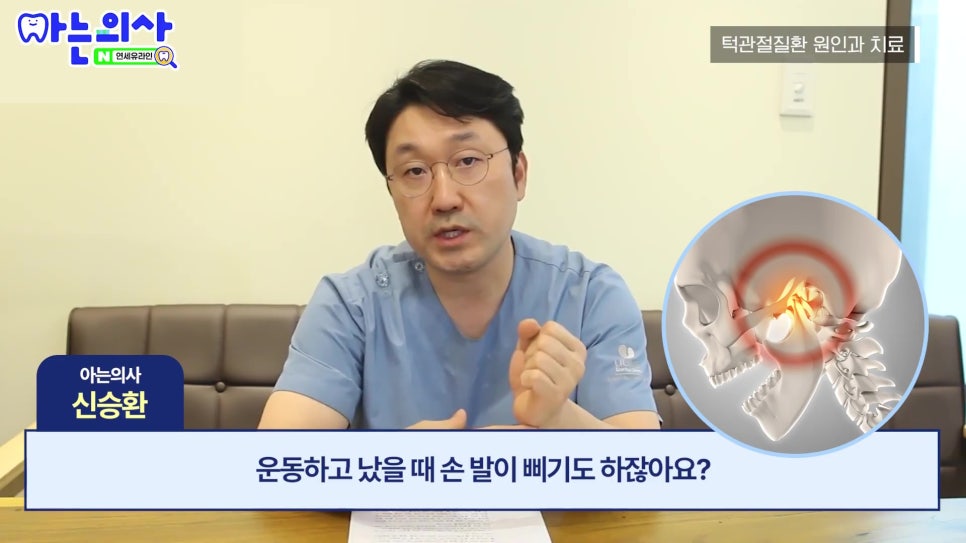
Like spraining the wrist or ankle,
this happens when the ligaments and muscles around the jaw are overstretched
and damaged, leading to pain and limited movement.
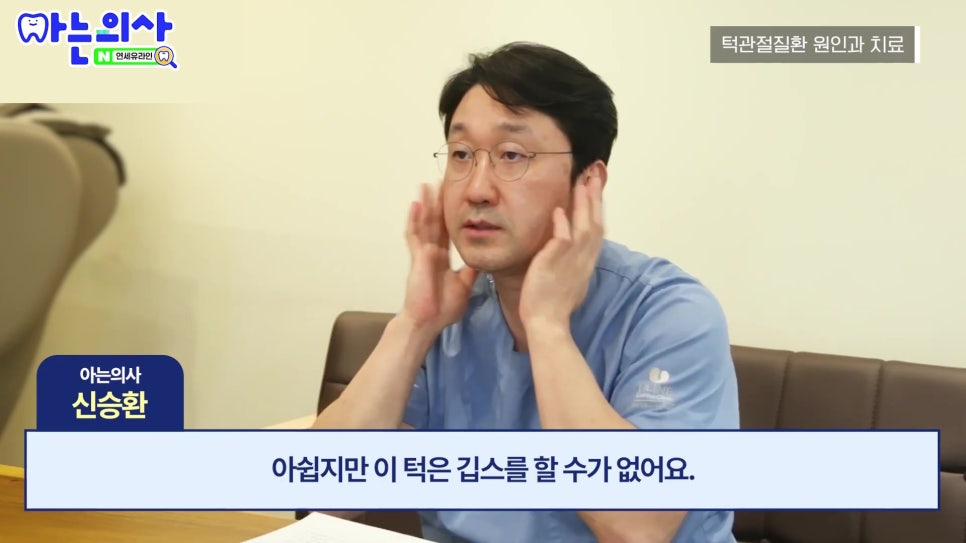
The problem is that, unlike other joints, it cannot be immobilized with a cast.
We need to talk, breathe, and eat.
That is why home care is important.
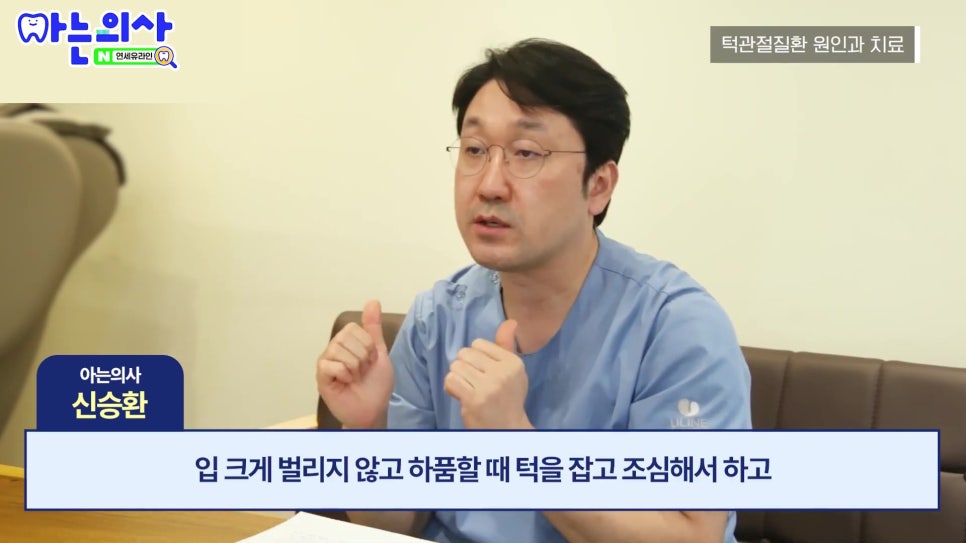
It’s best to avoid opening the jaw too wide as much as possible,
and to be careful by lightly supporting the jaw when yawning.
You should also avoid poor postures such as resting your chin on your hand
or leaning to one side.
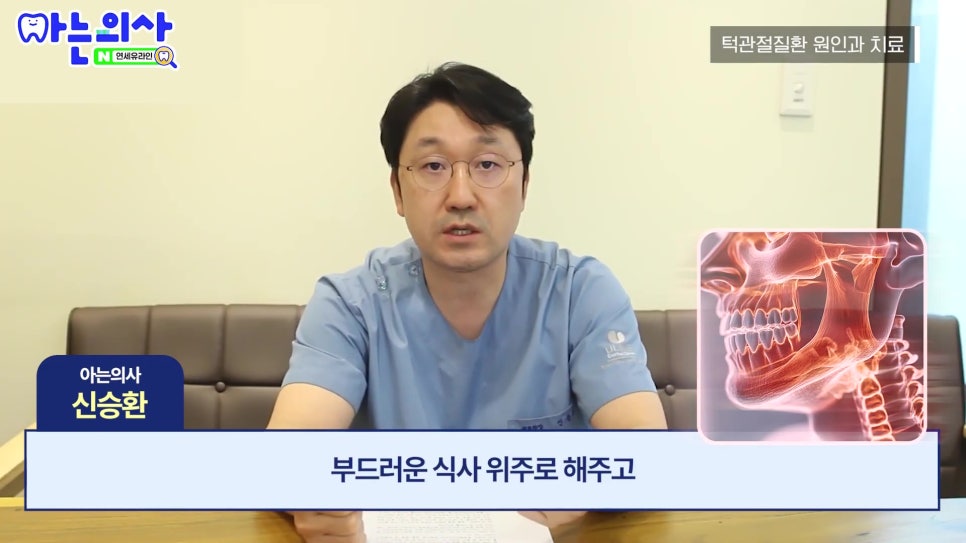
For meals as well, it helps to focus on soft foods rather than hard foods,
and to adjust your eating so the jaw does not move too much.
At home, warming the area around the jaw with a hot compress is also a good method to relax it.
If these adjustments relieve the symptoms, that is fortunate,
but if the pain is severe or persists for a long time,
it is necessary to combine treatment with medication at a dental clinic.
This usually involves taking pain relievers and muscle relaxants for about 1 to 2 weeks
to help with recovery.
If there is still no improvement, it should be considered more than a simple sprain
and judged as having progressed to an actual temporomandibular disorder.
Active treatment for temporomandibular disorders
usually uses two approaches.
The first is splint therapy, commonly known as a “bruxism appliance.”
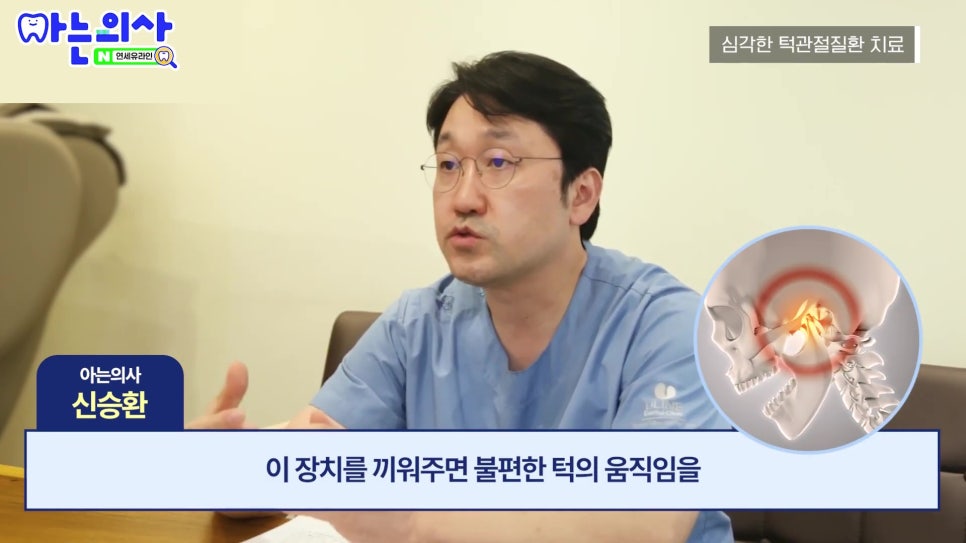
Worn while sleeping, it helps relax the jaw and reduce unconscious force.
There are various types depending on the purpose of fabrication,
but all fall under the broad category of splints.
The second is occlusal treatment.
When the bite is not aligned well, when one side of the jaw is mainly used,
or when natural jaw movement is blocked due to missing teeth or malocclusion,
this treatment gradually adjusts the shape of the teeth to normalize jaw movement.
When necessary, combining it with splint therapy can be even more effective.
Since temporomandibular disorders can lead to repeated pain and increasing limitation in mouth opening if left untreated, early response is important.
If your jaw often makes sounds or feels uncomfortable, please do not brush it off lightly, and if the symptoms keep recurring, I recommend that you get examined.
This has been Garak Branch of Yonsei Uline Dental Clinic near Garak Market Station.