When Can You Start Chewing After a Songpa-gu implant?
Hello, this is Shin Seung-hwan, chief director of Yonsei Uline Dental Clinic Songpa-gu Garak branch, located near Exit 4 of Garak Market Station in Garak-dong, Songpa-gu.
After implant surgery, many people ask, “Can I eat right away?”
So today, I’ll organize and explain it clearly.
In some cases, same-day implants, where a prosthetic tooth is placed on the implant right away, are possible.
However, if you apply strong force immediately, the implant can move slightly.
For the implant to firmly bond with the bone,
it needs at least two months.
During that period, it is important not to touch it as much as possible.
Not only eating, but also lightly tapping it with your tongue or hand to see if it’s okay is not a good habit.
Even after two months, when impressions are taken and the prosthetic tooth is fitted,
that does not mean you can immediately eat hard foods freely.
What patients often say is that the implant on the lower side feels fine,
but the opposite natural tooth hurts.
Or they say that after getting an upper implant,
the lower teeth hurt.
Even if we adjust the height properly,
if a patient has been chewing only on one side for several months after extraction and surgery,
the teeth on the opposite side have been resting and not working at all.
So when you suddenly make them work again, they are startled.
To use an analogy, it’s the same as if your leg were broken and you had only been in a wheelchair for two months, then suddenly tried to run—the surrounding muscles and ligaments would not be able to تحمل it.
Teeth and jaws are the same.
When teeth that have been resting for a long time suddenly receive strong force,
they feel uncomfortable and sore, almost like they’ve been struck.
However, in most cases, these symptoms naturally adjust after about 1 to 2 weeks.
So instead of forcing hard foods from the beginning,
keep using the side you normally used,
and slowly start using the implant side with soft foods first.
For example, use it about 10% today,
20% tomorrow, then a little more after that...
You need to give it time to adapt like this.
If you chew hard foods such as short ribs, dried squid, or dry side dishes from the start,
it will naturally be uncomfortable.
Also, because implants do not have nerves that feel pain,
some people unknowingly chew even harder foods better than their own teeth.
But if you repeat excessive force like this,
the prosthetic tooth can break, or the implant fixture can be stressed.
In severe cases, the implant itself can even fracture.
Implants can be used in a way similar to natural teeth,
but they are not stronger than natural teeth,
so they must always be used with care.
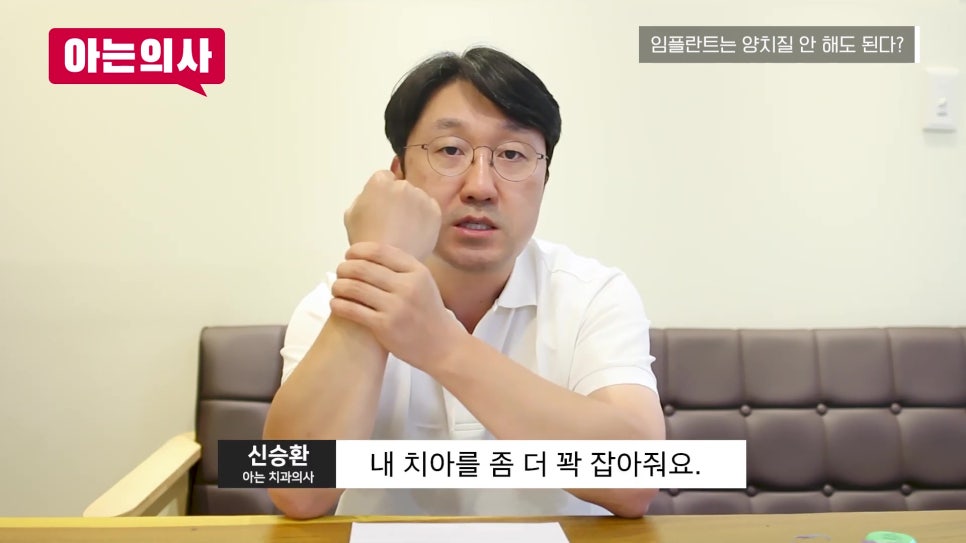
Another important point is cleanliness.
Many people think, “Now it’s all porcelain, so cavities won’t happen, and I can be a little careless with brushing,”
but that is absolutely not true.
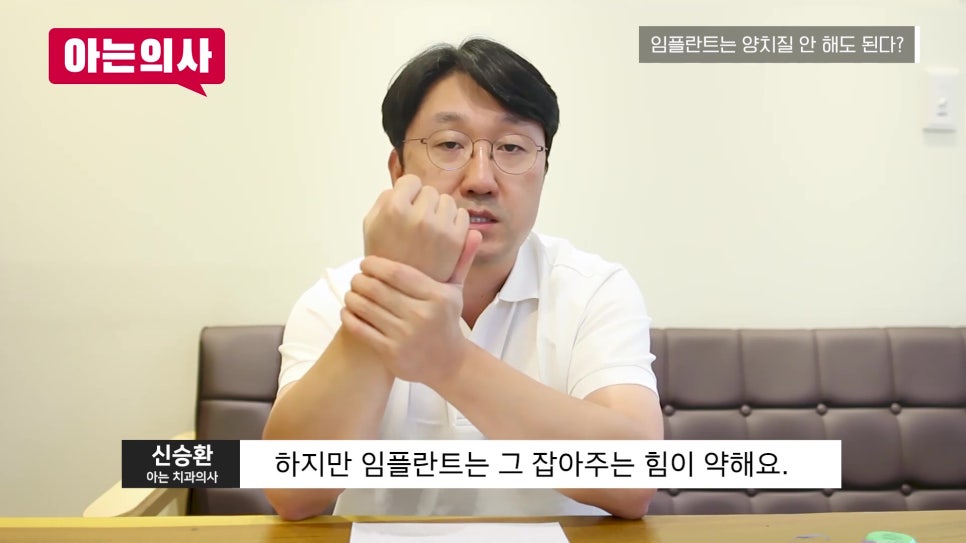
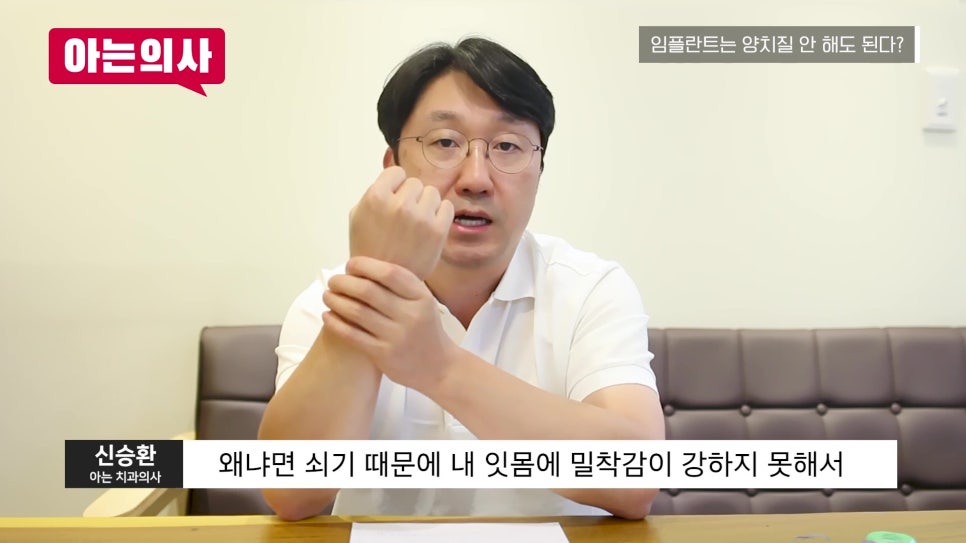
Implants do not get cavities,
but they are much more vulnerable to gum disease than natural teeth.
Natural teeth are tightly attached to the gums, but implants have weaker gum seal structurally,
so food gets stuck more easily and inflammation can develop more easily.
Especially with implant prosthetics that connect several teeth into one unit,
floss does not fit well between the spaces,
so home care becomes more difficult.
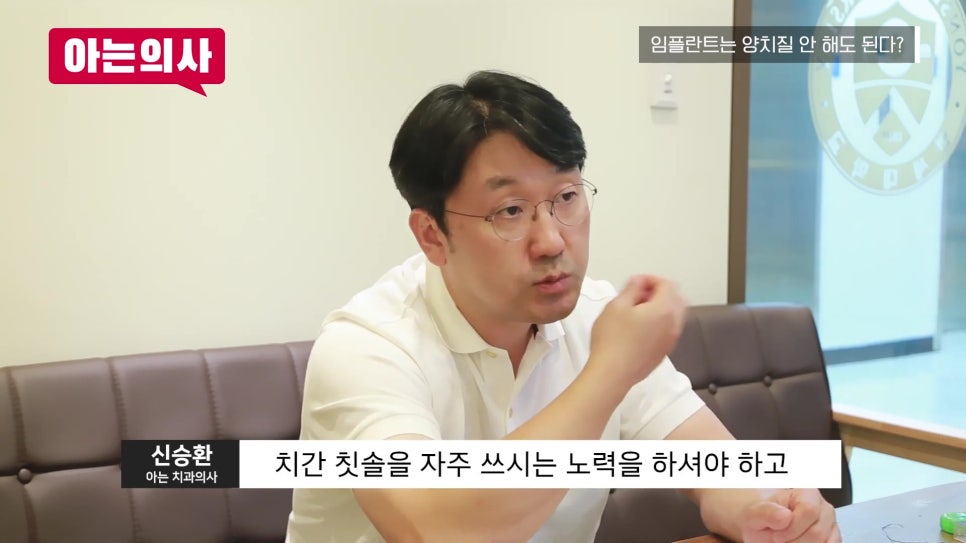
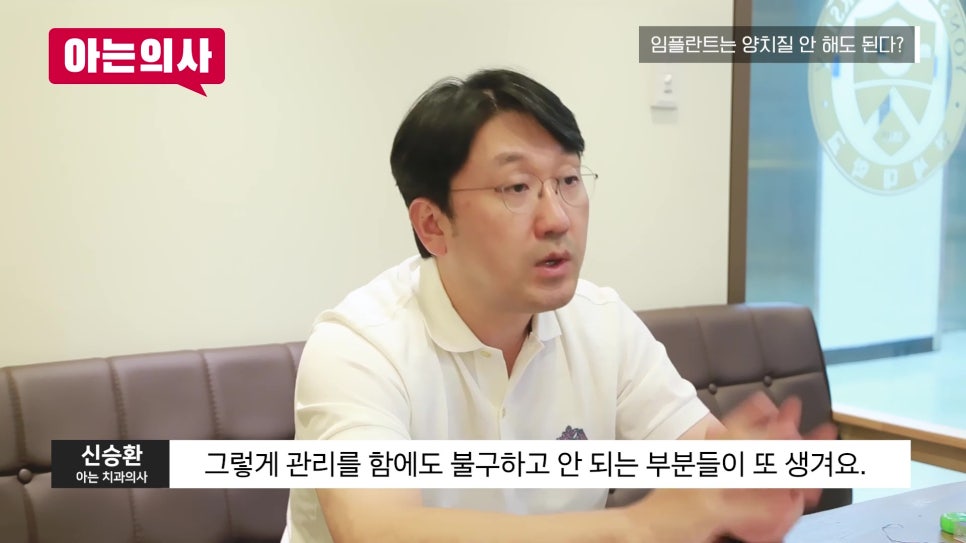
That is why it is essential to actively use辅助 tools such as interdental brushes and water flossers.
Even then, home care alone cannot solve everything 100%,
so you need to visit the dental clinic regularly for scaling and gum care as well,
so that you can use your implant well for a long time.
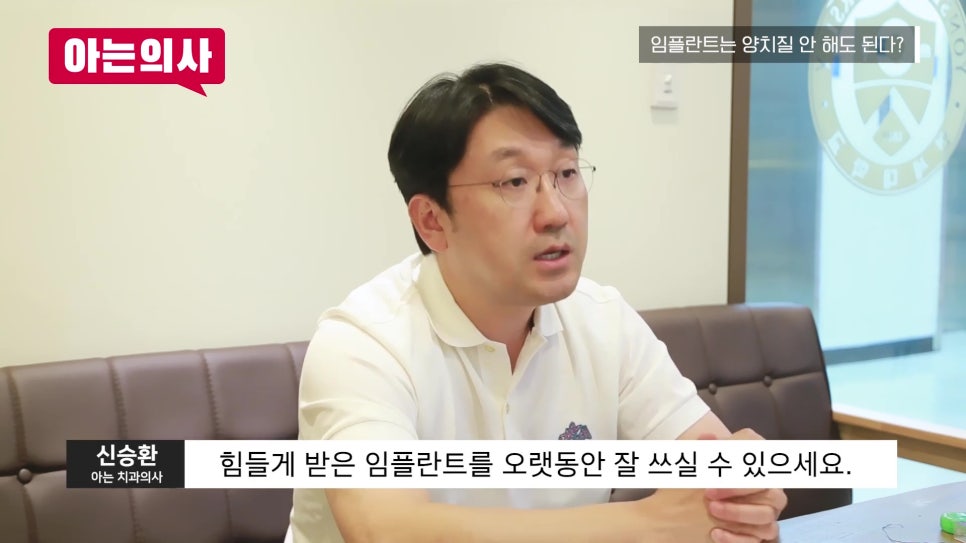
If used properly, implants are truly convenient and reliable treatment,
but the adaptation period and care are very important.
At first, go slowly, and maintain consistent cleanliness.
If you follow just these two things well,
you can use them for a long time without problems.
This has been Yonsei Uline Dental Clinic in Garak-dong, Songpa-gu.