Hello. I’m Shin Seung-hwan, the chief director of Yonsei Uline Dental Clinic Garak-dong Branch, near Garak Market Station in Garak-dong, Songpa-gu.
Many people experience discomfort because their jaw makes a clicking sound or hurts when they open their mouth.
It is often referred to as a jaw disc issue or temporomandibular joint disorder.
More precisely, these various symptoms are often collectively called a “temporomandibular disorder.”
In dentistry, it is also commonly abbreviated as TMD.
In the early stages, it often starts with only a sound.
It may begin with a clicking noise when opening the mouth,
or with a feeling that the jaw is catching.
The problem is that, over time, pain begins to accompany it.
At some point, it may become hard to open the mouth properly,
or the area around the jaw may hurt and feel uncomfortable when opening widely.
In severe cases, after opening the mouth, it may feel as if the jaw has briefly slipped out of place and does not return easily.
These symptoms often begin when the jaw joint is suddenly put under strain.
Our joints and muscles have a set range of motion, and if they move excessively beyond that range, the surrounding ligaments and muscles can be damaged.
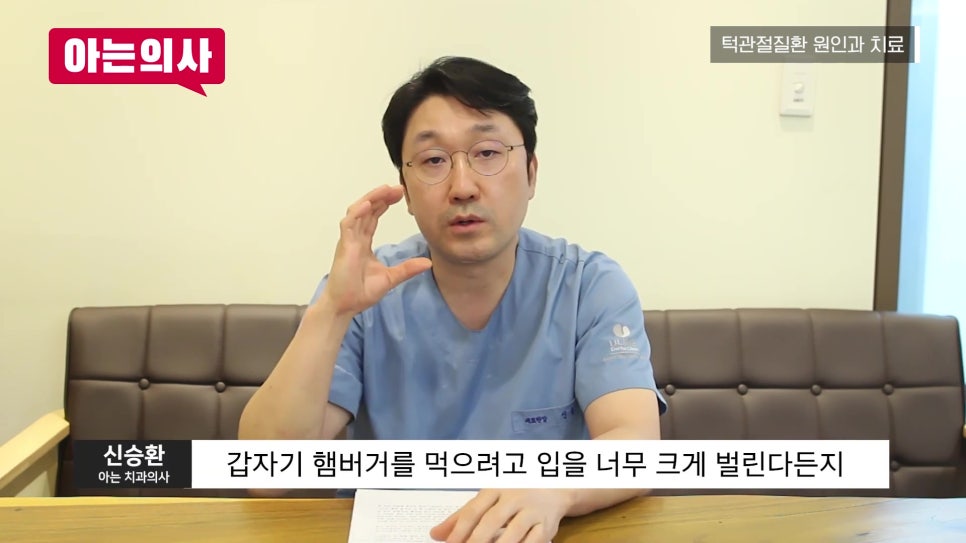
The temporomandibular joint is no different.
For example, symptoms often begin when you open your mouth too widely to take a big bite of a hamburger, when you yawn widely, or when you use your mouth too much while singing for a long time.
Simply put, you can think of it as a sprain of the ligaments and muscles around the jaw.
Normally, if you sprain an ankle or wrist, you protect it so it does not move.
But with the jaw, it is realistically difficult to completely restrict movement.
That is because we need to speak and also eat.
So managing daily habits is very important.
First, you should reduce actions that involve opening the mouth too widely.
When yawning, it is better to be careful by lightly supporting the jaw with your hand,
and it is best to avoid repeatedly moving the jaw on purpose or trying to check for clicking sounds.
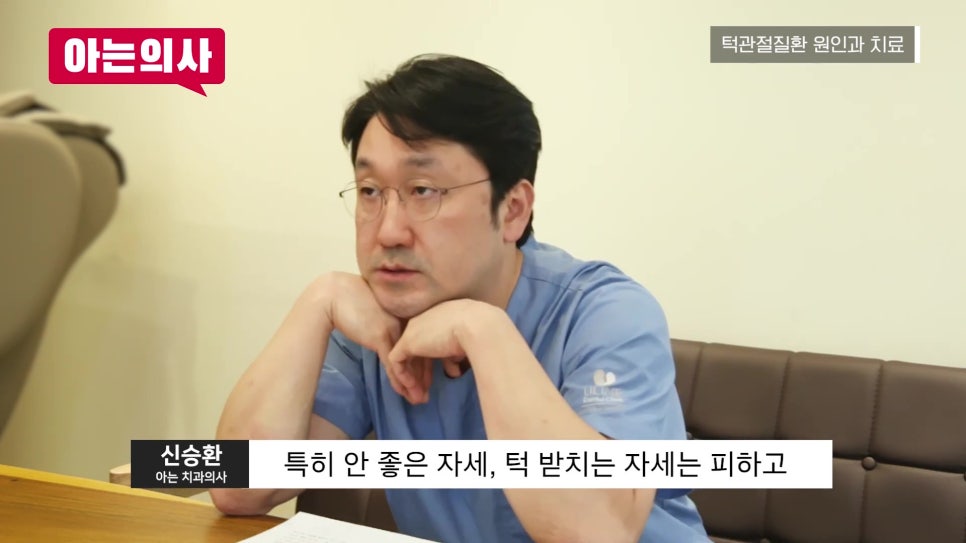
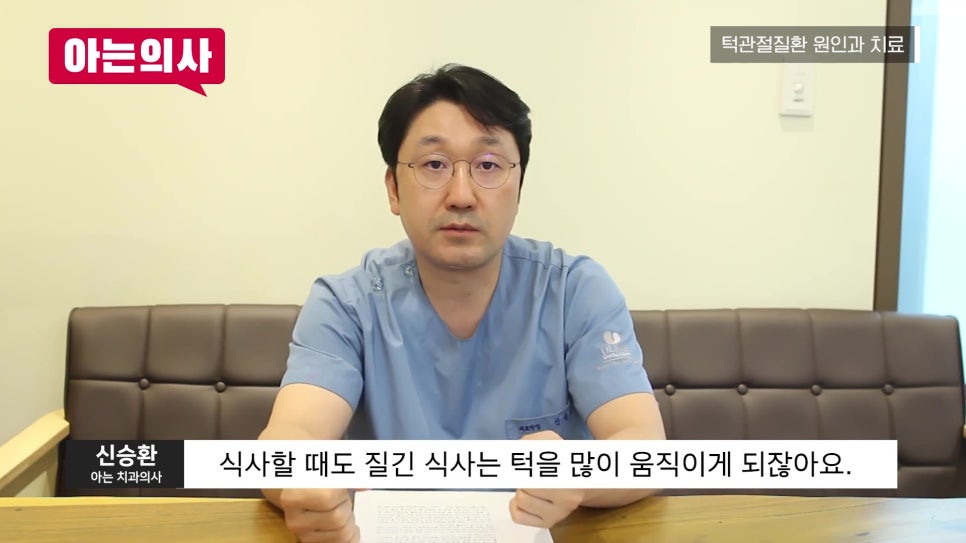
Also, habits such as resting your chin on your hand or chewing only on one side can put strain on the jaw joint.
Chewy and hard foods increase jaw use, so when symptoms are severe, eating softer foods can help.
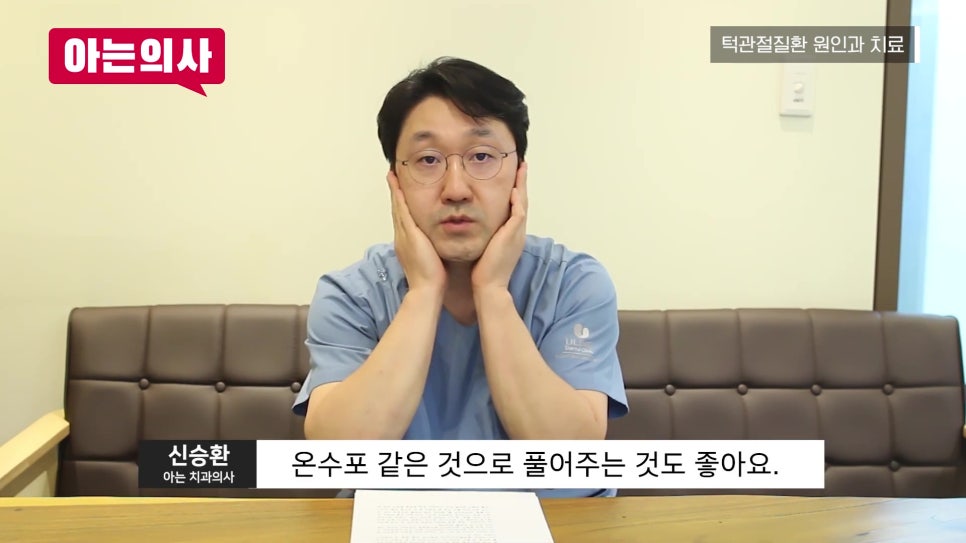
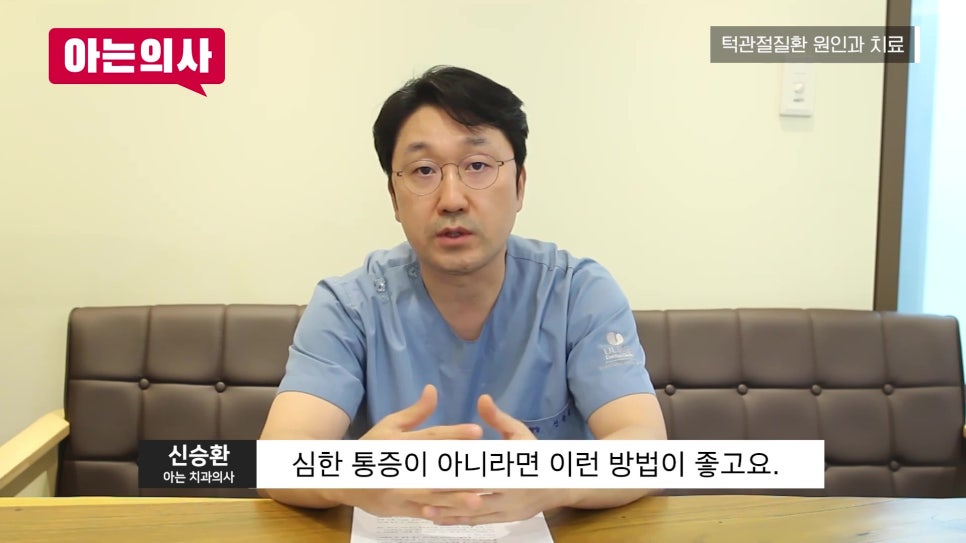
At home, warm compresses can also help gently relax the muscles around the jaw.
If the pain is not severe, it is often possible to improve with these lifestyle measures alone.
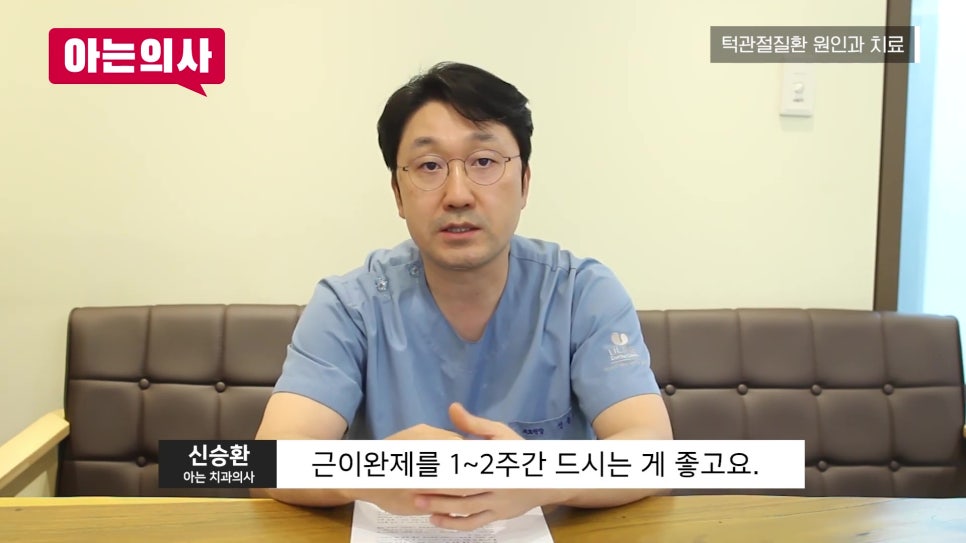
However, if the pain persists or
if opening the mouth remains difficult, it is advisable to receive dental care.
If necessary, pain relievers or muscle relaxants that ease muscle tension may be used for a certain period.
If symptoms recur or continue for a long time despite this care,
it may not be a simple temporary pain but a state that has progressed into a full-fledged temporomandibular disorder.
In such cases, more active treatment may be needed.
One of the representative treatments is splint therapy.
Many people know it as a teeth-grinding device.
Worn during sleep, it helps reduce tension in the temporomandibular joint and surrounding muscles,
and it plays a role in guiding jaw movement more stably.
In some cases, occlusal adjustment treatment may also be performed together.
This is because if the bite is unbalanced or force is concentrated in only certain areas,
continuous strain can be placed on the jaw joint.
Chewing on only one side,
leaving missing teeth untreated for a long time,
and malocclusion can also be causes.
Temporomandibular disorders often do not end as simply a problem of jaw sounds.
Even if they begin mildly at first, if left untreated they can lead to pain and functional limitations,
so if symptoms recur, it is important to seek care early.
This has been Yonsei Uline Dental Clinic, Garak-dong, Songpa-gu.