Internal tooth whitening
Hello.
I am Oh Tae-hoon, chief dentist at D-Day Dental Clinic.
Not long ago, a woman in her 30s walked into the consultation room and immediately covered her front teeth with her hand.
She said, “Doctor, this changed like this after I got root canal treatment. Would whitening help?” and her expression looked truly upset.
Many people are surprised when they see a tooth that has had root canal treatment turn dark over time.
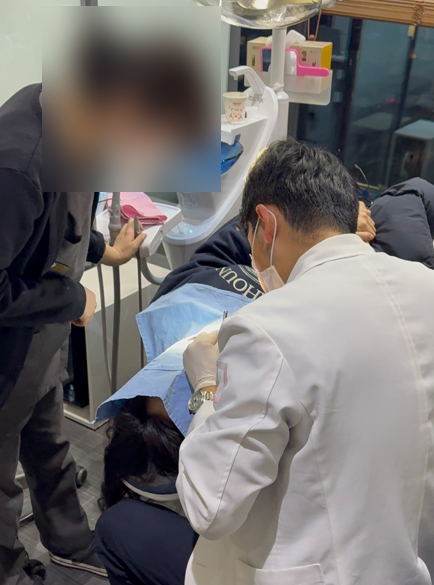
Because all the surrounding teeth are white, but only one tooth turns yellowish or gray, it is only natural to feel self-conscious every time you smile.
Many people consider getting regular whitening.
Unfortunately, however, regular whitening cannot solve this problem.
That is because the cause and location of the discoloration are completely different.
Today, I will explain in detail how internal tooth whitening for a tooth that has had root canal treatment differs from regular whitening.
After reading this, you will be able to know exactly what treatment your tooth needs.
|
|---|
| 1. Internal tooth whitening, the reason it is completely different from regular whitening 2. Internal tooth whitening, how it is performed 3. D-Day Dental Clinic, painless internal tooth whitening |
- Internal tooth whitening,
The reason it is completely different from regular whitening
Typical tooth discoloration is caused by external factors such as coffee, wine, or cigarettes.
It is the buildup of staining on the tooth surface.
That is why regular whitening is done by applying a whitening agent to the outside of the tooth to remove pigments from the surface.
But a tooth that has had root canal treatment is completely different.
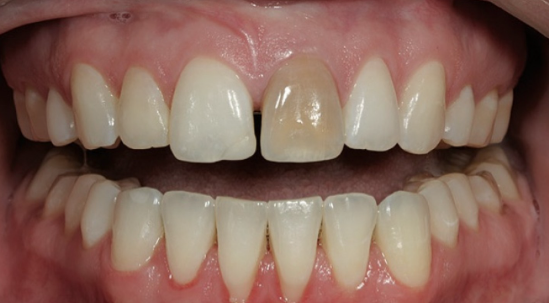
As the nerve tissue is removed, blood components or decomposition products of the nerve tissue inside the tooth seep deep into the dentin.
In simple terms,
this means the color changes from the inside of the tooth.
- Seoul internal tooth whitening,
How it is performed
So what should be done?
Internal tooth whitening is performed by placing whitening agent directly inside the tooth.
The part that was sealed during root canal treatment is opened slightly, the whitening agent is filled in, and the tooth is temporarily sealed.
As the whitening agent works slowly inside the tooth, it breaks down the pigments that have seeped deep into the dentin.
Usually, you return to the clinic after about a week to replace the whitening agent,
and this process is repeated until the desired brightness is reached.
In most cases, two to three sessions are enough to restore the color to something close to the surrounding teeth.
Although it varies depending on the condition of the tooth, it can improve a discolored tooth much more effectively than regular whitening.
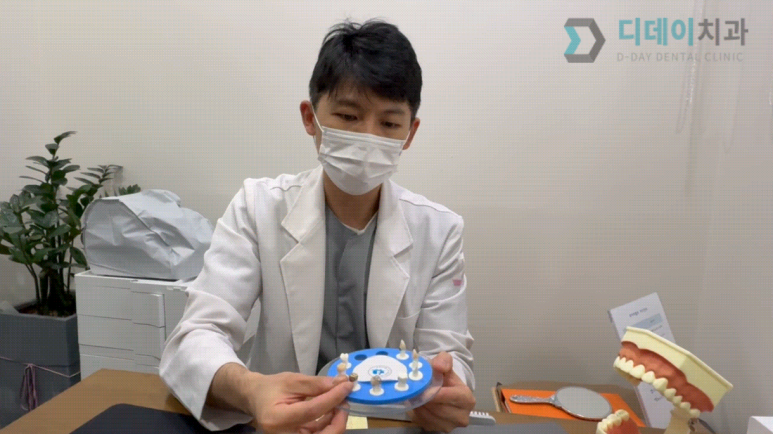
Some people worry about whether the treatment will be painful.
Because the tooth no longer has a nerve, the procedure itself causes very little discomfort.
However, after the whitening agent is placed, you may temporarily feel a little sensitivity,
but for most people it disappears within a few days, so there is no need to worry too much.
- D-Day Dental Clinic,
Painless internal tooth whitening
The most important thing for me in treatment is that the patient understands and accepts the treatment.
So before performing Seoul internal tooth whitening,
-
I explain why this treatment is necessary
-
I explain the process in enough detail
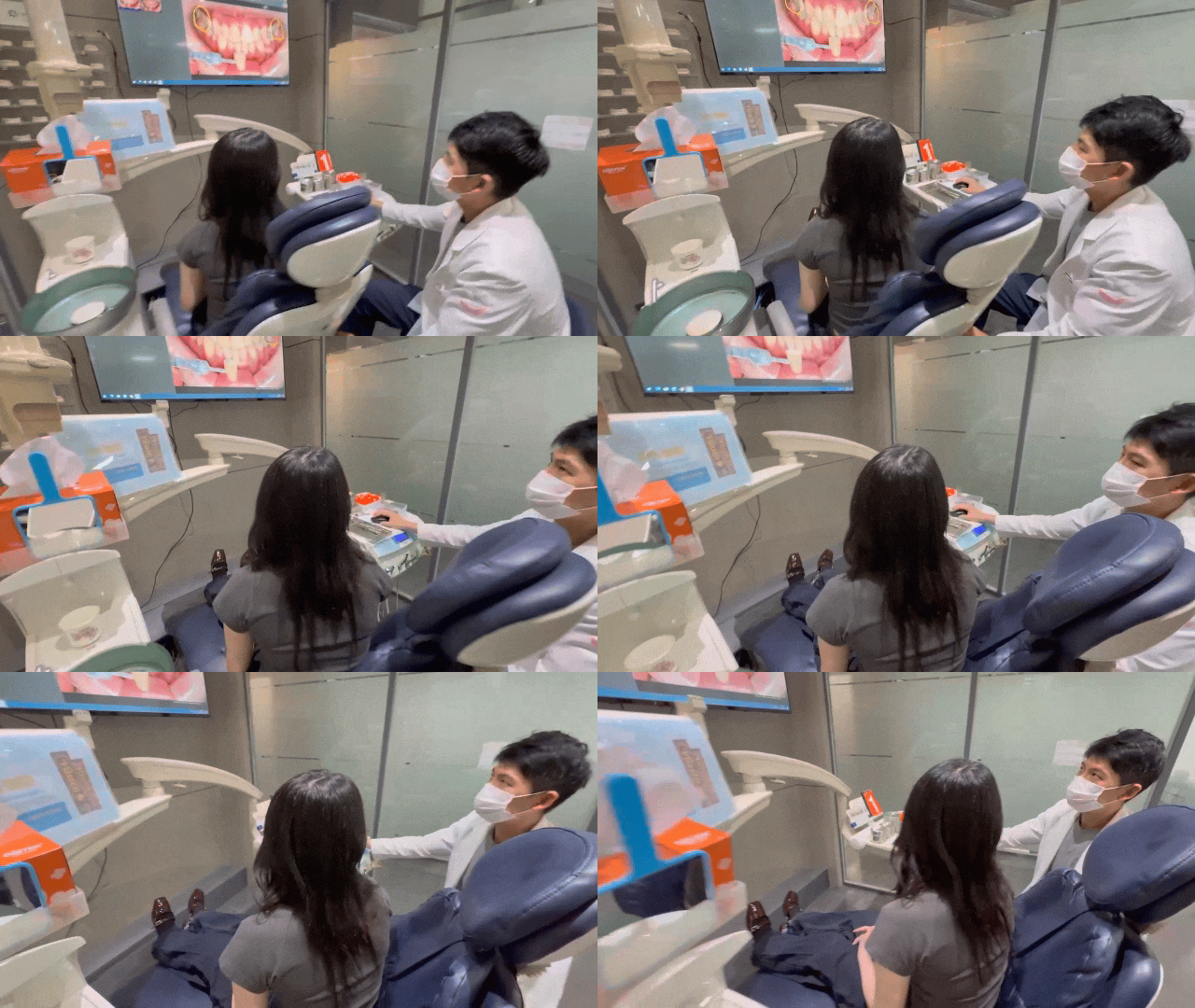
I also let patients know in advance about any parts of the treatment process that could cause discomfort.
There is nothing more difficult for a patient than unexpected pain or discomfort.
I believe it is very important to proceed with clear communication.
Internal tooth whitening is not simply for cosmetic purposes.
When a single discolored tooth makes you shrink back every time you smile,
and even when taking photos you cover your mouth,
the stress in daily life can be significant.
I think of it as a treatment that helps restore confidence.
Just because a tooth that has had root canal treatment has become discolored does not mean you must always have prosthetic treatment such as laminate veneers or crowns.
In many cases, Seoul internal tooth whitening can improve it sufficiently.
The biggest advantage is that it allows aesthetic improvement while preserving the natural tooth as much as possible.
If you are worried because a tooth that has had root canal treatment has become discolored,
please remember that what you need is internal tooth whitening, not regular whitening.
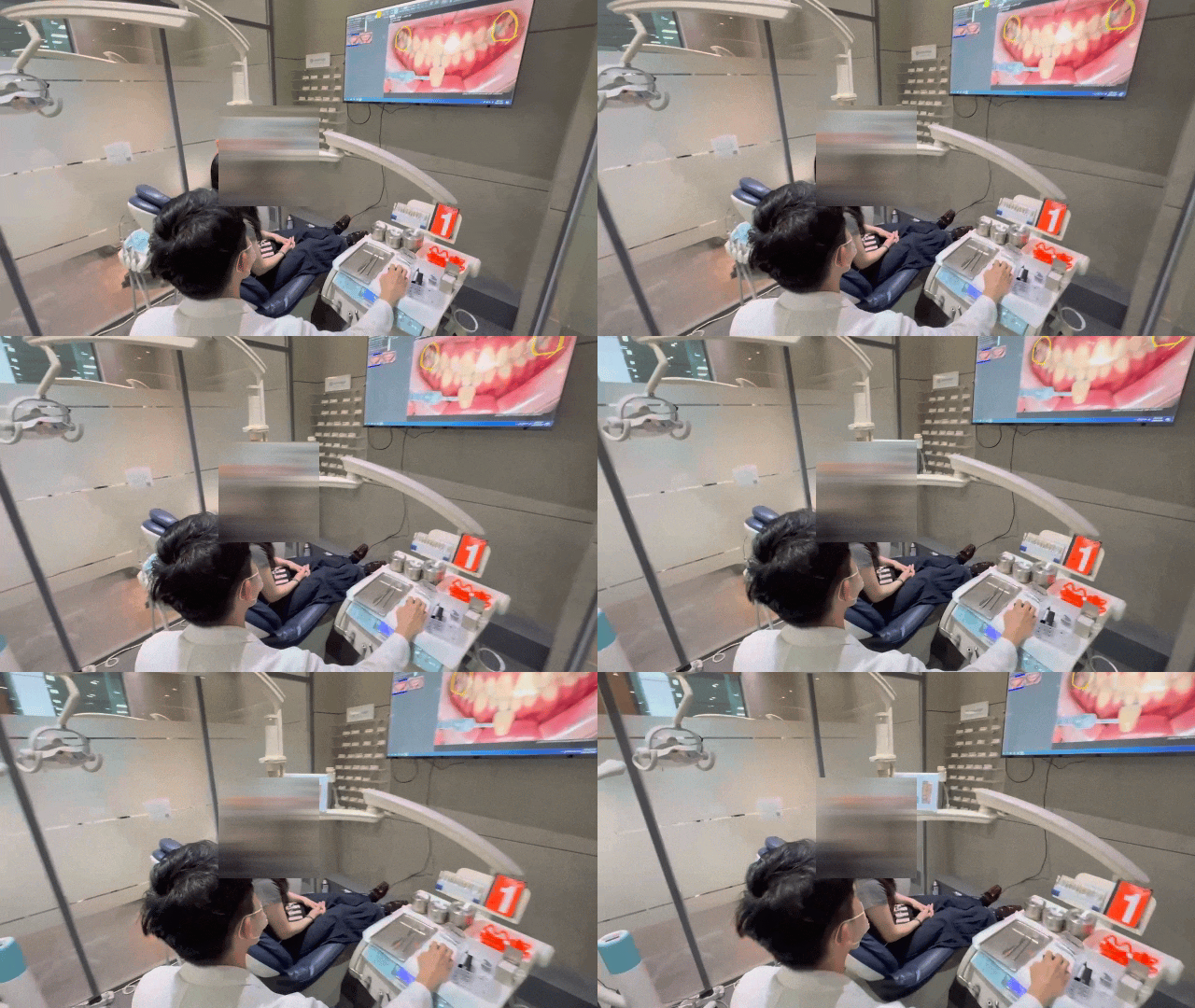
It is important to check the condition of the tooth through an accurate diagnosis and choose the treatment method that is right for you.
If you have any questions,
please feel free to contact us anytime.
D-Day Dental Clinic
Chief Dentist Oh Tae-hoon
| A place that honestly recommends only the treatment that is truly necessary — D-Day Dental Clinic Naver Reservation ✔ |
| Seoul D-Day Dental Clinic treatment inquiries |
|---|
| Main phone: 02-568-2877 (go directly) Naver TalkTalk inquiry (go directly) |

Seoul internal tooth whitening







