Early-stage cavities
Hello.
I’m Kim Mu-jin, chief director of D-Day Dental Clinic.

“Cavities are black.”
That’s what most people think, right?
But what I want to tell you is this:
By the time a cavity looks black,
it is already very late.
The really dangerous cavities
are not visible from the outside.
No matter how closely you look in the mirror, they seem fine,
and even if you touch them, they feel smooth.
In fact, many patients confidently say,
“My teeth are healthy.”
But when we actually take an X-ray,
the result is shocking.
The spaces between the teeth are already decayed,
and in some cases, it has progressed to the point
where root canal treatment is needed.
Why does this happen?
Today, I’ll explain the two decisive reasons
why early cavities are not visible to the naked eye.
If you read this to the end,
you’ll clearly understand why regular checkups are so important,
and how to protect your own teeth.
|
|---|
| 1. Cavities start from inside the tooth2. Interproximal cavities develop hidden |
- Cavities start from inside the tooth
and spread
This is something many people misunderstand.
They think cavities start
from the outside of the tooth.
But in reality,
it’s completely the opposite.
A tooth is broadly made up of three layers.
The outer white enamel,
the inner yellow dentin,
and the innermost pulp area,
where the nerves and blood vessels are located.
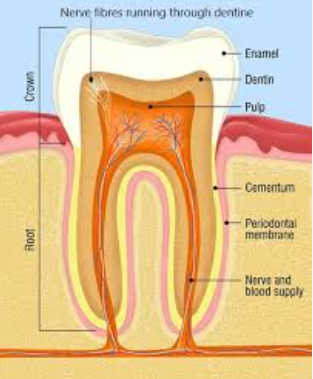 Early-stage cavities: 2 reasons they’re not visible to the naked eye - D-Day Dental Clinic
A cavity begins when calcium is lost from the surface of the enamel.
At this stage, you can’t see anything from the outside.
At most, it only looks slightly whitened or discolored.
Patients naturally don’t notice it.
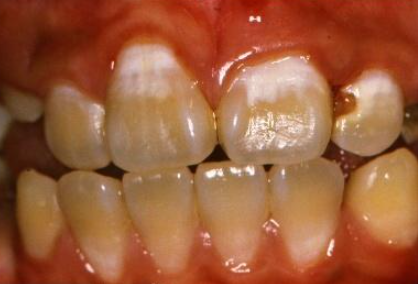 Early-stage cavities: 2 reasons they’re not visible to the naked eye - D-Day Dental Clinic
But the problem starts here.
Once a tiny hole forms in the enamel,
the dentin underneath is much softer than enamel.
When cavity-causing bacteria enter through that tiny hole,
they begin quickly eating away at the dentin.
It spreads inward in a triangular shape,
as if chopping into wood with an axe.
The outside may look fine,
but inside it is already badly decayed.
What’s even more frightening is that even at this stage,
there is almost no pain.
Until the enamel layer is completely gone,
you may not feel anything.
That’s why patients often go on without knowing,
and then one day, while eating something hard,
the tooth suddenly breaks apart.
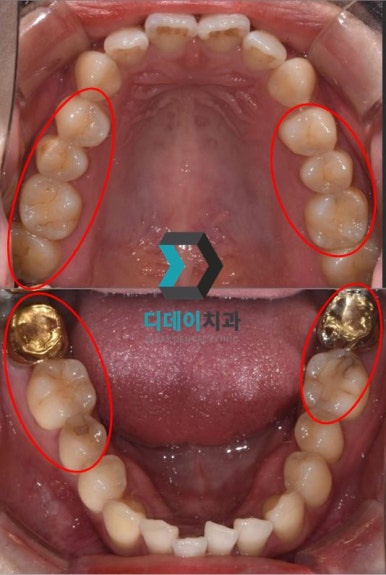
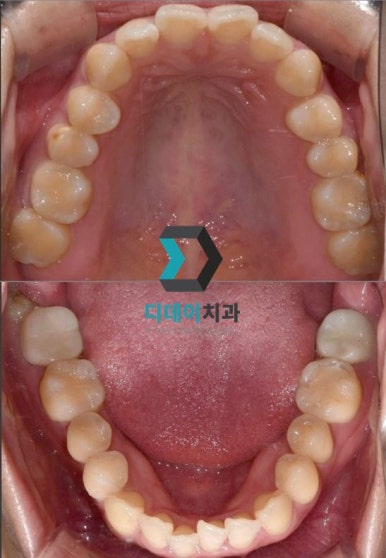 A patient who visited for treatment of molars
Interproximal cavities and secondary cavities in the affected teeth were treated with inlays
An old gold crown was replaced with a zirconia crown
2023.02.27
A patient who visited for treatment of molars
Interproximal cavities and secondary cavities in the affected teeth were treated with inlays
An old gold crown was replaced with a zirconia crown
2023.02.27
What always feels unfortunate to me while treating patients
is exactly this point.
If they had come just a little earlier,
a simple filling would have been enough,
but because they came late, there are many cases
where root canal treatment and a crown are needed.
- Interproximal cavities
develop hidden
The second point is interproximal cavities,
which occur between the teeth.
Cavities on the chewing surface
are at least visible to the naked eye.
You can see a black line
or a hole.
But cavities that form between teeth are
totally hidden.
No matter how closely you look in the mirror,
you can’t see them.
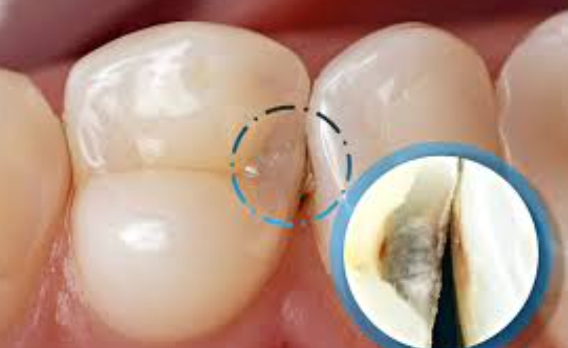 Early-stage cavities: 2 reasons they’re not visible to the naked eye - D-Day Dental Clinic
From the outside,
the teeth look completely fine.
Even for me, as a dentist,
it is often difficult to identify them with the naked eye alone.
That’s why X-rays are absolutely necessary.
When we take an X-ray, we can clearly see
cavities progressing as dark areas between the teeth.
Interproximal cavities have one more characteristic.
They don’t just occur in one place;
they often develop in multiple spots at the same time.
If there is a cavity between one pair of teeth,
there is a very high chance there is also a cavity
between another pair of teeth.
In cases like this, patients sometimes misunderstand.
“Doctor, my teeth look fine,
so why do I need so much treatment?
Isn’t this overtreatment?”
They say things like that.
Whenever that happens, I show them the X-ray images
and explain everything in detail.
 Early-stage cavities: 2 reasons they’re not visible to the naked eye
D-Day Dental Clinic
When they can see for themselves
that it may not be visible on the outside but has actually
already progressed quite a bit,
most people say, “Ah, it was that far along,”
and understand.
We do not force patients into treatment.
But if a treatment is truly necessary,
I honestly tell them that if it is not done now,
there could be bigger problems later.
Early cavities are not visible to the naked eye.
They start from inside the tooth,
and especially cavities that form between teeth
develop completely hidden.
That’s why regular checkups are really important.
If you come to the dental clinic once every six months
and check with X-rays,
you can detect cavities early.
If detected early,
a simple filling is enough.
But if found late,
you may need root canal treatment and a crown,
which takes much more time and cost.
 Early-stage cavities: 2 reasons they’re not visible to the naked eye
D-Day Dental Clinic
My biggest goal is to keep patients from feeling pain.
Early-stage cavities
To do that,
it is truly important to detect and treat cavities early.
Please remember what I shared today,
and make sure to get regular checkups.
I hope you take good care of your precious teeth
and keep them healthy for life.
D-Day Dental Clinic
Chief Director Kim Mu-jin
| A place that honestly recommends only the treatment that is truly necessary D-Day Dental Clinic Naver Reservation ✔ |
| Seoul D-Day Dental Clinic treatment inquiries |
|---|
| Main phone number: 02-568-2877 (Go now) Naver TalkTalk inquiry (Go now) |


Early-stage cavities: 2 reasons they’re not visible to the naked eye







