
What is OCD, or obsessive-compulsive disorder?
It refers to a mental disorder in which certain thoughts or behaviors repeat regardless of a person's will. Although OCD is said to be difficult to treat, it can improve with medication or changes in behavioral therapy. Let’s look at self-diagnostic methods for OCD and treatment methods for OCD.
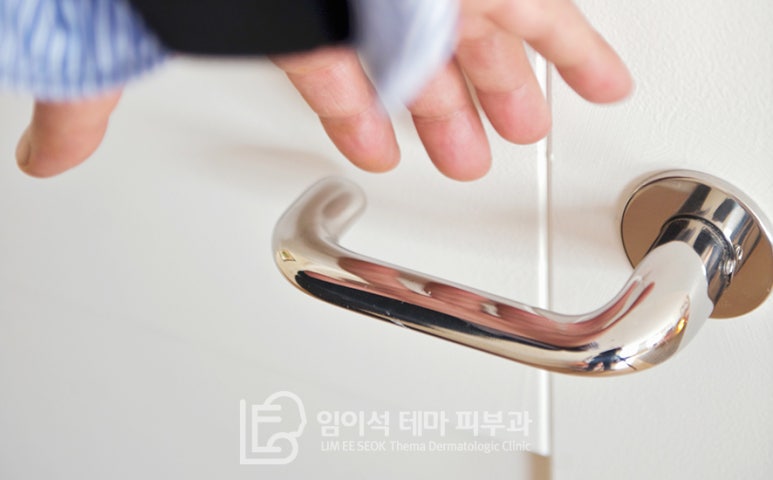
Typical symptoms of OCD include repeatedly washing one’s hands out of fear of contamination, or repeatedly checking the door because of doubts about whether it was locked. Thoughts, images, or impulses that keep coming to mind regardless of one’s will are called obsessive thoughts. Although a person wants to get rid of these thoughts, they cannot do so by will alone, which increases their anxiety.

Self-diagnosing OCD
Having these symptoms does not mean that a diagnosis of OCD can be made. First, there must be obsessive thoughts or behaviors, and the person must recognize that they are excessive or abnormal. In addition, a diagnosis is possible only when these behaviors and thoughts significantly interfere with daily life.
Self-diagnostic method for obsessive thoughts
-
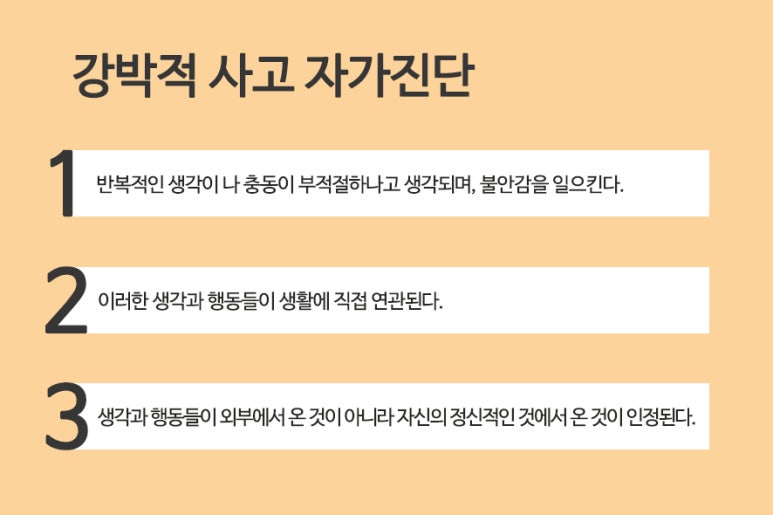
Repetitive thoughts or impulses seem inappropriate and cause anxiety.
-
These thoughts and behaviors are directly related to daily life.
-
It is recognized that these thoughts and behaviors do not come from outside, but from one’s own mind.
Self-diagnostic method for compulsive behaviors
-
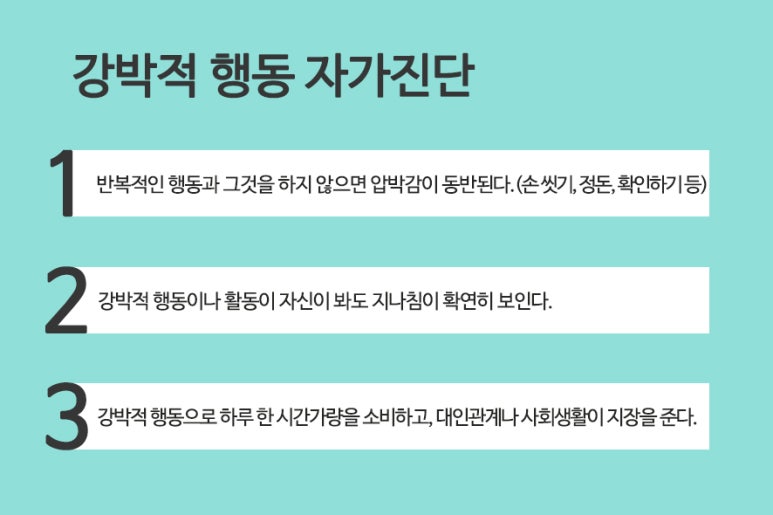
Repetitive behaviors are accompanied by pressure if not performed. (Handwashing, arranging, checking, etc.)
-
The compulsive behaviors or activities are clearly excessive even to oneself.
-
Compulsive behaviors take about an hour a day and interfere with interpersonal relationships or social life.
If the above examples apply, OCD should be suspected. In general, the most effective treatment methods for OCD are medication and cognitive behavioral therapy. The most common medications used are clomipramine or selective serotonin reuptake inhibitors. Rather than overlooking OCD, it is recommended that you consult a specialist, receive help, and be treated with appropriate methods such as behavioral therapy and medication.