
Skin dryness

Skin dryness is an unwelcome guest that arrives in winter. These days, with the large temperature difference between day and night and the dry weather, the skin becomes dry. When dry skin itches, you keep scratching it, which causes wounds and leads to a vicious cycle of inflammation caused by bacterial infection.
What is the skin barrier where skin dryness occurs?
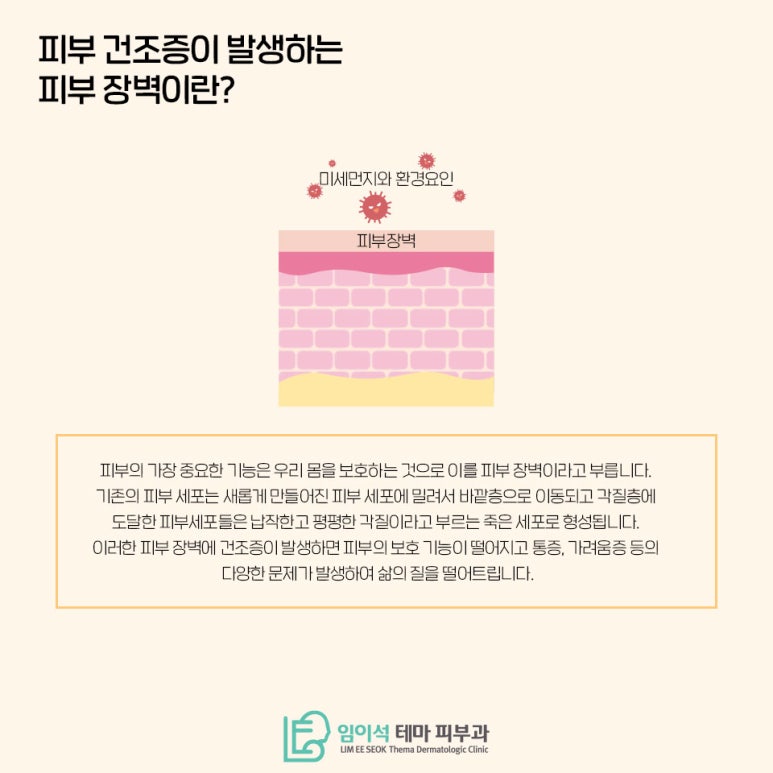
The skin’s most important function is to protect our body, and this is called the skin barrier. The stratum corneum, the outermost layer of the skin, protects our body by blocking various bacteria that penetrate from the outside and by helping regulate body temperature.
Existing skin cells are pushed outward by newly created skin cells, and the skin cells that reach the stratum corneum form dead cells called flat, plate-like keratin. When dryness occurs in this skin barrier, the skin’s protective function declines, causing various problems such as pain and itching, which lowers quality of life.
What causes skin dryness?
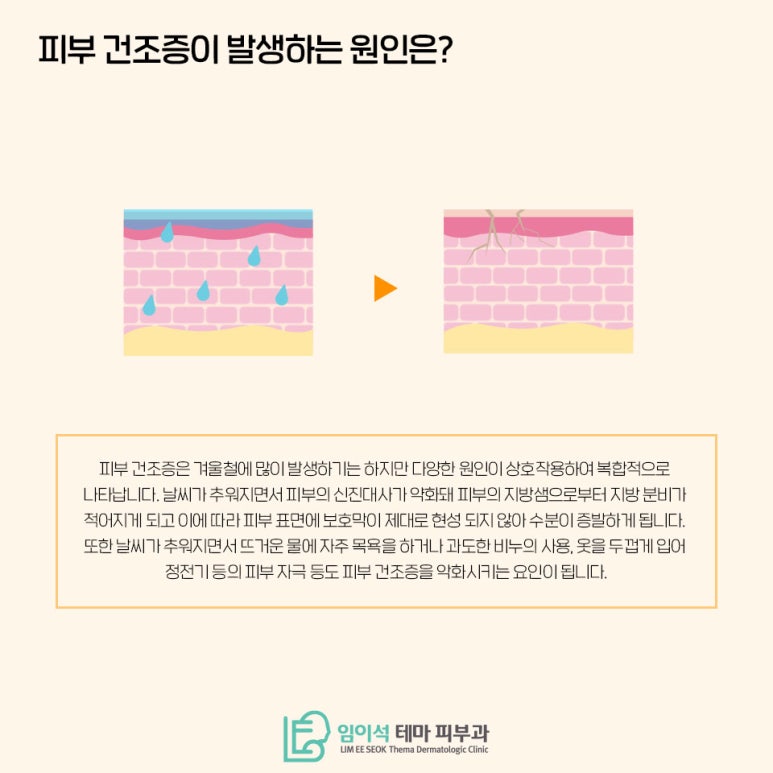
Skin dryness occurs most often in winter, but it appears in a complex way through the interaction of various causes. As the weather gets colder, the skin’s metabolism weakens, reducing the secretion of oil from the skin’s sebaceous glands. As a result, a protective film does not form properly on the skin surface, and moisture evaporates. In addition, as the weather gets colder, frequent baths in hot water, excessive use of soap, and skin irritation such as static electricity caused by wearing thick clothing also worsen skin dryness.
Symptoms of skin dryness

Symptoms of skin dryness often appear on the legs, such as the thighs and calves, and on the arms, and as the condition progresses, they spread throughout the body, including the sides, pelvis, and lower back. In severe cases, flaking occurs, and later the skin’s surface appears to crack as if the ground had dried and split.
For this reason, whenever you take a posture such as stretching your body, it stings as if the skin is breaking, and itching accompanies it. If you scratch because it itches, or apply ointment without a specialist’s diagnosis, inflammation may occur and it may lead to a chronic condition, so caution is needed.
-
Skin tightness and pulling sensations
-
Redness symptoms and rashes
-
Dry eczema symptoms in which scratching because of itching causes the skin to crack and bleed
-
Flaking symptoms that look like white scales
-
Symptoms of itching and stinging as if the skin is cracking when sitting or changing positions such as stretching the body
Precautions when skin dryness occurs
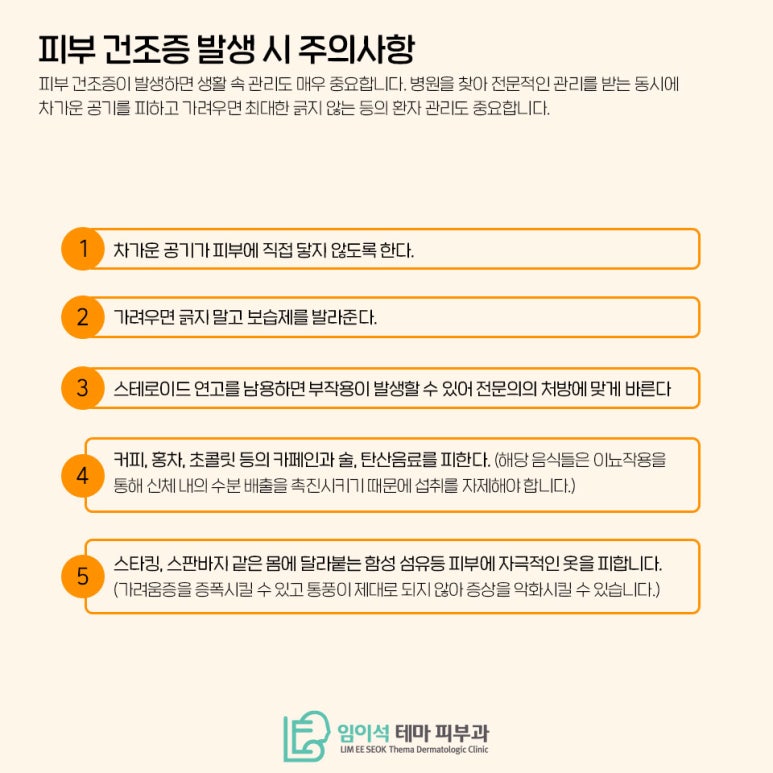
When skin dryness occurs, daily care is also very important. While visiting a hospital for professional care, patient management is also important, such as avoiding cold air and scratching as little as possible when itching.
-
Prevent cold air from directly touching the skin.
-
If it itches, do not scratch; apply moisturizer instead.
-
Overuse of steroid ointments can cause side effects, so use them according to a specialist’s prescription.
-
Avoid caffeine such as coffee, black tea, and chocolate, as well as alcohol and carbonated drinks. (These foods should be limited because they promote water loss from the body through their diuretic effects.)
-
Avoid synthetic fibers that cling to the body, such as nylon, stockings, and spandex pants, as well as irritating clothing like wool and fur. (They can intensify itching and worsen symptoms because they do not allow proper ventilation.)
How to prevent skin dryness

To prevent skin dryness in winter, it is important to control indoor humidity and prevent moisture loss by using moisturizer. Since indoor humidity is best maintained at at least about 40%, it helps to adjust the indoor environment by using a humidifier, placing bowls of water around, or hanging laundry indoors, and drinking about 8 cups of water a day is also helpful. In winter, using too much soap or body products can dry out the skin, so it is better to avoid excessive soap use and keep shower times short. One shower a day is good for skin health. In particular, taking long showers increases skin fatigue and can dry the skin, so it is advisable to avoid them. When taking a bath, 15 to 20 minutes is appropriate. In the case of bathing, a proper bath can be helpful because it may prevent skin dryness through effects such as cleansing and cooling. After bathing or showering, it is necessary to apply moisturizer within 3 minutes while the skin is still damp so that moisture does not evaporate. In particular, moisturizer should be used after washing the face, after showering, and after washing hands.
Today, we covered the causes, symptoms, prevention, and care methods for skin dryness. Through the methods introduced today, please actively care for your skin to prevent skin dryness in this dry weather, and if skin dryness has already developed, please visit our clinic and receive professional care. If treatment for skin dryness is delayed, it may lead to a chronic condition as mentioned earlier, so caution is necessary. Thank you.