Early Symptoms and Management of Adult Atopic Dermatitis
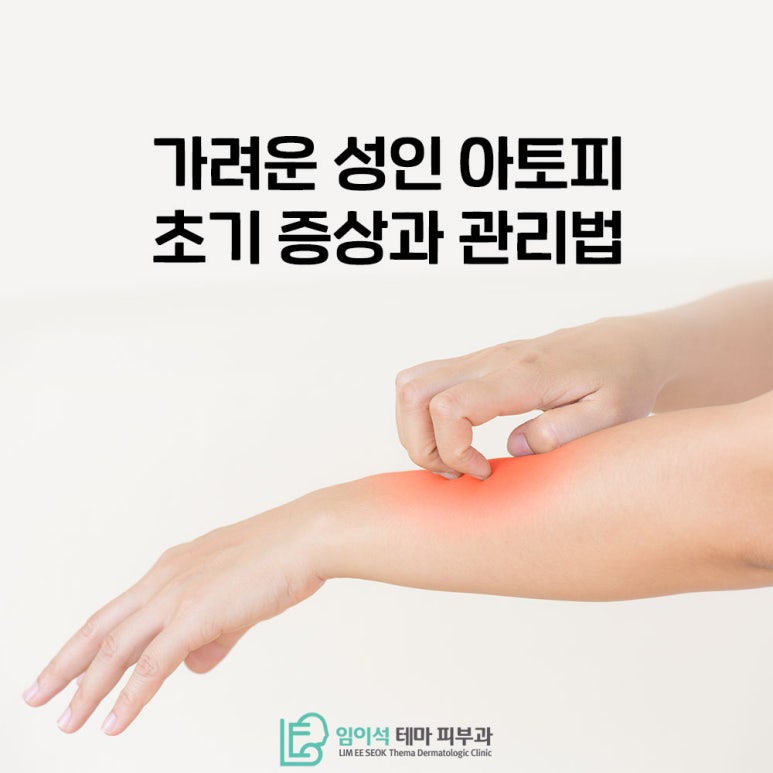
Atopic dermatitis, which is characterized by severe itching, is a chronic inflammatory skin disease that commonly occurs in childhood, when the immune system is not yet fully mature. However, atopic dermatitis can also develop during adolescence and adulthood, and if it suddenly appears in adulthood, active treatment is very important.
Unlike other conditions, atopic dermatitis does not have clear diagnostic evidence or an objective test method. Therefore, diagnosis is made according to certain criteria, which include itching, the shape and distribution of characteristic skin lesions, and whether the person has allergic diseases.
However, even if the condition does not meet the diagnostic criteria and there is skin allergy, symptoms may worsen later and a diagnosis of atopic dermatitis may be made. Therefore, if atopic dermatitis symptoms are suspected, ongoing management is necessary.
Early Symptoms of Adult Atopic Dermatitis
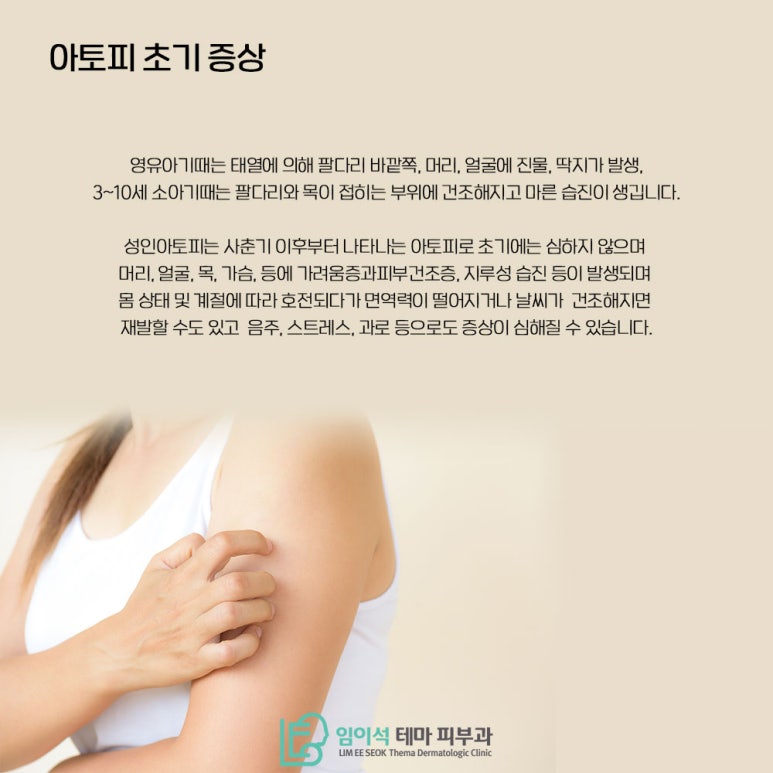
In the early stage of adult atopic dermatitis, the condition is not severe and begins with itching and dry skin. Common symptoms of atopic dermatitis include itchy, red, bumpy, rough skin. Other skin conditions may also show similar symptoms, but unlike other diseases, atopic dermatitis does not suppurate like pimples or boils, does not swell up and move around like hives, and does not cause blisters like shingles.
Adult atopic dermatitis often causes the skin to turn red and bumpy, like goosebumps, and as scratching continues due to itching, the skin gradually becomes rough and cracked. It mainly occurs on the trunk or the extensor surfaces of the arms and legs, and unlike in infants and toddlers, it usually appears on the face, neck, inner elbows, and behind the knees.
Another characteristic of adult atopic dermatitis is that symptoms usually worsen from evening to early morning. In general, symptoms are not severe during the daytime when the sun is out, but they worsen in the evening and can cause sleep disturbance due to itching and stinging while lying in bed. In addition, drinking alcohol, stress, and overwork can also worsen atopic dermatitis symptoms.
Causes of Adult Atopic Dermatitis
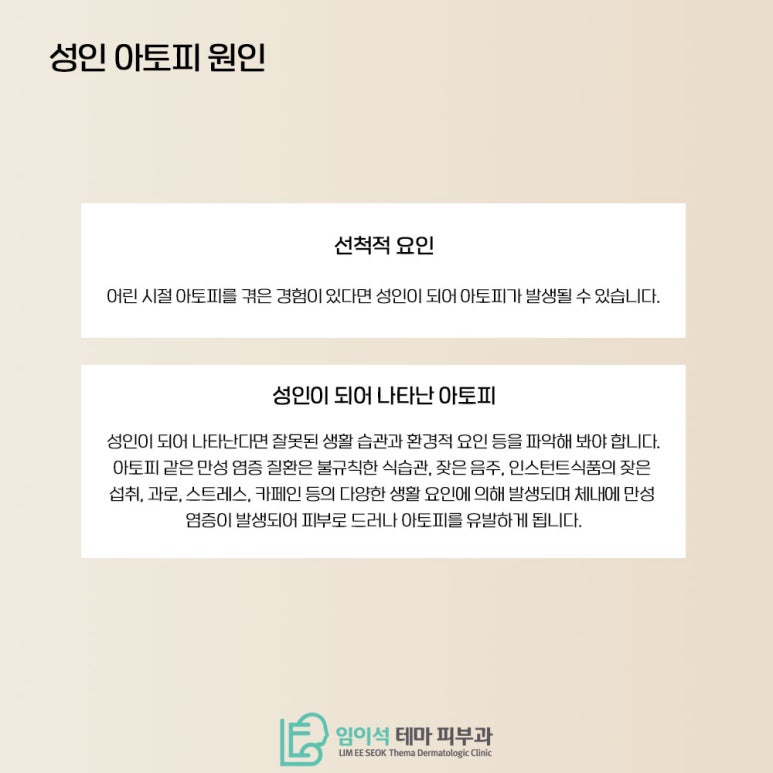
The first cause of adult atopic dermatitis is congenital factors. If you experienced atopic dermatitis in childhood, it may develop again in adulthood. On the other hand, if there were no symptoms in childhood but they appear in adulthood, you should look into poor lifestyle habits and environmental factors.
Chronic inflammatory diseases such as atopic dermatitis can be caused by various lifestyle factors such as irregular eating habits, frequent drinking, frequent consumption of instant foods, overwork, stress, and caffeine. When such lifestyles repeat, they can lead to physical symptoms and various chronic diseases may develop. Chronic conditions such as indigestion, fatigue, and a feeling of heat rising in the body may occur, and if these conditions are not treated properly, chronic inflammation develops in the body and appears on the skin, causing atopic dermatitis.
In other words, in the case of adult atopic dermatitis, it is difficult to determine a single cause, so the patient's lifestyle pattern, habits, and underlying conditions need to be examined to identify the cause. In many cases, adult atopic dermatitis is not a simple skin disease but an immune disorder caused by an abnormality in the body's immune function.
Atopic Dermatitis Symptoms Are Not Just a Simple Skin Condition
Because atopic dermatitis occurs on the skin, it may be thought of as a skin disease caused by abnormalities in the skin barrier, but it is actually one of the immune disorders caused by an excessively activated immune system.
When the abnormally functioning skin barrier and overactivated immune system deliver certain chemicals to the surface of the skin, inflammation occurs and itching is felt as a result. In patients with atopic dermatitis, the rash that appears on the skin is a visible manifestation of a phenomenon occurring near the dermal layer. Even if the skin looks clean, inflammation may still be present near the dermal layer.
When itching occurs, the skin is scratched, damaging the stratum corneum and allowing bacteria, viruses, and allergens to enter the body. In response to these external invaders, the body's immune system delivers chemicals to the skin surface, causing inflammation and worsening the symptoms.
How to Manage Adult Atopic Dermatitis!
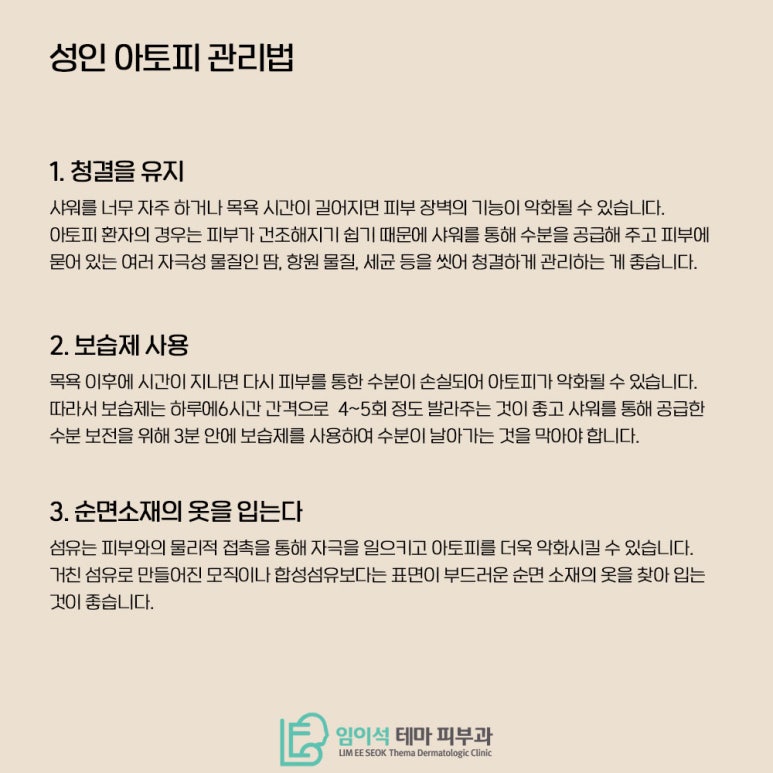

As mentioned earlier, adult atopic dermatitis has many different causative factors and appears differently from patient to patient. Therefore, it is best to identify the cause of your own atopic dermatitis and avoid environmental factors as much as possible. Along with this, it is also good to follow general atopic dermatitis management methods for prevention.
- Shower every day
In general, showering too often or taking very long baths can wash away the skin's natural moisturizing factors and water-soluble lipids, which may worsen the function of the skin barrier. However, because people with atopic dermatitis tend to have dry skin, it is better to supply moisture through showering and wash away various irritating substances on the skin, such as sweat, antigens, and bacteria, to keep the skin clean. When bathing, do not scrub off dead skin; instead, shower with lukewarm water only. When using soap or body wash products, low-irritation products are recommended, and it is best to use them only about 2 to 3 times a week.
- Use moisturizer
As time passes after bathing, moisture is lost again through the skin, which can worsen atopic dermatitis. Therefore, moisturizer should be applied about 4 to 5 times a day, and if possible, every 6 hours. In addition, to preserve the moisture provided by showering, moisturizer should be used within 3 minutes to prevent moisture from evaporating.
- Wear cotton clothing
In patients with atopic dermatitis, the condition can develop for various reasons. In particular, fabrics can irritate the skin through physical contact and further worsen atopic dermatitis. Therefore, for clothing that comes into direct contact with the skin, it is better to wear cotton with a smooth surface rather than wool or synthetic fibers made of rough materials.
- Emotional stability and lifestyle improvement
Emotional anxiety, tension, and frustration in patients can worsen atopic dermatitis, and atopic dermatitis itself can cause problems in relationships with others or make people withdraw, potentially leading to secondary emotional disorders. Therefore, it is better to avoid stress, overwork, drinking, and smoking, which can affect atopic dermatitis, and maintain emotional stability.
Today, we talked about adult atopic dermatitis. The causes are very diverse and vary from patient to patient. Therefore, it is important to identify the cause of your atopic dermatitis and avoid environmental factors as much as possible. Along with this, it is also good to follow general atopic dermatitis management methods to treat atopic skin, and if lifestyle management alone is not enough, please visit a specialist for treatment. Our clinic provides care tailored to each patient's skin through about 60 premium laser devices and medical skin care. If you have any questions, please contact Imiseok Thema Dermatology Clinic.