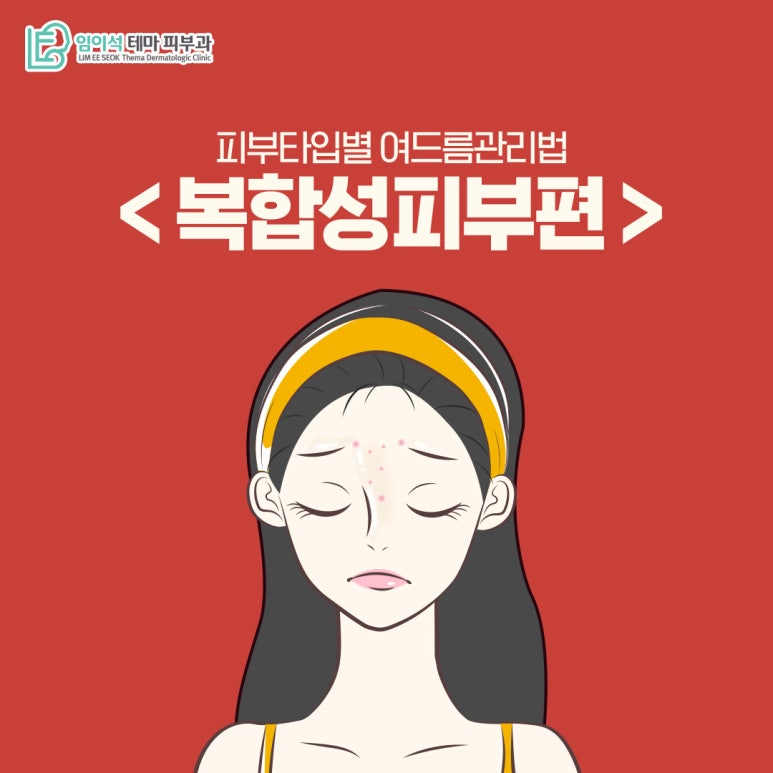
What is combination skin?
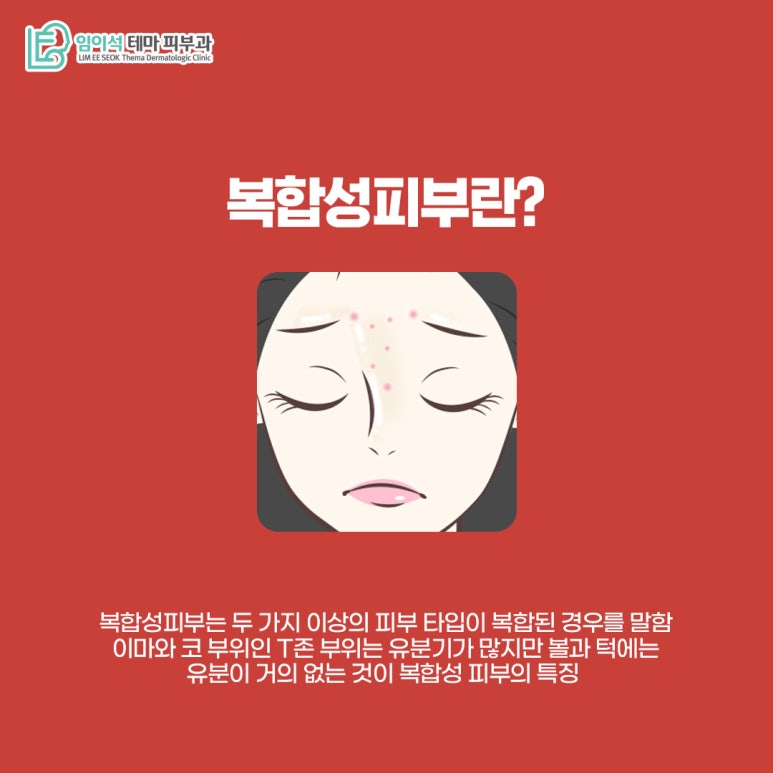
Skin type is classified into four categories based on the characteristics of the skin, which are often studied in genetic research. Each type is determined by the amount and distribution of sebum secretion. To figure out your skin type yourself, you can check the oil that appears on your skin about 2 hours after washing your face and leaving it without applying anything.
Combination skin refers to a case where two or more skin types are combined. The T-zone, including the forehead and nose, tends to be oily, while the cheeks and chin have little to no oil. Because sebum secretion varies by area, breakouts often occur in the T-zone, and the U-zone, such as the cheeks and around the mouth, often experiences internal dryness, with both oiliness and dryness occurring at the same time.
Why acne management is difficult for combination skin
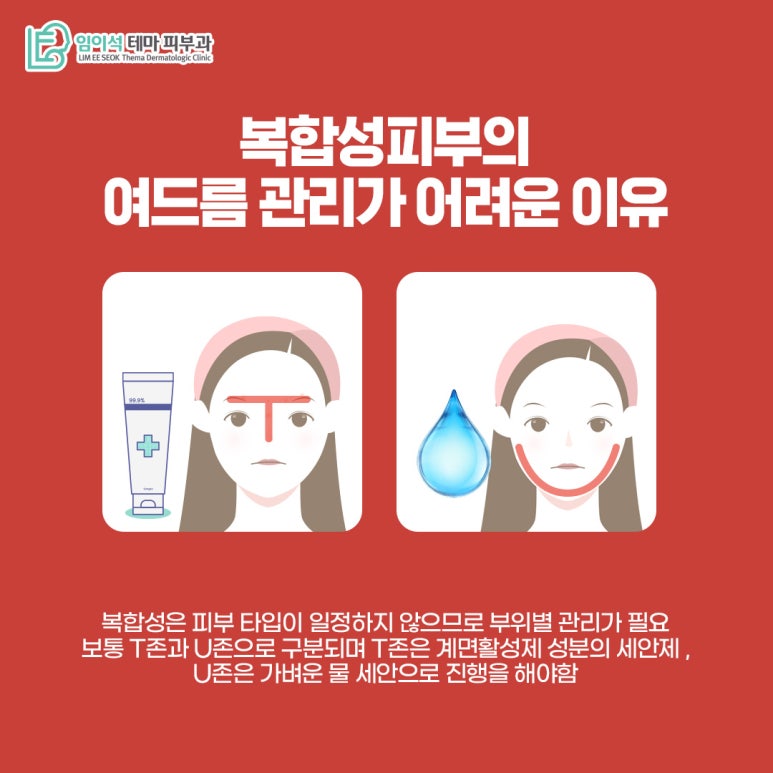
Because combination skin does not have a consistent skin type, area-by-area care is necessary. It is usually divided into the T-zone and U-zone, so care suited to each type should be provided.
First, the forehead and nose area, which become shiny due to oil, should be washed with a cleanser containing surfactant ingredients, while the cheeks outside the center of the face should be balanced with a light water cleanse. In addition, the cheeks and chin should be balanced overall in terms of oil and moisture with a light water cleanse. On top of that, it is a good idea to use a scrub about once every two weeks to manage accumulated dead skin cells and enlarged pores.
If it does not improve easily even while doing basic self-care, how should it be managed?
How to manage acne on combination skin
To effectively treat acne on combination skin, we recommend combining laser treatment and medical skin care. Imiseok Theme Dermatology recommends the following care and treatments to manage excessive sebum secretion and clogged pores, which are the causes of acne.
- Premium laser treatment
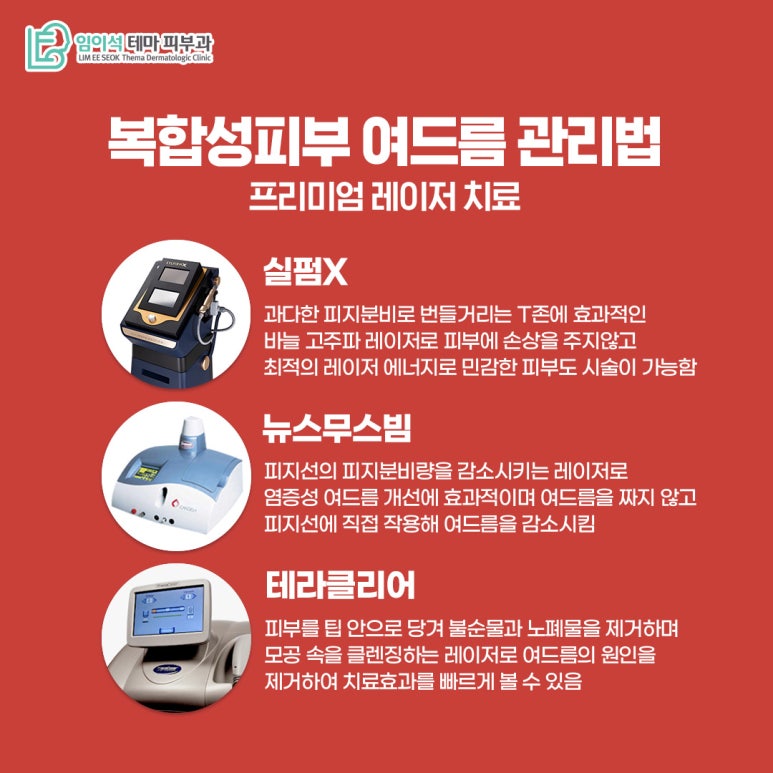
- Sylfirm X
Sylfirm X laser is a microneedle RF laser that is effective for the oily T-zone caused by excessive sebum secretion. Microneedle RF is relatively suitable for East Asians, and it is one of the most sought-after devices because domestic companies make it at a world-class level. By appropriately using three laser modes, it is possible to provide comprehensive treatment from acne improvement to acne marks, and it has the advantage of being usable even on sensitive skin because it precisely delivers optimal energy deep into the skin without damaging it.
- New SmoothBeam
If you want to reduce sebum secretion from the sebaceous glands, we recommend New SmoothBeam laser treatment. New SmoothBeam is a laser approved by the U.S. FDA and is effective for improving inflammatory acne. Treatment is carried out by stimulating the dermal tissue to induce skin regeneration. It reduces acne by acting directly on the sebaceous glands, the root cause, without squeezing the acne, and it is effective for patients who have difficulty taking medication.
- TheraClear
Even good pore care alone can help reduce acne. TheraClear is a laser that cleans the inside of pores by pulling the skin into the tip and removing impurities and waste, so you can see treatment effects quickly by eliminating the cause of acne. It has the advantage of improving acne for all skin types and has been approved by the U.S. FDA.
- Medical skin care�
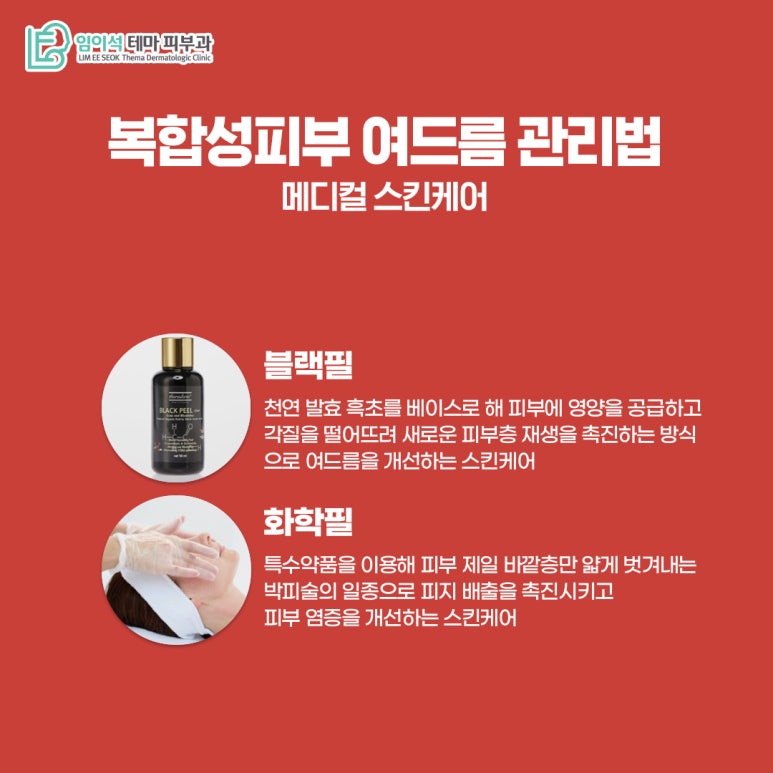
- Black Peel
Black Peel improves acne by using naturally fermented black vinegar as a base to nourish the skin, remove dead skin cells, and promote regeneration of a new skin layer. Doctors in more than 30 countries have proven that it is effective in improving chronic acne through pore and sebum care and by preventing skin trouble. In addition, depending on the medical staff's diagnosis, it can be combined with home care along with in-clinic care, which is an advantage because it allows consistent management.
- Chemical peel
If you want skin scaling without interfering with daily life, we recommend a chemical peel. A chemical peel is a type of exfoliation that uses special chemicals to thinly remove only the outermost layer of the skin, promoting sebum discharge and improving skin inflammation. This opens pores blocked by dead skin cells and sebum, helping improve the skin to a clear and clean condition.
Imiseok Theme Dermatology provides customized treatment by skin type based on diagnosis and prescription from dermatology specialists. Based on extensive clinical experience, we offer 1:1 personalized care, so if you are concerned about combination skin and acne in different areas, please consider a consultation with an Imiseok dermatologist.