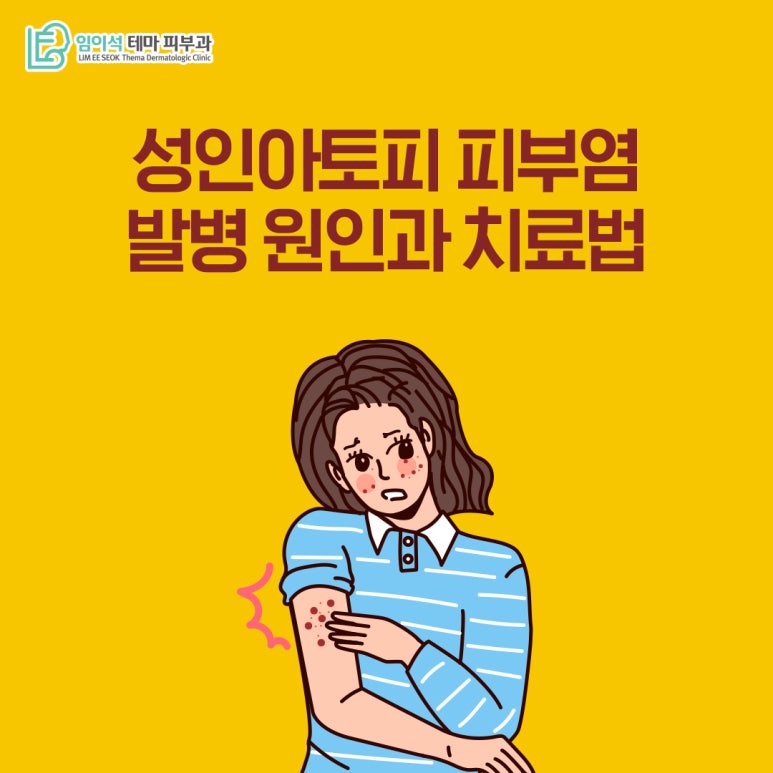
What is adult atopic dermatitis?
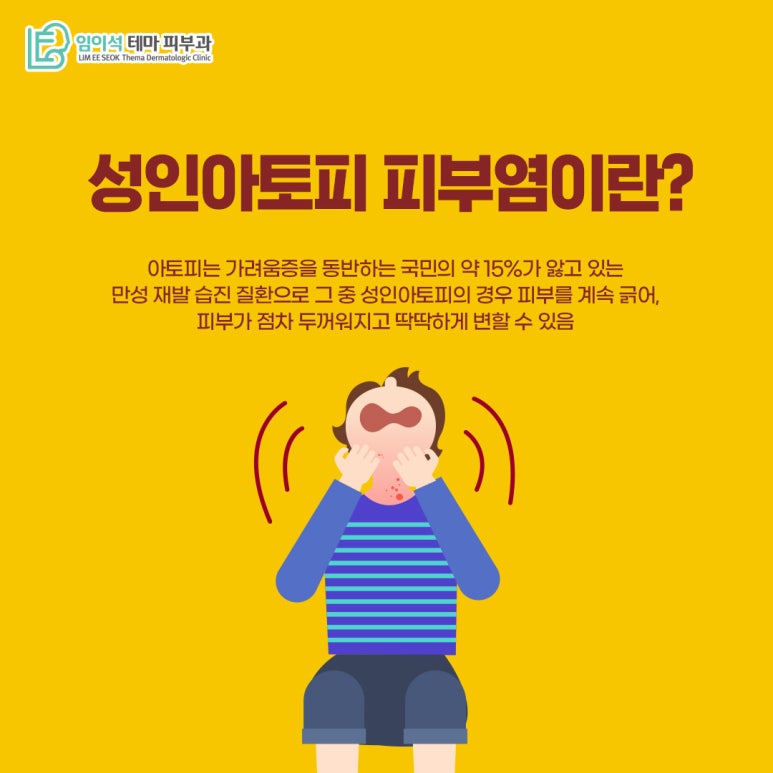
Atopy is a chronic, recurrent eczema disorder accompanied by itching. It is also a condition known as "atopy rash," and about 15% of the population is affected, making it a very common condition. Classified as a type of allergic disease, atopy is very itchy and may also cause sores and scabs.
Atopy can be divided into three types according to the age at which it develops: infancy, childhood, and adolescence/adulthood, and the distribution, appearance, and symptoms of the lesions differ slightly by stage. Here, we will look at adult atopy.
People with adult atopic dermatitis often experience severe itching and dryness, which leads them to keep scratching the skin. If the skin in the affected area is continually scratched, it gradually becomes thicker and may turn rough and hard, like scales. Adult atopic dermatitis commonly appears on areas easily exposed to the outside, such as the face, neck, and chest. If it occurs in flexural areas, the skin may crack or become raw, so caution is needed.
People with adult atopic dermatitis often also have symptoms such as allergic rhinitis, bronchial asthma, acute urticaria, and allergic conjunctivitis. In addition, many have had the condition for several years, so early treatment is important.
Causes of adult atopic dermatitis
Although adult atopic dermatitis is increasing worldwide, its cause has not yet been clearly identified. So far, the following four factors are considered the main causes.
- Genetic factors

A family history of atopy has been reported at a high rate of 70–80%. Among patients visiting the dermatology clinic, many have a parent, sibling, or child with atopic dermatitis. It is thought to result from mutations in genes related to the skin barrier, leading to reduced barrier function.
- Abnormal skin barrier

The skin’s function as a barrier plays a very important role in the body. In adult atopic dermatitis, this barrier function is impaired. When the skin lacks moisture and becomes dry, it may not perform its proper barrier function when attacked by allergens or bacteria, which can lead to atopy.
- Immunological factors
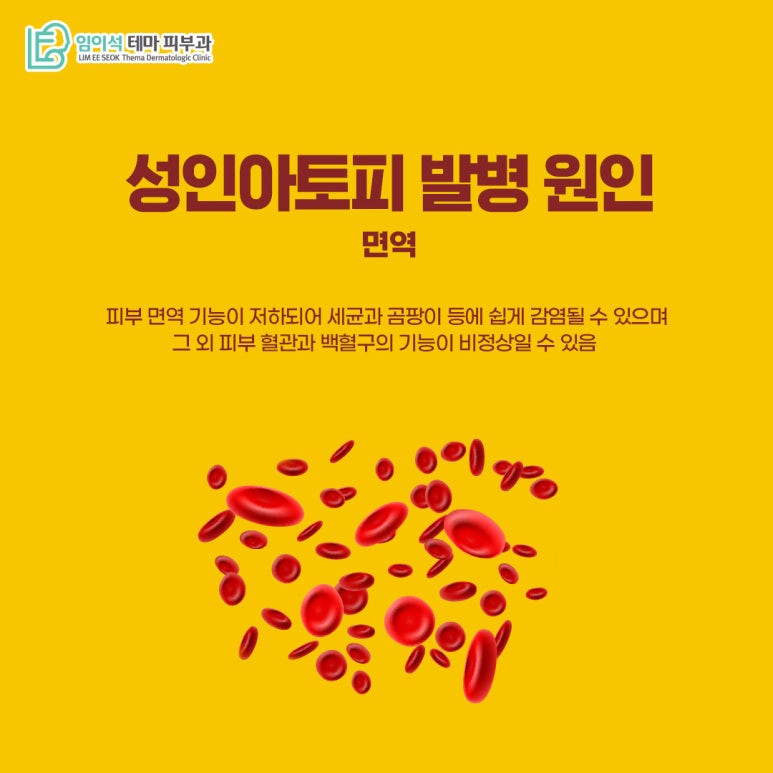
When skin immune function declines, the skin can no longer be properly protected. There is a very large difference between the skin’s protective function in healthy people and in patients with adult atopic dermatitis. Compared with healthy people, patients with adult atopic dermatitis may more easily feel itching or become easily infected by bacteria and fungi encountered in daily life. In addition, the functions of skin blood vessels and white blood cells may be abnormal.
- Environmental factors

As environmental problems have become more severe in recent years, there are many cases in which atopy develops due to environmental factors. Common factors include house dust mites, sweat, synthetic clothing, carpets, bedding, and pets, among others. In addition, Westernized lifestyles and mental stress may also have an effect.
Characteristics of adult atopy
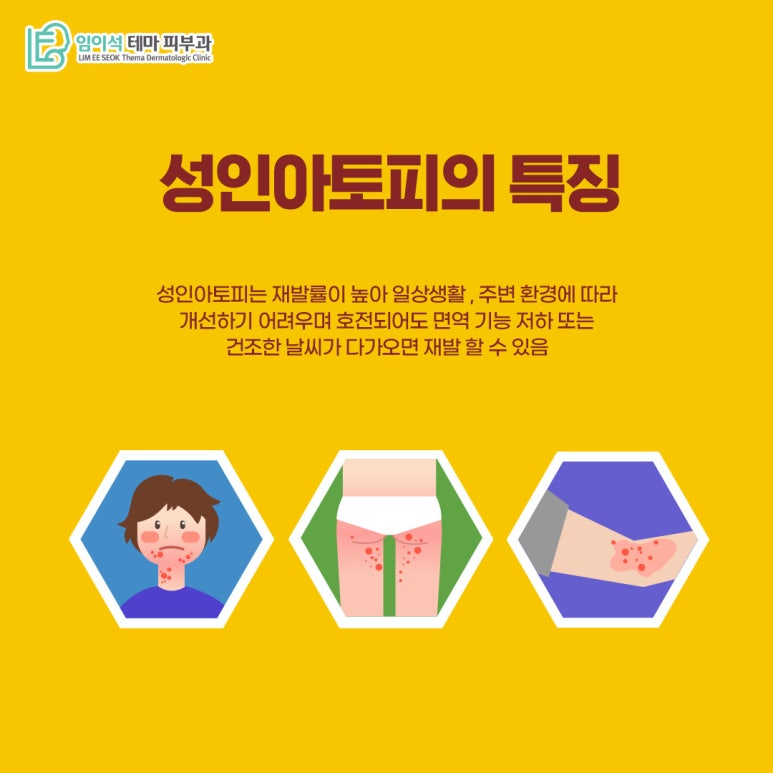
Adult atopy, which develops after adolescence, is characterized by a high recurrence rate. This is because it often develops due to factors that are difficult to improve easily, such as irregular routines, constant mental stress, and environmental hormones.
In addition, adult atopy may improve temporarily as overall physical condition improves, but it can easily recur when immunity declines or dry weather arrives. Therefore, if you feel itching or dryness of the skin on areas such as the head, face, neck, or chest, it is best to visit a dermatology clinic quickly and consult a specialist.
Treatment for adult atopy
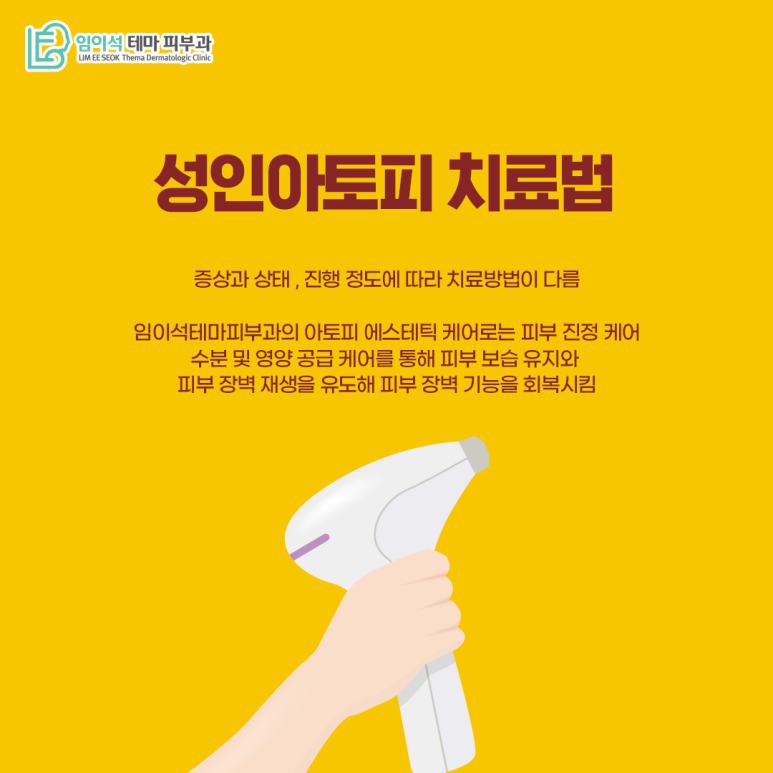
At Imiseok Dermatology in Sinsa, adult atopy is improved through aesthetic care. By calming the skin and supplying moisture and nutrients, we help maintain hydration in the skin and support recovery of the skin’s original barrier function by promoting skin barrier regeneration. In addition, there are methods such as applying ointment directly to the affected area or taking medication.
Treatment methods vary depending on the patient’s symptoms, condition, and degree of progression. In general, atopy can be treated with oral medication or topical medication, but in cases of acute lesions, the symptoms may be severe enough to require phototherapy. Therefore, consultation with a specialist is essential for fundamental atopy treatment.
Symptoms relief and prevention methods for adult atopic dermatitis
The most basic thing for atopy patients is proper use of moisturizer. In patients with mild atopic dermatitis, using moisturizer alone can bring some improvement, so it is good to choose a low-irritation moisturizer and keep the skin moisturized frequently. For reference, cream-type moisturizers generally provide stronger hydration.
Also, because it is greatly affected by surrounding environments and lifestyle habits, factors that affect the skin must be identified and removed. It is best to avoid places with sudden changes in temperature and humidity as much as possible, manage stress consistently, and avoid wearing wool or nylon clothing as much as possible. Eating kelp, sea mustard, and green-yellow vegetables, which help metabolism function smoothly, may also help relieve itching.
To prevent adult atopic dermatitis in daily life, it is necessary to act as follows.
-
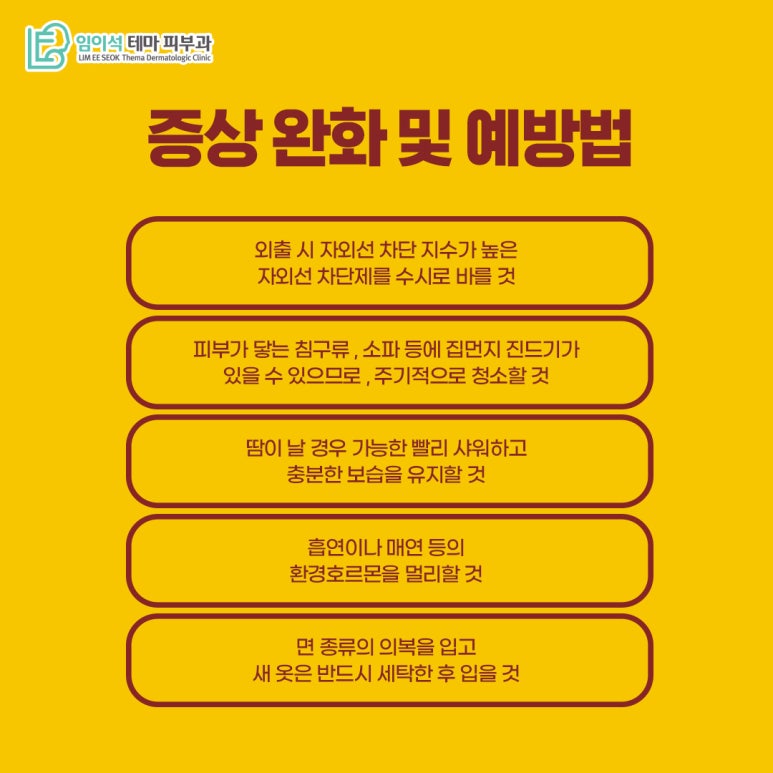
When going out, apply sunscreen with a high SPF frequently.
-
Dust mites may be present in bedding and sofas that come into contact with the skin, so clean regularly.
-
If you sweat, shower as soon as possible and maintain sufficient moisturizing.
-
Stay away from environmental pollutants such as smoking and exhaust fumes.
-
Wear cotton clothing, and always wash new clothes before wearing them.