
Provider: Im Eiseok Theme Dermatology Clinic

Sweating is a natural bodily response
for regulating body temperature.
However, if you sweat excessively
and this causes an unpleasant odor,
you should suspect hyperhidrosis and
bromhidrosis and receive appropriate diagnosis
and treatment. As more people experience
this, along with stress caused by psychological
withdrawal, the number of such patients is increasing,
and as the weather gets hotter, these patients
are becoming more common.
Today, we would like to share information
about hyperhidrosis and bromhidrosis,
which can lower quality of life, as well as
their causes and treatments.
What Is Hyperhidrosis?
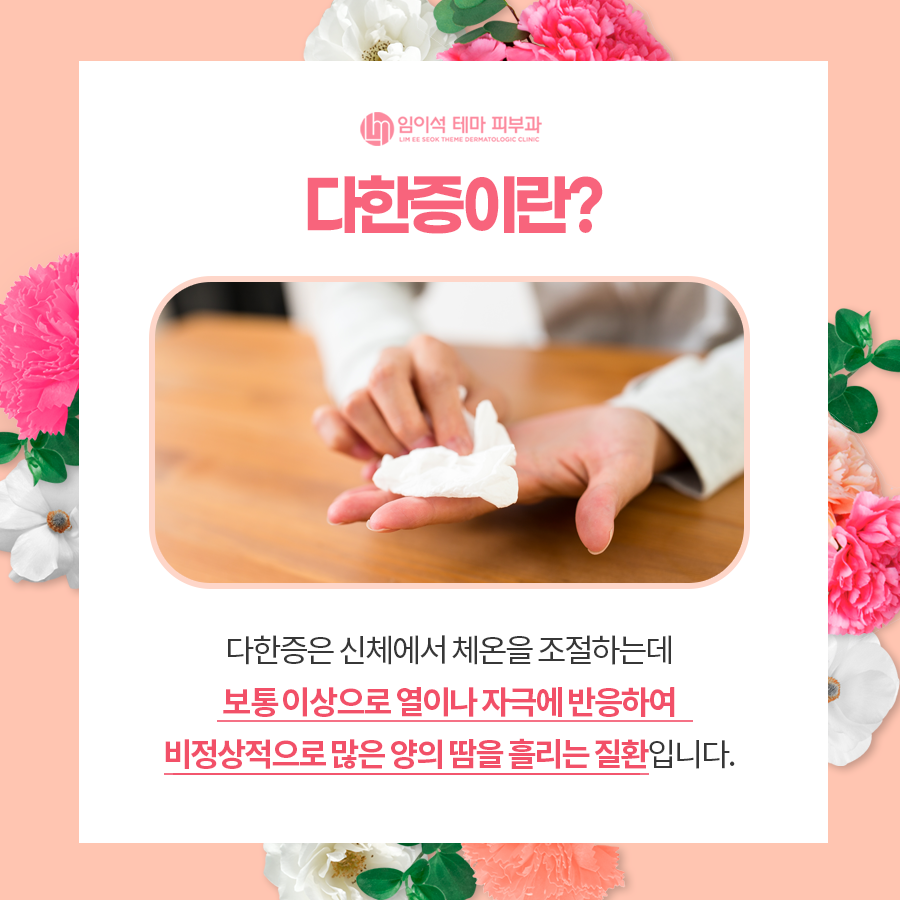
Hyperhidrosis is a condition in which the body
sweats an abnormally large amount in response to heat
or stimulation, beyond what is normal for regulating
body temperature.
When body temperature rises, sweat glands are
stimulated to release sweat onto the skin, lowering
body temperature in the process. In hyperhidrosis,
sweating occurs more than necessary on the palms,
soles, head, and armpits. Hyperhidrosis is divided
according to the area where sweating occurs into
localized hyperhidrosis, such as palmar hyperhidrosis,
plantar hyperhidrosis, palmoplantar hyperhidrosis,
and facial hyperhidrosis, and generalized hyperhidrosis,
which refers to excessive sweating throughout the body.
It may also be caused by infection, endocrine abnormalities,
or neurological abnormalities. When it occurs without a cause
in otherwise healthy people, it is also called primary focal
hyperhidrosis. Even when body temperature does not rise,
sweating becomes excessive in situations such as tension,
excitement, or stress, and emotional changes also have a
significant impact. Sweat is essential for eliminating waste
products and regulating body temperature, but when there is
too much sweating, daily life can become very uncomfortable
due to stickiness and unpleasant odor.
Symptoms of Hyperhidrosis
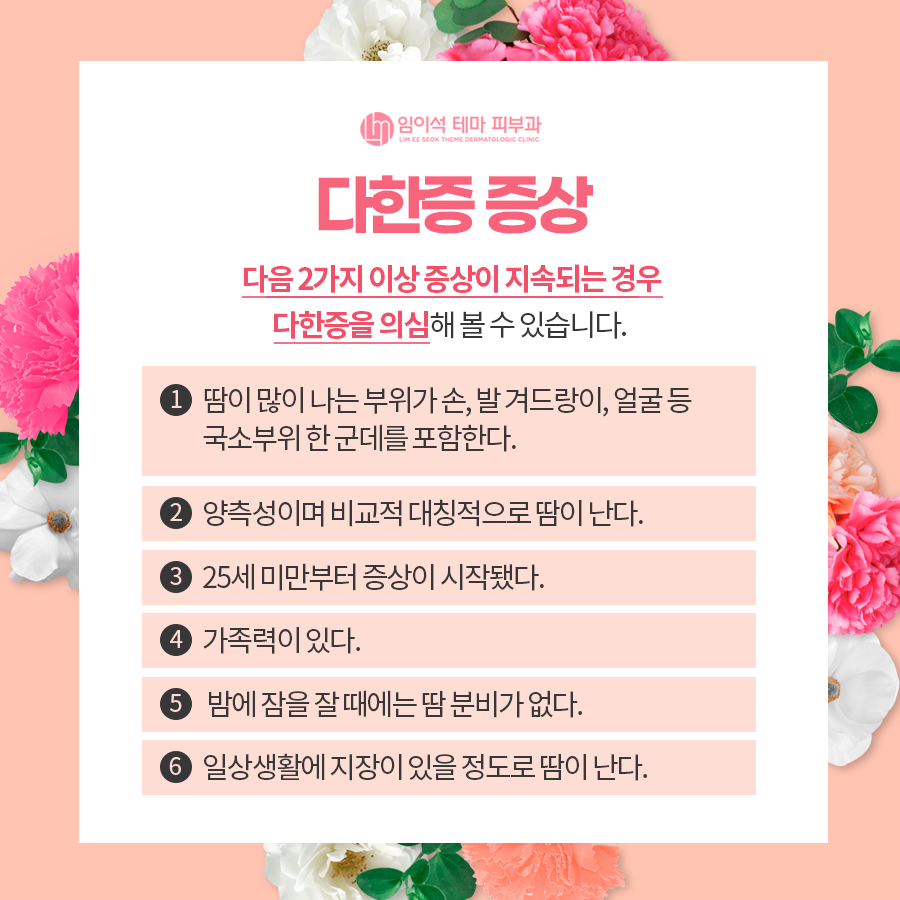
When not exercising, axillary hyperhidrosis usually has a secretion rate of 50 mg/min or more. On the palms, it is considered pathological if the secretion rate is 20 mg/min or more. If, for a period of more than 6 months, a large amount of sweat is produced in a specific part of the body without an identifiable cause and at least two of the following symptoms persist, hyperhidrosis may be suspected.
- The area that sweats heavily includes one localized area such as the hands, feet, armpits, or face.
- It is bilateral and relatively symmetrical.
- The symptoms began before the age of 25.
- There is a family history.
- There is no sweat secretion during sleep at night.
- Sweating is severe enough to interfere with daily life.
What Is Bromhidrosis?
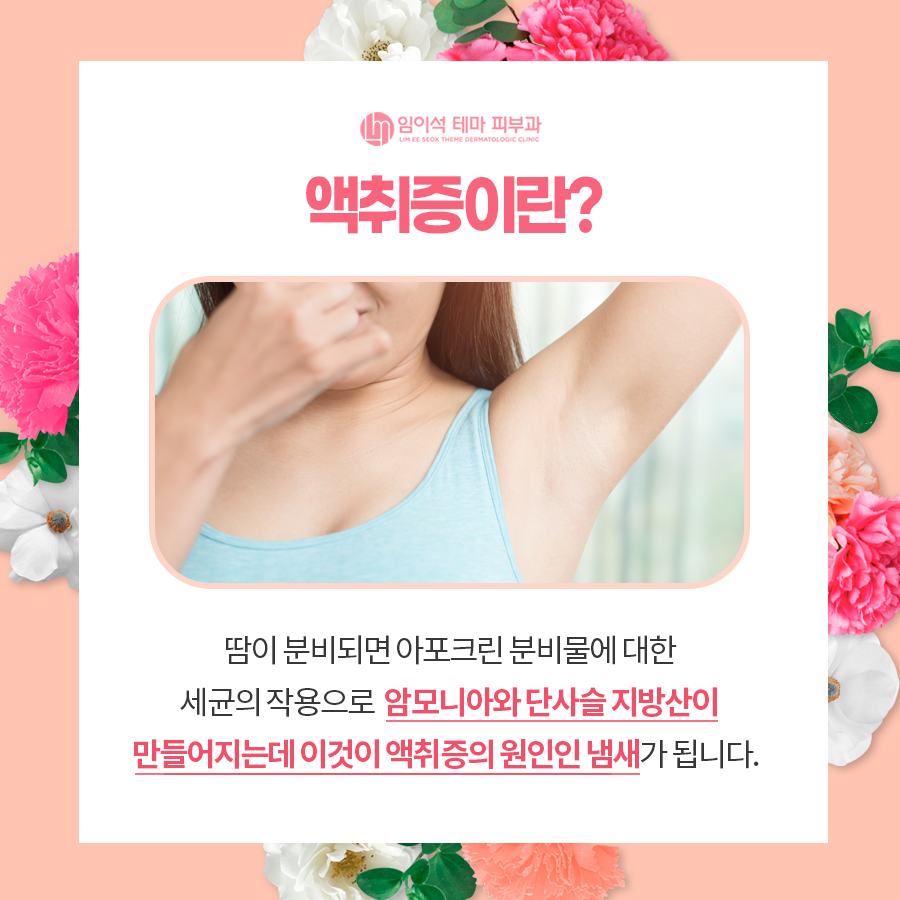
Bromhidrosis does not occur just because you sweat, but hyperhidrosis is often accompanied by bromhidrosis. In particular, in the case of axillary hyperhidrosis, people may have trouble because their clothes become wet, and it can be accompanied by bromhidrosis, also called "underarm odor," making it difficult to use public places easily.
When sweat is secreted from areas where apocrine glands are located among the sweat glands, bacteria act on the apocrine secretions and produce ammonia and short-chain fatty acids, which cause the odor.
The occurrence of sweat itself does not cause underarm odor, but the more sweat there is, the easier it is for underarm odor to develop.
Symptoms of Bromhidrosis
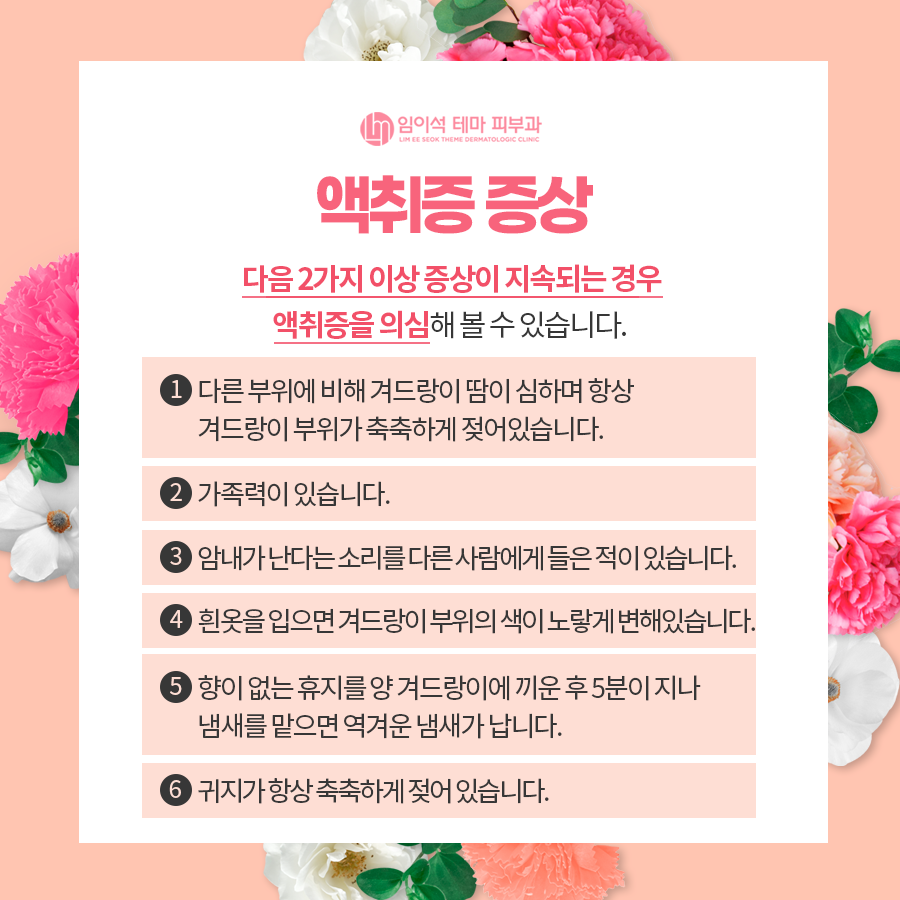
Bromhidrosis, which worsens most in summer, comes with sweating and a stronger pungent odor. In severe cases, the smell can be noticeable to people nearby, and even adults, not just people in sensitive periods such as adolescence, may avoid meeting or making contact with others, leading to difficulties in social life.
If two or more of the following symptoms apply, it is recommended to suspect bromhidrosis and receive treatment.
- Armpit sweat is more severe than in other areas, and the armpit area is always damp.
- There is a family history.
- You have been told by other people that you have underarm odor.
- When wearing white clothes, the armpit area has turned yellow.
- After placing unscented tissue under both armpits for 5 minutes and smelling it, it has a foul odor.
- Earwax is always moist.
If you remove underarm hair, you can reduce odor by preventing bacterial growth and the accumulation of sweat on the hair shafts. In addition, it can be treated with medication (antibiotics, deodorants, etc.) and bromhidrosis surgery.
Differences Between Hyperhidrosis and Bromhidrosis
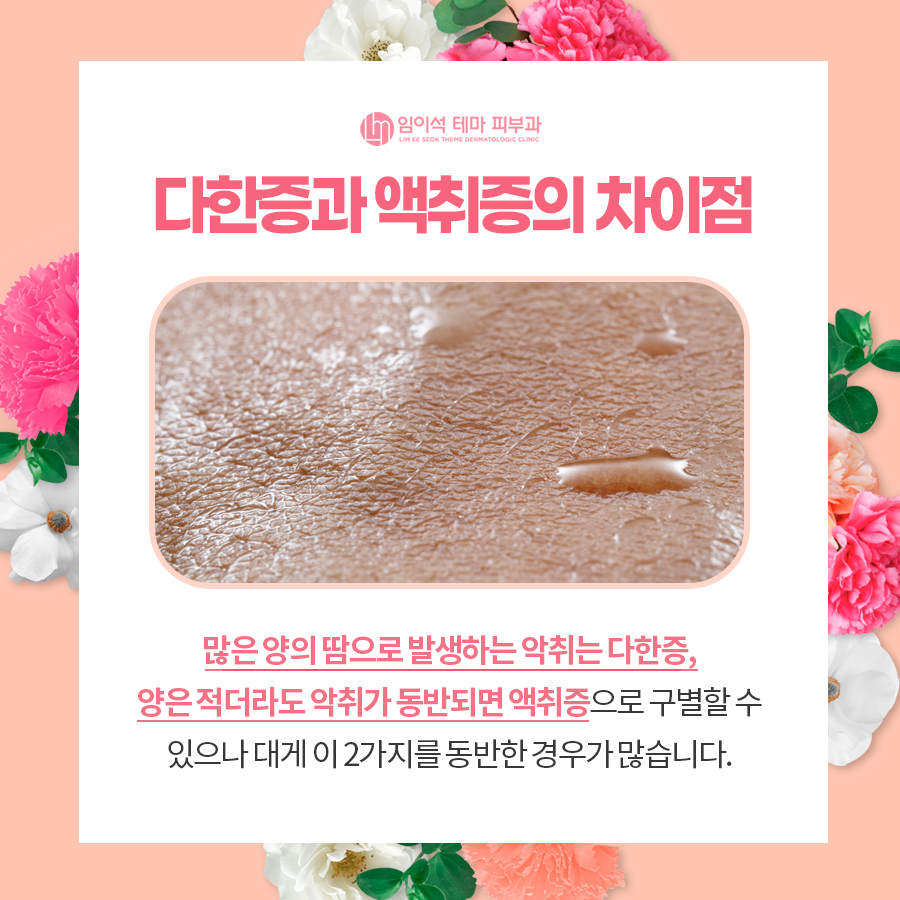
Eccrine sweat glands: colorless, odorless, and tasteless; responsible for regulating body temperature and removing waste products
Apocrine sweat glands: contain fat or protein, so they produce transparent, sticky sweat
Many people think hyperhidrosis and bromhidrosis are similar because they are conditions caused by "sweat," but there are differences. The human body has eccrine sweat glands, which are colorless, odorless, and tasteless and are responsible for regulating body temperature and excreting waste products, and apocrine sweat glands, which are developed in specific areas such as the armpits, nipples, navel, and perineum and contain fat or protein, producing non-transparent, sticky sweat.
Apocrine sweat glands cause bromhidrosis, and eccrine sweat glands cause hyperhidrosis, so the criteria for onset differ.
The odor caused by hyperhidrosis is due to sweating that occurs up to eight times more than in the average person, whereas bromhidrosis occurs when sweat secreted from apocrine glands is released onto the skin surface and combines with bacteria to create an odor.
To put it simply, an unpleasant odor caused by a large amount of sweat can be classified as hyperhidrosis, while if a smell is accompanied even by a small amount of sweat, it can be classified as bromhidrosis. However, the two often occur together.
Methods for Treating Hyperhidrosis
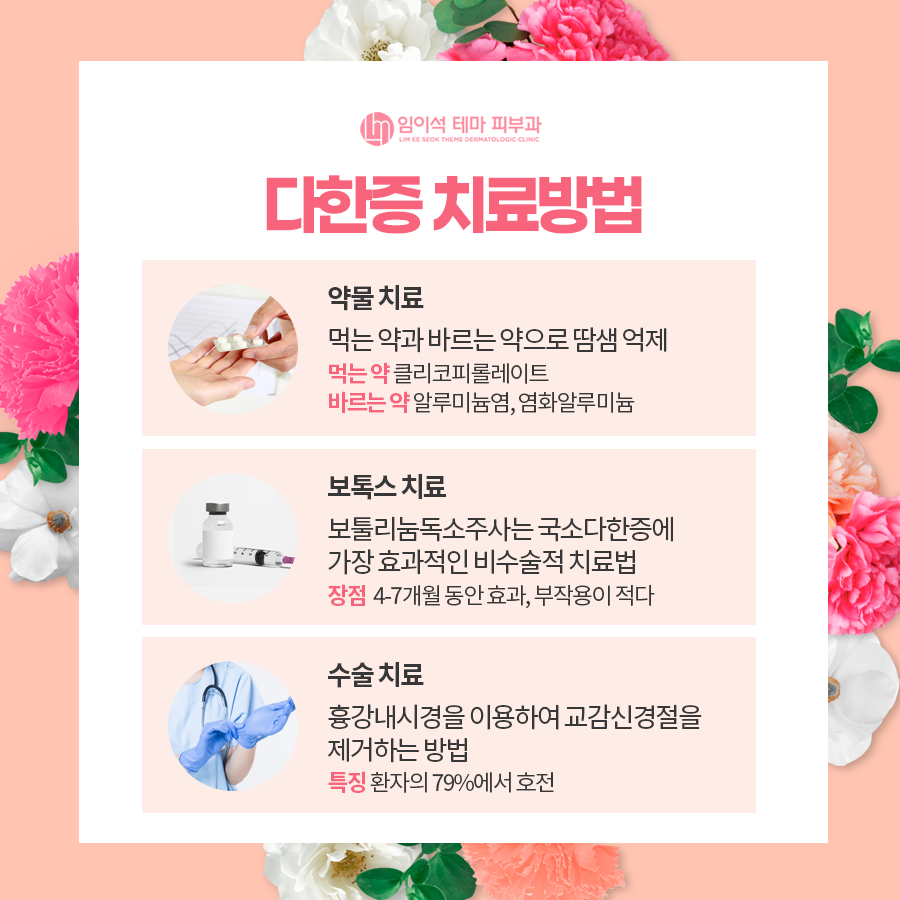
Hyperhidrosis treatment and bromhidrosis treatment mainly use three methods: medication, surgery, and Botox.
Medication: Medication is divided into oral medication and topical medication.
Glycopyrrolate, an oral medication, blocks the switch that causes sweating and reduces sweat secretion. Aluminum salts, a topical treatment for hyperhidrosis, are the most widely used local antiperspirants, and concentrations of 1–2% are used.
Preparations containing aluminum chloride are used at 15–25%.
They must be applied daily, and side effects may include irritation, burning, and paresthesia. Oral and topical medications are pharmaceuticals and can only be used with a prescription based on a doctor’s examination. Because misuse may cause side effects, accurate diagnosis by a dermatologist and use according to the prescription are necessary.
Botox treatment: In the past, surgeries such as nerve blocking were often performed, but due to side effects such as compensatory hyperhidrosis, the trend has shifted toward managing hyperhidrosis with Botox.
Botulinum toxin injection is the most effective non-surgical treatment for localized hyperhidrosis, and in the case of Botox, it has an effect for 4–7 months, with the advantages of fewer side effects and a short procedure time.
The method of using Botox for hyperhidrosis is to inject Botox into the dermis, which suppresses the release of acetylcholine, a neurotransmitter at the synapse of the sweat gland, thereby reducing sweating.
Surgical treatment: Thoracic sympathectomy, a surgery for hyperhidrosis, is performed using thoracoscopic surgery to remove the sympathetic ganglia and is carried out for palmar hyperhidrosis and axillary bromhidrosis surgery, with improvement seen in 79% of patients.
Complications related to surgery may include hemothorax and pneumothorax. Therefore, treatment should be approached carefully after sufficient consultation with the medical team.
If you think your sweat secretion is excessive and has an odor, and you suspect hyperhidrosis or bromhidrosis and are considering examination and treatment, it is best to visit a hyperhidrosis clinic and consult with a doctor thoroughly to find the treatment method that is right for you.
Im Eiseok Theme Dermatology Clinic has been providing systematic treatment for skin problems and premium beauty care for a long time, and based on extensive clinical experience, it offers customized treatment for patients. In addition, it continuously adds or replaces premium laser equipment to minimize side effects and improve effectiveness.
If you have any questions about hyperhidrosis and bromhidrosis clinics, please contact Im Eiseok Theme Dermatology Clinic.