
From silicone side effects to autologous rib cartilage warping
When considering rhinoplasty, the most frequently searched questions are
silicone side effects, donor rib cartilage side effects, and autologous rib cartilage warping.
In this post, I will organize the structure and principles of rhinoplasty materials in the same order explained in the video.
1️⃣ Materials Used in Rhinoplasty
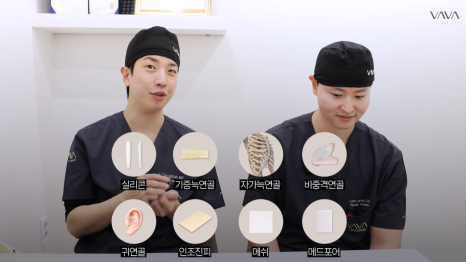
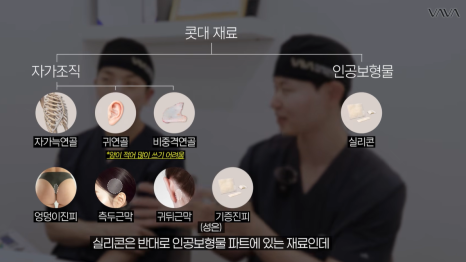
The materials used in rhinoplasty are broadly divided into autologous tissue and artificial implants.
This is the first structure explained in the video as well.
① Autologous tissue
Materials harvested from your own body.
Autologous rib cartilage
Ear cartilage
Septal cartilage
Buttock dermis
Temporal fascia
Postauricular fascia
Autologous tissue is highly compatible with the body,
and even when a capsule forms, it tends to be very thin.
However, immediately after grafting, blood supply is cut off,
so until new blood vessels grow in,
it goes through a period of temporarily limited nutrient supply.
② Artificial implant
An implant manufactured externally.
Silicone
(If needed) other implant materials
Silicone has the advantage of a consistent shape
and no absorption or warping.
However, due to the body’s foreign-body reaction,
a capsule may form
and in some cases it can become thicker.
In other words, the choice of nasal bridge material
comes down to these two broad categories:
autologous tissue
or artificial implant
From here on,
let’s go over the characteristics of each material,
as well as silicone side effects, ear cartilage resorption, and autologous rib cartilage warping.
✔ Nasal bridge using silicone
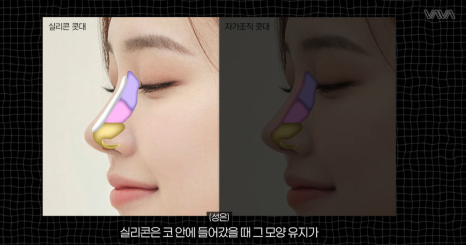
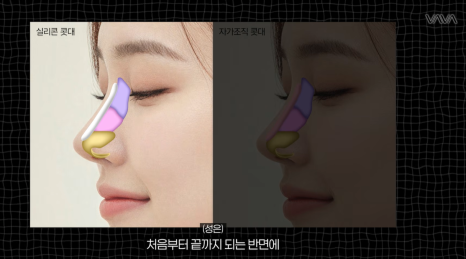
The nasal bridge is the area that creates height and a straight line.
Shape retention and stability are important.
It maintains a consistent shape, hardly changes, is not absorbed,
and can be removed.
Silicone is still a stable material for the nasal bridge.
However, designing it with excessive height or without considering skin availability
can cause side effects.
Silicone is the most commonly used material for nasal bridge rhinoplasty.
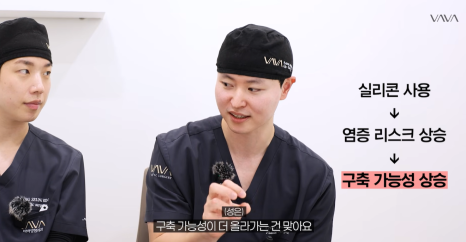

However, the cause of silicone side effects is often not the material itself,
but rather excessive height settings and an over-aggressive design.
✔ Autologous tissue nasal bridge
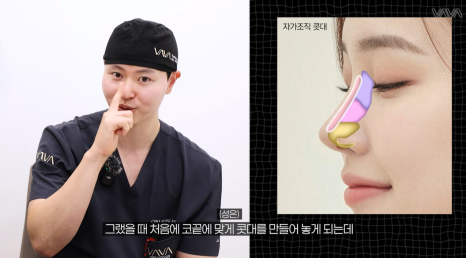
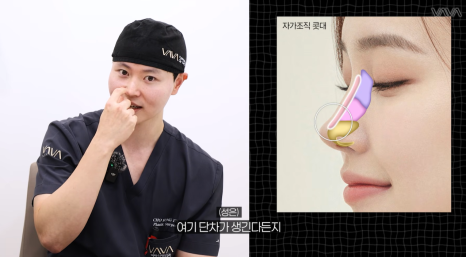
When autologous tissue is placed in the nasal bridge, until it receives blood supply and survives,
that cartilage is essentially deprived of nourishment and decreases in size. At that point, the bridge is made to match the nasal tip at the beginning, but if the absorption rate is high, problems such as a step-off or a collapse in a certain area can occur.
Also, when the amount of absorption feels too small, it may instead result in a thick nasal bridge or a protruding hump, so predictability of the outcome can be lower.
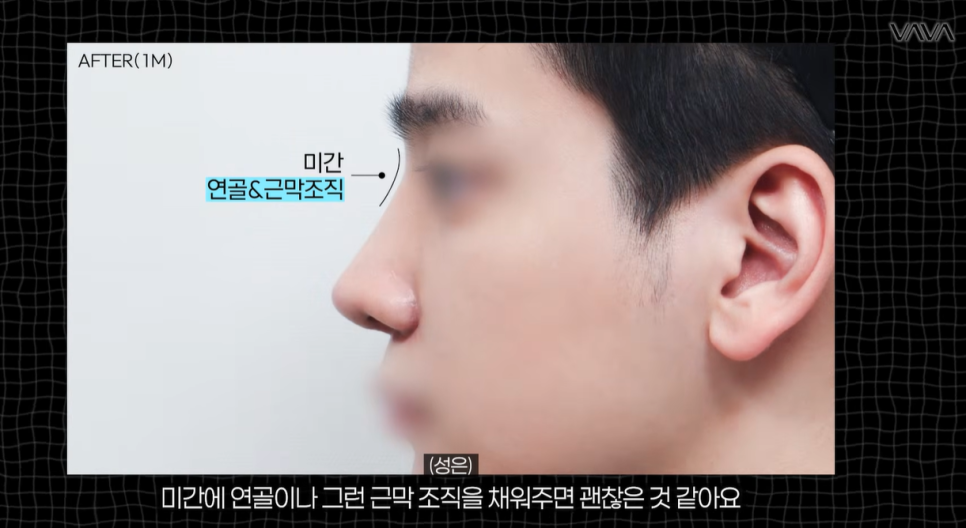
*It is suitable when there is a hump, but only the glabella between the eyebrows is slightly low.
2️⃣ Difference Between Implants and Autologous Tissue - Capsule Formation
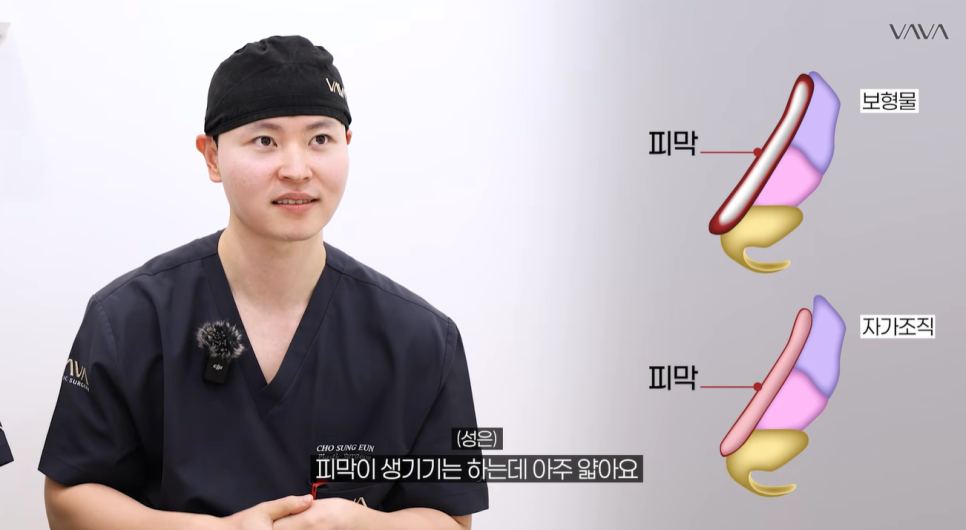
One of the things often mentioned in rhinoplasty materials is capsule formation.
When a foreign substance enters the body, the body forms a membrane around it,
and when an implant (such as silicone) is used,
this capsule can form relatively thickly.
If this capsule becomes excessively thick or hard,
it can cause contracture or shape distortion.
In contrast, autologous tissues such as autologous rib cartilage, septal cartilage, and ear cartilage
are part of your own body,
so even if a capsule forms, it tends to be very thin.
Implant → relatively thick capsule formation possible
Autologous tissue → thin capsule formation
This is the difference.
3️⃣ Nasal Tip Materials
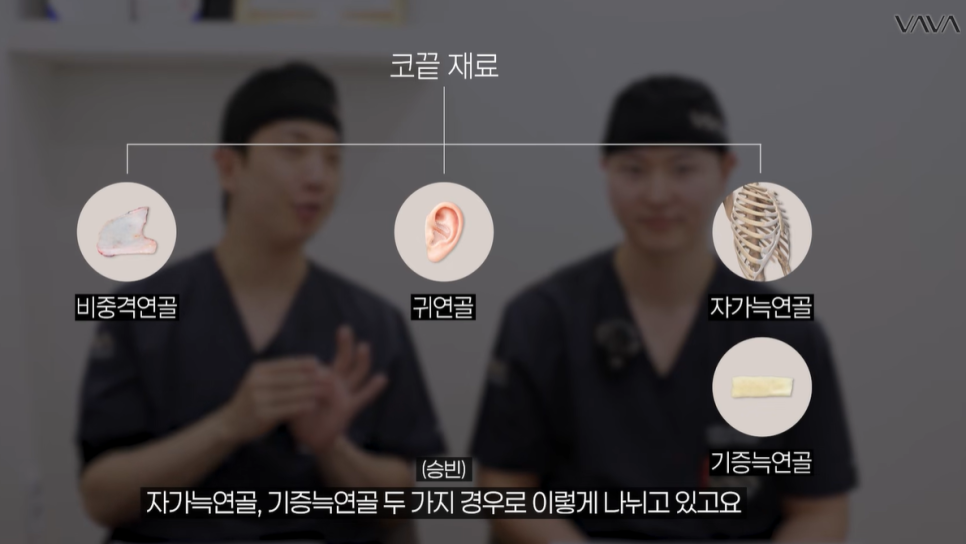
Nasal tip cartilage = a pillar that can provide height
so firm cartilage is needed.
✔ Septal cartilage
Most commonly used in primary surgery, with strong support.
✔ Ear cartilage
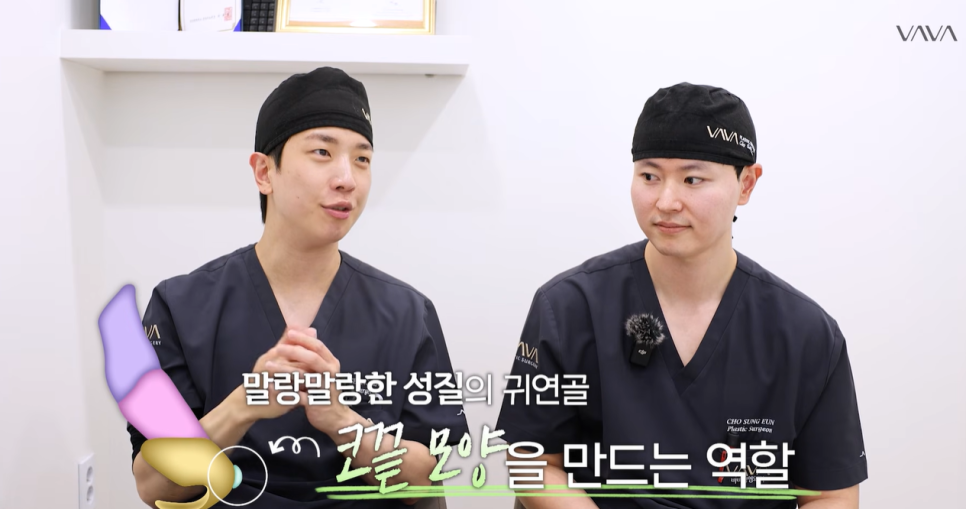
It has good elasticity and is advantageous for creating a natural shape.
However, the absorption rate varies depending on the purpose of use.
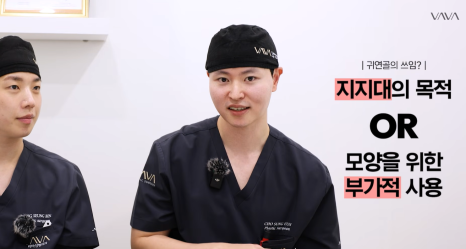
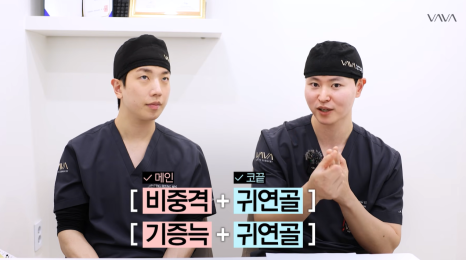
When used alone as a support → relatively high absorption
Septal cartilage + ear cartilage / donor rib + ear cartilage → relatively low absorption
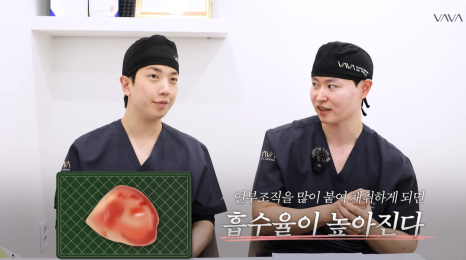
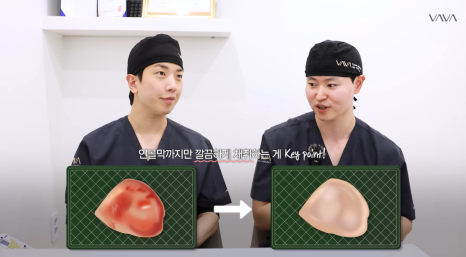
Also, when harvesting ear cartilage,
if too much soft tissue is left behind, the absorption rate may increase,
so it is important to harvest precisely only up to the perichondrium.
✔ Autologous rib cartilage
It can create strong support
and is suitable for revision surgery or cases with a weak structure.
4️⃣ Autologous Rib Cartilage Warping, Really?
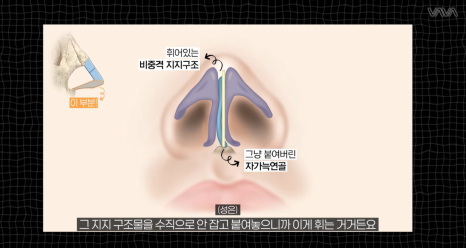
Autologous rib cartilage warping is
a theoretical concept that means rib cartilage can bend over time.
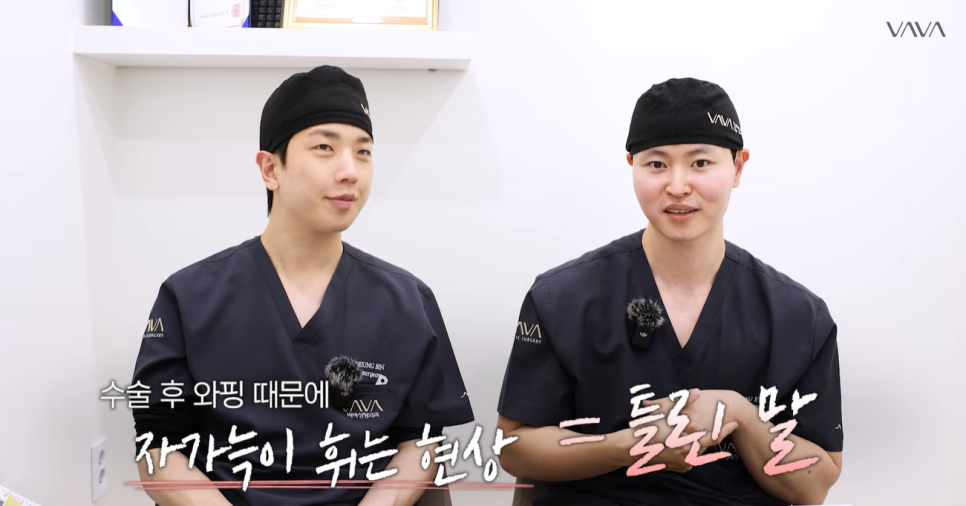
However, in cases confirmed through revision surgery at Baba Plastic Surgery,
the autologous rib cartilage itself was rarely bent.
In most cases,
✔ it had been fixed onto a bent septal support structure, or
✔ the central pillar had not been placed perfectly vertically
In other words, it was a problem with the structural design.
At Baba Plastic Surgery,
because the central pillar is aligned precisely vertically
and the nasal tip is reinforced with a two-layer autologous rib cartilage structure,
cases where the cartilage itself warps and becomes a problem are considered rare.
In the end, what matters is not the cartilage itself, but the design of the support structure.
■ Why autologous rib cartilage is recommended for the first surgery
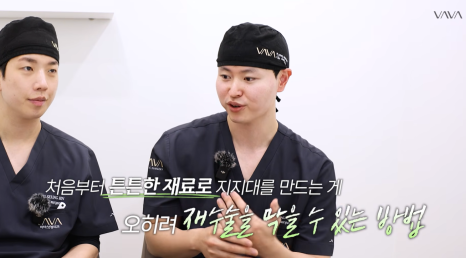
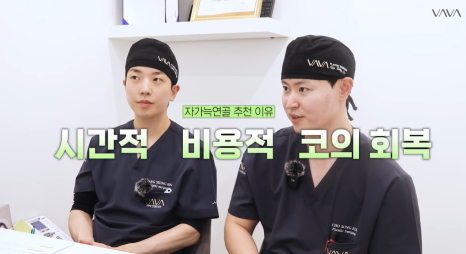
Recently, there are cases where autologous rib cartilage is chosen even for primary rhinoplasty.
The reason is that,
if a strong support is made from the start,
it can reduce the chance of collapse over time
and lower the possibility of revision surgery.
Revision surgery involves
time costs, financial burden, and tissue damage.
Therefore, when considering long-term stability,
autologous rib cartilage can be one option.
In the end, rhinoplasty is
not a matter of which material is used,
but of how it is designed.
Thank you.


