Brushing after meals?
Doing just this can reduce trips to the dentist
Hello.
I’m Dr. Oh Su-hwan, a dentist with 18 years of experience, working hard to help patients regain healthy smiles.
Why is there something called the 3-3-3 rule?
It means that for healthy teeth, you should brush three times a day, within 3 minutes after meals, for 3 minutes.
That’s not wrong, but it leaves out a truly important key point.
The point is that even if you brush just once, you need to do it the right way.
So today, let’s take a look at how to brush properly after meals,
and also review some incorrect brushing habits.
How to brush so your teeth don’t fall out
Brushing after meals
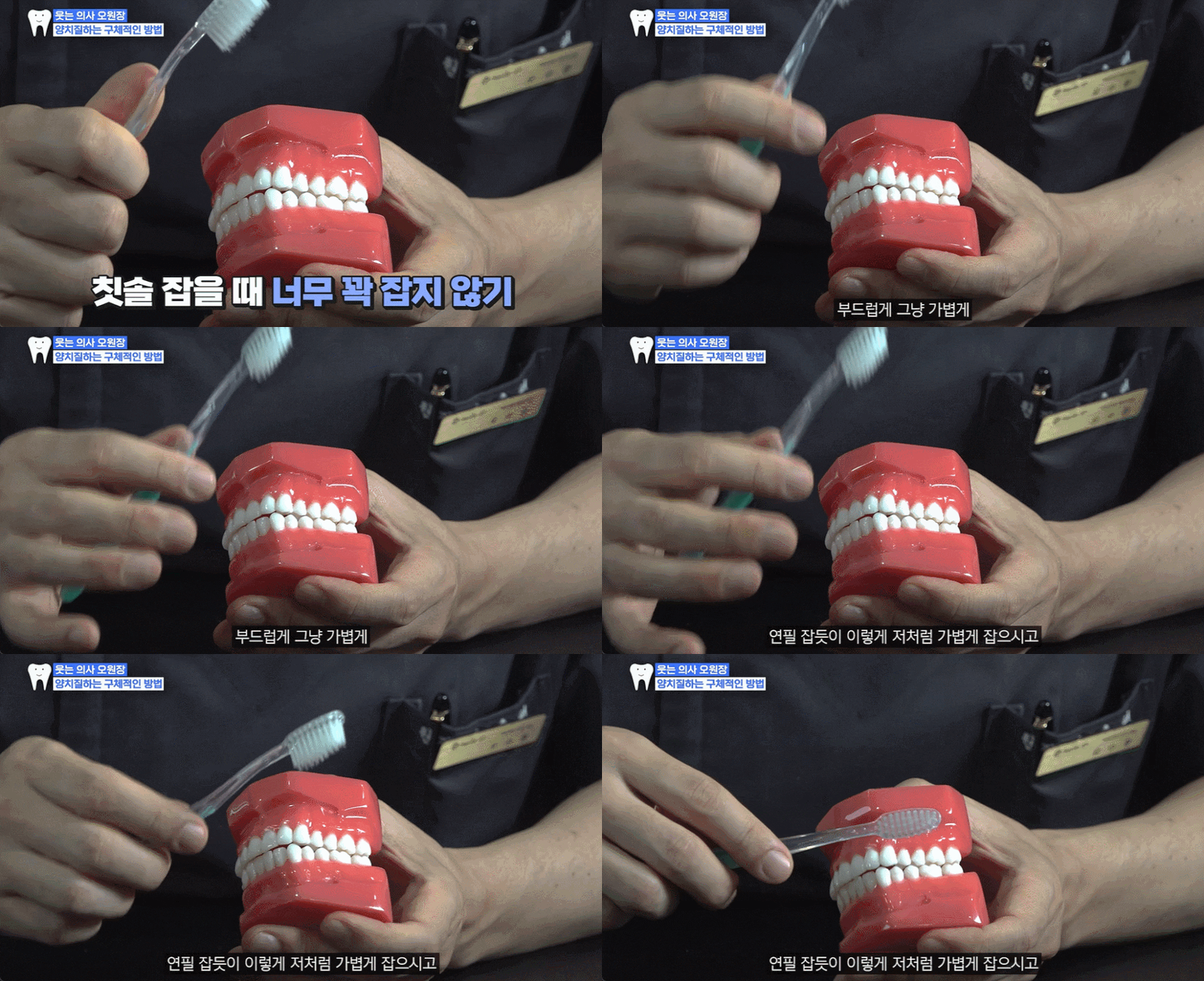
First, hold the toothbrush lightly, like holding a pencil.
What brushing is meant to remove is a bacterial film, like slippery grime.
Rather than scrubbing hard, it’s better to brush gently with a soft toothbrush.
When brushing, clean the upper and lower teeth separately,
and do so in this order: molars, front teeth, then the molars on the other side.
Keeping a systematic order helps you brush thoroughly without missing any areas.
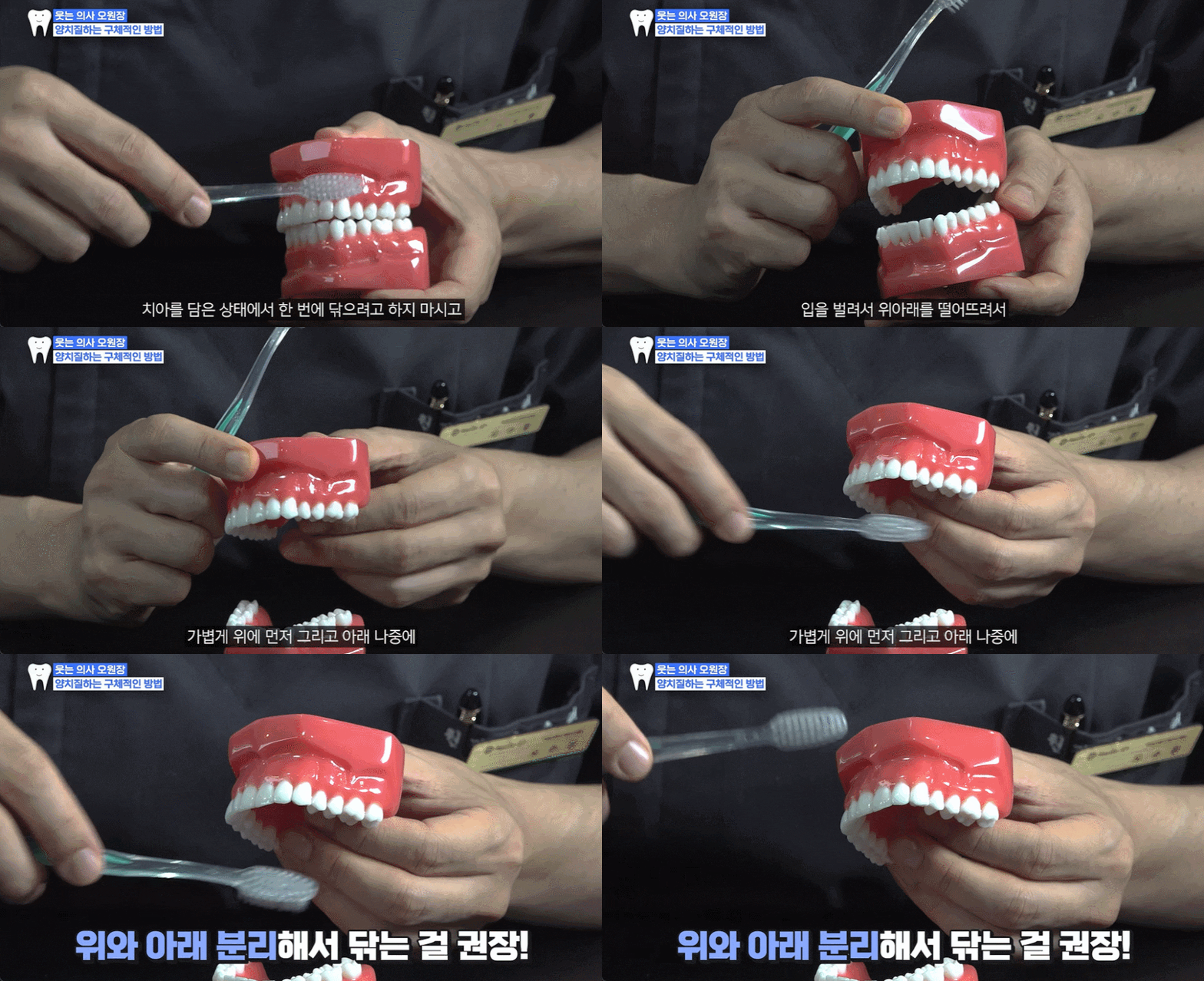
The key here is not to scrub, but to clean them one by one.
In general, many people tend to rub several teeth at once with force when brushing after meals.
With that method, you can’t clean every nook and cranny thoroughly.
After brushing one tooth, lift the toothbrush away,
move to the next tooth, and then place the brush back in contact and clean it.
Think of it as one-to-one close-up care for each tooth.
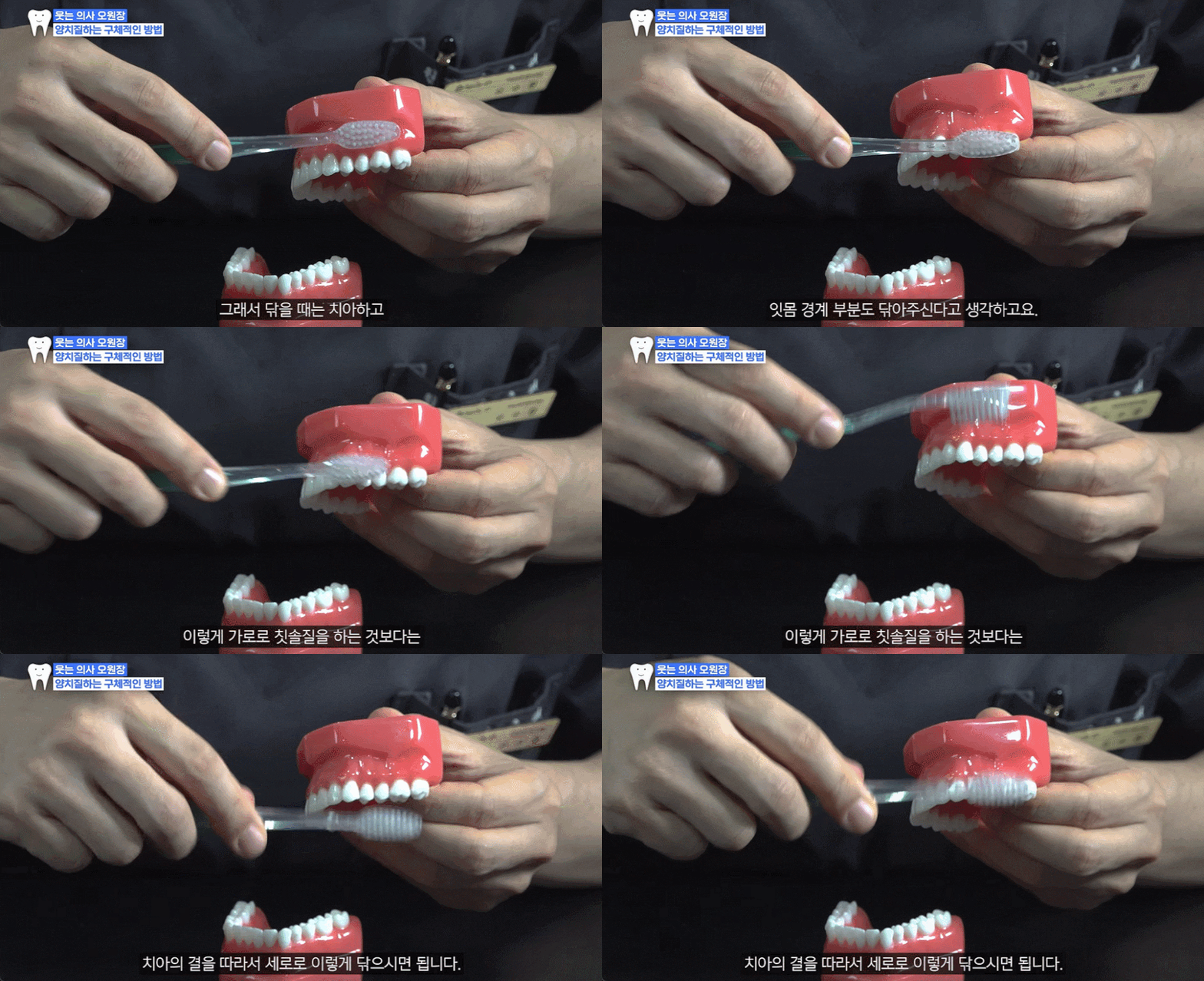
The area that needs special attention is the boundary between the teeth and gums.
Rather than simply brushing the tooth surface, along the gum line
it’s better to tilt the toothbrush and brush gently.
To do that, the bristles should not cover the chewing surface of the teeth, and the toothbrush should be inserted a little deeper toward the gums.
Tip. Brush with your mouth open
Just as you carefully clean while checking with your eyes when cleaning the house, brushing is the same.
Don’t brush with your mouth closed; brush while looking at your teeth with your mouth open.
It’s good to hold a small mirror and check as you brush,
or brush while observing your teeth close to the bathroom mirror.
Keep checking whether the bristles are making proper contact with each tooth as you brush.
Only then can effective cleaning take place.
Tip. How should you choose a toothbrush?
-
To effectively clean the boundary between the teeth and gums while protecting the gums, soft bristles are best.
-
The bristles should be densely packed so that force is evenly distributed and cleaning power is improved.
-
A small head can reach into the corners of the teeth, allowing more detailed brushing.
TOP 4 bad brushing habits
Brushing after meals
Here are four bad brushing habits.
Check whether the brushing habits you have are actually incorrect.
Rinsing the mouth carelessly (X)
How much do you rinse your mouth after brushing?
Some people like the refreshing aftertaste of toothpaste and simply rinse their mouths once or twice,
while others leave their mouths un-rinsed at all because they think the fluoride in toothpaste helps prevent cavities.
But this is not a good habit at all.
Rather, the surfactants in toothpaste can remain in the mouth and dry out the oral mucosa, which may cause bad breath.
So after brushing, it’s best to rinse your mouth thoroughly with clean water at least 7–8 times.
Brushing immediately after using mouthwash (X)
Using mouthwash immediately after brushing is also the wrong method.
This is because the surfactants in toothpaste and the chlorides contained in mouthwash can react and cause tooth staining.
It’s best to use mouthwash at least 30 minutes later.
 Putting water on the toothbrush and brushing (X)
Since dust may be on the toothbrush and it may be dirty,
some people rinse the toothbrush under running water before brushing.
This is a habit that reduces the effectiveness of toothpaste.
Toothpaste contains ingredients such as ▲ abrasives that remove plaque ▲ surfactants that create foam and remove foreign substances ▲ fluoride that helps prevent cavities,
and among these, abrasives can become diluted when exposed to water, reducing their effectiveness.
Fluoride can also be diluted in water, reducing its cavity-preventing effect.
Therefore, brushing without wetting the toothbrush with water can clean your teeth more thoroughly.
Squeezing out too much toothpaste (X)
Using a lot of toothpaste is not better.
As I mentioned earlier, if the surfactants in toothpaste remain even after brushing,
they can dry out the mouth, which may cause bad breath or make it easier for bacteria to grow.
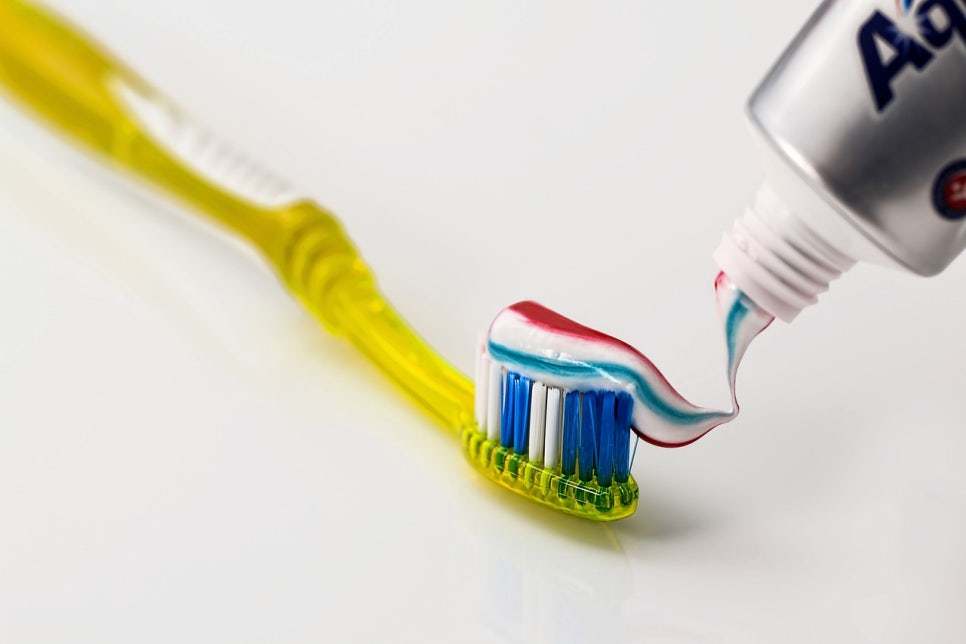
For adults, an amount about one-third to one-half of the toothbrush bristles is enough,
and it is more effective to squeeze the toothpaste so that it seeps into the bristles.
Small habits add up and help protect oral health.
I hope everyone can protect their healthy smiles by brushing properly after meals. ^^
This has been Dr. Oh Won-jang of Smile D. Thank you.