I want to get orthodontic treatment
without extracting healthy teeth, if possible.
Is that possible?
Having healthy teeth extracted... it somehow feels scary, and a little wasteful too.
So among people who have actually had orthodontic consultations,
some say that when they hear, “You need extraction-based orthodontic treatment,” they start wondering deeply whether they really need orthodontics at all.
But not all orthodontic treatment necessarily requires extractions.
At our Smile D Dental Clinic, there are also many cases where we created straight, aligned teeth without extractions.
Hello,
I’m Suhwan Oh, an orthodontic specialist certified by the Ministry of Health and Welfare with 18 years of experience.
As the primary doctor who looks at both overall dental alignment and highly complex bite correction,
I aim for non-extraction orthodontic treatment that prioritizes preserving natural teeth whenever possible.
Today, I’d like to talk about arch expansion, one of the non-extraction orthodontic methods.
Let’s look at a real case where orthodontic treatment was possible without extraction,
and I’ll also explain in detail the arch expansion process and precautions that many people are curious about.
[Smile D Dental Clinic Information]
| ☎️ Smile D Dental Clinic Phone Number |
|---|
| 0507-1449-2087 |
| ℹ️ Smile D Dental Clinic Website |
|---|
| Official website |
| 🎥 Smile D Dental Clinic YouTube |
|---|
| YouTube |
Arch Expansion Process and Case
First, this is what the arch expansion device looks like.
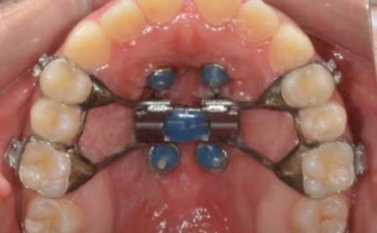
The metal device is attached to the inside of the palate,
and when you insert a stick and turn it like a lever,
the device opens slightly on both sides and temporarily widens the jawbone.
Usually, it is expanded by 0.2 mm every 3–4 days,
which is a tiny change about the thickness of a strand of hair.
Since many people find it difficult to visit the clinic frequently,
I first demonstrate it myself,
and then provide detailed guidance so you can safely carry it out on your own at home.
(Don’t worry. Most people get used to it quickly!)
The expansion period is short, about 1–2 months,
and after that, there is a retention period before moving into the full tooth movement stage.
I brought a case of non-extraction orthodontic treatment using an arch expansion device.
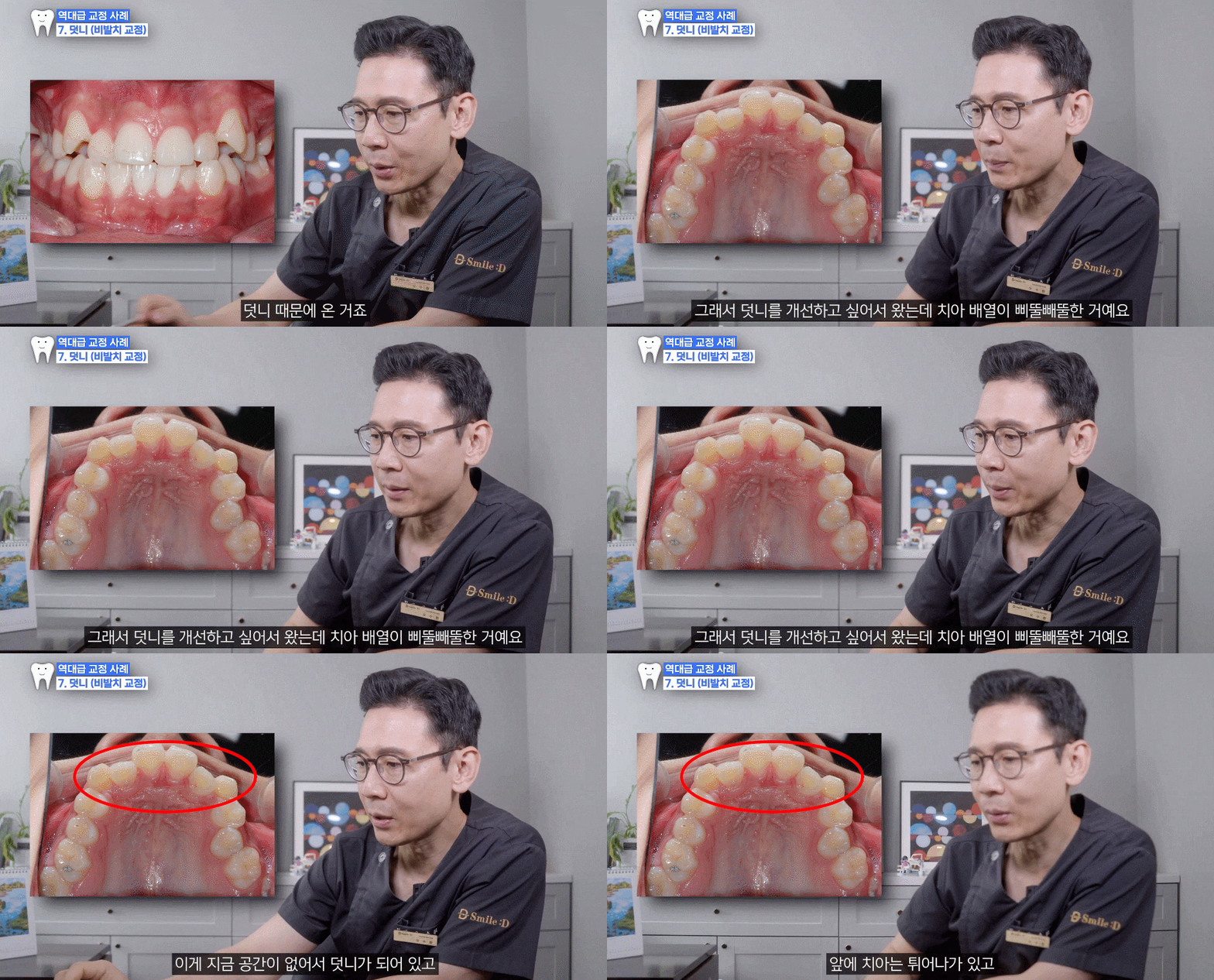
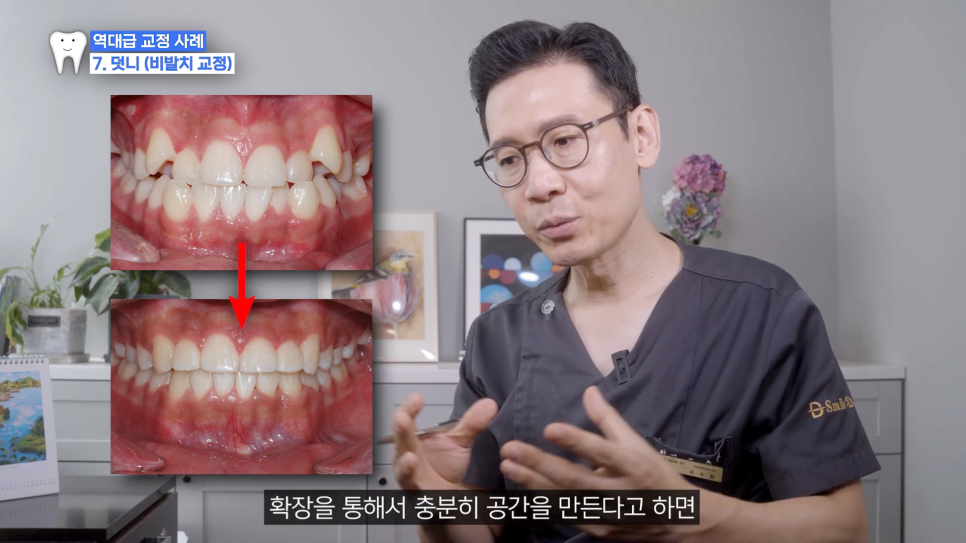
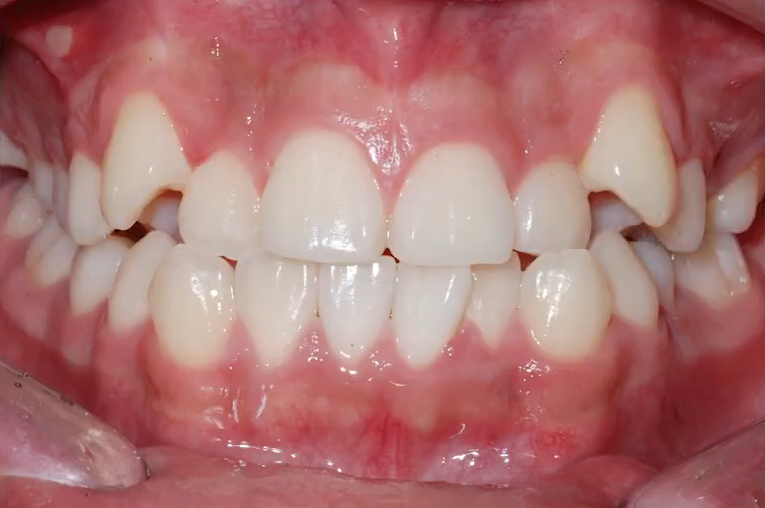
The front teeth are very crooked.
There isn’t enough space for the teeth to be aligned neatly, so the canines are protruding.
At another clinic, extraction-based orthodontic treatment was recommended,
but since the patient was still in adolescence and still had growth remaining, we decided to proceed with non-extraction treatment as much as possible.
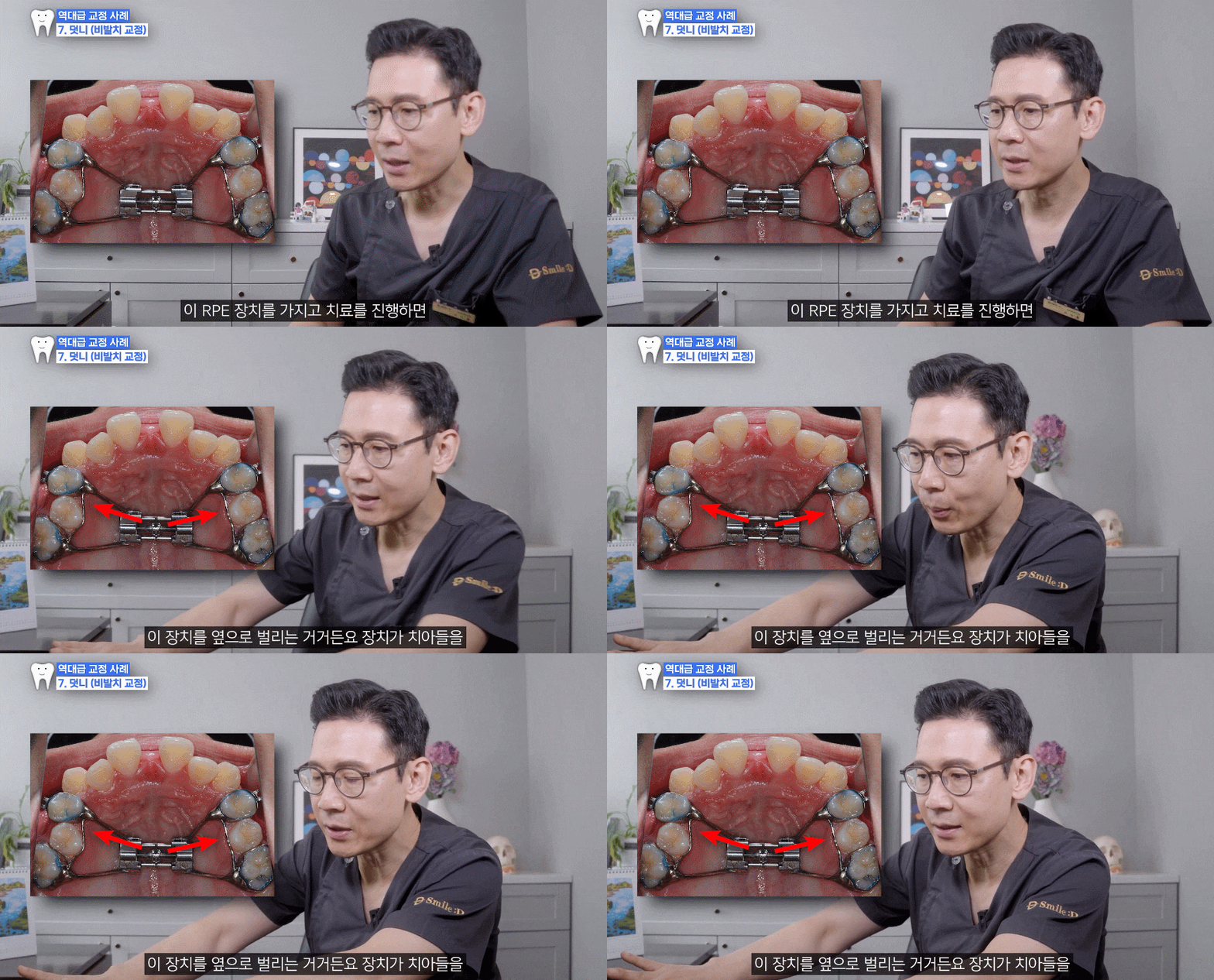
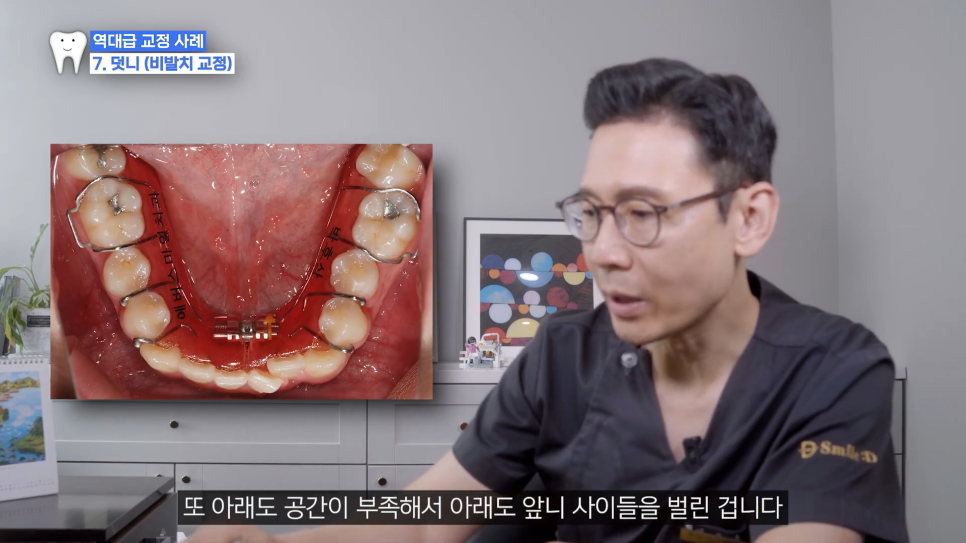
Using the arch expansion device, we widened the upper and lower arches to naturally create space between the teeth,
and then attached orthodontic appliances to align the teeth evenly.
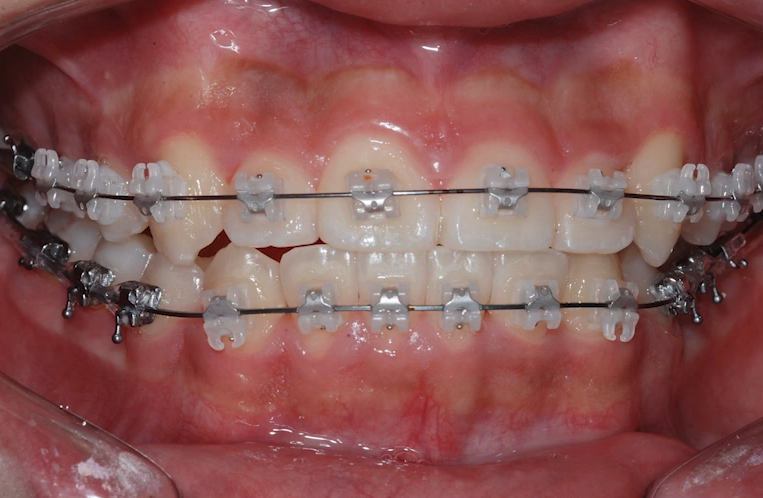
Although the canines were quite severe, we created enough space through expansion,
and this was a case that completed orthodontic treatment without extraction.
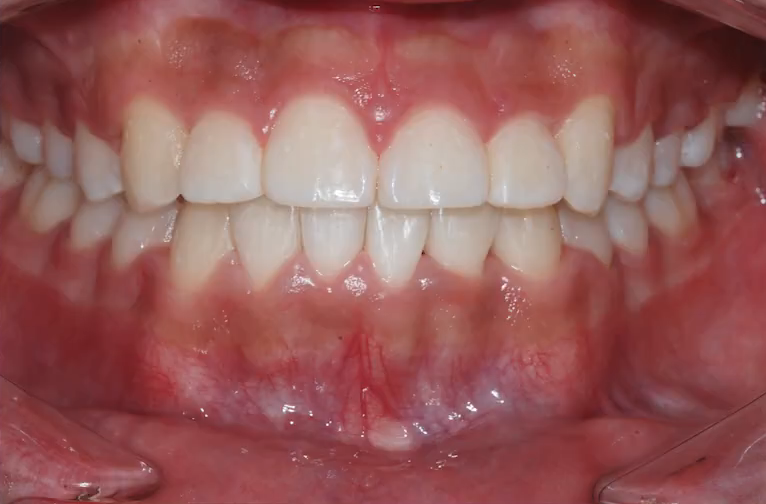
*Treatment period: 2022.03~2023.9
*The before-and-after photos were posted with the patient’s consent and are original images without separate retouching.
*All treatments may involve side effects, so please make your decision after sufficient consultation with a doctor.
Precautions for the arch expansion device
In adolescents who are still growing, the arch is not yet fully hardened, so it can be expanded relatively easily,
but in adults, because the bones are firmly fused,
a fixed expansion device that can continuously deliver stronger force is generally used.
Since the fixed type is a directly attached device,
it has the advantage of not being cumbersome to operate and offering high predictability in treatment.
However, because the device is fixed inside the mouth, speech may feel awkward at first, and food may get stuck,
so during the adjustment period, you need to pay closer attention to your eating habits and oral hygiene.
Meanwhile, as the arch is expanded,
a gap between the front teeth commonly appears.
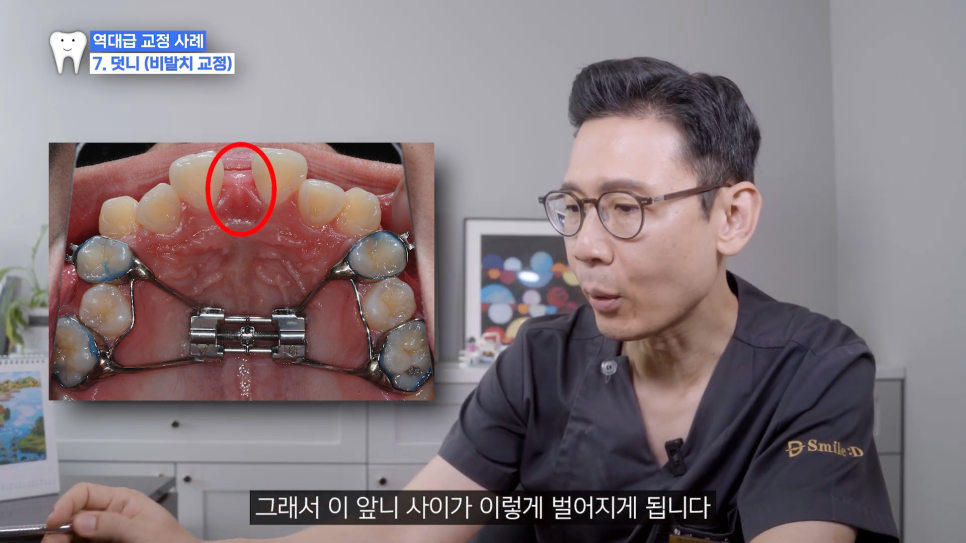
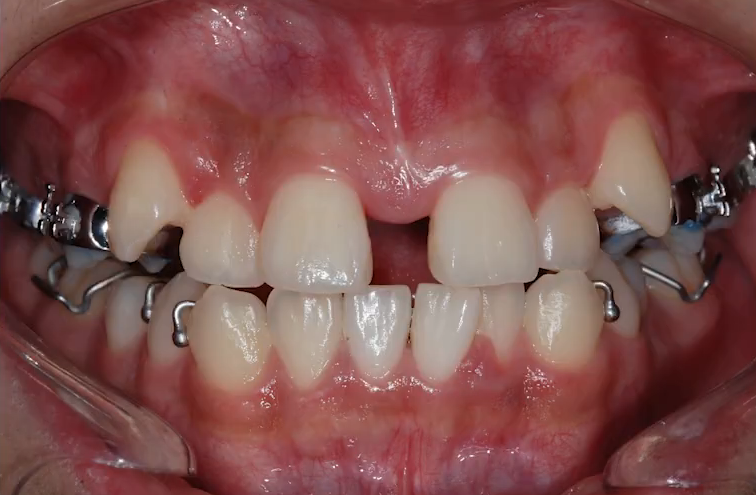
You may be surprised at first, but this is evidence that the teeth are moving properly.
They will naturally come back together during the follow-up orthodontic process, so there is no need to worry.
However, many people feel aesthetic stress at this stage,
so we explain this period in advance and, depending on the progress, use partial brackets together
so that treatment can continue without anxiety.
One more thing you should definitely know is that forced expansion can also cause side effects.
If you try excessive expansion that does not match the jaw structure, simply because you are determined to “have orthodontics without extraction,”
it can put strain on the periodontium and, rather, increase the chance of relapse after orthodontic treatment.
That is why at Smile D Dental Clinic,
we do not insist on just one method, such as non-extraction orthodontics.
We analyze CT scans, dental model analysis, bite condition, soft tissue thickness, gum height, and more from multiple angles,
and create a treatment plan in the most stable and healthy direction.
Non-extraction orthodontics without an accurate diagnosis and plan
can actually waste a lot of time and money.
Non-extraction orthodontics, including arch expansion, is clearly an attractive treatment method.
However, because whether it can be applied depends on each person’s oral structure and dental alignment,
you should not decide hastily without a professional diagnosis.
At Smile D Dental Clinic, an orthodontic specialist and a specialist in integrated dentistry personally make the diagnosis,
and provide detailed guidance from whether extraction is needed to the orthodontic method.
If you have questions such as:
"Can I have orthodontic treatment without extraction too?"
"Will arch expansion change my face shape?"
"How long will the front teeth stay apart?"
please get a thorough examination and consultation.
This has been Suhwan Oh, the head doctor at Smile D Dental Clinic.