Before looking for an anterior implant dental clinic
Please read this first
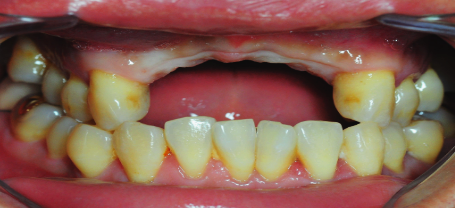
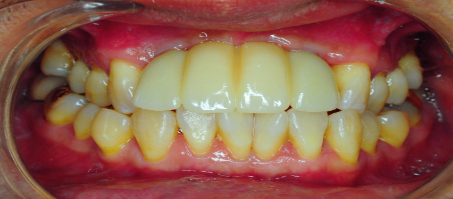
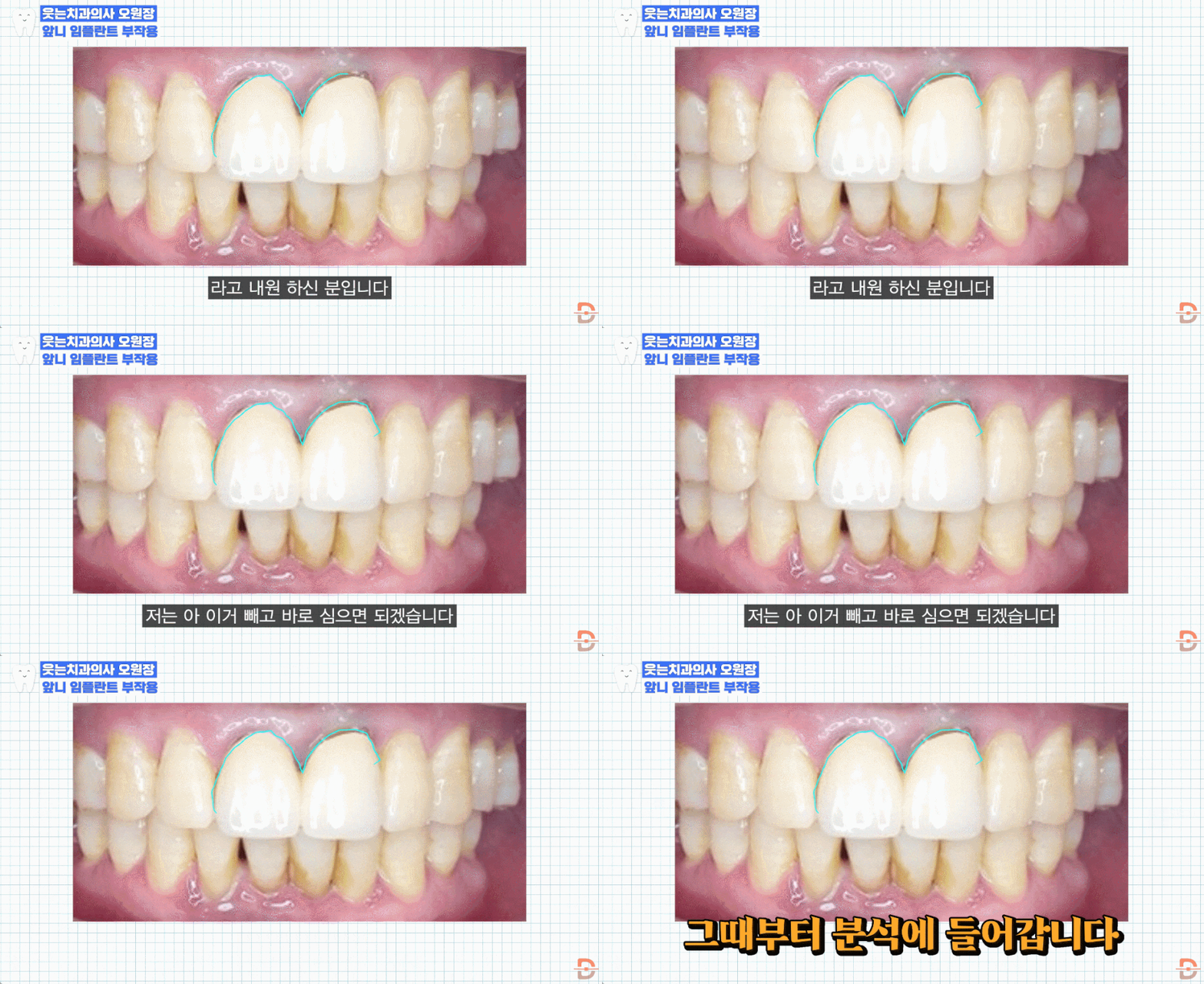
| * Before-and-after case of anterior implant dental treatment* (left) 23. 12. 25 / (right) 24. 06. 28 |

Hello.
I am Oh Su-hwan,
the chief director of Smile D Dental Clinic,
with 18 years of clinical experience,
and a smiling doctor.

"I lost my front tooth in an accident.
It seems I’ll need an implant,
so I’m looking into an anterior implant dental clinic,
but I’m worried about what to watch out for
and what kind of hospital I should go to...
"

If you are reading this now, you may be dealing with concerns similar to the ones above.
As we go through life, we can lose front teeth due to accidents, illness, and other reasons.
In such cases, an implant becomes the only solution for replacing the tooth with something as healthy and natural as a natural tooth.
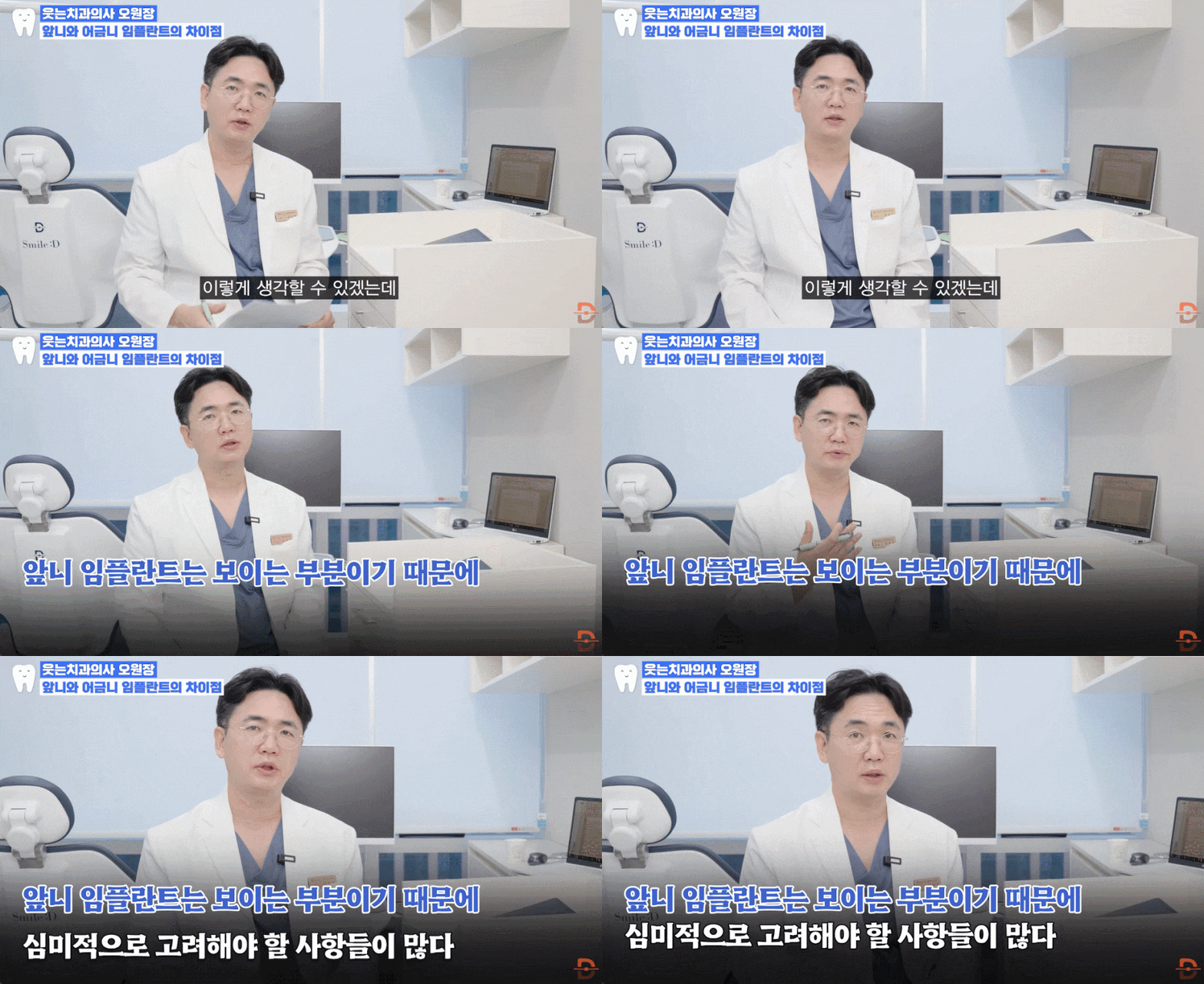
But what many people do not know is...
Anterior implant treatment is considered a highly difficult procedure,
so you must carefully choose an anterior implant dental clinic from the beginning.
Accordingly, as a board-certified orthodontic specialist with 18 years of experience certified by the Ministry of Health and Welfare, I will personally explain the following through the rest of this post.
- Precautions for anterior implants
- Key points of anterior implants seen through real cases
I plan to take the time to explain these two topics step by step.
If you read to the end, you should be able to pick up some useful tips. ^^
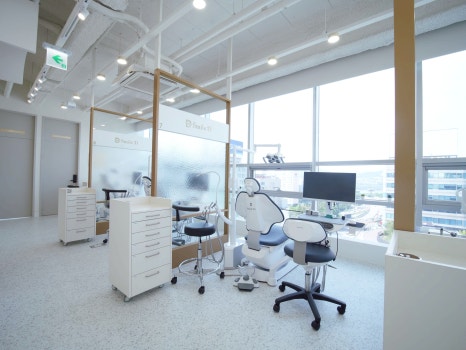

[Learn more about Smile D Dental Clinic]
[Smile D Dental Clinic map]
Anterior implant dental clinic,
why do you need to choose the "right" one?
I mentioned earlier that you need to choose an anterior implant dental clinic "well."
This is because anterior implants can lead to many side effects when incorrect information is used,
and because this is the area that is noticed first, both aesthetics and function must be satisfied.
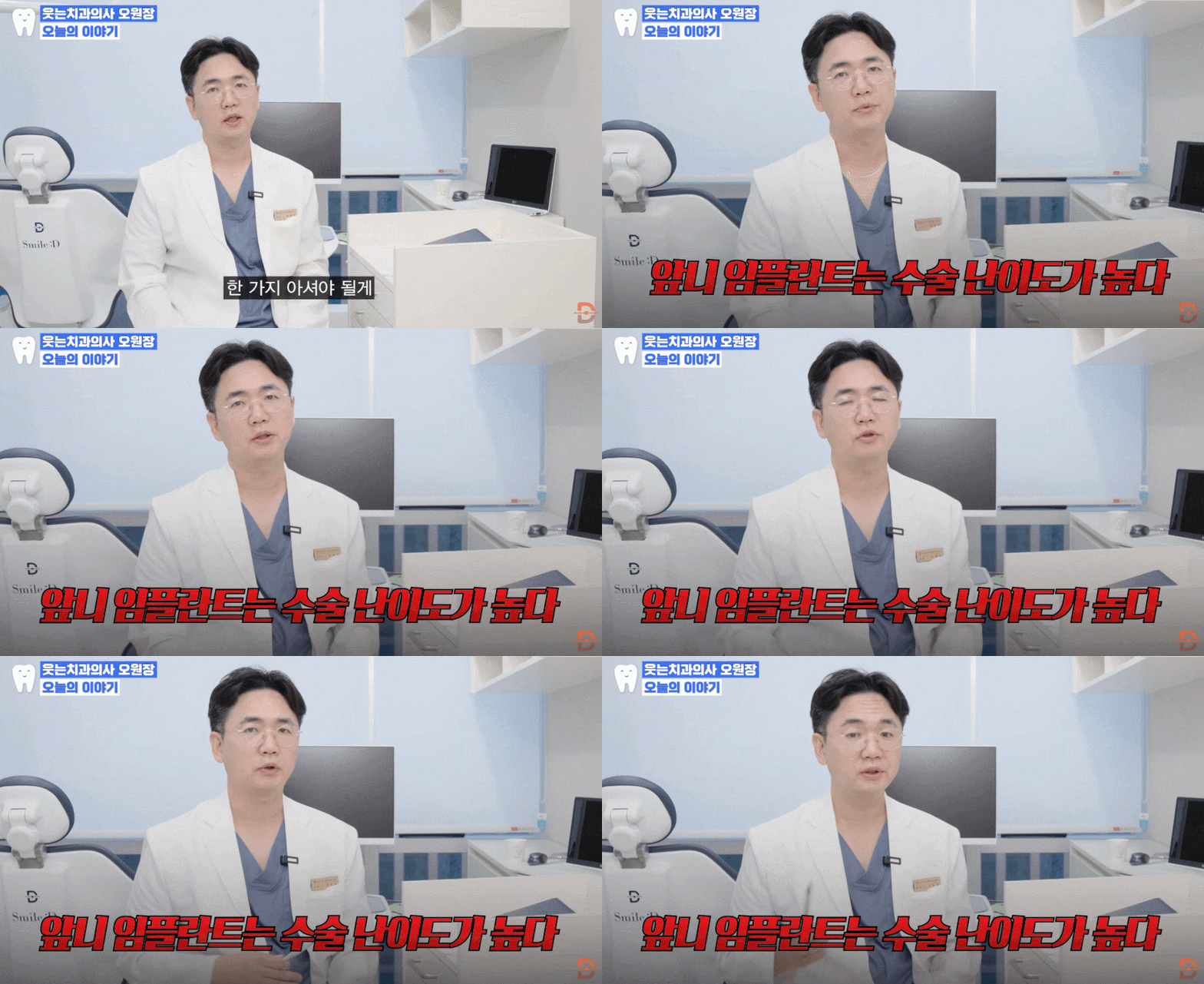
Once this dental treatment begins, there are many parts that cannot be reversed.
Then how does a skilled anterior implant dental clinic carry out treatment?
To help you understand, I will use our clinic’s anterior implant treatment process as an example.
- The importance of pre-treatment diagnosis
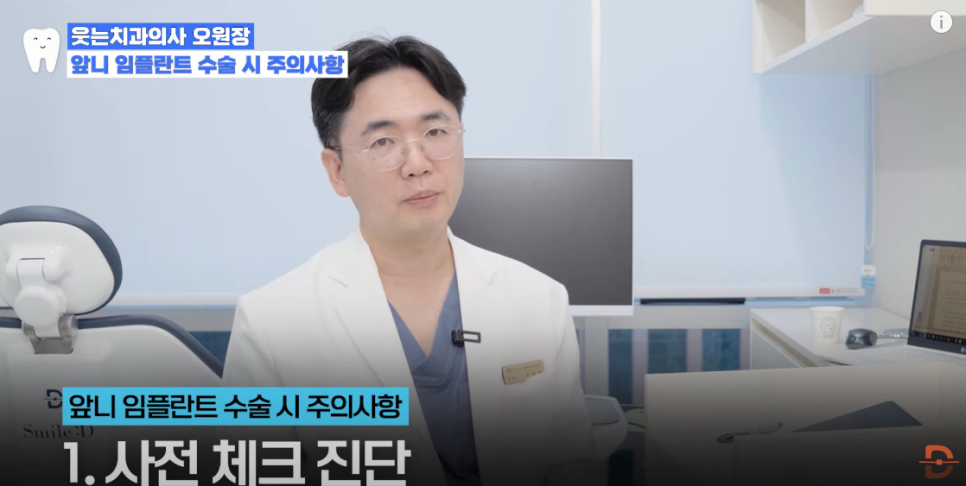
The approach to implants also changes depending on the reason for extraction.
If the tooth was broken due to trauma, the alveolar bone is often preserved,
but if the tooth was damaged and extracted due to periodontitis or similar conditions, bone resorption is likely already underway.
Therefore, a precise diagnosis using CT and a 3D scanner before surgery must come first,
so that it is possible to accurately predict whether bone grafting is needed and how much bone and at what angle it should be grafted.
- Checking the patient’s unique gum shape
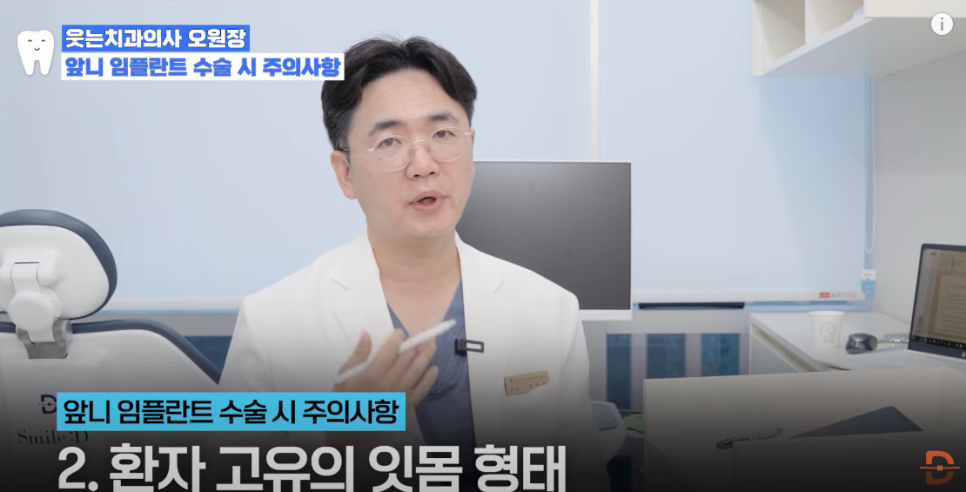
The shape of the gum line differs from person to person.
Some are shallow and gentle, while others have deep, narrow, wave-like gums.
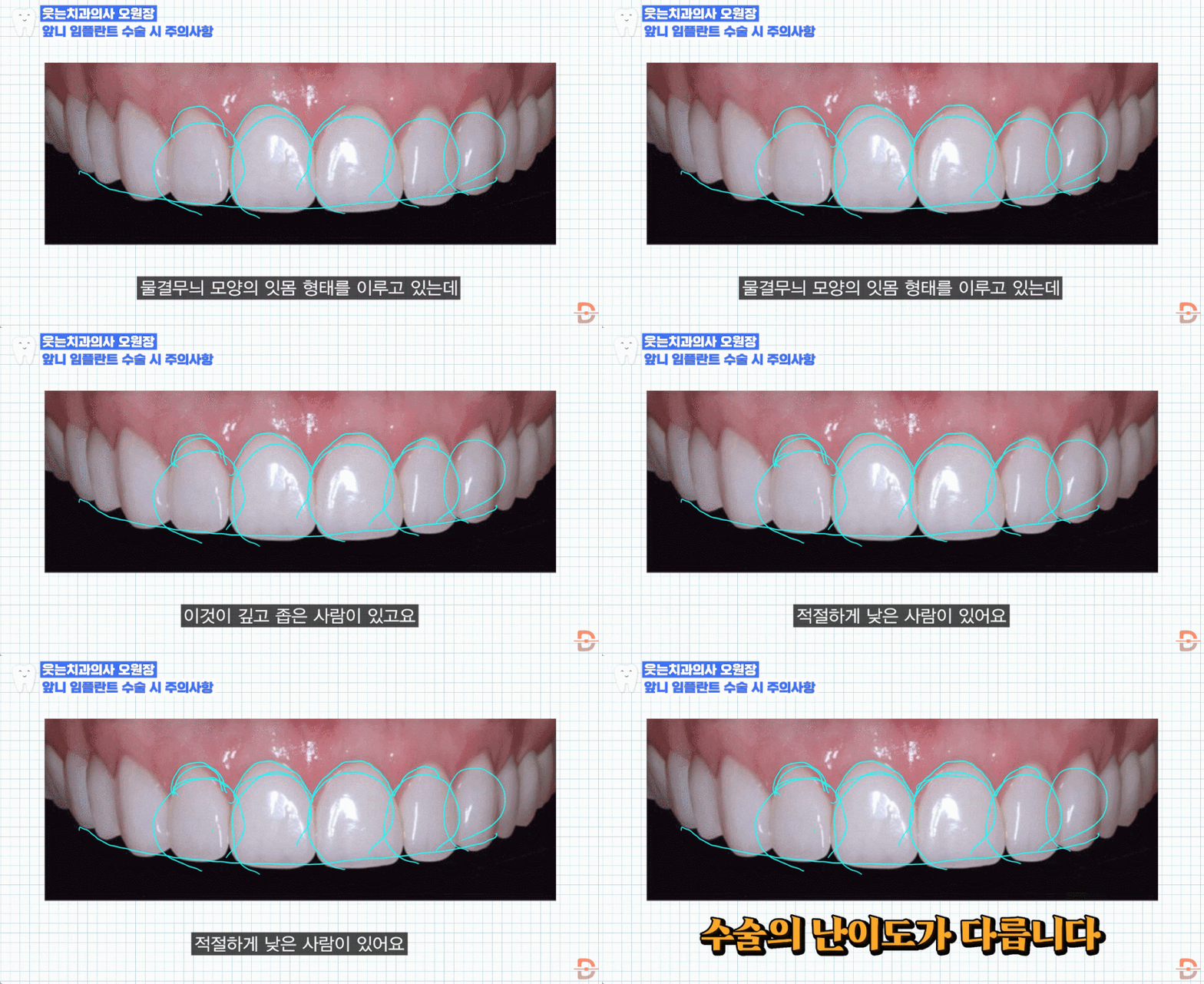
The latter is more difficult to treat surgically.
The deeper and narrower the gums, the thinner the alveolar bone,
which is why gum recession can happen easily if the implant is placed incorrectly.
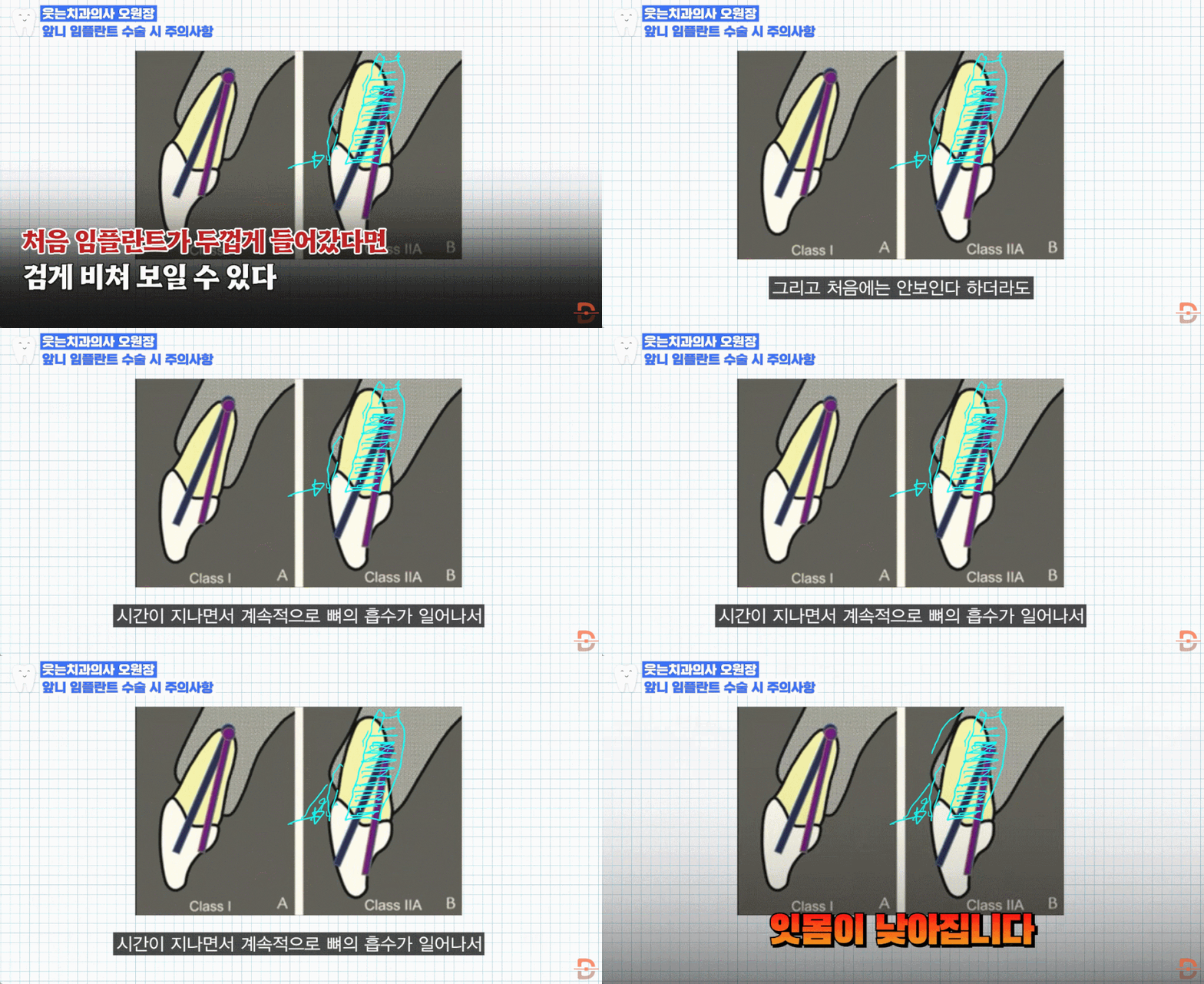
If the gums recede, over time
the implant may show through as dark, or the tooth length may look unnaturally long.
In the end, to prevent these problems,
you need a specialist who can judge whether advanced procedures and bone grafting should be performed together.

The key to successful anterior implants?
Let’s look at one patient case.
The patient visited us with a severely loose front tooth,
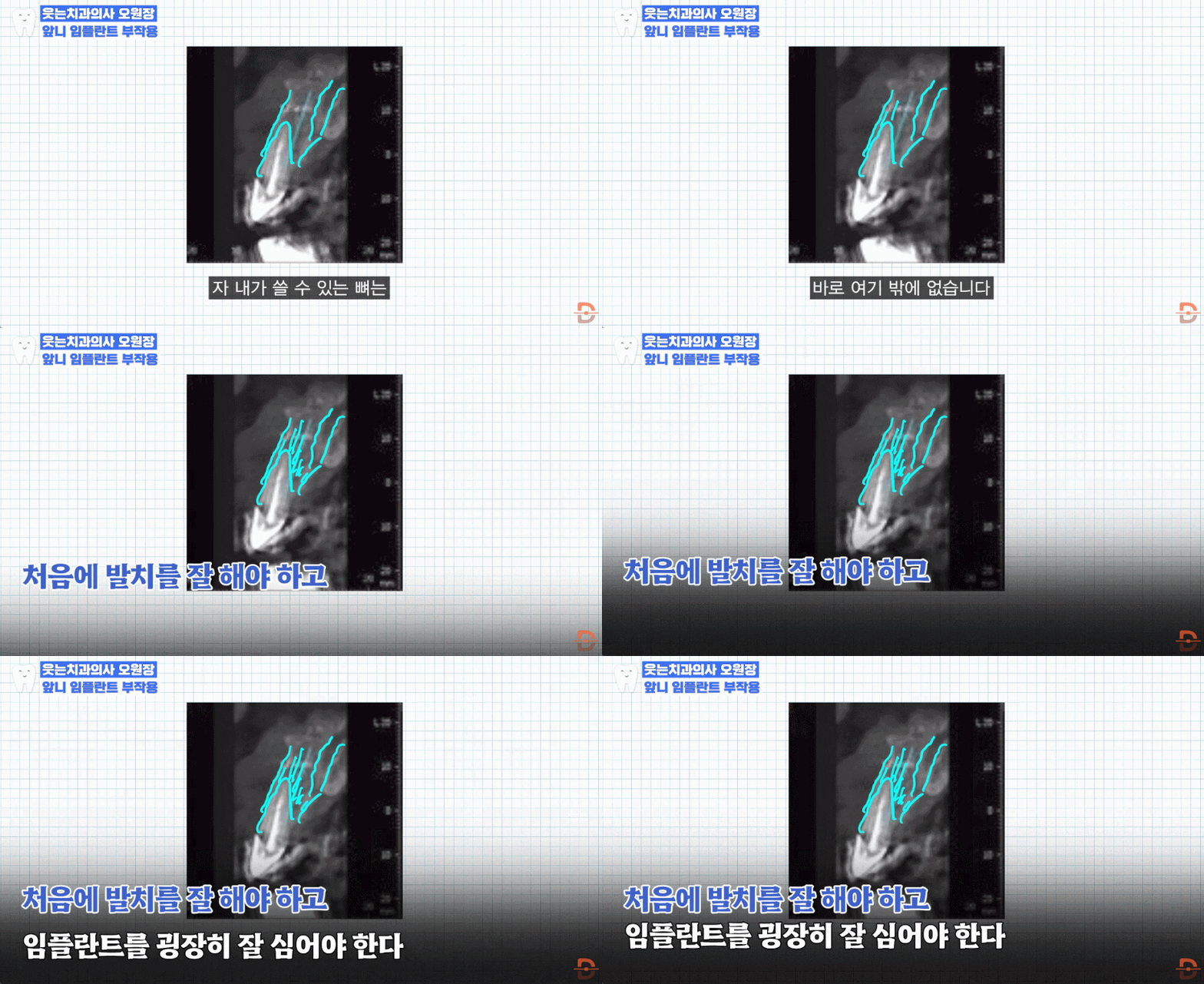
and after analyzing the CT, we found that the outer bone around the front tooth had almost completely disappeared.
If the alveolar bone is thin, it is easy to place the implant axis incorrectly,
and this can cause the gums to be resorbed quickly.
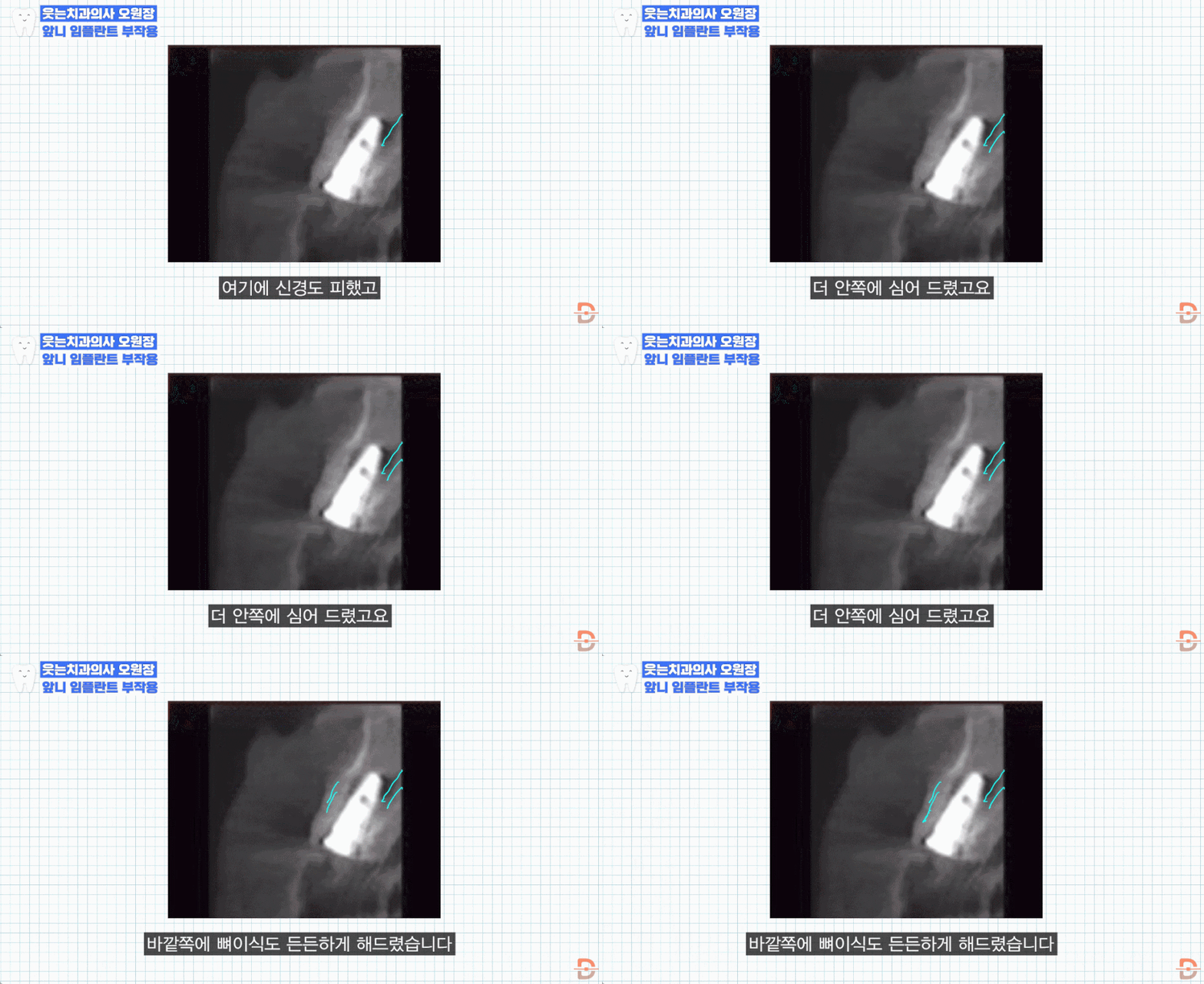
Our orthodontic specialist and specialist in integrated dentistry used an orthodontic perspective and a three-dimensional plan
to accurately determine the angle and position for placing the implant,
and we simultaneously carried out
(1) avoiding the nerve,
(2) securing a stable axis on the inner side, and
(3) sufficient bone grafting on the outer side.
As a result, the axis was stably established and the gum line was maintained naturally.
We also made a temporary tooth tailored precisely to the patient’s tooth shape and placed it on the same day.
After that, once the gum tissue had stabilized for three months, we placed the final prosthesis.
I remember that the patient was very satisfied. ^^
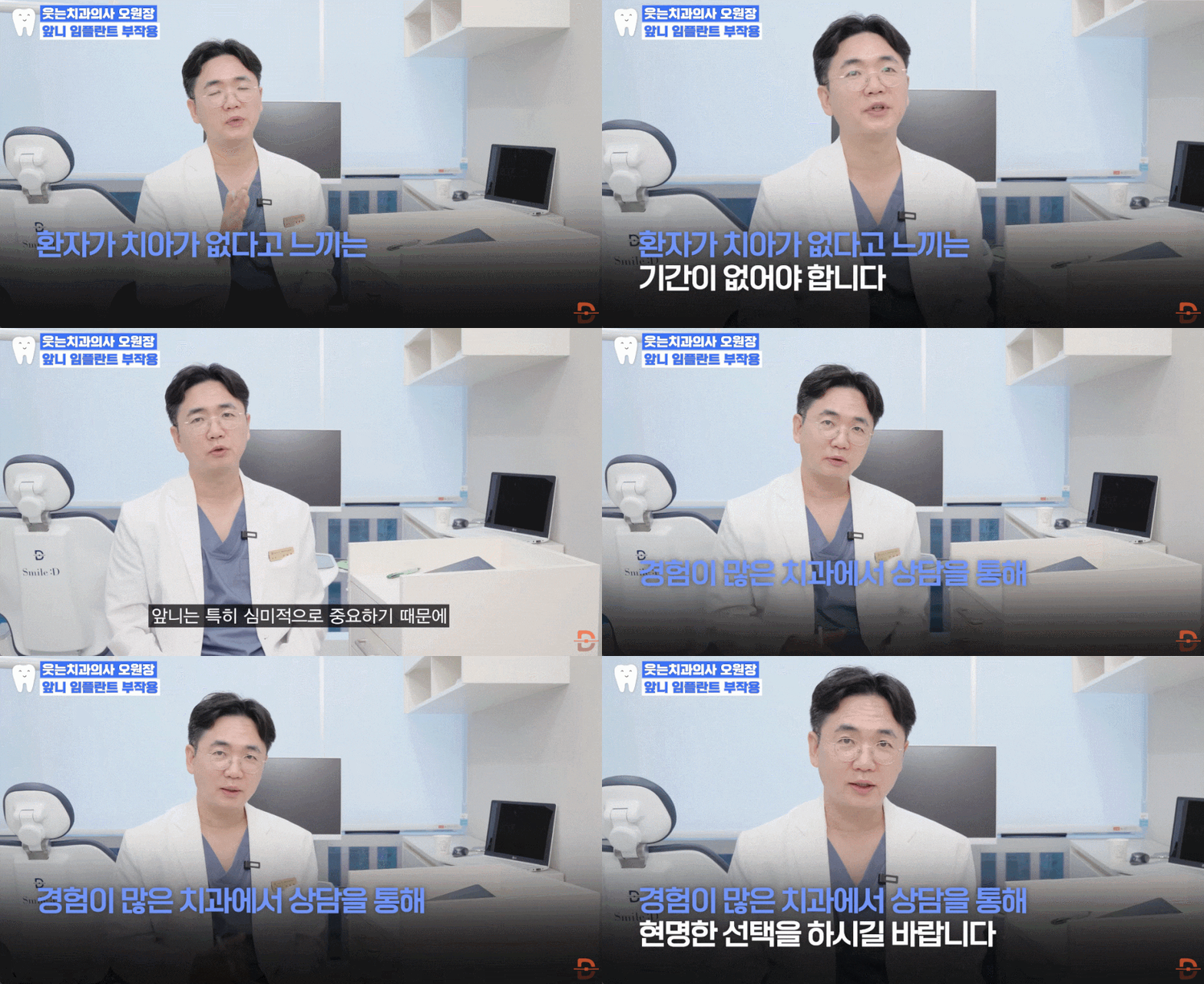
In particular, the key to anterior implants is ensuring that the patient does not feel like they are without teeth.
Only by designing the position and shape of the temporary tooth in advance from the treatment planning stage
can we maintain quality of life without affecting the patient’s daily life.
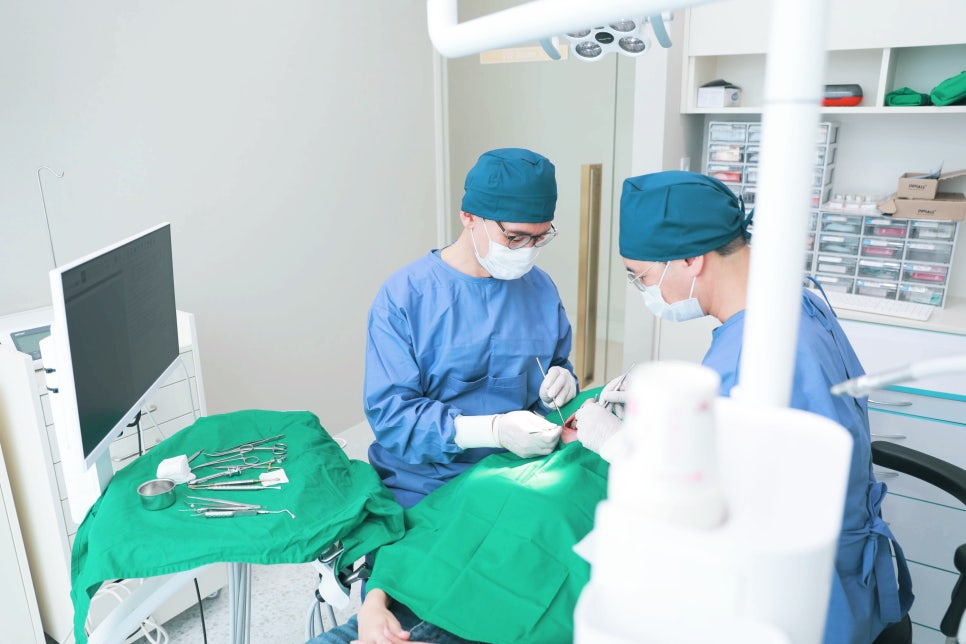
In this post, we talked about anterior implants.
Anterior implants are
not simply prosthetic treatment,
but a highly difficult surgery where
both aesthetics and precision
are essential.
I hope you can have enough conversations with an experienced specialist and find the best method for you.
This has been Oh Su-hwan, chief director of Smile D Dental Clinic.
[Learn more about Smile D Dental Clinic]
| ℹ️ Smile D Dental Clinic homepage |
|---|
| Official website |
| 🎥 Smile D Dental Clinic YouTube |
|---|
| YouTube |