Implants During Orthodontic Treatment,
How Should the Treatment Order Be Determined?
Hello.
This is Smile D Dental Clinic.
If you are undergoing orthodontic treatment or considering orthodontic and implant treatment together,
you may wonder what to begin with.
Some people hear that
“implants cannot be placed during orthodontic treatment,”
while others may be told that
“the empty space should be filled with an implant first.”
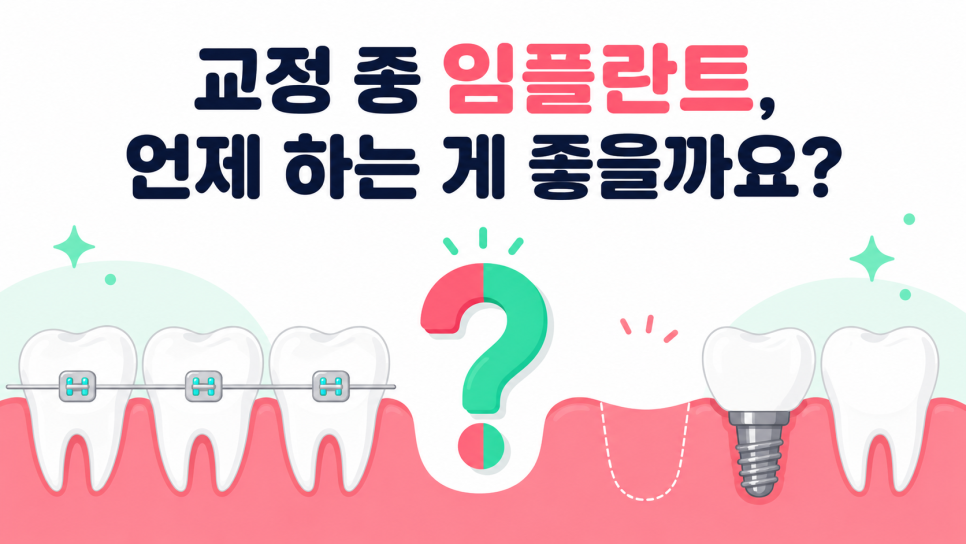
To begin with, implants are not impossible in every case during orthodontic treatment.
However, natural teeth and implants respond differently
when orthodontic forces are applied,
so if both treatments are being planned together, the overall direction of treatment should be considered first.
Today, we will look at the criteria that should be reviewed
when deciding which treatment to proceed with first:
orthodontics or implants.

The final position of the teeth
should be considered first
Both orthodontic and implant treatment
can affect the alignment of the teeth
and the way the upper and lower teeth fit together.
When a missing area is visible,
it is easy to think that an implant can simply be placed in that space.
However, after a detailed examination,
it may be necessary to straighten adjacent teeth that have tilted toward the empty space
or to adjust the width of the space where the implant will be placed.
While aligning the front teeth
and establishing the overall bite,
the empty space toward the back may also change from its original size or position.
Therefore, rather than only checking whether an implant can be placed during orthodontic treatment,
it is necessary to first determine whether the site being considered for implant placement
will remain in its final position after all treatment is complete.
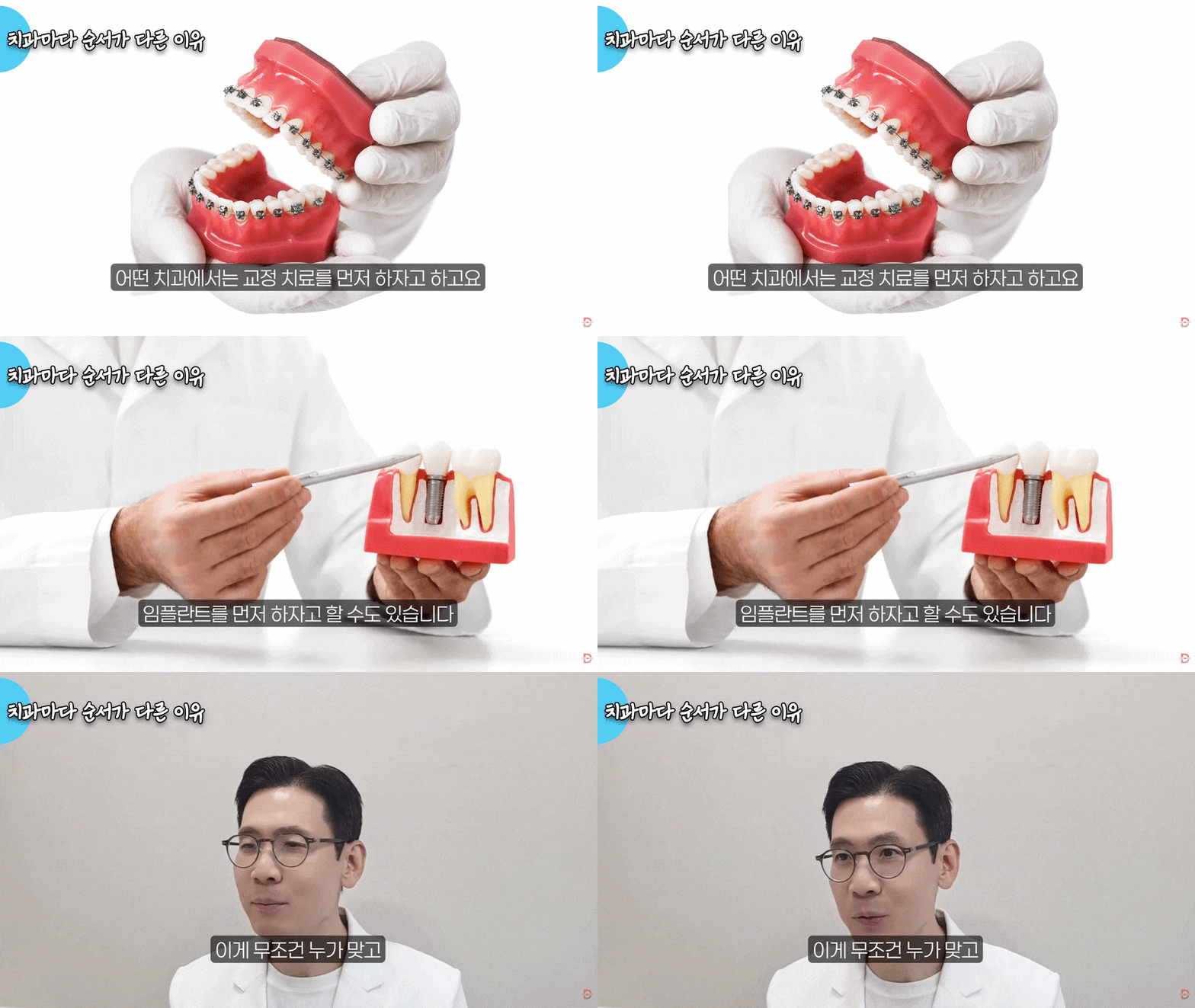
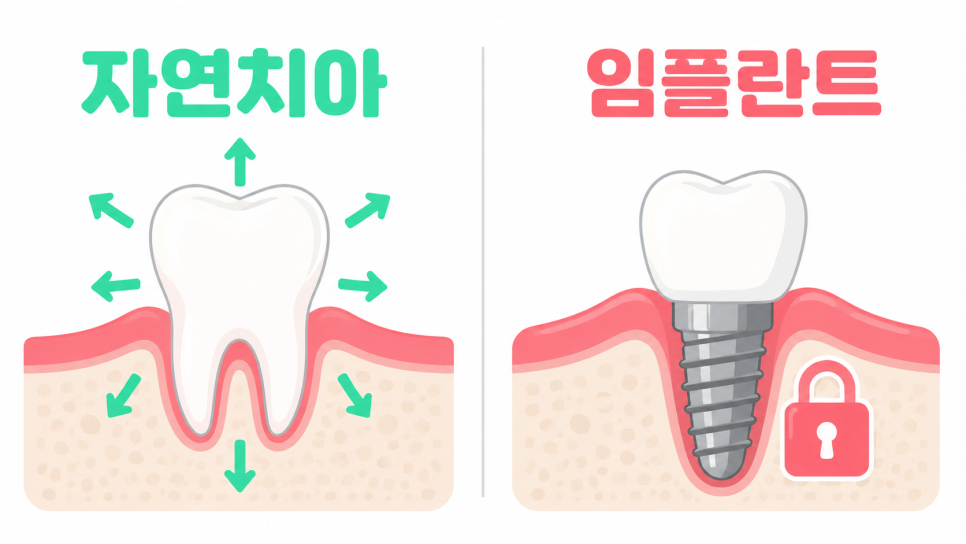
Natural teeth and implants
do not move in the same way
When force is applied to natural teeth with orthodontic appliances,
they can gradually change position.
They can be moved forward or backward,
and tilted teeth can be uprighted
or the spaces between teeth can be adjusted.
However, an implant is placed in the jawbone
and becomes integrated with the bone.
Because of this, it is difficult to change its position with orthodontic force as with a natural tooth.
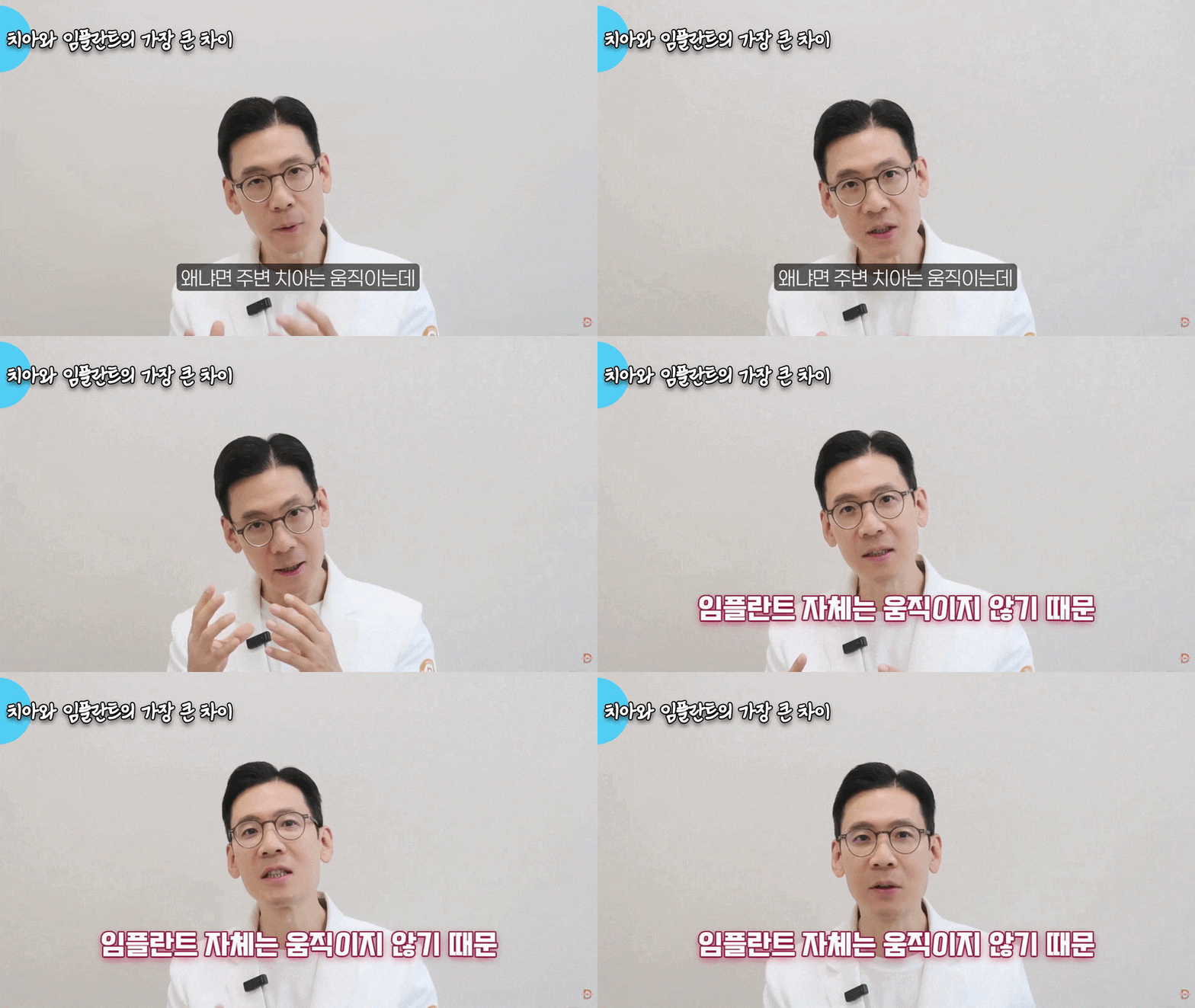
The surrounding natural teeth may move,
while an implant that has already become established remains in its original position.

This is why the timing of implant placement during orthodontic treatment
must be determined carefully.
The concern is not the implant itself,
but the possibility of creating an immovable reference point
before the positions of all the teeth have been finalized.
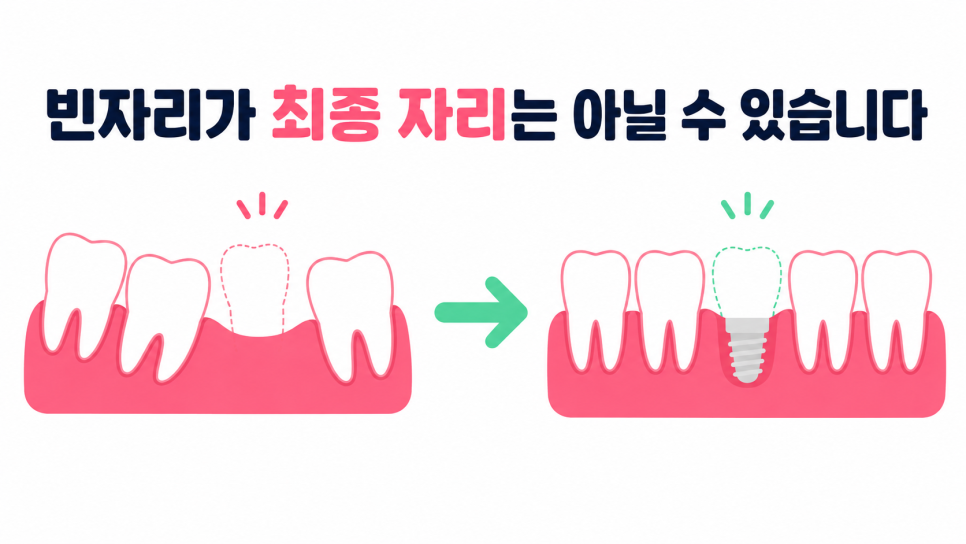
If an implant is placed first,
it may limit the orthodontic plan
Let us use a missing molar as an example.
If a long time has passed since the tooth was lost,
the molars on either side may tilt toward the empty space,
and the tooth that originally bit against it on the opposite side may have shifted downward or upward.
In such cases, rather than using the existing space as it is,
orthodontic treatment may first be used to upright the tilted teeth
and then re-establish an appropriate width for the implant.
However, if an implant has already been placed,
although the surrounding teeth can be moved,
it is difficult to change the position of the implant itself.

As a result, the range of possible orthodontic movement may be reduced,
or the width, shape, or bite of the final prosthetic restoration
may need to be adjusted separately.
Of course, placing an implant first does not always cause a problem.
However, the available options may differ depending on the treatment order,
so it is important to determine the implant placement site carefully from the beginning.

Not every patient
needs to start with orthodontic treatment
If an implant is needed,
does orthodontic treatment always have to come first?
Not necessarily.
In some cases, the space for the implant and its position after treatment are already clear,
or the teeth to be moved orthodontically have little effect on the area planned for the implant.
It may also be possible to plan partial orthodontic treatment
that moves only certain teeth rather than the entire dentition,
and an implant may be placed at an appropriate point during orthodontic treatment,
depending on the condition of the mouth and the progress of treatment.
Therefore, it is difficult to apply the following statements
as universal rules in every situation:
Implants cannot be placed during orthodontic treatment
If a tooth is missing, an implant should be placed first
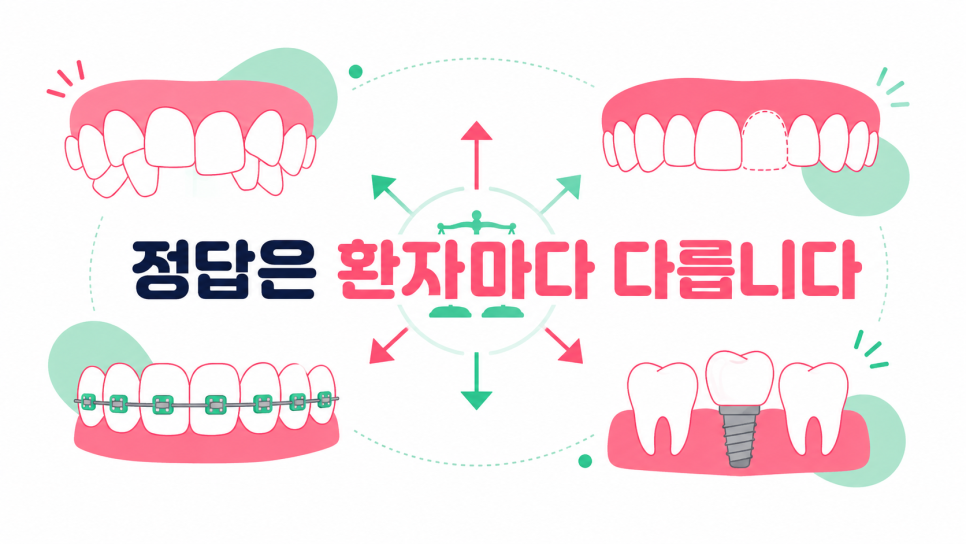
The individual treatment order should be determined after comprehensively reviewing
the location of the missing tooth, the degree of tilting of the adjacent teeth,
the condition of the jawbone, the extent of orthodontic movement required, and the bite.
The recommended order
may vary depending on the treatment goals
Even when oral conditions appear similar,
different dental clinics may recommend different treatment sequences.
This is because the plan may change depending on whether the priority is
to restore the current empty space quickly
or to first organize the overall alignment of the teeth and the bite.
The timing of implant placement may also differ
depending on whether comprehensive orthodontic treatment is needed
or partial orthodontic treatment limited to specific areas is possible.
When receiving a consultation, rather than simply asking which treatment comes first,
it is advisable to also ask about the reasons for choosing that sequence.
“How will the current empty space
change if I begin orthodontic treatment?”
“Will the site where the implant is planned
remain in its final position after treatment?”
“What are the advantages and limitations
of the proposed treatment sequence?”
When asking these questions,
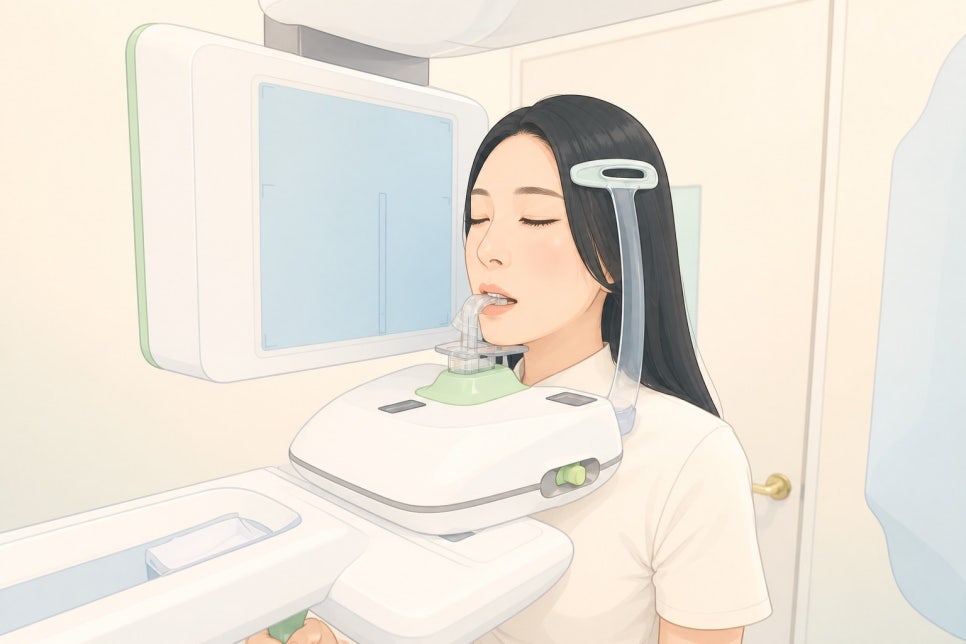
please check whether they are explained based on current imaging
and examination results.
If you are considering an implant during orthodontic treatment,
rather than making a decision based only on the empty space visible now,
the plan should be based on the position of the teeth after both orthodontic and restorative treatment have been completed.
The fact that implants do not move like natural teeth
does not mean that they can never be placed during orthodontic treatment.
The appropriate method and sequence may differ depending on
the alignment of the teeth and the missing area,
the amount and shape of the jawbone,
and the current bite.
Please confirm whether treatment is possible in your individual case
and the specific treatment sequence through an examination and diagnosis by a dental professional.
Thank you. This has been Smile D Dental Clinic.

※ This post is intended to provide general information about dental care and does not constitute a diagnosis of an individual’s oral condition or indicate the outcome of any specific treatment.