
Hello, everyone!
I’m Magok Dental Clinic, wishing for bright smiles all around the world.
I want to smile beautifully...
I want to eat comfortably...
In these ordinary parts of life,
there are times when we hesitate.
That’s exactly what happens
when there is a problem with oral health.
This is also one of the reasons
many people want to put off treatment.
During treatment, after all,
meals have to be chosen carefully,
exercise becomes difficult to do freely,
and if there is a problem with the front teeth or you are undergoing orthodontic treatment,
it is also true that smiling comfortably can feel awkward.
But as time keeps passing,
you probably already know very well
that the disease deepens and the cost increases.
So today, to help ease those worries even a little,
we have prepared answers to frequently asked questions
about what happens after a molar extraction,
which many people have been curious about.
I hope this content will be helpful
when making treatment plans before and after care.
The dentist says I need to have a molar removed... isn’t that overtreatment?
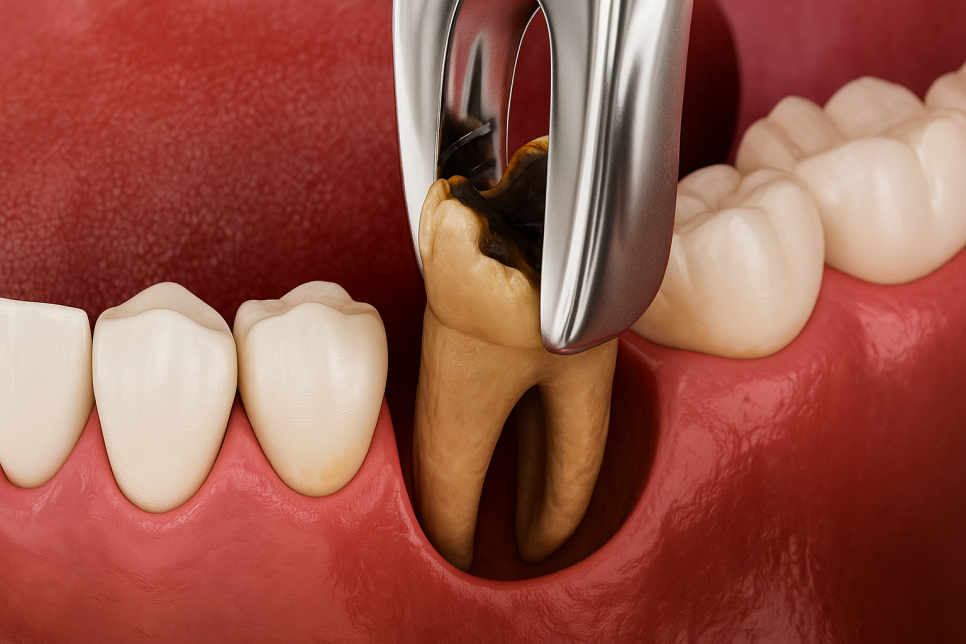
First, at Magok Dental Clinic,
we will explain why the above situation happens.
The main cause is, of course, tooth decay.
In the end, the tooth is not only decayed,
but infection has progressed to the area around the root,
making it difficult for it to function properly.
If left untreated, it can cause not only pain
but also gum disease,
and this can even lead to systemic disease,
and may also infect other healthy teeth nearby,
so it is inevitably removed.
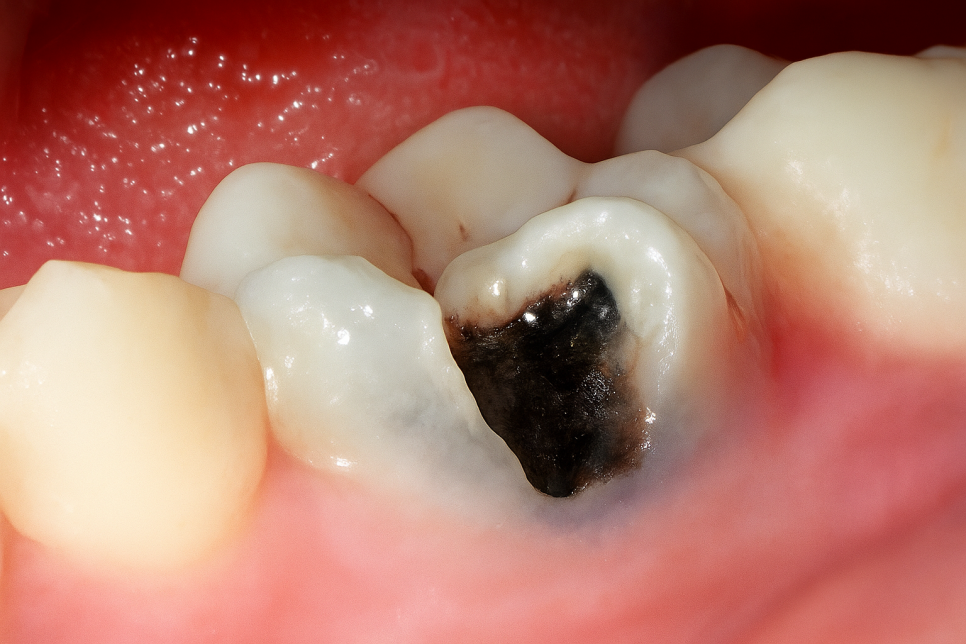
Then let’s take a look at why this decay occurs.
A common reason is the consumption
of foods and drinks high in sugar.
This sugar becomes food for bacteria and is broken down,
creating acids that erode the enamel layer (the outer surface).
This is what causes cavities.
Then let’s look at when these bacteria
have been in the mouth.
They mainly accumulate and multiply
at the boundary between the teeth and gums.
Even if you brush after eating as usual,
leftover debris that was not fully removed
can build up there and remain as plaque and tartar,
and especially because they thrive in dry environments,
it is best to pay attention to this.
This is why it is recommended not only to brush regularly,
but also to use dental floss, interdental brushes, and mouthwash together,
as well as to drink enough water.
How does the implant process after molar extraction work?
Of course, not every cavity necessarily leads to extraction,
and this is only a last resort,
with conservative methods such as root canal treatment being prioritized first.
However, if decay recurs even after removing the already infected nerve
and placing a crown,
then there may come a time when the tooth can no longer be saved.
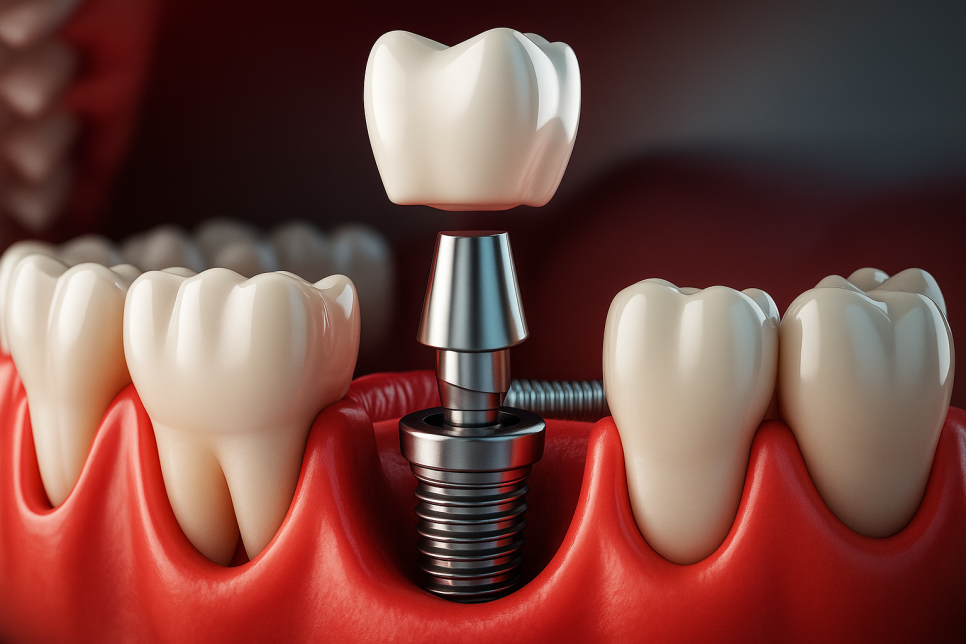
When that happens, it is not good to leave the empty space as it is.
That is when an implant is performed.
I will briefly summarize how the process works.
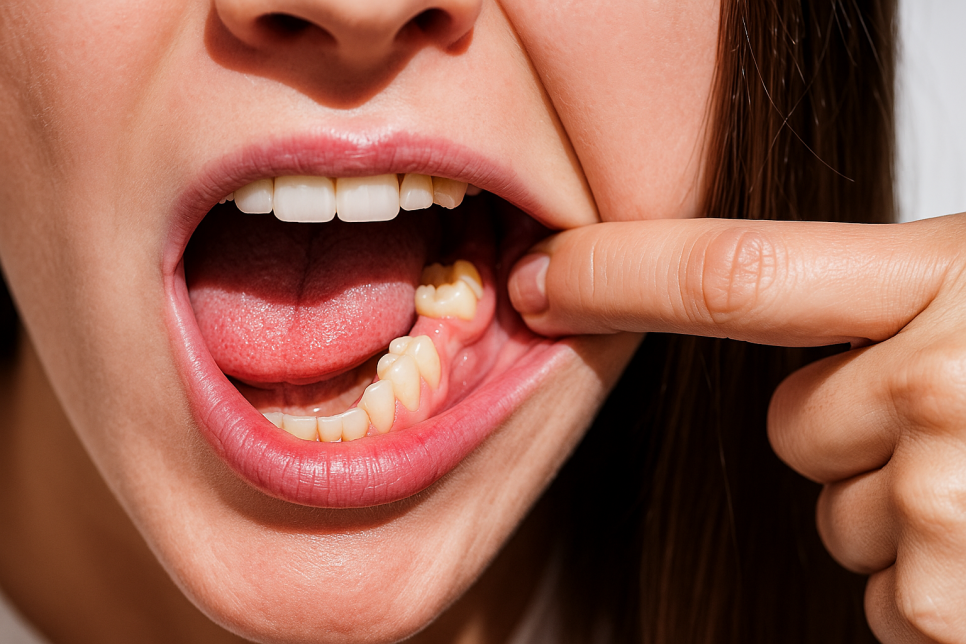
First, it is divided into two types:
immediate placement, in which the fixture (post) is placed right away,
and delayed placement, in which it is placed after a certain period of time.
Immediate placement can be performed when the conditions are met,
such as no inflammation in the area where the tooth used to be,
healthy jawbone, and sufficient initial stability.
Molars have large roots and a complex structure,
so achieving stability can be difficult,
but recently,
with precise diagnosis and advanced 3D CT analysis,
the exact position and angle can be calculated,
raising the success rate.
When immediate placement is not possible,
the procedure is performed after about 3 to 4 months,
once the gum bone has healed to some extent.
After that, when it is time to place the fixture,
which will fully replace the root, that is, the artificial root,
the amount and height of the alveolar bone are analyzed,
and additional procedures such as bone grafting or sinus lifting may be performed in parallel.
Then, after a strong period of osseointegration,
the artificial tooth is placed to finish the process.
How should I eat after a molar extraction?

This is one of the most common Q&A questions
many people are curious about.
Let me explain at Magok Dental Clinic.
For about one day, meals should be lukewarm, soft, and in liquid form,
rather than hot.
For example, porridge or soup is recommended.
Very spicy or irritating foods
can strain the wound area,
so it is better to avoid them.
Foods with small grains, such as sesame seeds or perilla seeds,
can get stuck between the teeth and may interfere with healing,
so please keep that in mind.
When can I start exercising?

For those who usually enjoy intense sports
that make you sweat a lot, such as soccer, basketball, tennis, gym workouts, and running,
I have some unfortunate news.
We recommend avoiding these activities for about one week.
The reason is to help prevent bleeding and support wound recovery.
A blood clot formed by blood pooling in the empty space where the tooth was
protects the area and acts as a barrier
that helps the alveolar bone and periodontal tissues heal.
However, intense sports increase blood pressure and heart rate,
which dilates blood vessels and can cause the clot to come off easily.
For the same reason, saunas and steam rooms are also best avoided,
because they raise blood flow, body temperature, and blood pressure.
In addition, alcohol and smoking affect blood flow
and can also cause bacterial infection,
so Magok Dental Clinic believes it is best to avoid drinking and smoking
for a certain period of time.

Still, after about 3 to 7 days,
if you check the recovery and there is no bleeding or pain,
you may do light exercise such as walking or stretching.
After about a week, once the stitches are removed,
and while monitoring the healing process,
you can gradually return to your original routine,
starting with low-intensity aerobic exercise or light weight training.
Please tell me how to manage the pain.

Usually, pain after implant placement varies from person to person,
but even after the anesthesia wears off,
it tends not to last long and disappears fairly quickly.
However, while you are biting down on gauze,
there may be some discomfort,
and if bleeding has not stopped even after some time has passed,
it is better to replace the gauze you are biting on
or return to the clinic.
If that is not the case,
using a cold compress at the beginning is helpful for pain relief.
Also, disinfection is carried out afterward
so that blood can pool again,
and if this process is neglected,
severe pain, chills, and fever may occur.
Please avoid pressing on the area where the molar was with your tongue
or touching it with your hand.
When should I remove the gauze?
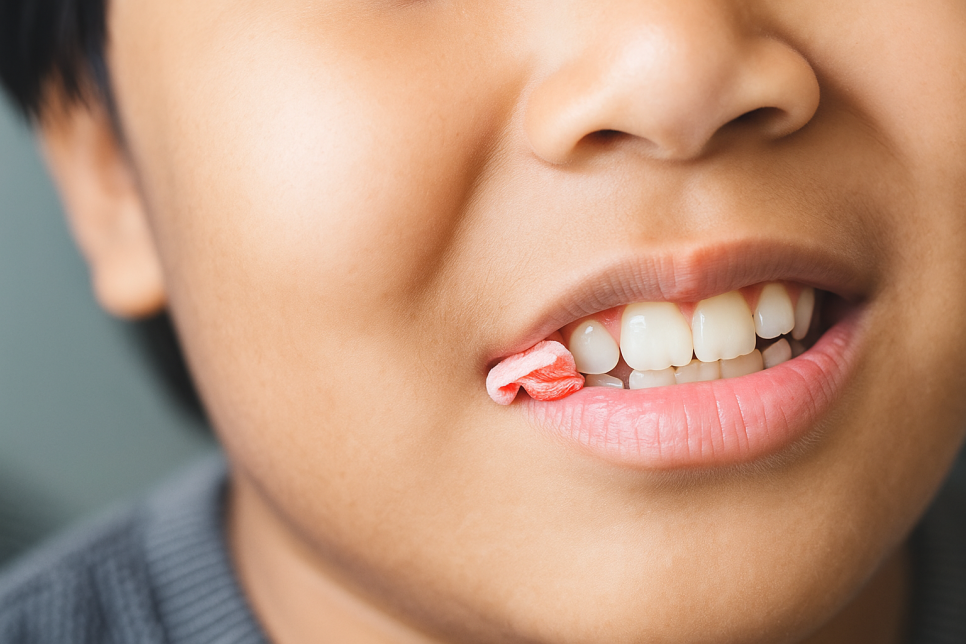
First, let me explain at Magok Dental Clinic
why we ask you to keep biting on gauze.
To put it simply, it is to help the bleeding stop properly
and for a blood clot to form well.
As mentioned above with "do not touch it with your tongue or hand,"
proper hemostasis is needed to help the wound heal.
Also, if you remove the gauze before the bleeding has stopped,
blood will continue to pool in your mouth.
If you keep spitting it out,
it can strain the area again,
and bleeding may continue.
Before getting an implant,
is it okay to leave the empty space as it is?
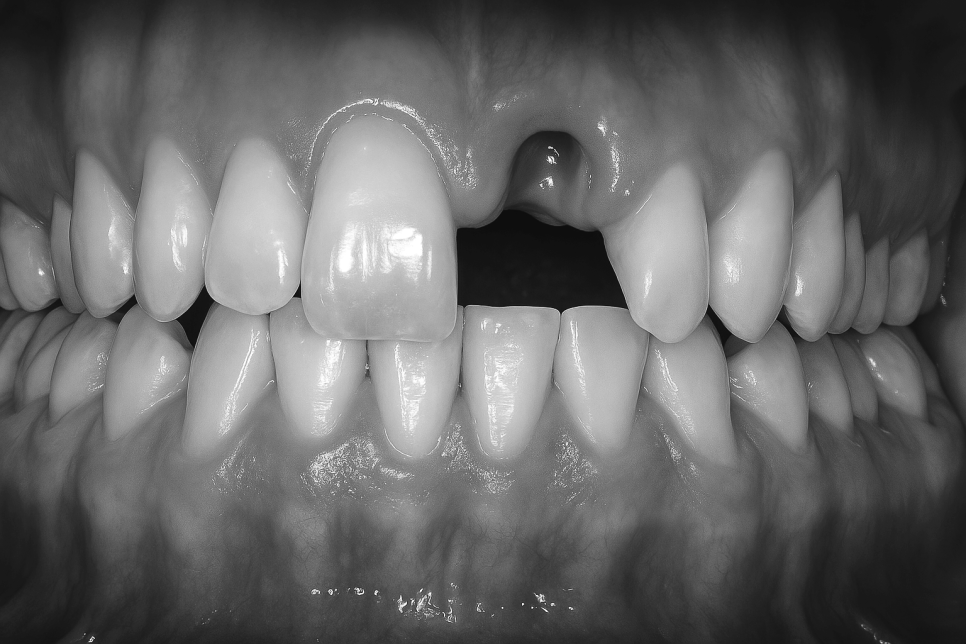
If it is a visible area like the front teeth,
a temporary artificial tooth is attached
instead of leaving the space empty.
However, in areas like the molars,
which are not very visible,
it is often left empty as it is.
The reason for leaving it empty is to avoid interfering
with the osseointegration process,
where the placed fixture properly bonds with the bone.
If there are no cosmetic issues or discomfort while eating,
leaving the space empty is recommended.
When eating, it is better to use the opposite side,
and the final prosthesis is placed after about 3 to 6 months.
Some people worry that, without an opposing tooth, the tooth may over-erupt,
or that other molars or premolars may move into the empty space.
That is why progress is monitored for about 3 to 6 months,
and if movement is noticed before then,
please have it checked.
However, if multiple natural teeth have been removed in several areas,
you may live with a temporary artificial tooth attached through a same-day implant.
Are there any complications?

Lastly, I will briefly summarize what other complications may occur
at Magok Dental Clinic.
First, as mentioned earlier,
there is the case where bleeding continues even after a certain amount of time has passed.
In that case, it is best to contact the clinic you visited immediately.
There may also be cases where the anesthesia wears off early,
and the pain continues.
In that case, manage it with an ice compress
and the painkillers that were prescribed,
and afterward, please take the prescribed medication regularly
according to the guidance provided.
Some swelling is unavoidable,
but if it is severe, the jaw may feel stiff
and opening the mouth may become difficult.
During brushing or pressing with the tongue,
the stitches may come loose;
in such cases, we recommend contacting the clinic right away
and receiving appropriate care.
With that, I will wrap up today’s prepared content.
I sincerely thank everyone who took the time to read this long post.
Next time as well, I will take the time to organize information
that many people have been curious about.
It was Magok Dental Clinic,
wishing for bright smiles all around the world.
Thank you :D