
Hello, everyone.
Wish sends greetings from Magok Dental Clinic, hoping to help restore people’s beautiful smiles.
The word “phobia” is even attached to it because
people are afraid of coming to the hospital
for anything related to their teeth.
From the whirring sound of machines
and the smell of unfamiliar medicines
to the green drape covering your view,
Even if anesthesia reduces the pain,
that feeling of fear seems hard to avoid.
That is why we always say it is important to
care for your oral health well in daily life
and get regular scaling.
And the oral cleanliness we maintain in our daily lives
comes from brushing our teeth.
Today, among those topics, I’ll explain in detail
how to choose a good toothbrush,
how to store it, and when to replace it,
so I hope this will be helpful to those who were interested.
How and with what
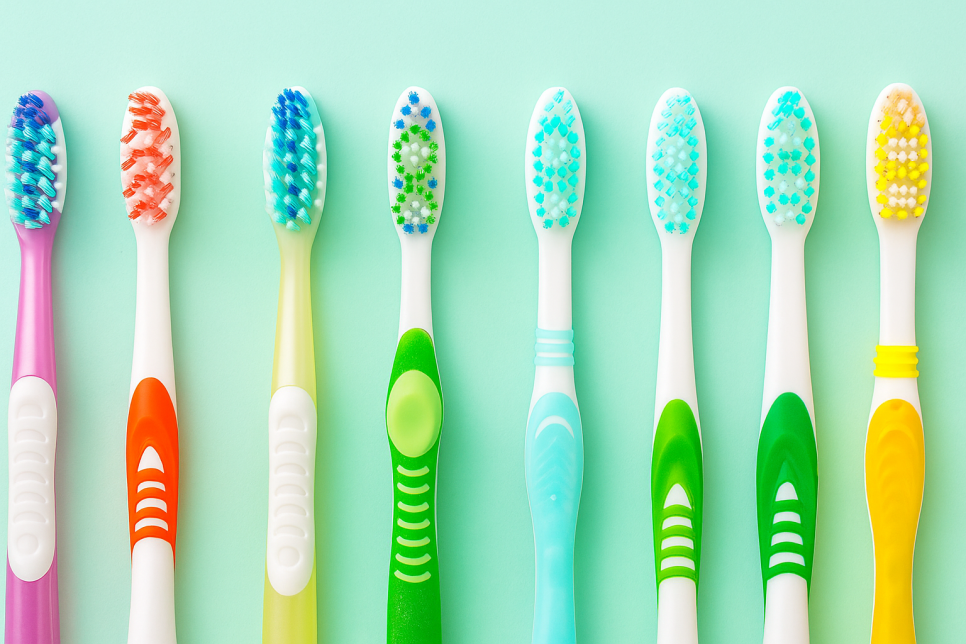
Tooth brushing is not simply about removing food stuck between teeth
and cleaning the tongue;
it can be seen as a fight against plaque
that cannot be seen with the naked eye.
This process not only maintains oral health,
but also plays a role in preventing various diseases,
so it is better to consider not only
“how you brush,” but also
“what you brush with” when making a choice.
Many people casually use whatever their parents bought on sale at the supermarket,
and tend to let it pass,
but in fact, it is better to choose carefully from this stage.
Let Magok Dental Clinic summarize the criteria.
Head size
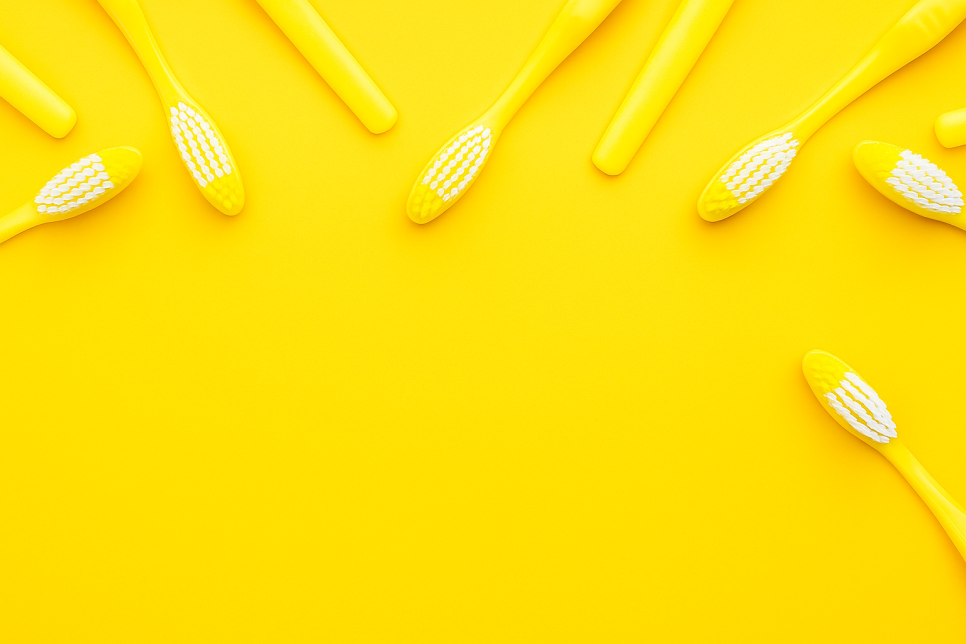
The first thing worth checking is the head part.
Some people think, “Larger must be better!”
and choose one casually,
and it is true that many such products are sold on the market,
but
for more precise brushing, it is better to choose one
whose head is not larger than a single tooth.
If you think about cleaning the grooves between floor tiles
when mopping the floor,
you may get the idea.
Even if you scrub hard with a large mop,
the bristles do not reach properly,
so it is difficult to clean thoroughly.
That is why you clean it by scrubbing with a small brush
that fits the size.
Likewise, a head that is too large is similar
to using a mop to clean those grooves.
Double fine bristles?
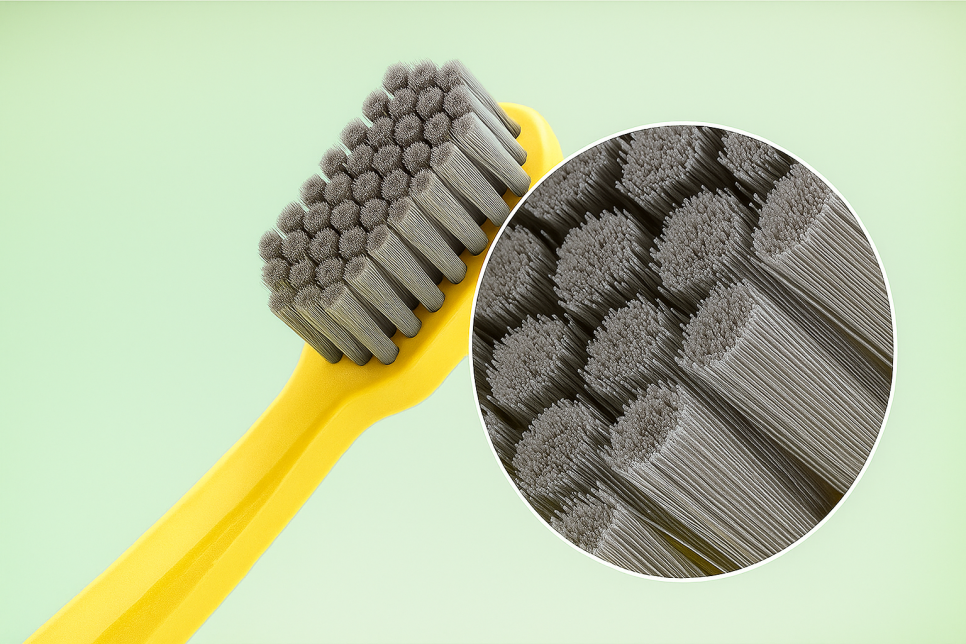
Products that have been released recently
highlight the use of double fine bristles as an advantage.
Fine bristles are excellent at removing food debris,
but many say they are inefficient against plaque.
It is also helpful to look at how densely
and tightly the bristles are packed.
If the spacing is too wide,
efficiency will also drop.
When they are densely packed,
if you touch them, they feel soft and resilient,
and you can clearly tell the difference
compared with ones that are not.
A small head, dense bristles,
and bluntly trimmed tips
are what Magok Dental Clinic thinks are good choices.
Brush lightly in the morning, thoroughly before bed
Brushing carefully at every moment
would of course be the best,
but for busy modern people,
that often cannot be done properly.
So what is the brushing method
that can improve efficiency?
Magok Dental Clinic will tell you.
If the morning is too hectic and busy,
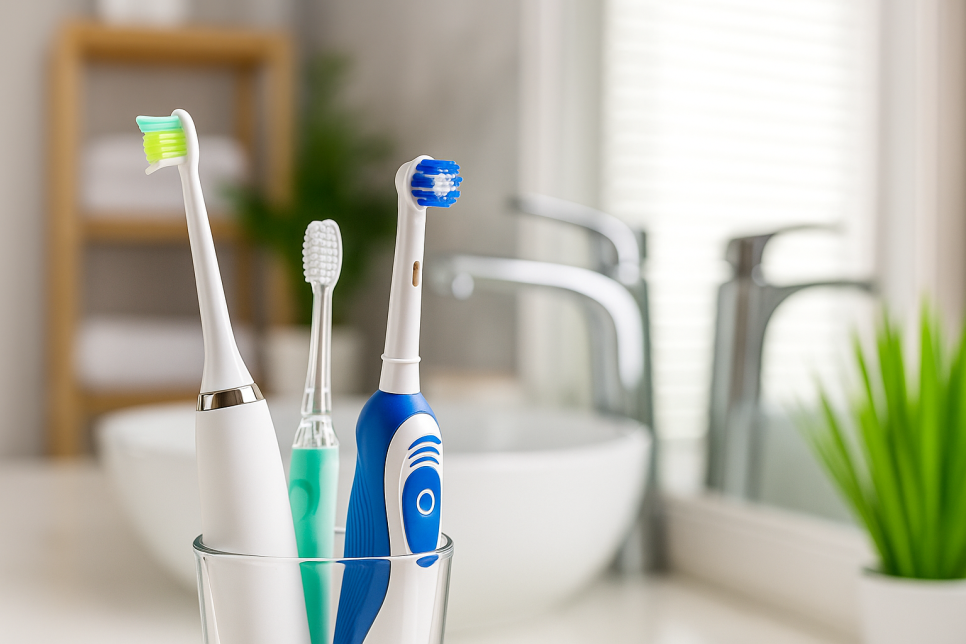
using an electric toothbrush can be a good way
to save time.
At lunch, after eating,
it is recommended to brush, if possible,
after finishing coffee as well.
And finally, in the evening,
we recommend setting aside enough time
to brush thoroughly.
To ensure you can properly care for deep areas like molars,
it is also good to use something very small,
and please make sure to care for the gums as well.
Why do they say you should definitely use interdental brushes and floss?
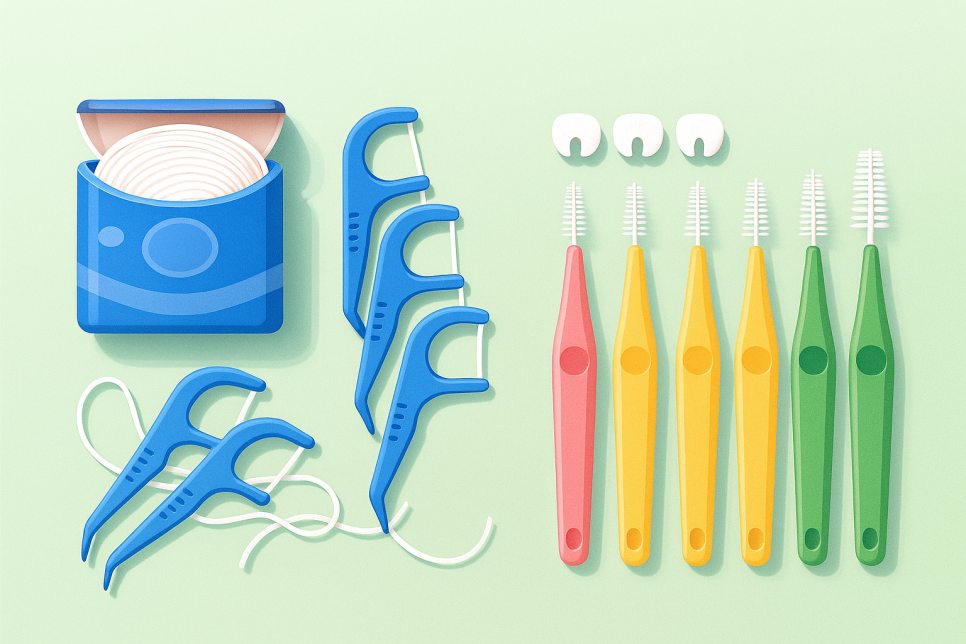
It is also good to use these two together in the evening.
Magok Dental Clinic will explain why.
The spaces between teeth are areas that,
no matter how carefully we try to clean every corner,
we often cannot fully reach.
However, tartar and plaque begin to accumulate there over time.
And these become the cause of cavities
and periodontal disease.
In particular, the contact surfaces where teeth touch each other
are difficult to care for even with the finest bristles.
That is why we say auxiliary tools like floss
are absolutely necessary to keep these areas clean.
Because they can reach deep into narrow spaces,
they can scrape away the plaque located there well
and help prevent various diseases.
How should it be stored?

Let Magok Dental Clinic briefly summarize
how to store it.
The key is none other than “dryness.”
Many households simply leave their brushing tools
in the bathroom,
but
the bathroom is likely to be humid rather than dry.
Therefore, it is better to store them
in a dry place outside the bathroom.
Even in households that use a sterilizer,
please make sure the tools are completely dry
before closing the lid.
When should it be replaced?
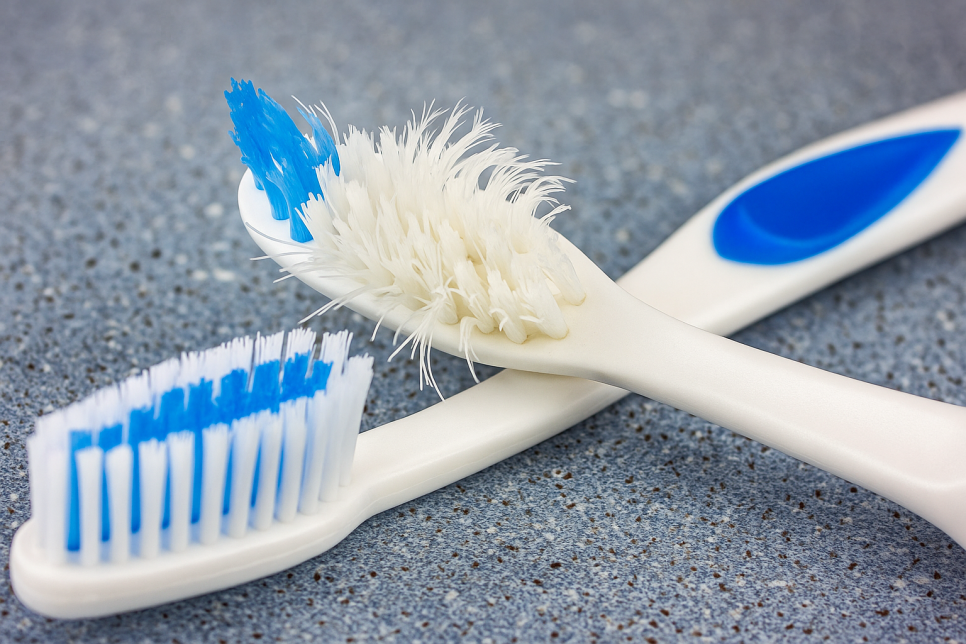
Finally, let Magok Dental Clinic explain
the timing for replacement.
Some say the standard is three months,
but
this is because after using it for more than three months,
the bristles spread out and wear down,
reducing the ability to remove plaque,
and the average point at which this happens is about three months.
If you keep using it without replacing it,
it may actually hurt your gums,
so even if it has not been three months,
if the shape has changed,
it is better to replace it immediately.
Replacing it regularly like this
can greatly help maintain oral cleanliness
and gum health.
“If fluoride toothpaste is good, do I really need to use it...?”

Compared with ordinary products,
fluoride toothpaste is more effective
in preventing cavities and strengthening teeth.
To explain its effects in more detail,
it strengthens the tooth surface,
increases resistance to various acids,
and plays a key role in helping demineralization and remineralization,
as well as inhibiting bacterial activity
to reduce the incidence of plaque-related diseases.
Therefore, if you have sensitive areas
or no allergic reaction,
using this type is generally better
for maintaining oral health.
I will explain in detail the biochemical mechanism
by which fluoride toothpaste helps prevent cavities.
First, the enamel layer is composed of the mineral
hydroxyapatite.
When fluoride ions contained in this toothpaste are applied to the surface,
they combine with hydroxyapatite and are converted into a new form,
fluorapatite.
This has a strong structure that is not easily dissolved by acid,
so demineralization does not occur easily.
It also acts on areas where demineralization has already begun,
helping promote remineralization as well,
which greatly helps the natural healing of early caries.
Especially in growing children,
it can be absorbed throughout the body and help form a tooth structure
with strong acid resistance.

I hope this content has helped resolve the parts
you were curious about.
In addition, what I want to emphasize again is that,
aside from the methods above, oral hygiene management
should become a habit in everyday life.
For example,
if you usually enjoy drinking, smoking, or snacking often,
even if you make efforts like those above,
the effectiveness will inevitably drop.
Therefore, quitting smoking is essential,
and as much as possible, I recommend drinking in moderation.
Also, because cavities can still develop from a small difference
even despite any effort,
I strongly recommend having regular checkups
every 6 months to 1 year.
At that time, by receiving scaling,
you can maintain gum health
and also respond early to possible signs
of cavities or periodontal disease.
I hope these efforts help you save on costs
and protect your health, making for a wise day,
and I will end the main text here.
Thank you for reading this long post.