Hello.
The smile designer who can turn your wish into a beautiful smile,
I am dentist Yeo Sang-ho from a Magok dental clinic.
Today, I’d like to talk about treatment options that can be considered when the front teeth (anterior teeth) are damaged.
During daily life, there are not a few unexpected moments when the anterior teeth are impacted.
For example, while eating hard food,
colliding during exercise,
or injuring the mouth by falling,
there are many different situations.
Looking at statistics on dental trauma,
the injury rate for the maxillary anterior teeth is quite high overall.
This is because their position at the front makes them more exposed to external impact.
So, when a front tooth cracks or part of it breaks off,
how can it be restored?
You may think that a crown must always be placed,
but that is not necessarily the case.
Personally, I believe that multiple factors such as the extent and location of the damage,
as well as the bite condition,
must be evaluated comprehensively.
- Choosing the treatment method according to the extent of damage
First, it is important to accurately identify the extent of the fracture.
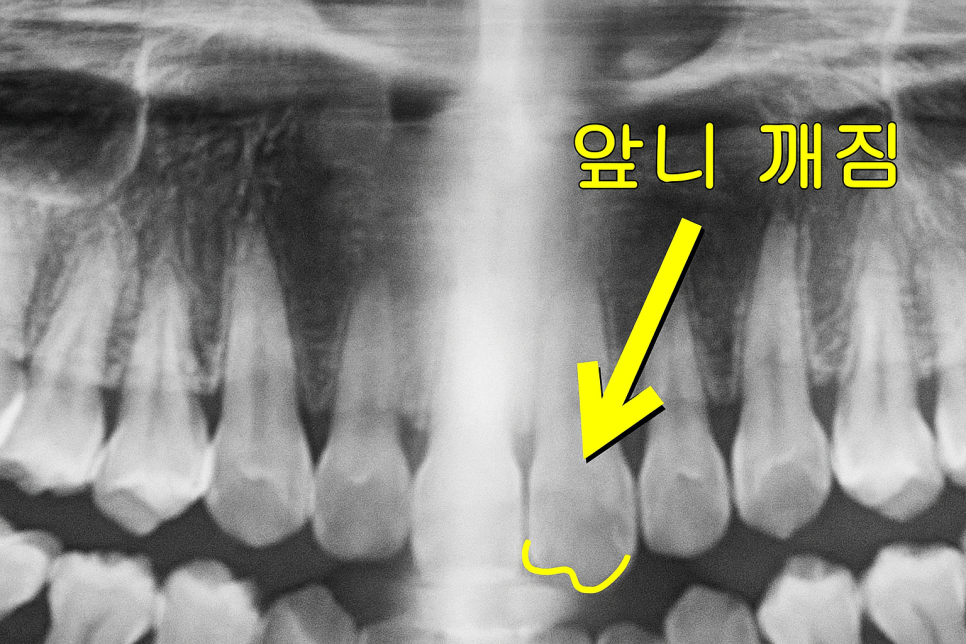
Through X-ray examination,
the condition of the root and whether the pulp tissue is exposed
must be checked,
and if only the surface is slightly damaged,
simply smoothing the rough area may be enough.
At the Magok dental clinic,
we explain that when reshaping in this way,
the natural tooth may appear shorter in length, and this should be taken into consideration.
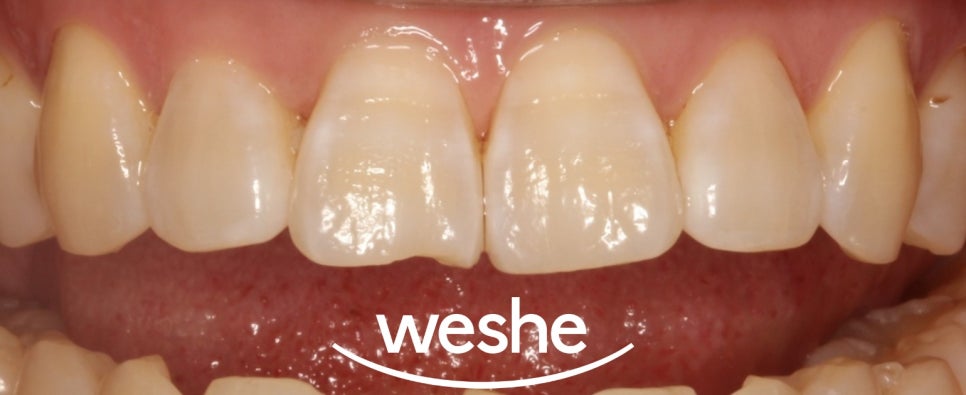
20250630
If a somewhat wider area is broken,
direct restoration using resin can be considered.
This has the advantage of allowing a natural shape to be created while minimizing tooth reduction.
A material with a similar shade is selected,
layered up gradually,
and then light-cured.
However, when more than half of the tooth is lost,
prosthetic restoration such as a laminate veneer or crown may be more appropriate.
- The effect of bite conditions
When deciding on a treatment method,
the bite pattern must be taken into account.
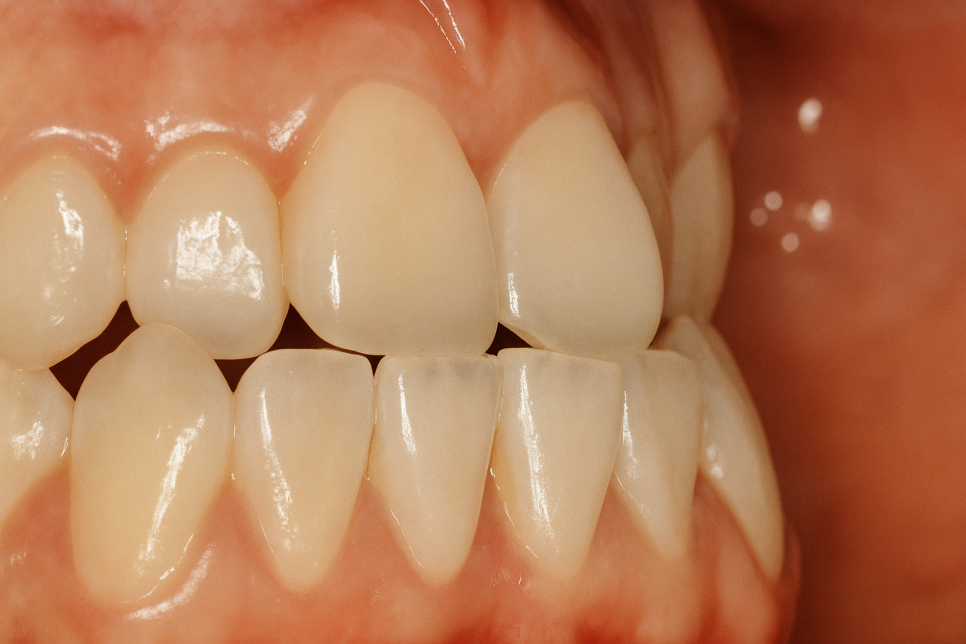
Example of an edge-to-edge bite
If the upper and lower front teeth meet edge to edge,
or if the lower teeth are positioned forward in an underbite,
extra caution is needed.
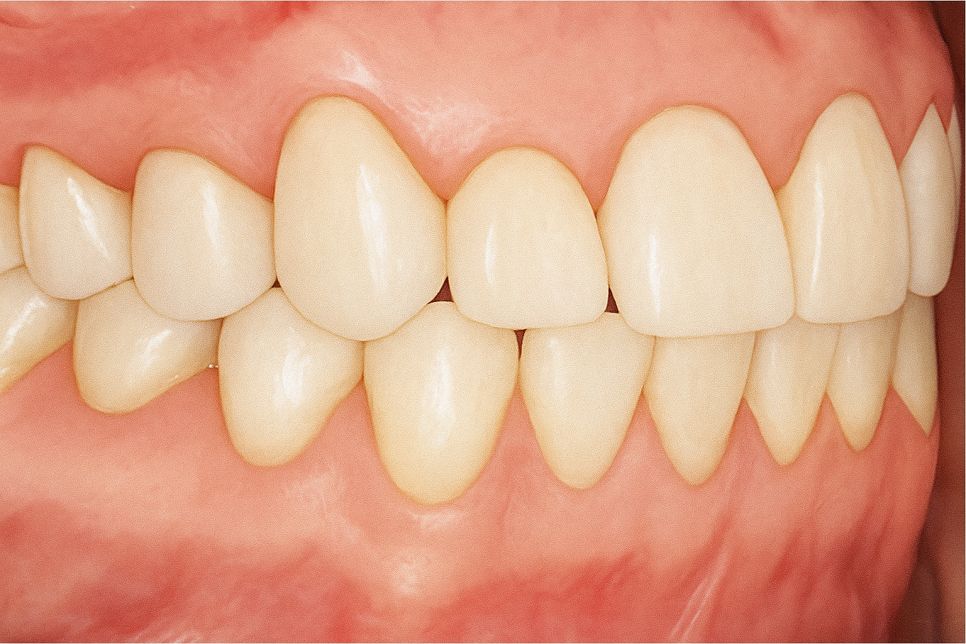
Example of a normal bite
In a normal bite,
the upper front teeth slightly overlap the lower teeth.
But when the edges meet directly,
continuous force is concentrated on the front teeth,
which can affect the durability of the material.
Resin is generally less hard than natural tooth structure.
So at the Magok dental clinic,
when applying resin to a position where bite force is directly applied,
we explain that adjustment is needed to minimize contact with the opposing tooth.
If there is an underlying bite problem,
combining it with orthodontic treatment is functionally more stable.
However, when quick recovery is desired,
it may also be an option to reinforce the tooth with restorative material within the range that is immediately possible.
- A conservation-first approach
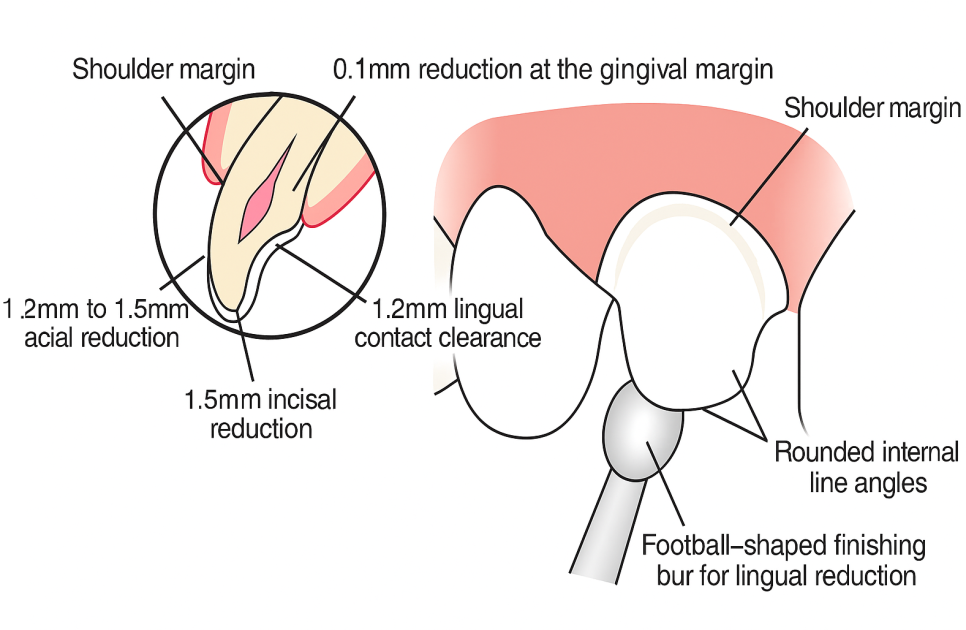
To make an all-ceramic crown,
at least 1.5 mm or more must be reduced from each surface.
When only a small part is damaged,
removing that much healthy tooth structure may be excessive.
It can be compared to replacing an entire piece of furniture just because of a small scratch.
Keeping the original structure as much as possible
is advantageous in the long term.
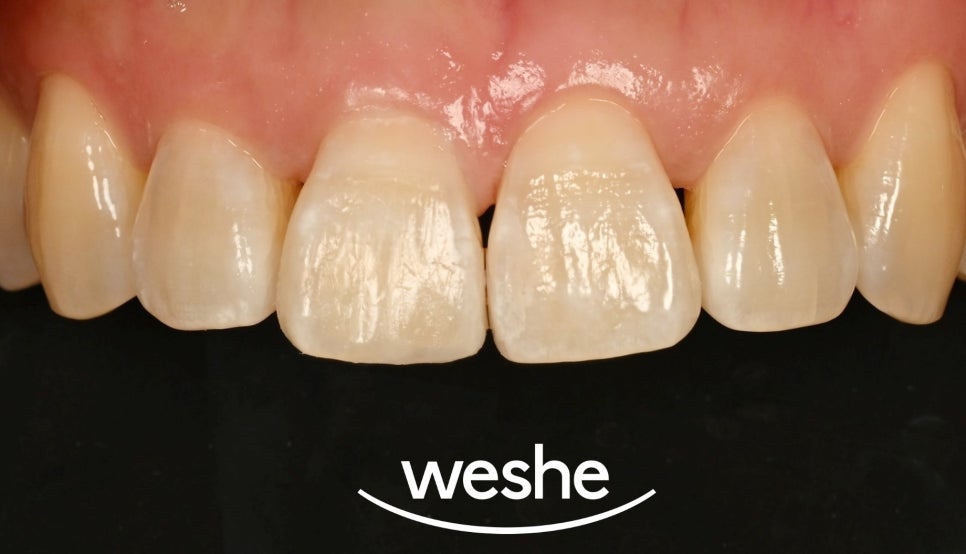
20251025
Because this method involves little to no reduction,
it is considered a conservative approach.
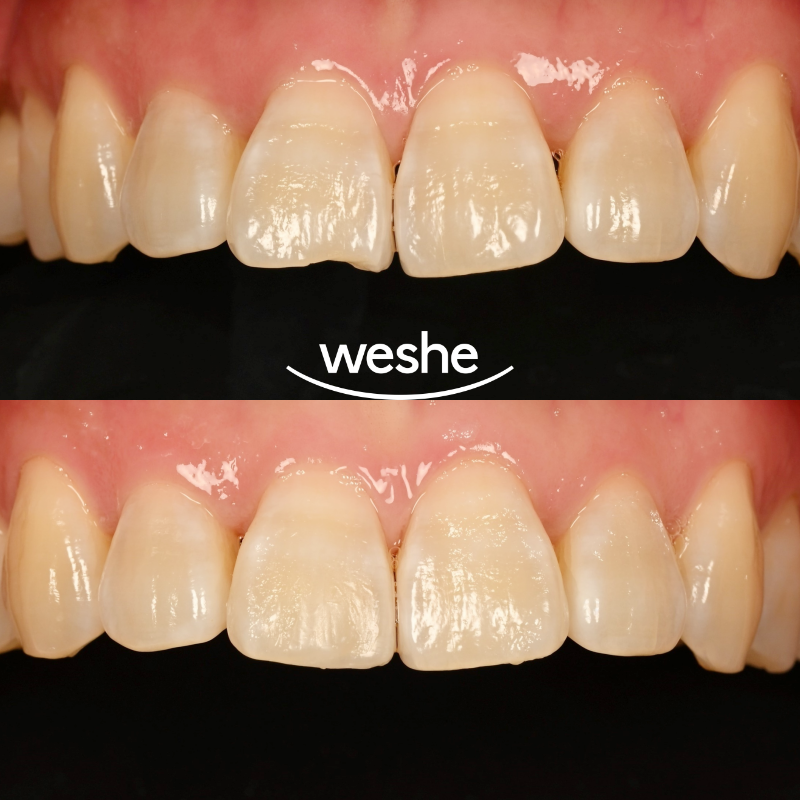
20250630/20251025
Of course, there may be limitations in that the boundary between the restorative material and the natural tooth
can be visually distinguishable.
Even so, it is a meaningful option because it allows as much tooth structure as possible to be preserved.
Prosthetics are relatively stronger,
but it is important to be cautious about removing healthy parts just to achieve that.
- Problems that can occur if left untreated
If a fracture is left for a long time,
various problems can arise.
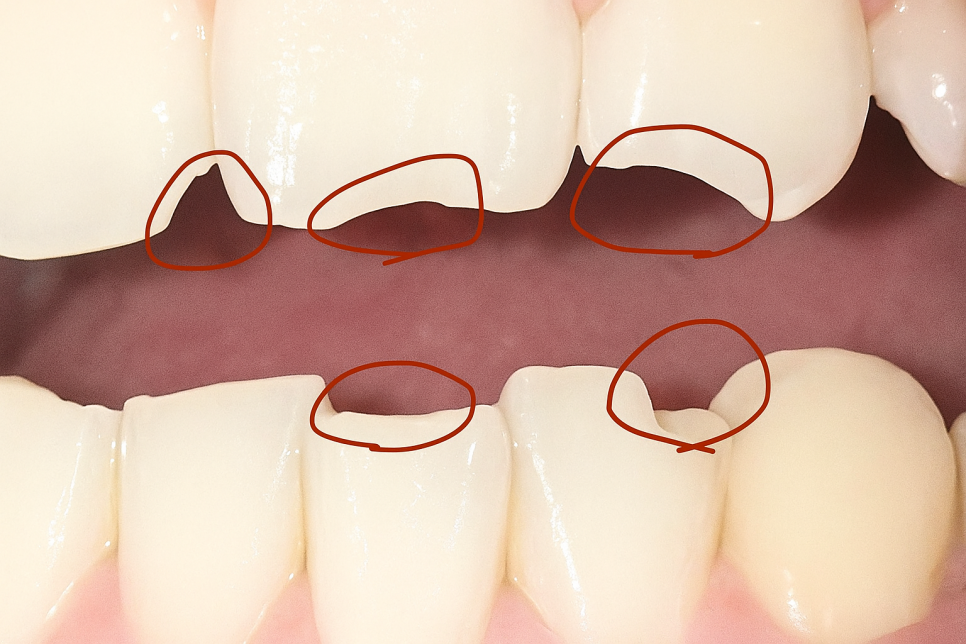
Thin areas are structurally weak,
so there is a risk that additional cracks may progress.
As chewing force is repeatedly applied,
the broken area may gradually become larger.
What initially looked like a small defect may,
over time, change color
and break more deeply.
In severe cases, the pulp may become exposed,
which can develop into a situation requiring root canal treatment.
Above all, many people also worry about aesthetics.
In particular, the anterior teeth are the area that is seen first when speaking or smiling.
That is why, at the Magok dental clinic,
we believe that even small changes can affect the overall impression,
so receiving appropriate treatment early is important.
- Aftercare through airflow and scaling
Continued care is needed even after treatment is completed.
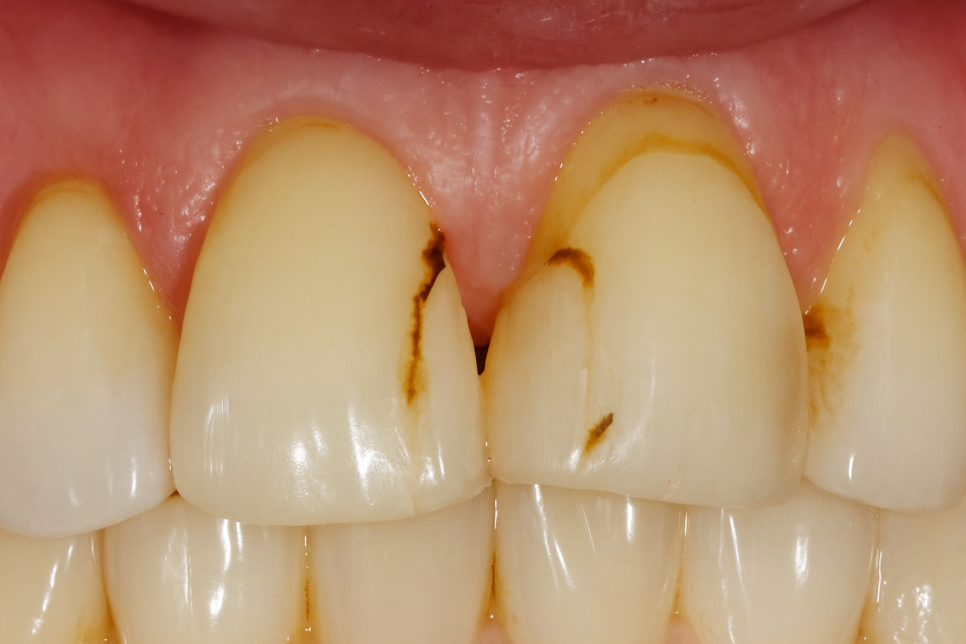
Example of discoloration around resin
In particular, when resin restoration has been performed,
tartar and discoloration can easily form around the margin.
It is good to remove tartar and maintain oral hygiene through regular scaling.
At the Magok dental clinic,
we believe it is better to use airflow equipment
to remove staining substances more delicately.
Airflow is a method that gently removes stains from the tooth surface
by spraying fine powder.
Its advantage is that it causes less irritation to the tooth surface than general scaling.
If tartar removal and stain management are performed together,
the restored area can also be kept clean for a long time.
If airflow is received regularly,
the tooth surface becomes smoother,
creating an environment in which new tartar is less likely to adhere.
To use healthy teeth for a long time,
daily brushing alone has its limits.
Professional instrument-based care
must be provided as well.
In the end, treatment for fractured front teeth
must be determined by comprehensively considering the extent of the damage, the bite condition, and the patient’s needs.
If the broken area is small,
it can be sufficiently restored with resin,
and if the area is larger,
prosthetic treatment can be considered.
This was Yeo Sang-ho, director of the Magok dental clinic.
Thank you for reading this long post.
20250630~20251025