Hello.
This is Yonsei Wish, a dental clinic in Magok. :)
As mentioned once in a previous post,
more and more people are thinking about
which method is better while moving between different types of prosthetics.
In particular, after root canal treatment,
the strength of the natural tooth is reduced, making prosthetic restoration essential.
In general, a crown that can fully cover and protect the natural tooth
is recommended, but in certain cases,
a laminate veneer may be an alternative.
So today, we have also organized below the questions
that people who visit our Magok dental clinic often ask.
(If you're curious, please read this post carefully all the way to the end^^)
Why Prosthetics Are Needed After Root Canal Treatment
A tooth that has completed root canal treatment
begins to change as its nutrient supply is cut off.
Like a tree drying into an old trunk,
the inside becomes brittle and weak.
If it continues to receive the same chewing force in this condition,
the risk of the tooth cracking or breaking increases.
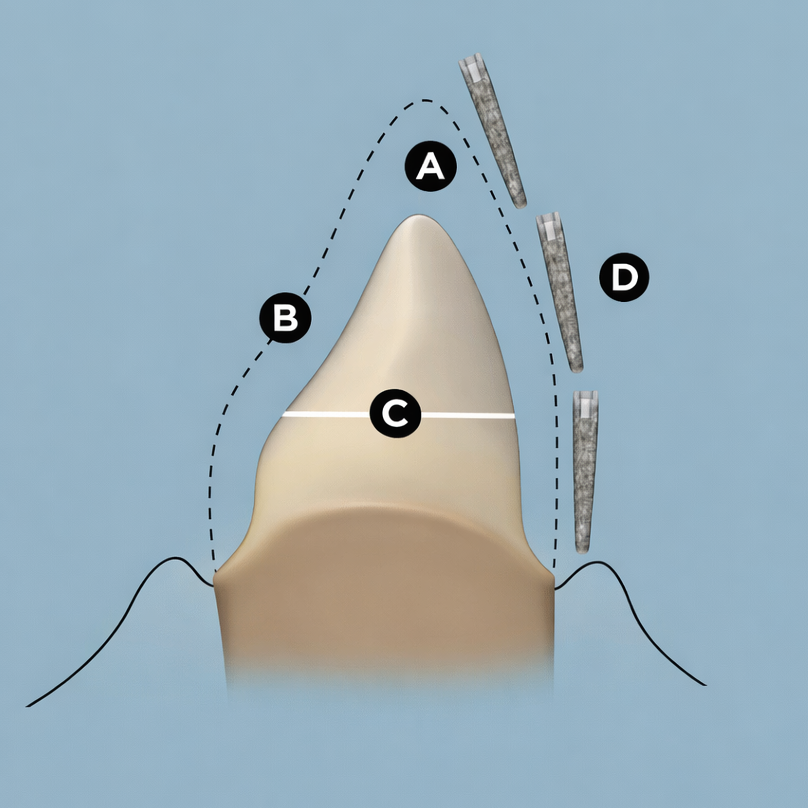
For this reason, the crown method, which covers and protects all surfaces,
has been standardly recommended.
However, in areas that are highly visible, such as the front teeth,
we may carefully analyze the patient's condition
and suggest a different direction.
3 Conditions for Laminate Veneers?
At our Magok dental clinic,
we place great importance on three main conditions during diagnosis.
- The first is the thickness of the remaining enamel.
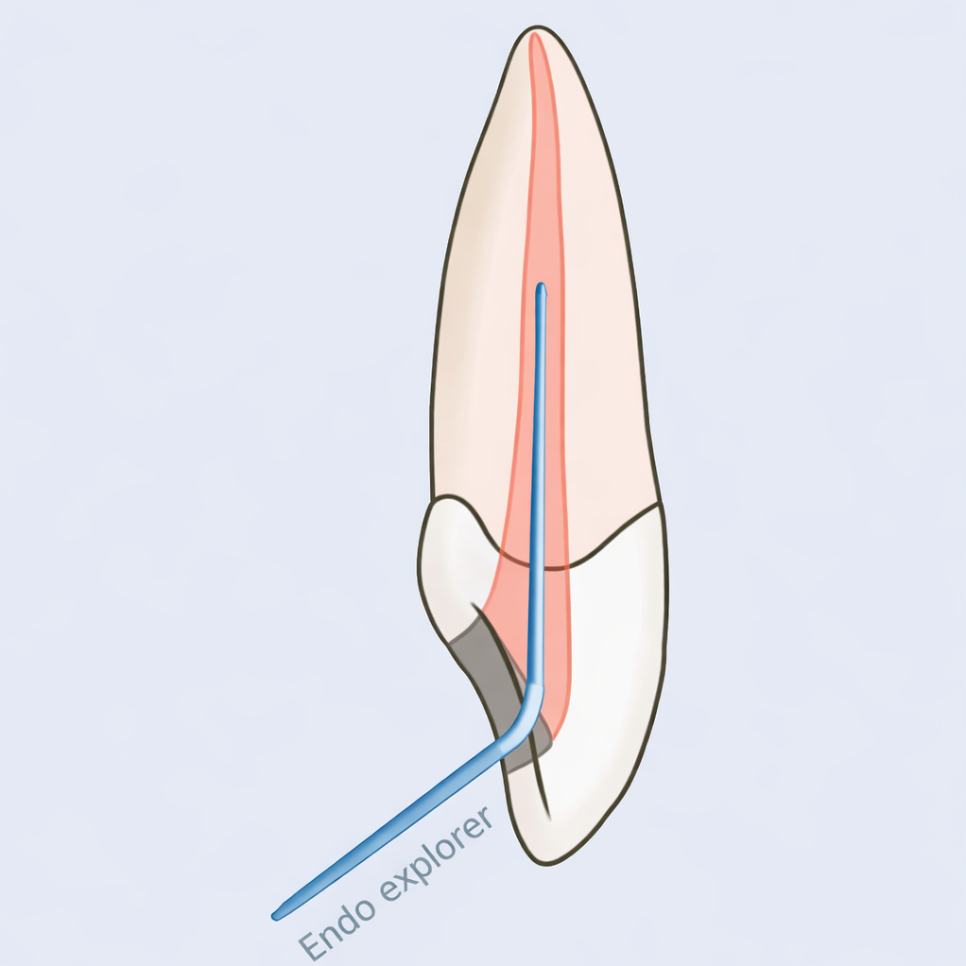
After root canal treatment,
there must be enough remaining tooth structure for the laminate veneer
to bond stably.
- The second is the strength of the bite force.
If excessive force is concentrated on the tooth when the upper and lower teeth bite together,
the risk of the thin prosthetic breaking increases.
People who clench or grind their teeth, or who have strong bite force,
need to be careful because the laminate may fracture.
- The third is the degree of discoloration.
If the abutment tooth has become too dark,
a thin laminate alone may have difficulty masking the color.
It is suitable when the discoloration is not severe,
and in severe cases, non-vital tooth whitening may be performed first,
or a crown, which can cover the color to some extent with an appropriate thickness,
may be more advantageous.
Key Points to Consider When Choosing a Prosthetic
To summarize whether laminate is possible after root canal treatment
at Magok dental clinic today,
the key ultimately comes down to the following.
Whether it is a prosthetic that can properly protect the current tooth,
and which option offers higher satisfaction relative to cost.
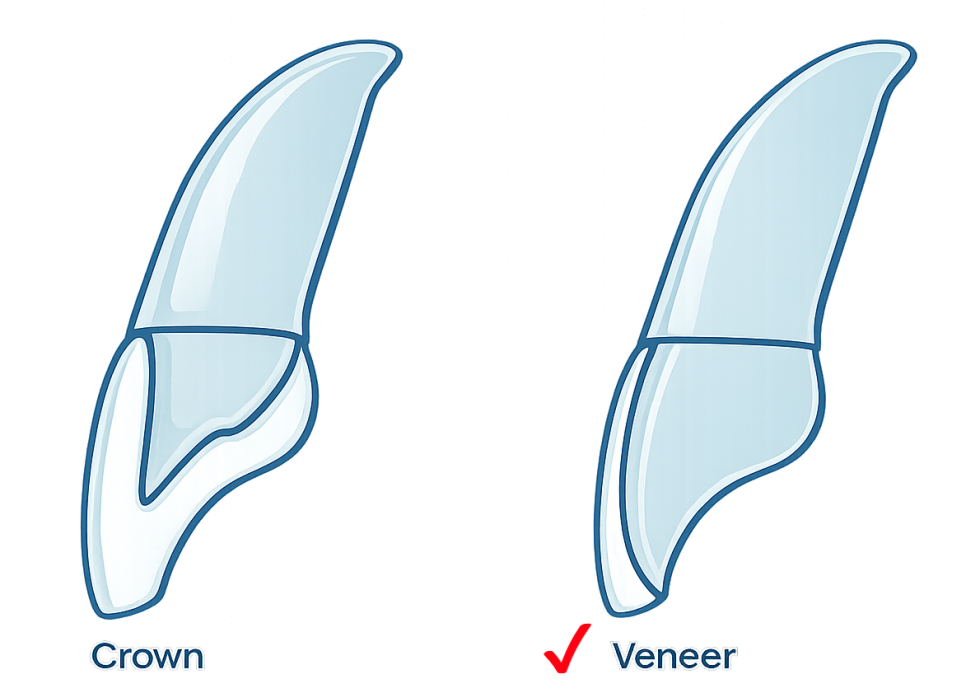
When the area of damage is limited to the front surface
and the overall structure is stable, you can choose a minimally invasive laminate
instead of a crown.
For those who want to preserve their natural teeth even a little more,
this can be a major advantage.
However, evaluating the individual's oral condition with a panoramic X-ray and oral scan
should come first, and regular checkups are essential even after treatment.
Frequently Asked Questions at Magok Dental Clinic
Q. Which lasts longer, laminate or crown?
There is no fixed absolute lifespan for prosthetics,
and durability depends more on care than on the material itself.
However, if bite force is strong or there is teeth grinding,
a crown may be more advantageous in terms of durability.
After a precise examination,
you can receive guidance on the option that suits you best.
Q. There is severe discoloration inside the front tooth.
Can it be covered with laminate?
If the discoloration is severe, it is difficult to block it out with a thin layer.
In such cases, performing non-vital tooth whitening first
or considering a crown is a way to achieve a more natural result.
The path to saving natural teeth
varies depending on the patient's oral condition.
Just because you have undergone root canal treatment
does not mean you must insist on only one method.
We recommend communicating sufficiently with an experienced medical team
and establishing a treatment plan that suits you well.
This has been Dr. Yeo Sang-ho of Yonsei Wish,
Magok Dental Clinic.
Thank you for reading this long post. :)
※ All treatments may have different results or durations depending on the patient's oral condition.
※ After the procedure, side effects such as pain, sensitivity, or prosthetic detachment may occur, so sufficient consultation with the medical team is necessary.