Hello.
This is a dental clinic in Magok-dong, Gangseo-gu.
When looking in the mirror, some people are surprised to visit after noticing that the gum line around their front teeth has turned bluish or black.
Doctor, are my gums dying?
Even if I brush well, the black line does not go away.
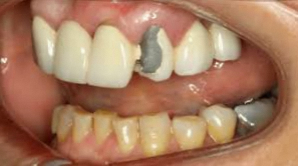
For patients who come in with these concerns,
if we examine their prosthetics,
in many cases they are old PFM restorations.
Today, I will explain in detail why this happens,
and how you can regain your original, clear smile.
- The limitations of PFM restorations:
Why the gum margin appears bluish
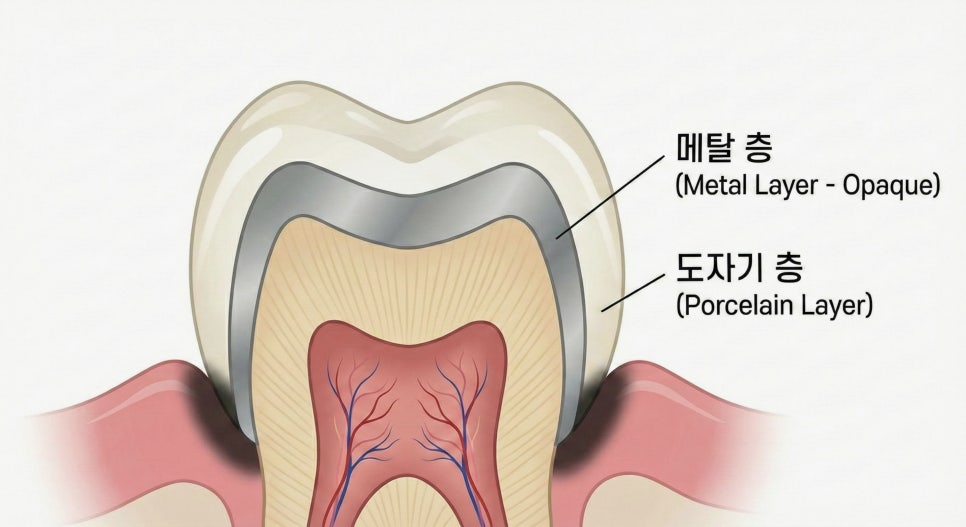
PFM restorations, which were widely used in the past,
are also called porcelain fused to metal.
The inside is made with a strong metal framework,
and the outside is covered with tooth-colored porcelain.
Thanks to the internal metal, strength could be secured,
but over time several limitations have appeared.
First, the metal inside blocks light,
making it difficult to reproduce the translucency unique to natural teeth.
Second, the metal components may show through the gum line,
or metal ions may leach into the gums,
causing the margin area to turn dark and bluish.
This phenomenon is not only aesthetically undesirable,
but also a sign that the restoration has reached the end of its lifespan.
- Zirconia and all-ceramic restorations,
which are metal-free and preserve translucency
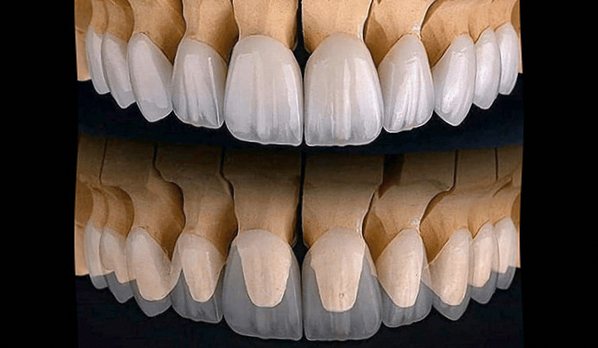
Recently, zirconia and all-ceramic restorations,
which compensate for these shortcomings of PFM,
are commonly used.
Zirconia is called 'artificial diamond' because of its excellent strength,
and it contains no metal at all.
Its light-transmitting property is similar to that of natural teeth,
so it can help prevent the gum line from turning dark
and gives a much brighter, fresher appearance.
All-ceramic restorations are also made entirely of porcelain,
which makes them highly aesthetic.
Checking for secondary decay inside an old crown
Precision examination with a microscope
What is more important than simply replacing it beautifully
is checking the health of the inside of the restoration.
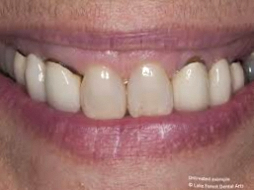
Old restorations tend to develop tiny gaps,
and food debris can get in through those spaces,
leading to secondary decay inside the restoration in many cases.
At the Gangseo-gu Magok-dong dental clinic,
when replacing restorations, we believe it is best to use a microscope
to precisely check even tiny inflammation or decay inside the tooth
that is difficult to see with the naked eye.
That is because a strong foundation makes it possible to use a new restoration
healthily and for a long time.
The shade-taking process
for recreating the look of my original tooth
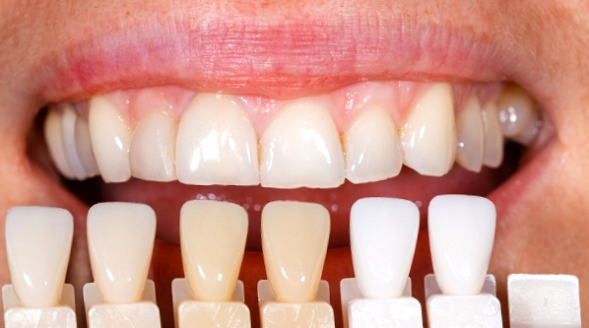
The key to creating a natural-looking restoration
is harmony with the adjacent teeth.
Through the shade-taking process,
the color, brightness, and translucency of each tooth
must be analyzed in detail.
Rather than simply making 'white teeth,'
a natural color that feels like your original tooth
is what we recommend at the Gangseo-gu Magok-dong dental clinic.
An anti-aging effect that brightens the entire face
simply by replacing the restoration
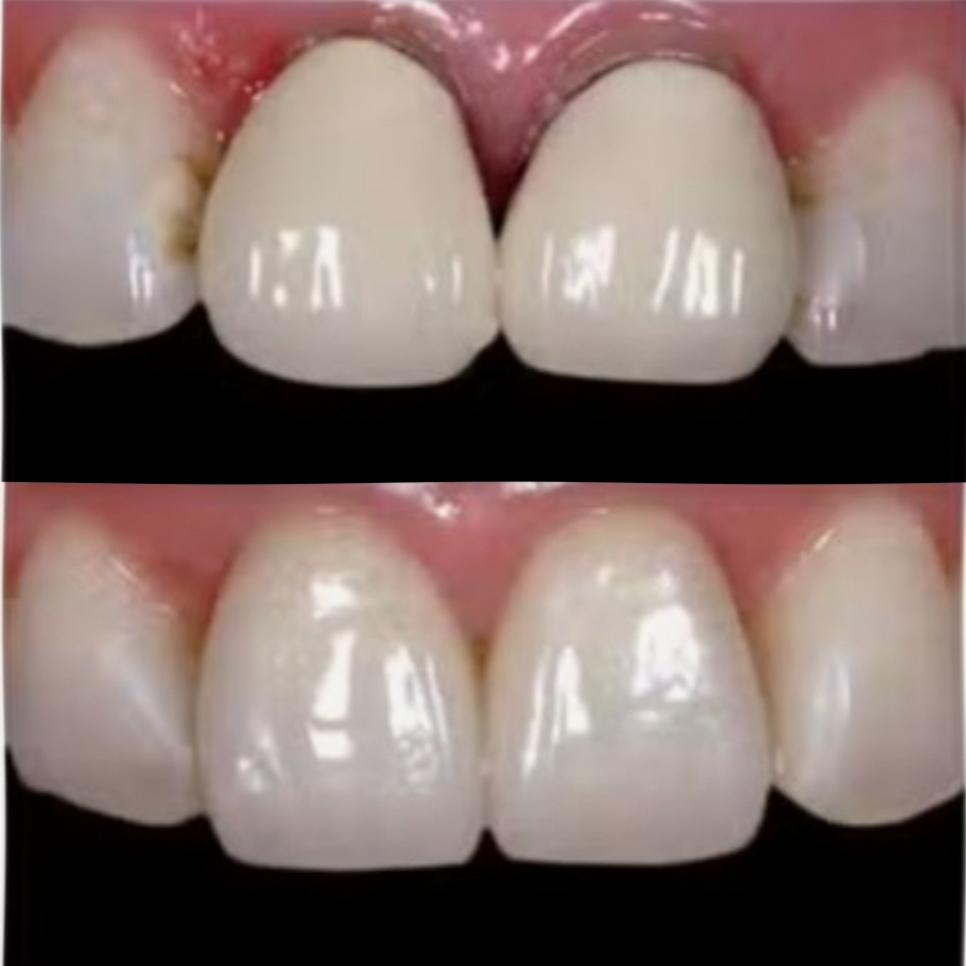
Erasing the black line on the front teeth and restoring translucency
means more than just a simple dental treatment.
When the area that used to bother you while smiling is improved,
your expression becomes much brighter and you gain confidence.
This can also create a kind of anti-aging effect
that makes the entire face look more lively.
If you are worried about an old restoration,
don't put it off any longer
and I recommend receiving a precise examination.
Because every patient has a different oral condition,
it is most important to create a personalized treatment plan.
I hope today's article was a small help in regaining your bright smile.
This was the Gangseo-gu Magok-dong dental clinic.
Thank you for reading this long post.
All procedures may cause side effects such as pain, bleeding, or sensory abnormalities depending on the patient's condition, and treatment results and duration may vary from person to person, so sufficient consultation with medical staff is necessary.