Hello, this is Magok-dong Dental Clinic.
Wisdom teeth are the last molars located at the very back of the posterior region.
If the wisdom tooth has erupted straight, it can be removed relatively easily,
but the problem is that this is not the case for most people.
Among these, impacted and horizontally tilted cases
require a surgical procedure involving incision of the gums and bone.
This is fundamentally different from a simple extraction
in terms of the nature of the procedure itself.
That is why, before treatment,
an accurate diagnosis and advance planning are important.
Article Contents
-
Structures to Watch Out for During Extraction
-
The Importance of CT Scans
-
Why You Should See an Oral and Maxillofacial Surgery Specialist
-
The Need for Early Diagnosis and Treatment
-
Q&A
-
Structures to Watch Out for During Extraction
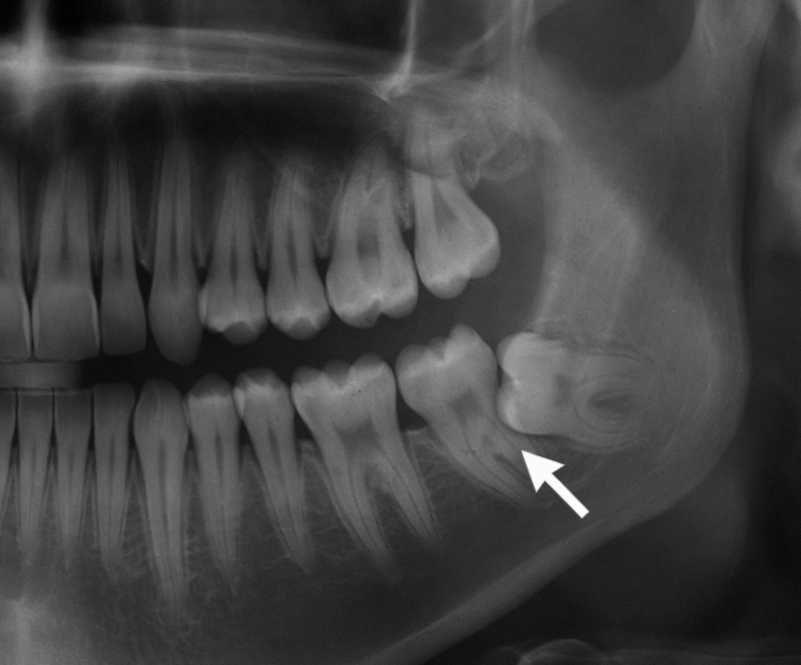
Even in wisdom tooth extraction,
the more difficult area is the mandible.
The reason is the inferior alveolar nerve,
a nerve tissue that passes through the inside of the lower jawbone
and is responsible for sensation related to the mandible.
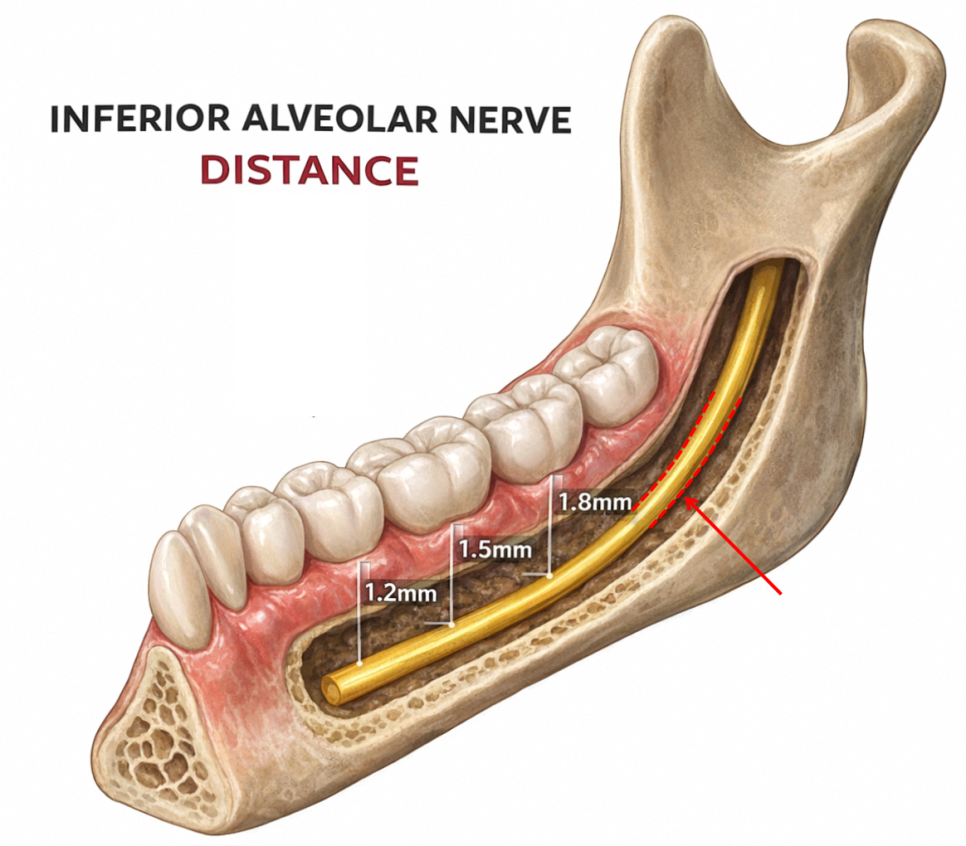
Due to their positional relationship, the roots of impacted wisdom teeth
are often located close to the inferior alveolar nerve,
and sometimes they are in contact with it as if encasing the tissue.
If stimulation is transmitted during the extraction process,
numbness or paralysis may occur.
This is different from pain,
and may be accompanied by various discomforts such as tingling,
numbness, and abnormal sensations.
Usually, it improves with medication or natural recovery,
and may remain only as a temporary symptom,
but in some cases it can become permanent.
As mentioned earlier by Magok-dong Dental Clinic,
this is also why advance preparation is important.
- The Importance of CT Scans
Many people think that a single X-ray is enough
to decide whether extraction is possible.
However, a panoramic X-ray is a two-dimensional image.
In other words, it has limitations in accurately determining
the actual distance between the tooth root and major structures,
their positional relationship, and whether they are in contact.
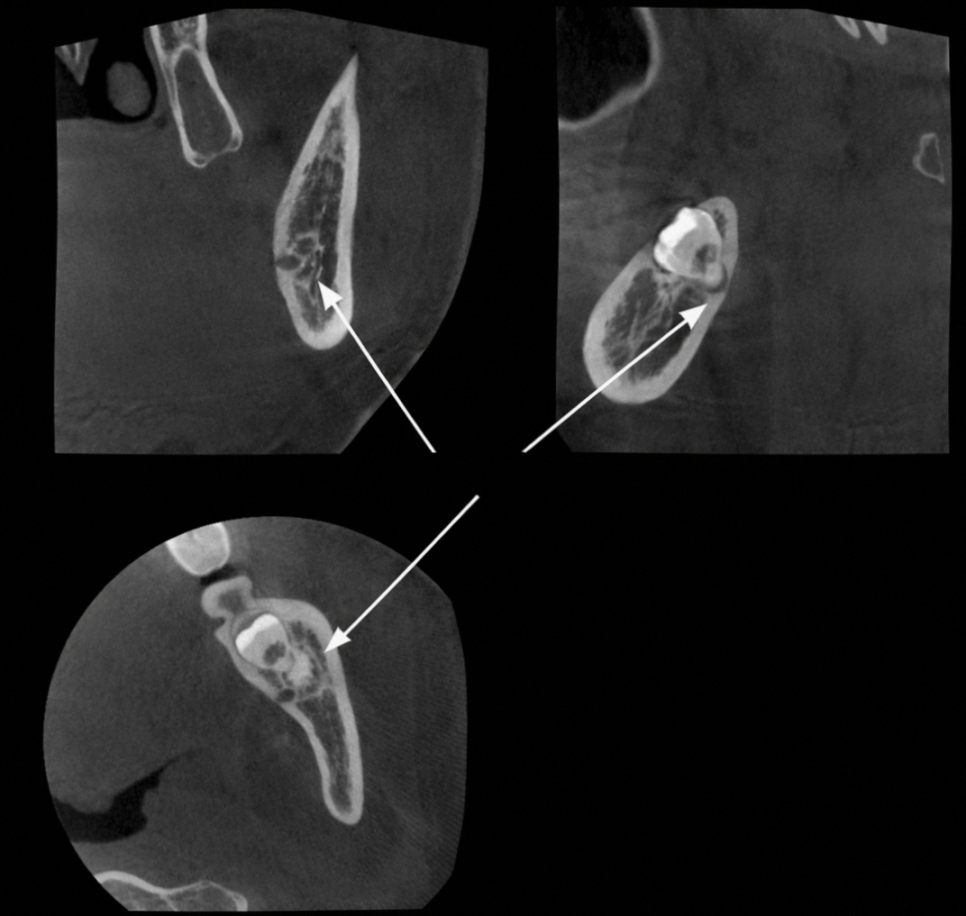
If there is suspicion that the tooth is close to the nerve,
analysis through CT scanning is necessary.
Through this, the exact shape and direction of the root,
the distance to the nerve canal and whether there is contact,
the thickness of the surrounding bone, and the location of structures, etc.
When this information is sufficiently obtained,
an extraction plan can be established with precision,
and unexpected situations can be minimized.
- Why You Should See an Oral and Maxillofacial Surgery
Specialist
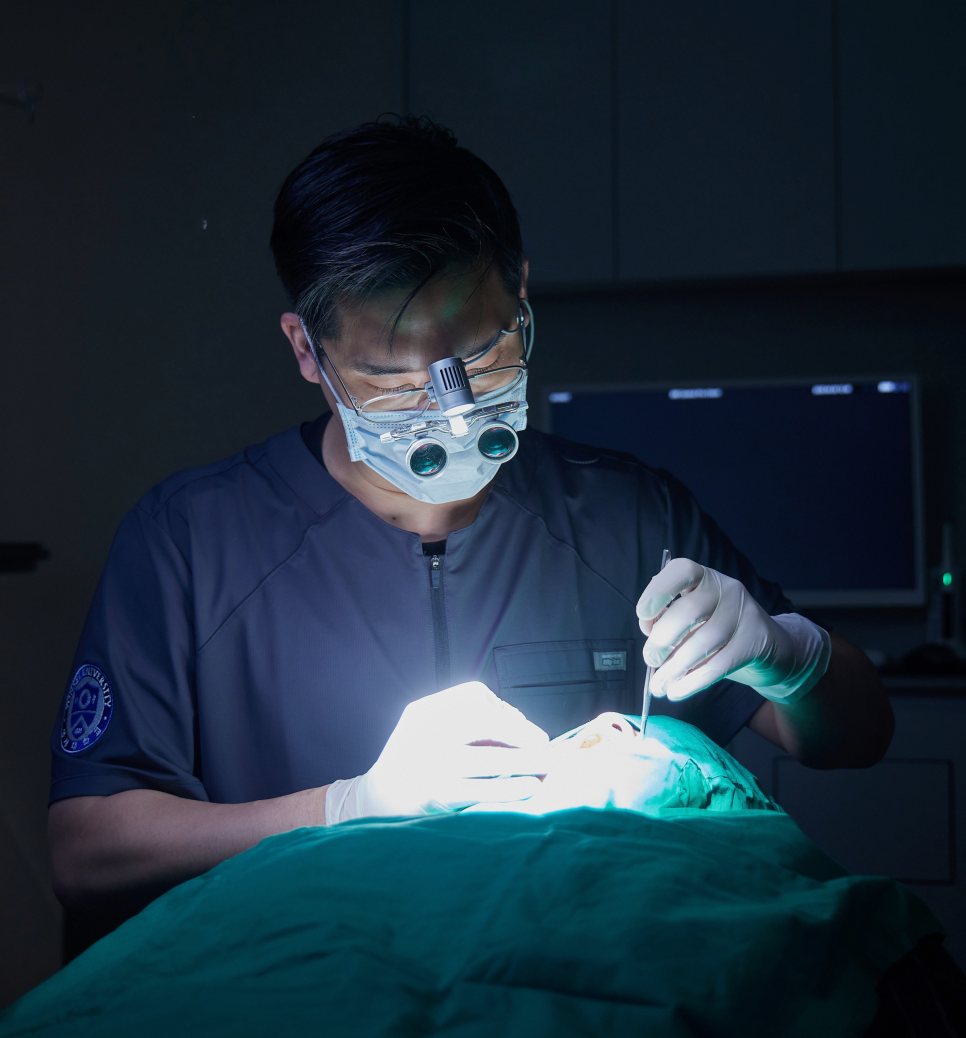
Oral and maxillofacial surgery is a field
that specializes in surgical procedures involving the jaws,
oral tissues, and temporomandibular joints.
To obtain specialist certification,
one must complete a 4-year residency training program.
A significant portion of that training focuses on
complex extractions, impacted tooth extraction, jaw surgery, and other oral surgical procedures.
In particular, the process of extracting an impacted wisdom tooth
requires a precise understanding of anatomical structures,
CT interpretation skills, and surgical procedures,
making it a high-difficulty treatment.
The more difficult and anxiety-inducing the procedure,
the more important it is to leave it to a specialist
with accurate diagnostic ability and expertise.
- The Need for Early Diagnosis and Treatment
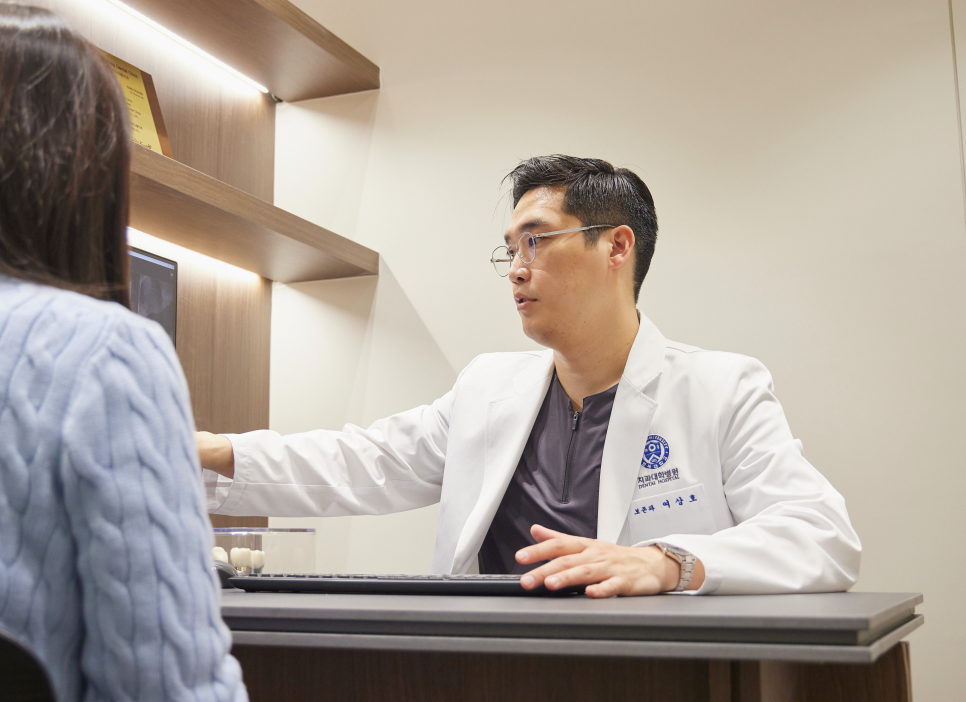
When providing consultations at Magok-dong Dental Clinic,
many people who are about to have a wisdom tooth removed
tend to feel especially afraid.
When they hear that the tooth is close to a nerve,
that anxiety naturally increases even more,
but in fact, that fear is understandable.
This is because one extraction decision
can affect daily life afterward.
However, continuously delaying necessary treatment
is not the solution.
The longer an impacted wisdom tooth is left untreated,
the more it can negatively affect the surrounding tissues.
It may damage the root of an adjacent tooth,
weaken surrounding tissues due to repeated inflammation,
and in rare cases, develop into a cyst.
As the time spent delaying out of fear gets longer,
the difficulty of treatment can increase,
and more complex procedures may be required instead.
Therefore, Magok-dong Dental Clinic recommends
checking whether extraction is needed early
and receiving treatment if necessary.
- Q&A
Q1. Do wisdom teeth always need to be removed?
Not all wisdom teeth must be removed.
If there are no special symptoms
and they do not affect oral health,
they may be maintained through regular observation.
However, if there is a possibility of inflammation, cavities, cyst formation,
or similar issues, we recommend receiving treatment without delay.
Q2. How long does recovery take?
Recovery time for impacted cases
may be somewhat longer.
In general, recovery occurs within 1 to 2 weeks,
but swelling and discomfort tend to be most severe
within 3 to 5 days.
Please keep in mind that recovery differs from person to person
depending on healing ability and post-treatment care.
Q3. Is it better to be younger?
In the early 20s, bone elasticity is better
and healing ability is relatively higher as well.
On the other hand, as people get older,
the roots and bone may become fused,
which can make the treatment process more complicated.
However, what Magok-dong Dental Clinic emphasizes is that
this can vary depending on each person's anatomical structure,
so we recommend receiving a consultation after an accurate diagnosis.
Q4. What should I be careful about after surgery?
Within 24 hours, exercise, alcohol, and smoking should be avoided.
They delay healing and increase the risk of infection,
so they should be avoided for at least 3 to 5 days.
In particular, to avoid directly刺激ing the affected area,
soft foods are recommended,
and please follow the prescribed dosage and duration for the antibiotics and painkillers.
This has been Magok-dong Dental Clinic.
Thank you.