Hello.
This is Gangseo-gu Dental Clinic.
�A0
Among patients who come in for regular checkups,
many say there is nothing wrong.
�A0
It may seem like there is no problem
since you can chew well and there is no pain,
�A0
but in fact, pain is not an absolute indicator
of a disease or lesion.
�A0
In many cases, when an X-ray is taken,
a dark shadow is already present
at the root tip of the tooth.
�A0
It may look fine on the outside,
but it is the trace of inflammation
that has quietly progressed inside the root,
and if left untreated, it often becomes the cause of extraction.
�A0
That is why today, at Gangseo-gu Dental Clinic,
we would like to explain in detail,
using a tooth that has undergone root canal treatment
as an example among cases of periapical inflammation.
-
A lesion that grows without pain
-
Why a treated tooth hurts again
-
Conservative treatment and extraction
-
Regular checkups for long-term prognosis
-
A lesion that grows without pain
A periapical lesion literally refers to
a lesion that forms at the root tip of a tooth.
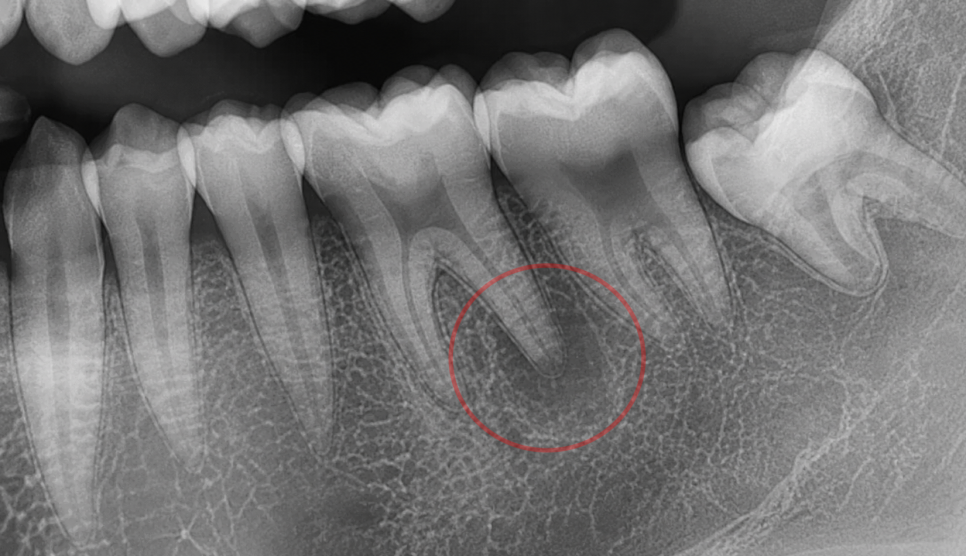
On an X-ray, it appears as a dark, round shadow
around the root tip,
and this dark area is where the bone has been lost.
�A0
It is the result of bacteria remaining deep inside
the root canal affecting the surrounding bone tissue
and causing bone resorption.
�A0
The problem is that this process can progress
without any special symptoms.
�A0
Sometimes it ends with only slight gum swelling
or a mild sense of discomfort,
so people often do not even notice it.
�A0
However, when patients visit after feeling that something is wrong,
many are surprised to be told that extraction is needed.
�A0
That is why, at Gangseo-gu Dental Clinic,
we repeatedly emphasize regular checkups
for early diagnosis.
- Why a treated tooth hurts again
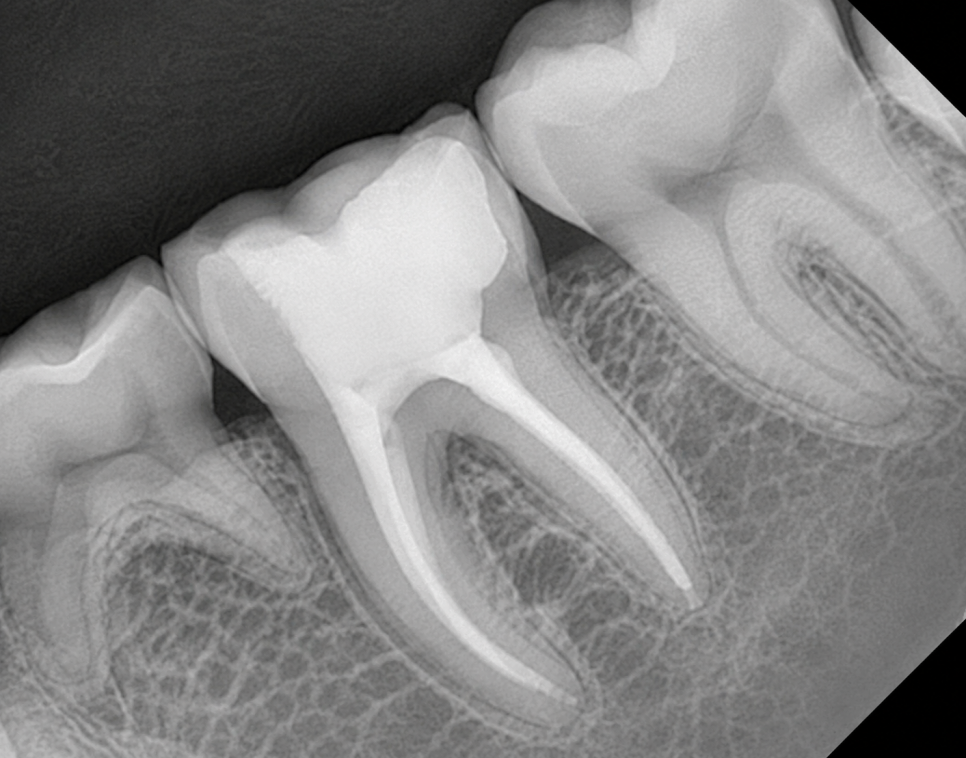
This is especially a common finding
even in teeth that have undergone root canal treatment.
�A0
There are two major pathways
for a periapical lesion to progress.
�A0
The first is when the proper procedure
was not performed during the previous treatment.
�A0
Among teeth, molars in the back have
not one root canal, but three or four,
�A0
and because their shape is also irregular,
it is not easy to treat even the smallest areas.
�A0
Since medical staff are human too,
there are cases where something is missed,
and this can eventually lead to retreatment.
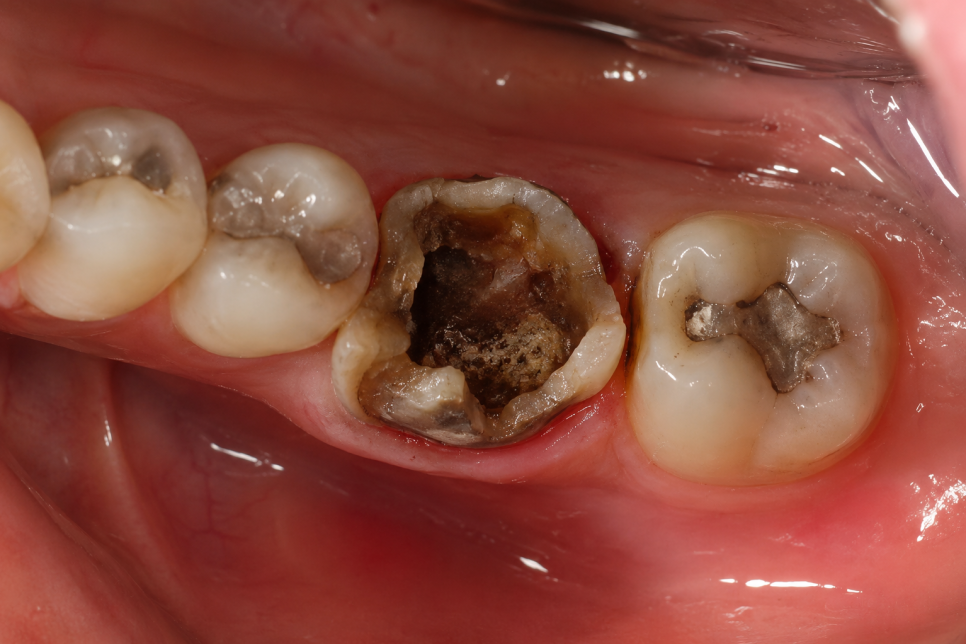
The second is when bacteria reinvade
through the prosthetic restoration over time.
�A0
After root canal treatment is completed,
a prosthetic restoration called a crown is placed
to protect the weakened tooth crown.
�A0
However, if gaps form that allow bacteria to enter,
such as due to gum recession or wear of the restoration,
secondary decay can also occur inside.
�A0
When a treated tooth relapses like this,
inflammation can form even more quickly.
�A0
As explained at Gangseo-gu Dental Clinic,
this is the point at which retreatment is needed
in order to remove the cause of the periapical inflammation.
- Conservative treatment and extraction
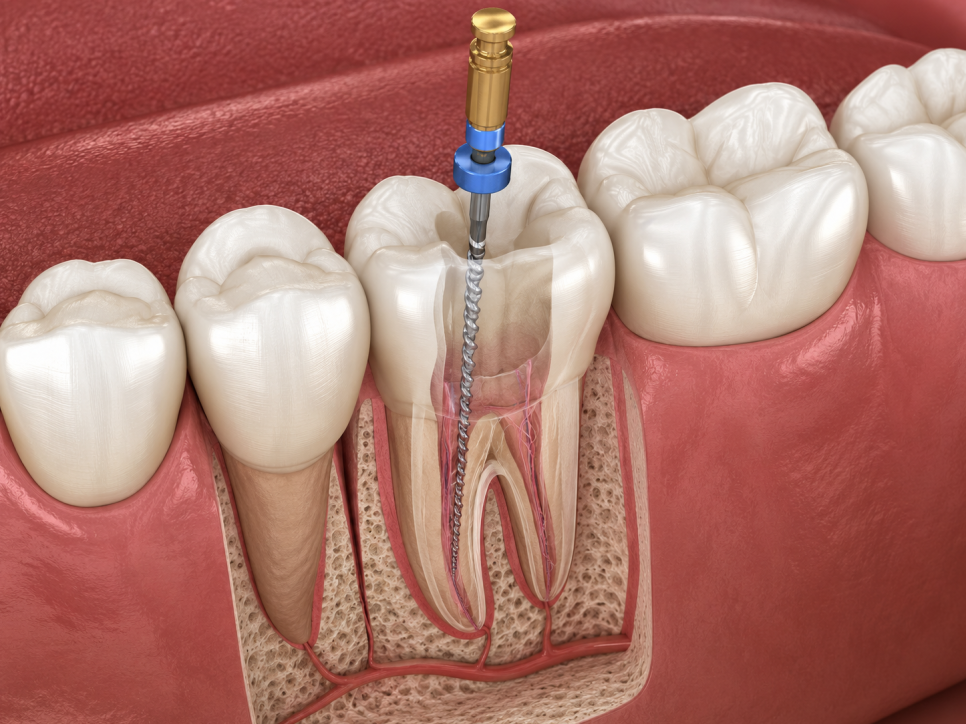
However, compared with the initial procedure,
much more precise work is required.
�A0
Because the tooth has already undergone treatment once,
the root canal opening is blocked with filling material,
�A0
and as time passes, the root may become narrower
or calcification may progress, which is also common.
�A0
In such situations, the prosthetic restoration and
the previously placed material must be completely removed
before access for treatment is possible.
�A0
For this reason, procedures such as apicoectomy
or tooth replantation may also be considered,
�A0
and if the condition cannot be treated even with these procedures,
extraction unfortunately has to be decided.
�A0
That is why, at Gangseo-gu Dental Clinic,
we tell patients that even after treatment,
they should continue regular checkups as well as ongoing care.
- Regular checkups for long-term prognosis
If you put it off because there are no symptoms,
even a tooth that could have been saved will eventually be lost.
�A0
So even if there seems to be no problem,
regular checkups and care should be carried out,
�A0
and we hope you will pay close attention
to keeping your own teeth for a lifetime.
�A0
Lastly, we will finish with a Q&A
related to today’s topic.
Q1. How many visits does retreatment usually take?
It varies depending on the condition of the tooth,
but it is generally carried out over two to four visits.
�A0
This is because removing the previous filling material,
cleaning the root canal,
replacing the internal material,
final filling, and crown restoration
are more helpful for long-term prognosis
when each step is given enough time.
Q2. Can a periapical lesion disappear on its own?
Unfortunately, almost never.
�A0
Because the source of a periapical lesion is bacteria inside the root canal,
it is difficult for it to subside unless it is directly removed.
�A0
Pain may temporarily decrease,
but this is not a sign of recovery,
so please get diagnosed as soon as possible.
Q3. Is there a possibility that it could recur again?
It is difficult to rule out that possibility.
�A0
Because the root canal itself is a tiny and complex structure,
complete sterilization may not be easy.
�A0
That is why regular checkups after treatment and
careful management of the condition determine the prognosis.
�A0
Thank you for reading this long post.
�A0
This was Gangseo-gu Dental Clinic.