Hello.
This is Maggok Station Dental Clinic.
If the tooth root area keeps throbbing even after root canal treatment,
what if the symptoms recur not once, but two or three times?
At this point, many patients
come to the conclusion that the tooth needs to be extracted.
However, even when the problem cannot be resolved with root canal treatment,
that does not necessarily mean extraction is required.
One option for preserving a natural tooth is
intentional tooth replantation.
It may feel unfamiliar,
but when performed under appropriate conditions,
it is a method that can address the problem at its source.
- Why it does not improve even after repeated root canal treatment
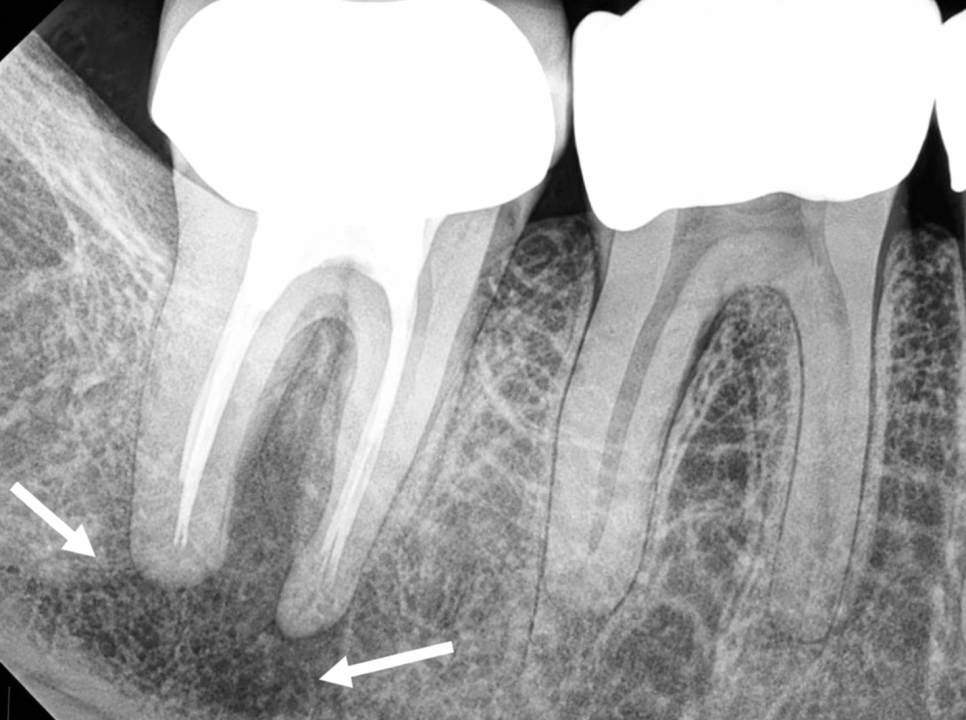
Root canal treatment involves removing the infected nerve
and blood vessel tissue inside the tooth.
In most cases, inflammation gradually subsides
through this process,
but in some cases,
the inflammation around the root continues
or recurs even after treatment.
There are various causes.
Cases where the root canal branches in a complex way,
or where there are blind spots that instruments cannot reach, and so on.
If the root cause of the inflammation cannot be resolved
even after treating the inside of the canal,
the problem is difficult to eliminate.
In the situation mentioned by Maggok Station Dental Clinic,
repeat root canal treatment is usually considered,
but if even that cannot produce good results,
it is necessary to consider another method.
- How is intentional tooth replantation performed?
Intentional tooth replantation is a procedure in which the problematic tooth is
temporarily extracted,
and then treated directly outside the oral cavity.
When the tooth is taken out of the mouth,
areas that were difficult to access with instruments can be
carefully examined and treated in detail.
After removing the inflamed tissue
and partially resecting the root tip,
the retrograde filling is completed,
and the tooth is placed back in its original position.
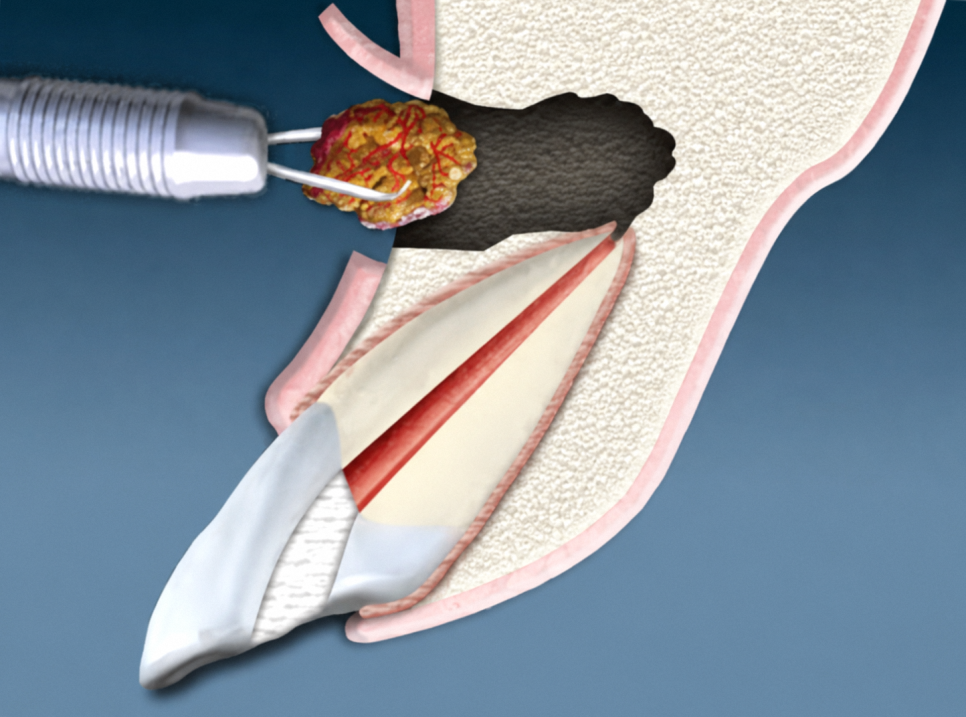
There is a similar procedure called apicoectomy,
but the approach is completely different.
An apicoectomy involves making an incision in the gum
and accessing the root tip from the bone side,
whereas intentional tooth replantation differs in that
the tooth itself is removed and treated directly.
At Maggok Station Dental Clinic,
after a comprehensive review of the tooth’s position, root shape, and anatomical structure,
we recommend receiving treatment in the most appropriate direction.
- Conditions that determine success and precautions
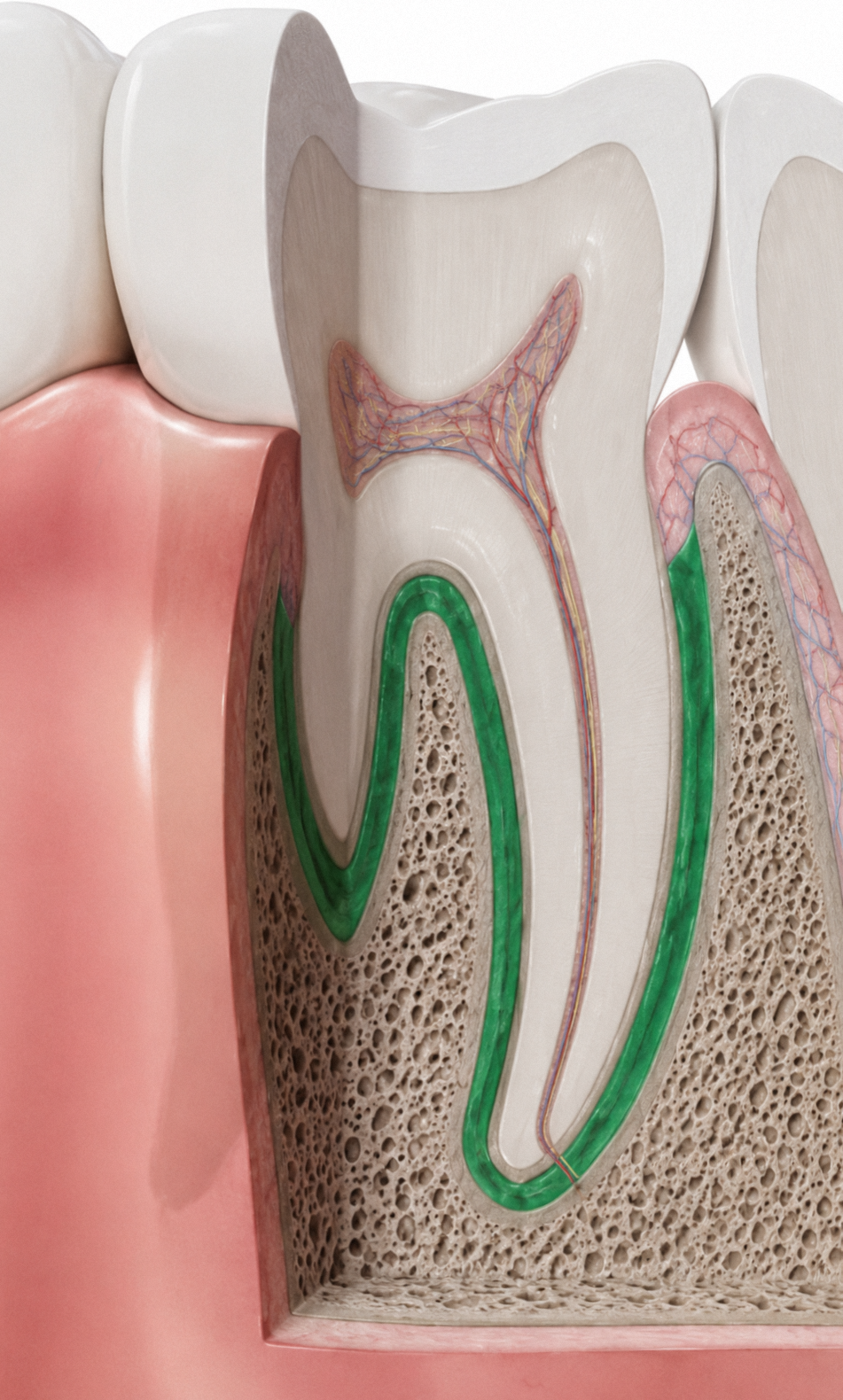
The key factor determining the success or failure of this replantation procedure is
the viability of the periodontal ligament.
The periodontal ligament is a thin connective tissue that surrounds
the surface of the tooth root and plays a role in allowing the tooth
to properly attach to the bone.
What is important here, however, is that the longer the tooth remains exposed outside the mouth after extraction,
the faster the periodontal ligament cells are damaged.
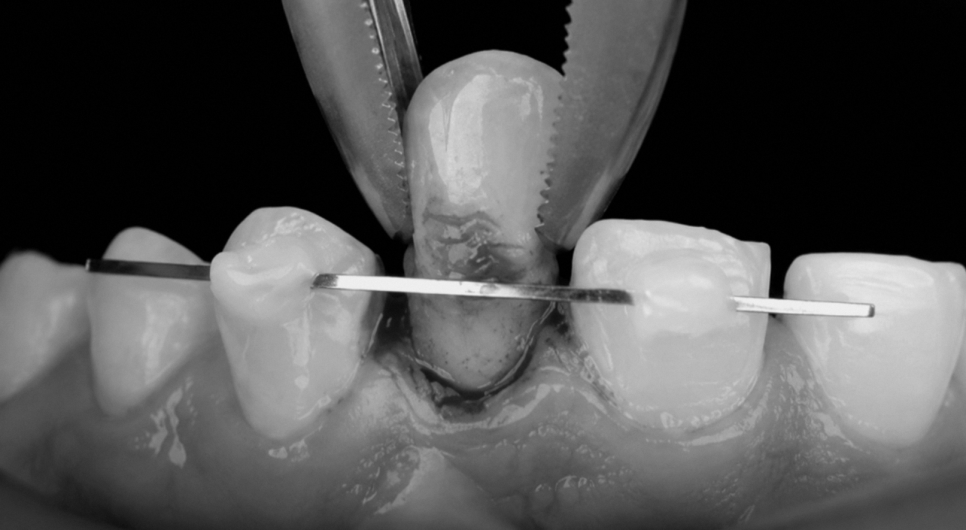
Therefore, minimizing the extraoral treatment time is
a very important condition in replantation.
If replantation is performed while the tissue is damaged,
there is also the possibility of ankylosis, where the bone and tooth fuse directly,
or root resorption.
Accordingly, this is a procedure that may be difficult to apply in cases such as
when the root is short or there is a high risk of fracture during extraction,
and if you have taken osteoporosis medications long term
or have reduced immune function,
it may affect the healing process.
Therefore, Maggok Station Dental Clinic emphasizes that
you must inform the medical staff of any medications you are taking
and your medical history during the consultation.
- Questions about replantation
Then, finally, in addition to the above,
I will answer the questions that you were likely curious about.
Q1. When can I resume daily life?
After the procedure, splinting is also performed.
This is a device that stabilizes the tooth with a wire,
and during this period, it is best to be careful
so that no major stress is applied.
In general, it is removed within a few weeks,
and the progress is monitored.
Recovery speed varies depending on each person’s healing ability,
so it is important to receive a consultation.
Q2. What happens if the replantation does not go well?
If, during the course of treatment, root resorption or ankylosis progresses
and it becomes difficult to preserve the tooth,
extraction may need to be considered.
However, trying replantation does not make implants difficult.
It is simply an attempt to save the natural tooth,
and depending on the result, the next direction can be
set flexibly.
Q3. How long does the treatment take?
From extraction to treatment and replantation,
it is completed in a single visit.
As mentioned earlier by Maggok Station Dental Clinic,
this is a procedure where treatment time is very important,
and it usually takes about 10 to 30 minutes.
Thank you for reading this long post today.
This has been Maggok Station Dental Clinic.