Hello, I’m Lee Su-kyung, a specialist in integrated dentistry.
One of the concerns parents have when raising young children is their teeth alignment.
"It looks like our child’s teeth are coming in crooked,"
"Their permanent teeth are falling out later than their peers."
.
.
.
There are so many different concerns.
Whether the issue is serious enough to need treatment,
or whether time can resolve it
can be difficult to tell,
which is why regular checkups are more important than anything else.
If treatment is delayed during childhood,
one of the issues that can be difficult to resolve later is the arch,
and I’d like to share information about it at Naebalsan Dental Clinic.
If you have similar concerns,
please be sure to read to the end.
Cases where arch expansion is needed.
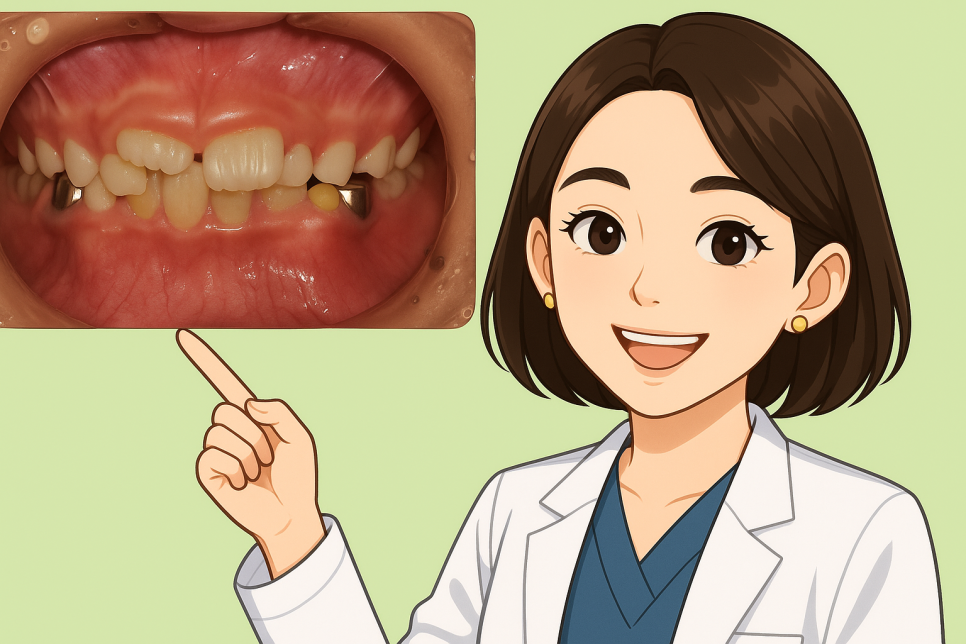
As in the photo prepared by Naebalsan Dental Clinic,
if there is not enough space and the permanent teeth come in crooked
or are judged to have difficulty erupting,
arch expansion, which widens the upper jaw bone itself,
may be necessary.
Not only can permanent teeth erupt crookedly,
but the teeth themselves may not be able to erupt at all, and a misaligned bite can make eating difficult,
and because a misaligned bite can inhibit or excessively stimulate jaw growth,
it is advisable to correct it in a timely manner.
Naebalsan Dental Clinic information
Why do it in childhood?
Sometimes parents wonder whether treatment can be postponed because the child is too young and it might be difficult.
However, once all permanent teeth have erupted, the correction process becomes more complicated.
The jaw bone itself needs to be widened,
and if you try to correct it after growth has already finished,
you have to compensate for a jaw that has grown too large or too small,
so the process becomes somewhat more difficult.
Also, because growth has already stopped,
compensating for a smaller or larger lower jaw becomes even more difficult.
But when done in childhood, it is relatively easier.
Because treatment is carried out by intervening while the child is still growing,
the process of guiding growth to continue or to stop growing further
is relatively simple.
The results are also generally good.
The fundamental reason for starting with first-stage treatment in childhood
is to use growth to carry out treatment,
and through this, to properly improve the environment so that teeth can align as primary teeth are replaced by permanent teeth.
However, there are cases where even after pediatric orthodontic treatment in childhood,
further treatment is needed.
Even after the jaw bone during growth has been compensated for,
a residual growth that remains later can cause jaw problems that need correction,
or
because recurrence is common in cases such as open bite,
the alignment may shift and second-phase orthodontic treatment may be needed.
There are also cases where the initial diagnosis is to observe first without making improvements,
and proceed with treatment later.
In such cases, there is no problem with the jaws themselves,
so correction is done after the entire dentition has been completed.
Naebalsan Dental Clinic information
How is the treatment carried out?
Then let me explain in detail how it is carried out at Naebalsan Dental Clinic.
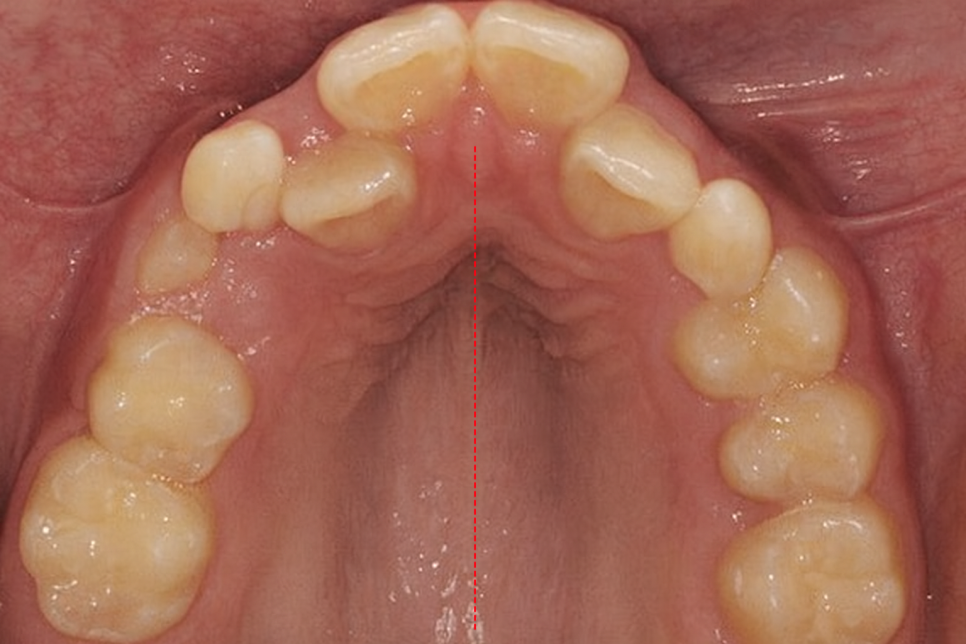
As shown in the photo, in cases where the upper jaw bone is small and the teeth overlap as they erupt,
expansion may be considered necessary.
This refers to widening the mid-palatal suture in the center of the upper jaw bone using a device,
allowing bone tissue to fill in and thereby widening the jaw.
The devices used for this process are broadly divided into fixed and removable types.
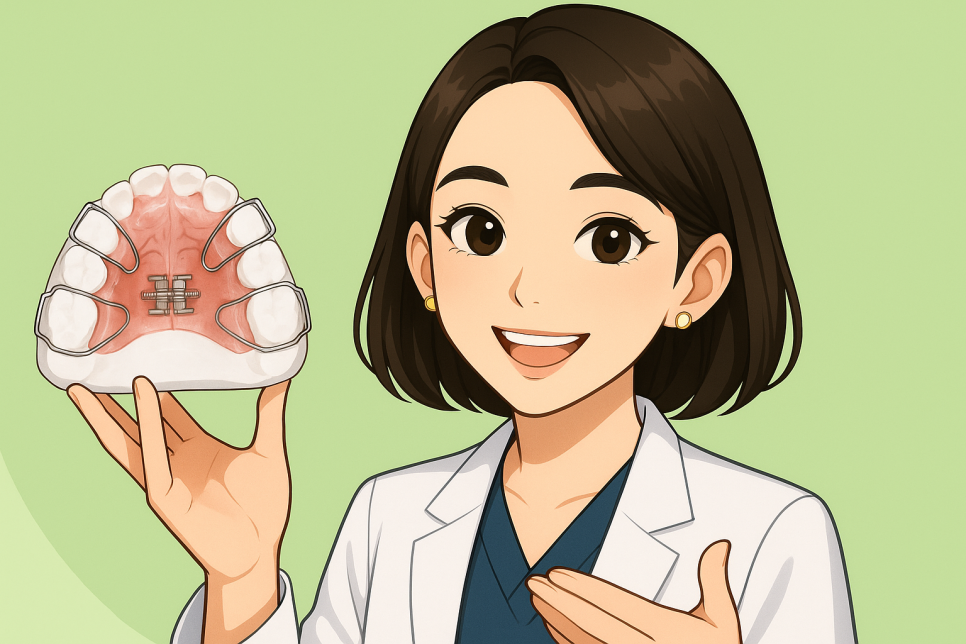
In the case of removable appliances,
they can be taken in and out.
So they are somewhat less uncomfortable for patients,
but because they must be worn for the prescribed amount of time to be effective,
they are suitable for patients with good cooperation.
If cooperation is poor and wear time is short,
a fixed appliance may produce better results.
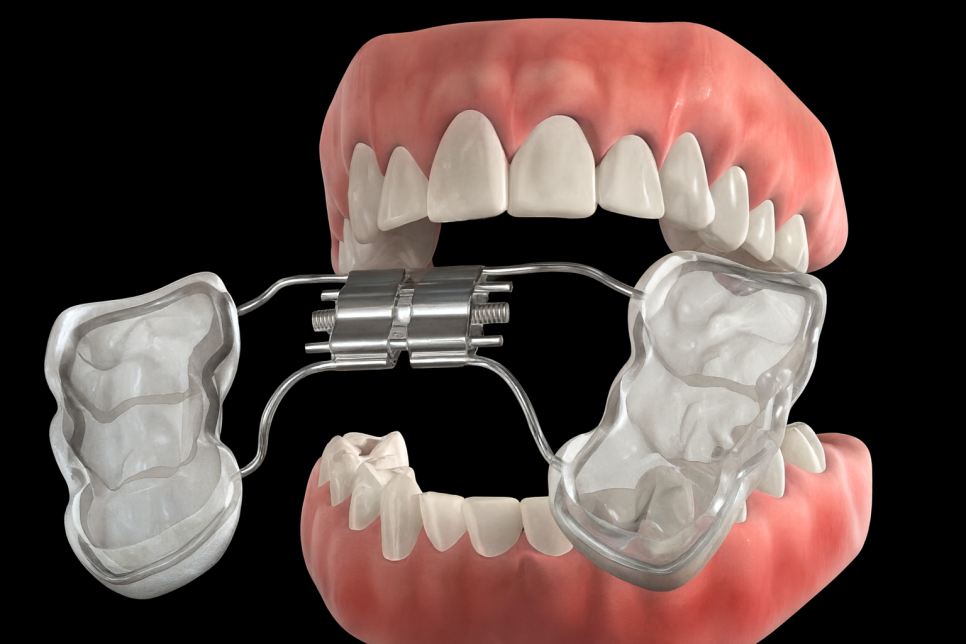
As with the band-like part prepared by Naebalsan Dental Clinic,
I’ve prepared an image of a Bonded RPE,
which is fixed by attaching blue adhesive containing fluoride, known for helping prevent cavities.
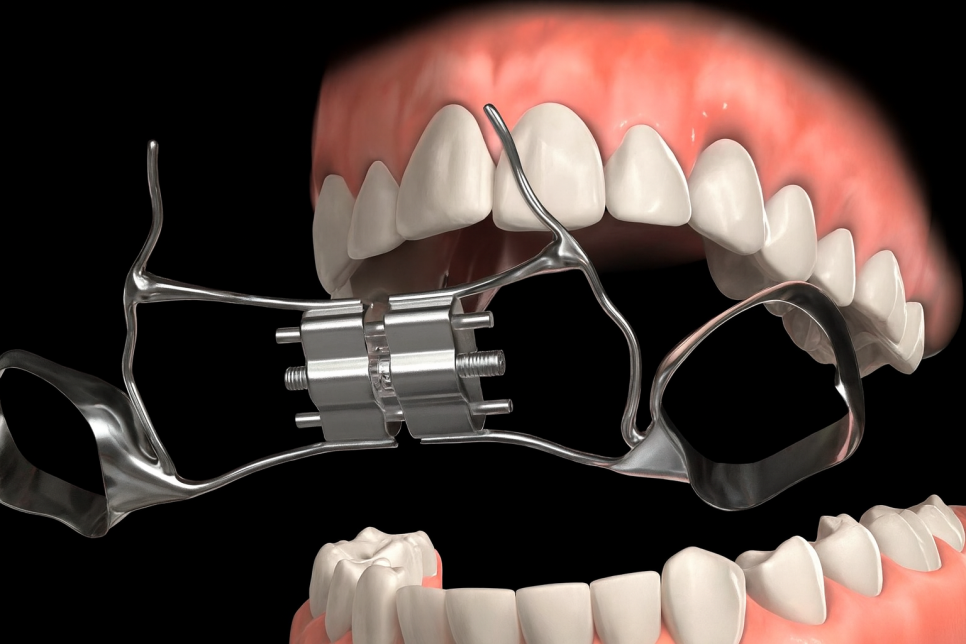
In addition, here is an image of a general RPE that uses bands,
which fit ring-like pieces onto the teeth.
In this way, the devices are divided into two types: fixed appliances and removable appliances that can be taken in and out.
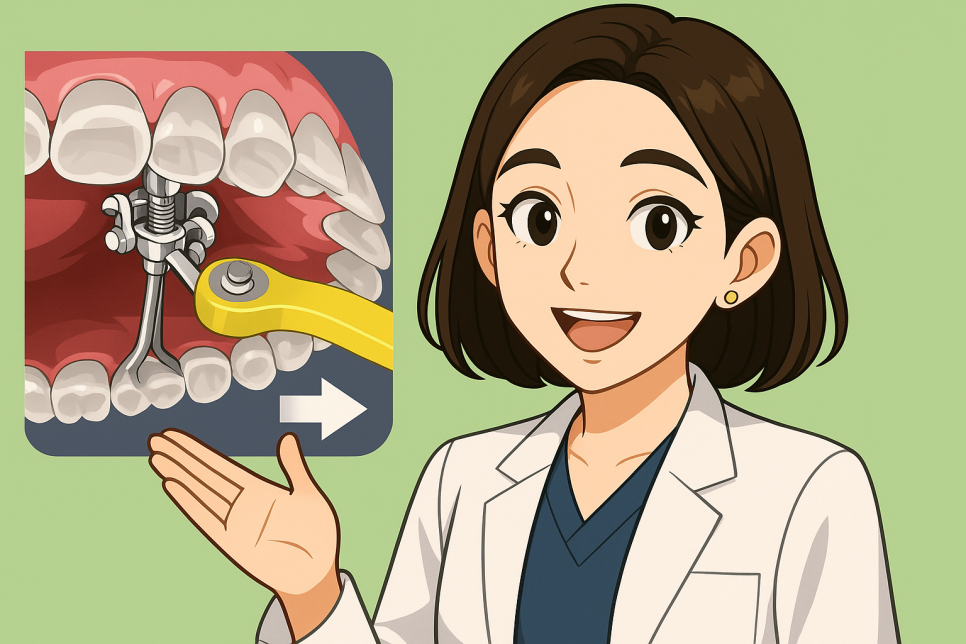
For both devices, the screw in the center must be turned
in order to efficiently induce arch expansion.
After inserting the special dedicated key into the appliance,
push it in the direction of the arrow on the back and turn it.
Then release the force and slowly remove it.
Usually, it is turned once or twice a day,
and each turn gradually increases by 0.25 mm.
The attending doctor regularly checks the expansion status
and determines how many times it should be turned,
and once the bone has widened to a certain extent,
it is observed for about 2 to 3 months until it hardens,
and then the arch expansion is completed.
Pediatric orthodontic treatment is all about timing.
And sometimes people think that because improvement was done in childhood, there will be no more problems,
but that is not always the case.
First-phase orthodontic treatment helps guide growth control,
but it is difficult to directly make something grow or suppress it.
Therefore, if control through guidance is difficult,
it is good to be aware that surgical treatment or second-phase orthodontic treatment may be necessary.
That’s all for today’s update from Naebalsan Dental Clinic.
I hope this was a helpful post, and I’ll wrap up here.
This was Lee Su-kyung, thank you.