Hello, I’m Lee Soo-kyung, a specialist in integrated dentistry at Ujangsan Dental Clinic.
When periodontal disease or cavities are discovered late,
or when they have progressed so far that conservative treatment is difficult,
natural teeth often have to be extracted because they are no longer easy to preserve.
Sometimes, after a tooth is removed, people delay implants
or do not receive treatment because they think it is unnecessary.
But then the problem continues to spread
and can grow larger like a snowball.
If you are currently in a similar situation
or have related concerns,
please be sure to read my post to the end.
Q. Why shouldn’t it be left untreated?
If teeth are left untreated, problems can occur
in a chain reaction.
In cases where a natural tooth has been extracted or a tooth is congenitally missing,
three problems can arise as follows.
Ujangsan Dental Clinic, Specialist in Integrated Dentistry Lee Soo-kyung
First, tooth supraeruption
Usually, if wisdom teeth do not erupt, 14 teeth each
come up in the upper and lower jaws.
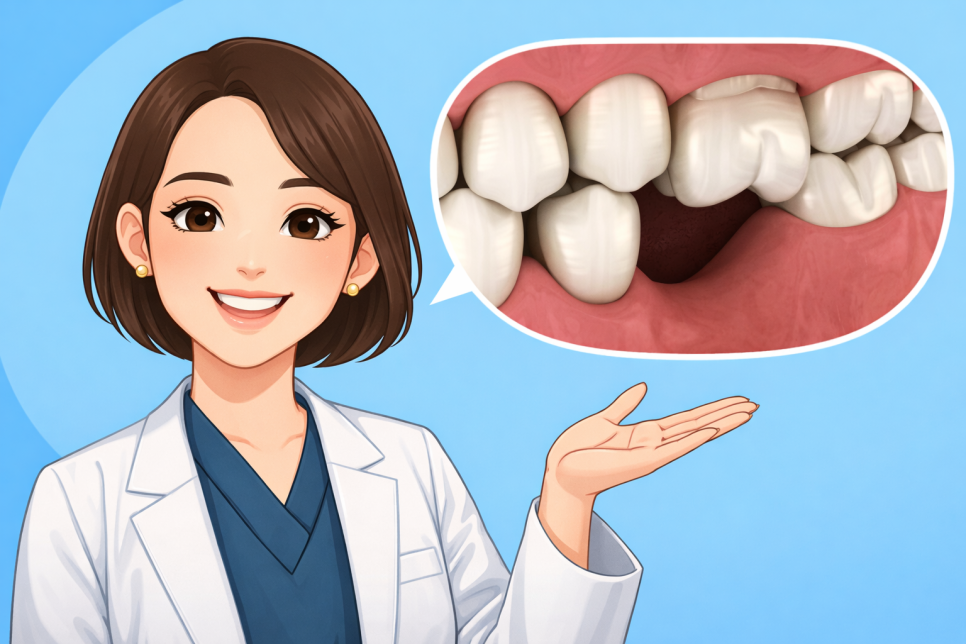
So when eating or speaking, the upper and lower teeth
come into contact with each other and form an organic relationship.
If a tooth that used to bite against another tooth is lost for some reason,
the opposing tooth gradually supraerupts and rises upward.
As time passes, supraeruption becomes more severe,
and the root is gradually exposed outside the gum,
which can cause severe mobility.
That may even make extraction necessary
for the previously healthy opposing tooth.
Ujangsan Dental Clinic, Specialist in Integrated Dentistry Lee Soo-kyung
Second, tooth axis inclination
Natural teeth do not always stay in the same place;
they move little by little over a lifetime.
If the contact points with the opposing tooth that bites against it
and the surrounding teeth are maintained, they can remain in equilibrium,
but if even one is broken and the contact point disappears,
it is affected and moves.
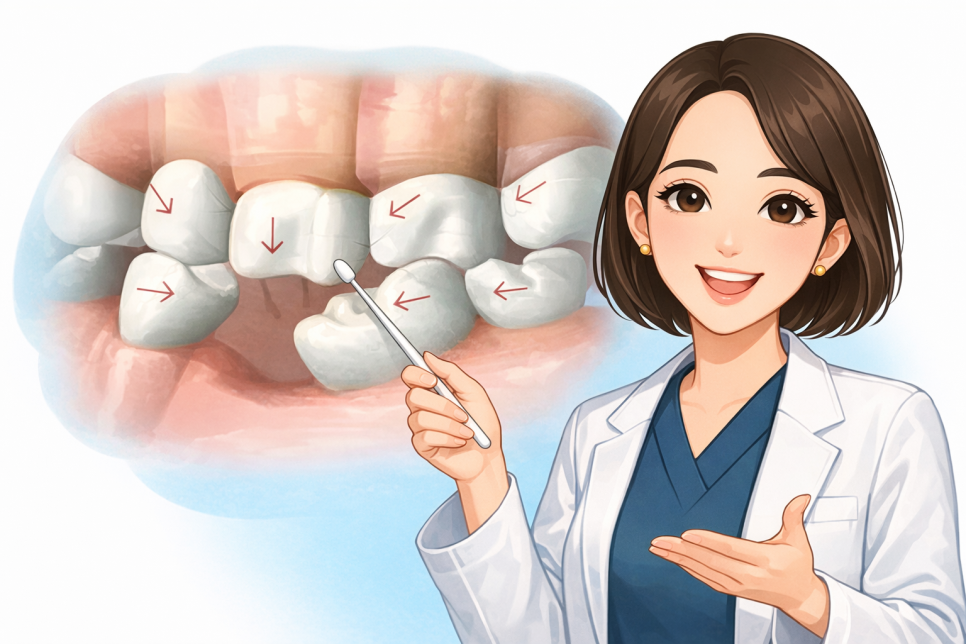
So if a neighboring natural tooth is extracted
and an empty space is created,
it will gradually lean toward that side and become inclined.
As with supraeruption, if the degree becomes severe,
it may become very loose and extraction may be considered.
Ujangsan Dental Clinic, Specialist in Integrated Dentistry Lee Soo-kyung
Third, alveolar bone resorption
After a natural tooth is extracted, the jawbone is rapidly resorbed.
It is a natural process.
It is most active around 3 months after extraction,
and after 12 months, you can observe a pattern in which bone tissue fills in again.
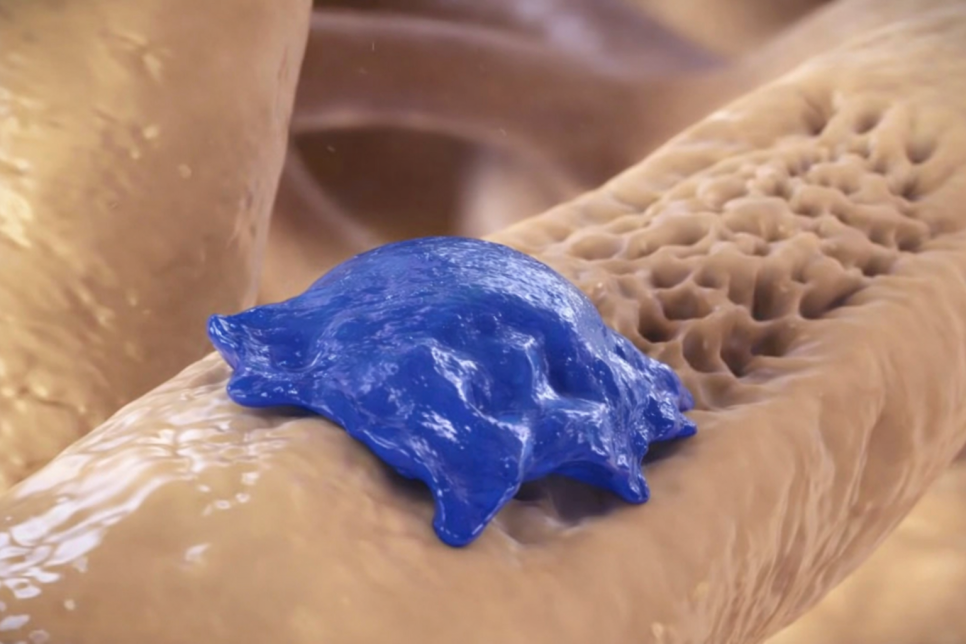
The reason is that when the tooth is removed,
the stimulation applied to the jawbone disappears,
and osteoclasts become activated.
But if a prosthesis such as an implant is not placed afterward,
bone tissue slowly deteriorates over the course of several months.
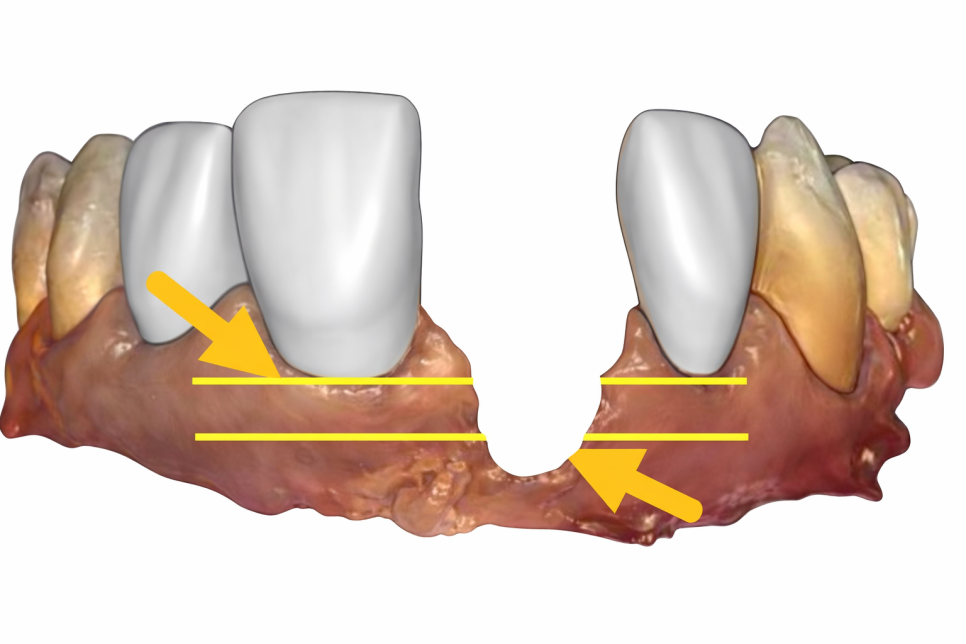
If the bone gradually resorbs and collapses,
even if you later want to place an implant, there may not be enough bone tissue,
so the procedure itself may become difficult,
and additional improvement procedures may be needed to reinforce the bone tissue.
That is why, at Ujangsan Dental Clinic, rather than leaving the area untreated after extraction,
we believe it is important to choose the right time and restore the function of the natural tooth.
As a specialist in integrated dentistry,
this is what I have felt while encountering many cases in clinical practice:
In cases where treatment was delayed and led to multiple problems,
most had disease that had progressed across the overall oral area.
In other words, they knew there was a problem,
but kept putting off treatment,
until eating became difficult and they came to the clinic.
I cautiously believe the reason may be [dental phobia].
In fact, whenever anyone enters the treatment room,
they are bound to feel scared.
There are many factors that can cause tension,
such as the distinctive smell or the whirring sound of the equipment.
So I think we need to make some efforts to improve this.
To prevent people from continuing to delay treatment even as their oral environment worsens due to dental phobia,
I can suggest two approaches.
- Treatment using N2O gas.
So-called laughing gas, N2O,
helps reduce tension while keeping consciousness clear.
It induces relaxation by inhaling the gas through breathing.
It is considered safe, so it can be used by everyone
from young children to adults.
If you want more detailed information, I think it would be helpful to refer to a post I wrote earlier.
🔽Related Ujangsan Dental Clinic post🔽
- Put more effort into the anesthesia process.
Some people sometimes say, “The anesthesia process to avoid pain hurts more.”
I think this is because a step-by-step anesthesia system was not applied.
I administer anesthesia in three major stages.

First, I use a gargle-type medication to numb the entire mouth. Because the concentration is mild, it works for about 30 minutes.
After that, I use a spray-type medication to apply surface anesthesia again only to the area where the needle will enter.
After these two steps, I use a computer-controlled painless anesthesia device. Because the surface is already numb, the sensation of the needle entering is hard to feel, and since the medication is controlled steadily by computer, the pain is significantly reduced.
Today, I shared information about three problems that can occur
when a tooth extraction is left untreated,
along with solutions for people who delay treatment due to dental phobia.
I hope the information delivered by Ujangsan Dental Clinic was helpful, and I’ll wrap up here.
This has been Lee Soo-kyung.
Thank you.