Hello, this is Ujangsan Dental Clinic.
I am Lee Su-kyung, a specialist in Integrated Dentistry.
"At some point, it feels like my gums have receded."
"My tooth is shaking, and I was told the bone has melted away."
.
.
.
One of the moments that pains patients the most is
when they are told that their bone has melted away.
Because it is a place you cannot see, it is easy to leave it untreated,
but since it means the foundation supporting your natural teeth is collapsing,
quick action is especially important.
Today, at Ujangsan Dental Clinic,
I would like to explain in detail
why the alveolar bone (gum bone) melts away
and the stages for overcoming it
and restoring function.
Ujangsan Dental Clinic Oral Information
Why does gum bone melt away?
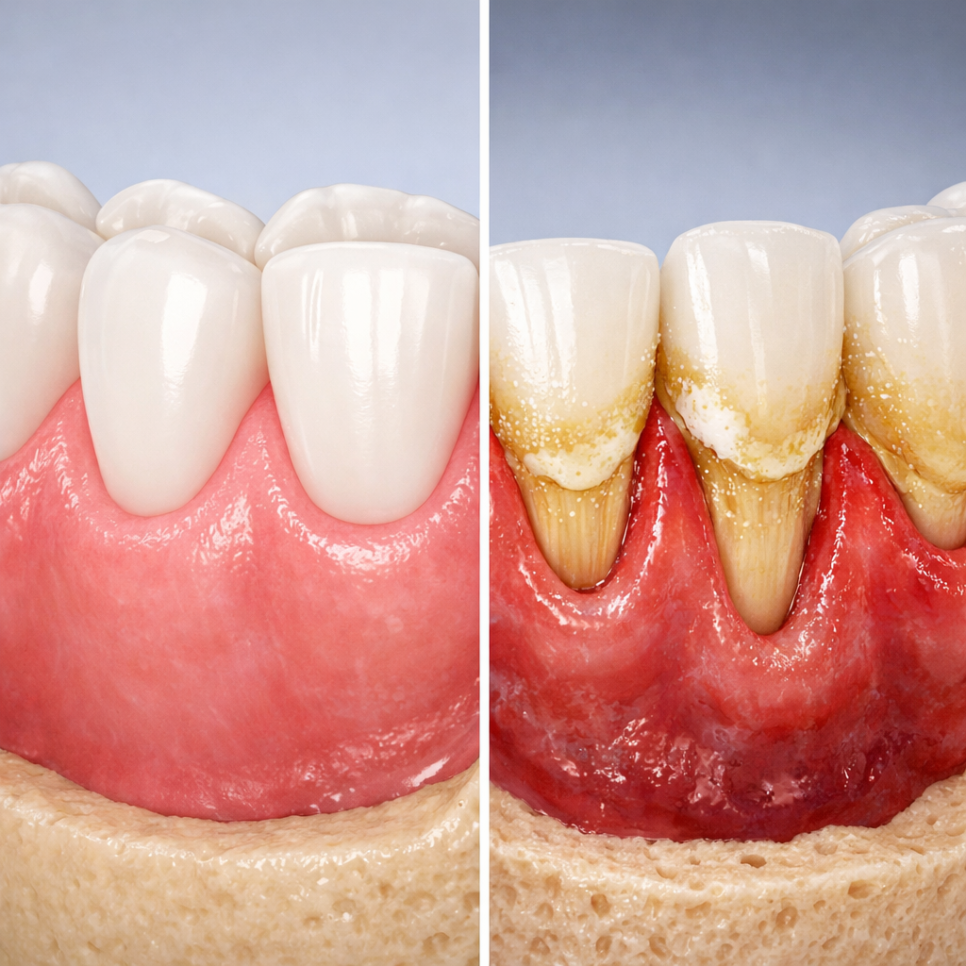
The biggest cause is 'periodontitis.'
Tartar and bacteria that accumulate between the teeth and gums
cause inflammation,
and this inflammation penetrates deeply and destroys the alveolar bone.
Another important reason is
leaving a natural tooth lost for a long time without treatment.
When a tooth falls out,
the bone in that area no longer receives
the chewing stimulation it originally handled.
When that stimulation disappears, our body judges
that the bone is no longer needed
and naturally absorbs it.
It is similar to how unused muscles
gradually become thinner.
In fact, when people have worn dentures for a long time
or delayed treatment after an extraction,
this alveolar bone resorption
often becomes more pronounced.
Ujangsan Dental Clinic Oral Information
The first step for restoring function: bone grafting
When the bone has melted away,
even if you want to place an implant,
it is like having too little soil to plant a tree.
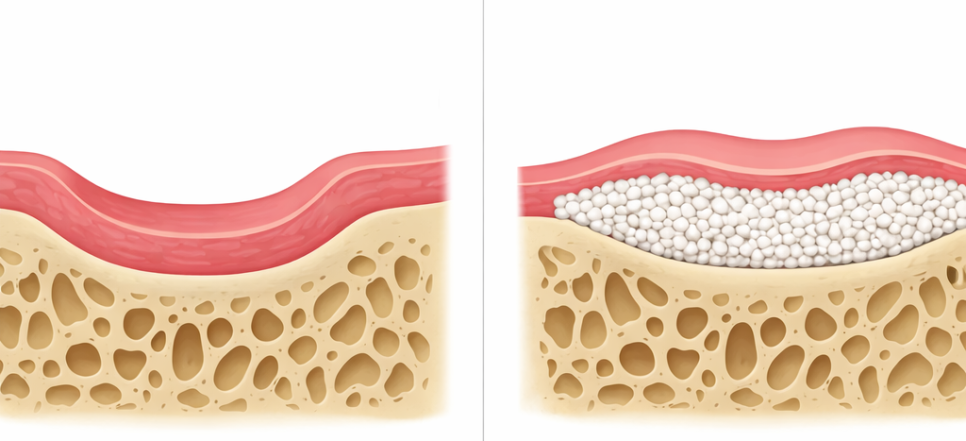
What is needed at this time is 'bone grafting.'
By filling the deficient area with graft material,
a suitable environment is created
so that the artificial tooth can be firmly fixed.
Recently, to support recovery,
medications such as PDRN (a tissue regeneration activator)
are sometimes used together.
This ingredient, extracted from salmon and others,
helps reduce inflammation and supports the formation of new blood vessels,
making it very helpful in bringing about a positive course
that allows osseointegration to progress smoothly.
(If you are curious about PDRN,
please refer to that post as well;
it may help your understanding.^^)
Ujangsan Dental Clinic Oral Information
The process of implant placement and osseointegration
Once the foundation has been prepared,
the implant is then placed in earnest.
It does not end simply with placement;
a period of 'osseointegration' is needed,
during which the placed implant and the patient's own bone
firmly bond together.
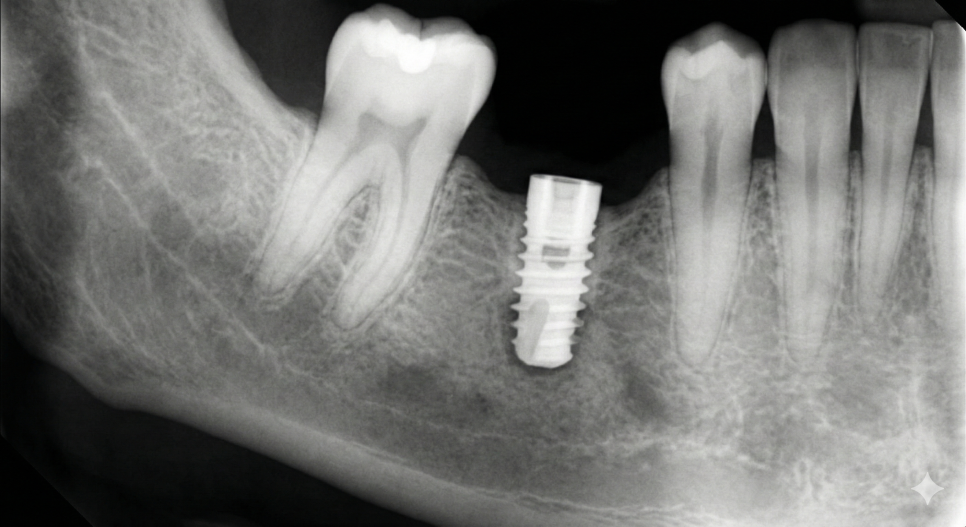
This period can take several months,
depending on the patient's bone quality and overall health,
and how stably this period is managed
can determine the success or failure of the entire treatment.
To reduce discomfort that may occur during this process
and increase the success rate,
digital equipment is used to determine the implant position.
Ujangsan Dental Clinic Oral Information
The importance of regular follow-up care
Once all the procedures are complete and the prosthesis has been placed,
you can use it comfortably just like your own teeth.
However, there is one point you must remember.
Although implants themselves do not develop cavities,
the surrounding gums can still become inflamed.
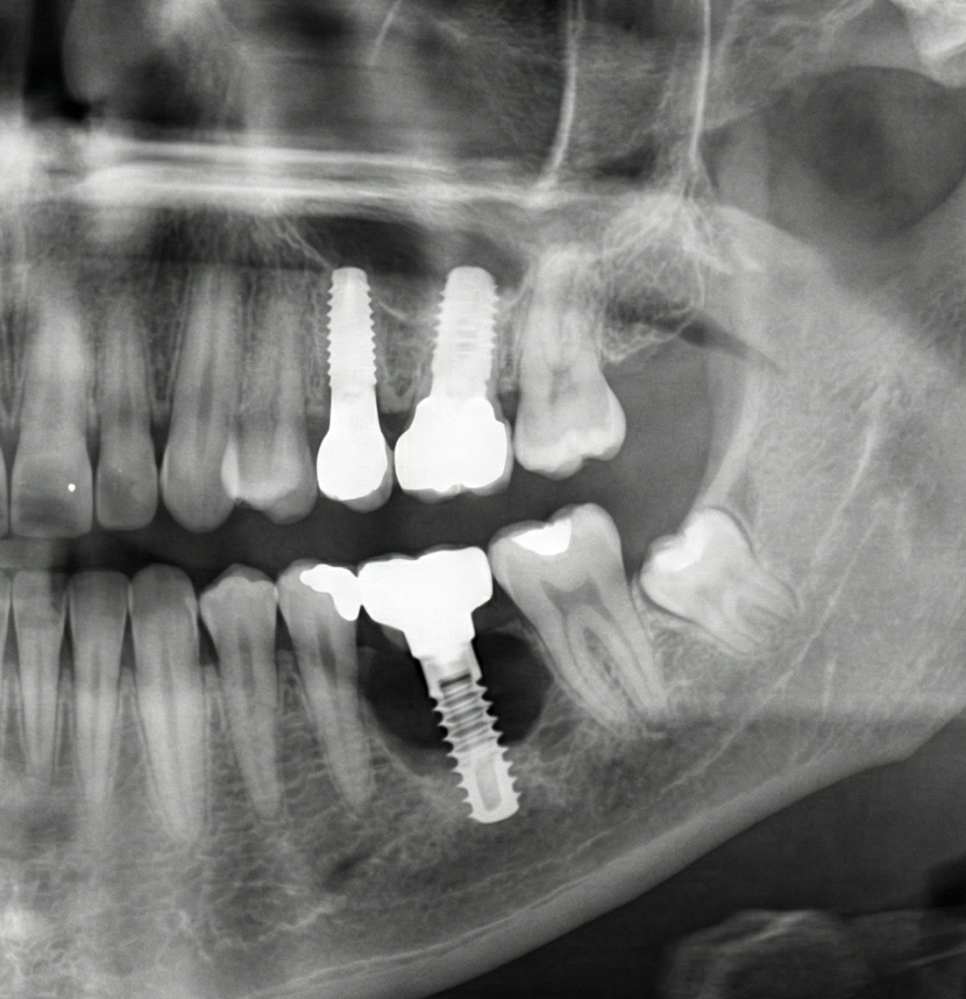
This is called 'peri-implantitis,'
and because bone that has once melted away is more prone to damage again,
it is important to keep managing it consistently
through annual scaling and regular checkups.
Please think of it as a promise
to preserve the precious function you have recovered
after great effort for a long time.
Today, I explained the reasons why the alveolar bone melts away
and the stages of recovery.
The longer you delay dental care,
the wider the scope of treatment becomes
and the more complex it tends to be.
If you feel even a little discomfort,
I recommend getting examined nearby
before it becomes too late.
This has been Ujangsan Dental Clinic,
Lee Su-kyung, specialist in Integrated Dentistry.
Thank you.