Hello, this is Lee Su-gyeong,
an integrated dentistry specialist at a dental clinic in Gangseo.
When people hear the word cavity,
most first think of
a visible black spot or
the pain felt while chewing.
But while treating patients, there are times when they say things like this:
"I can’t see a cavity, but... it feels uncomfortable."
.
.
.
What does this mean?
There are also cases where someone had no symptoms at all,
but during a dental checkup suddenly hears,
“Your cavity has progressed quite a bit.”
In this way, there are cases where cavities progress even though they are not easily visible,
and one of the 대표적인 causes is
interproximal caries (decay).
Today at the Gangseo dental clinic,
in relation to this,
we would like to look at the importance of regular checkups,
with a focus on the risks of interproximal caries.
Gangseo Dental Clinic Oral Information
- What is an interproximal cavity?
It refers to a cavity that occurs on the side surfaces
where teeth are in contact with each other,
that is, on the proximal surface.
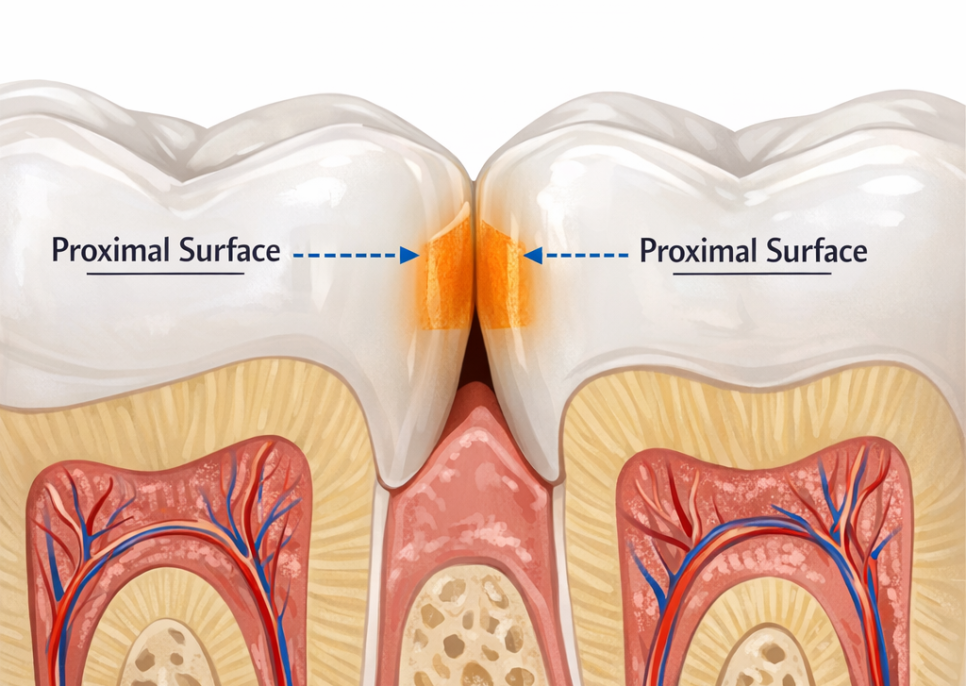
This area is structurally
a place where toothbrush bristles are hard to reach,
and because it is an environment where food debris and plaque can easily remain,
it has conditions that make cavities more likely.
Also, because of the structural characteristic of teeth being tightly pressed together,
even if an early cavity develops,
it is often almost impossible to confirm visually.
It may look normal on the outside,
but in reality, demineralization and cavity progression
are often taking place inside the spaces between teeth.
To use an analogy,
it is similar to a situation where, in a bookshelf packed tightly with books,
the inner sides where two books touch become dirty.
Gangseo Dental Clinic Oral Information
- Why is it difficult to find on your own?
One reason interproximal cavities are tricky is that
they cause almost no pain at first.
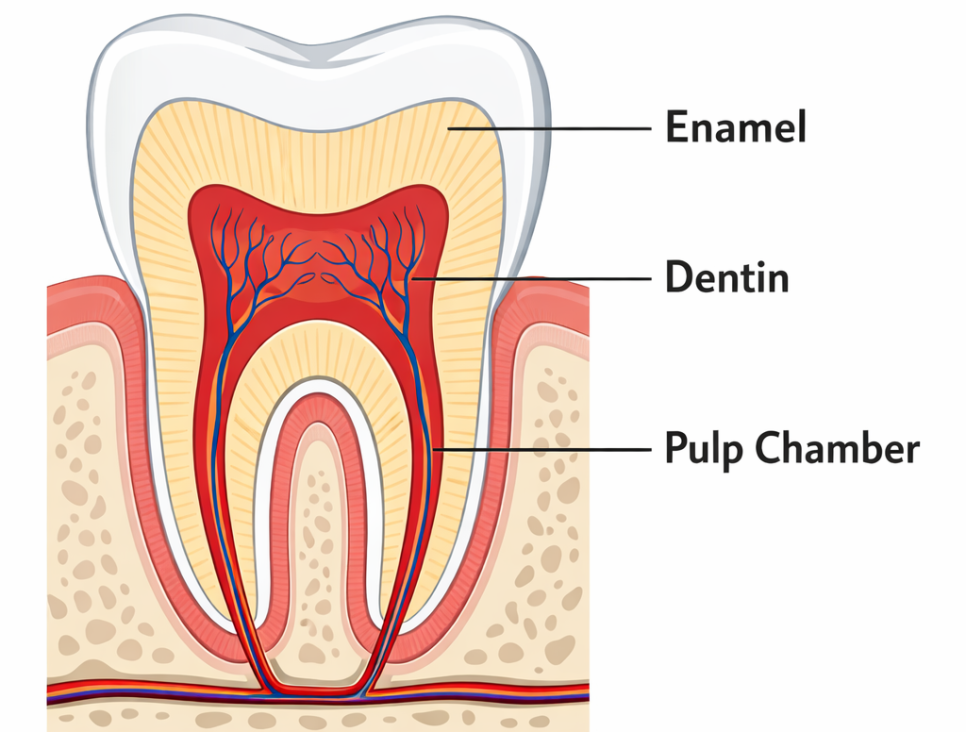
The outer enamel of the tooth is hard and has no nerves,
so it is difficult to feel clear symptoms before the lesion progresses into the inner dentin.
Also, as mentioned earlier,
because the teeth are in contact with each other,
it becomes a blind spot that cannot be checked from the outside.
In other words, you cannot directly see it.
(It may be visible depending on its location and size.)
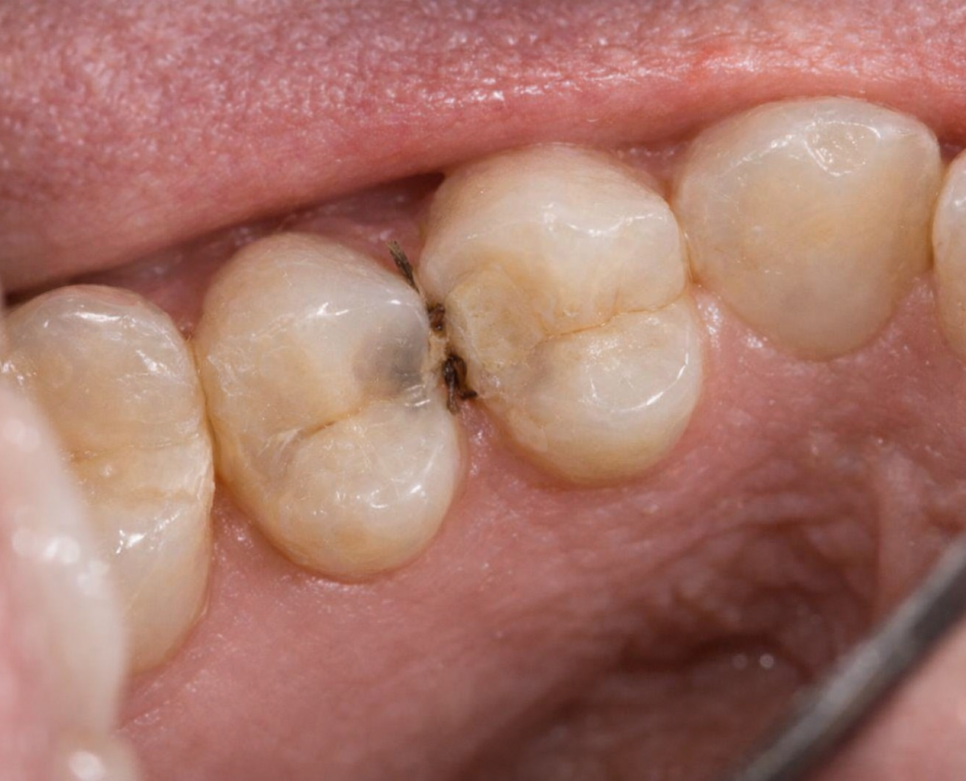
In addition, in many cases there is no obvious color change
or noticeable hole in the early stage.
For these reasons, interproximal cavities are often discovered not by patients themselves,
but during regular checkups
through radiographic imaging (X-ray).
Gangseo Dental Clinic Oral Information
- What happens if it is left untreated?
Once decay reaches the dentin,
it progresses very quickly.
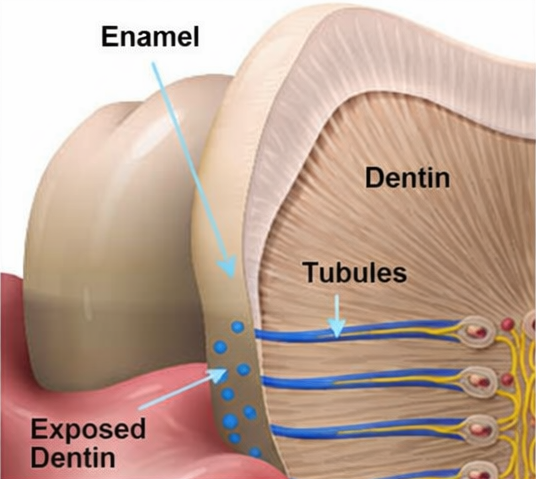
Compared with enamel,
dentin is relatively softer in structure,
and because it contains microscopic dentinal tubules
*very tiny tube-like pathways within the dentin
it has a characteristic that makes it easy for bacteria to spread inward.
In the early stage, treatment can be completed simply with resin filling,
but
if it progresses deeper,
an inlay or crown may be needed,
and if bacteria have invaded the nerve, root canal treatment becomes difficult to avoid.
In severe cases, it may become difficult to preserve the tooth itself.
In particular, interproximal cavities have the characteristic that they can also affect adjacent teeth.
If a cavity occurs on the interproximal surface of one tooth,
the interproximal surface of the opposing tooth in contact with it is also
more likely to be exposed to decay.
In other words, one cavity can have a chain effect
and influence adjacent teeth as well.
Gangseo Dental Clinic Oral Information
- It is difficult to detect without X-rays
As mentioned earlier,
the most reliable way to diagnose it is with intraoral radiographs (X-rays).
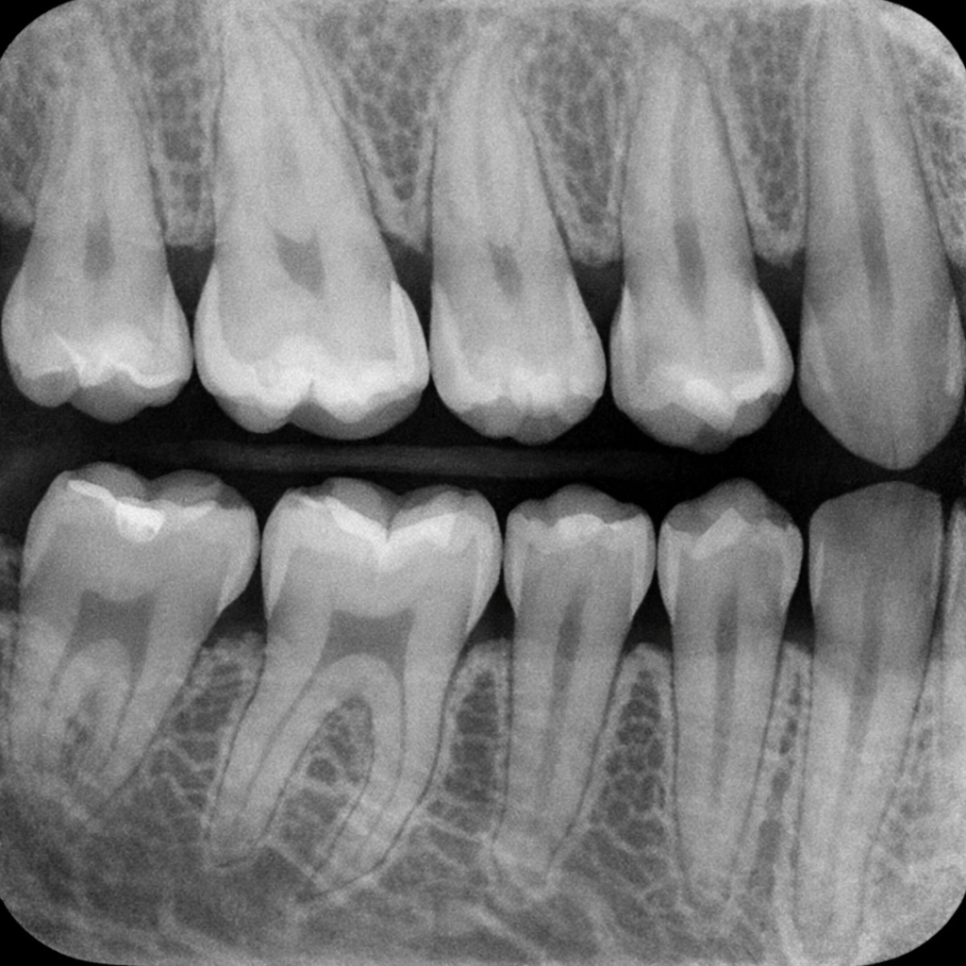
A bitewing X-ray, taken through the spaces between teeth,
can relatively accurately identify even early lesions on interproximal surfaces.
Because it allows us to check areas that are easy to miss with a visual exam alone,
this is why X-rays are an important part of regular checkups.
For this reason, you cannot conclude that there is no interproximal cavity just because there are no symptoms.
Gangseo Dental Clinic Oral Information
- Why regular checkups are needed - closing remarks
The most practical response to interproximal cavities is
to regularly check the oral condition before symptoms appear.
In general,
checkups every 6 months
are recommended,
and for those at higher risk of cavities,
a shorter interval may also be recommended.
During regular checkups, scaling,
oral hygiene assessment,
and X-rays are performed together.
If an interproximal cavity is detected in its early stage,
treatment can be completed with a simple method,
so the time and financial burden are much lower.
The best preventive methods in daily life are floss and interdental brushes.
When using floss for the first time,
the gums may bleed,
which can be a sign of gum inflammation,
so consistent use is recommended.
Once interproximal decay develops,
it is difficult for it to recover naturally,
so prevention and early detection are the most effective management methods.
This was Lee Su-gyeong from Gangseo Dental Clinic. Thank you.