Hello, this is Wujangsan Dental Clinic
I’m Lee Soo-kyung, a specialist in integrated dentistry.
Have you ever noticed a reddish color in the sink while brushing your teeth?
Even when people know they are bleeding,
many just think, “I guess that’s normal,”
and move on.
However, gum bleeding is
the first warning sign
that your oral health is sending.
Many people think of gum disease
as one single condition,
but gingivitis
and periodontitis
are completely different
in terms of the extent and depth
of inflammation and treatment prognosis.
Knowing exactly which stage your gums are in right now
is the starting point for proper care.
Wujangsan Dental Clinic Oral Information
- Gingivitis: An Early Signal from the Gums
Gingivitis is an inflammatory condition
limited to the gums,
that is, the gingiva.
The main cause is dental plaque,
a bacterial film that forms on the tooth surface,
and if it is not removed in time,
it irritates the gum line
and causes swelling and bleeding.
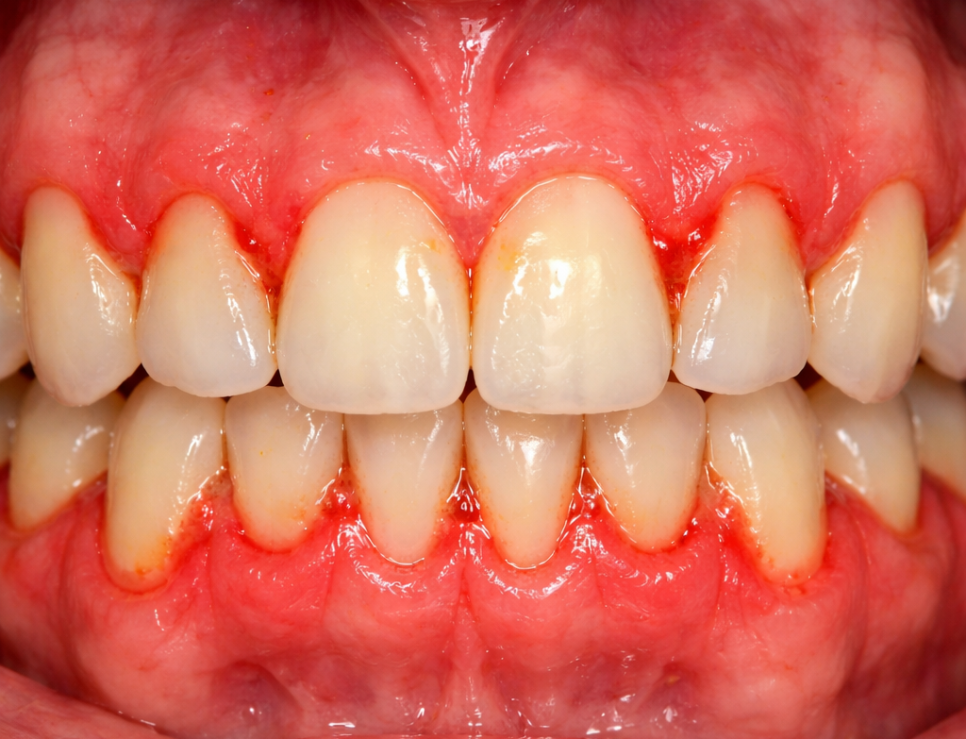
At this stage, because the bone that supports the teeth
(the alveolar bone) and the ligament
(the periodontal ligament)
have not yet been damaged,
the most important feature of gingivitis is that
with professional plaque and tartar removal
and proper oral hygiene management,
it can be completely restored
to a healthy gum condition.
Typical symptoms include:
bleeding when brushing,
red discoloration of the gums,
and swelling.
However, because it is accompanied by little to no pain,
it is difficult to recognize how serious it is on your own,
and as a result, many people miss the right time
for proper care.
Wujangsan Dental Clinic Oral Information
- Periodontitis: A Silent Disease That Spreads to the Bone
Periodontitis refers to a state in which
gingivitis has not been managed adequately
and the inflammation has spread to the alveolar bone
and periodontal ligament.
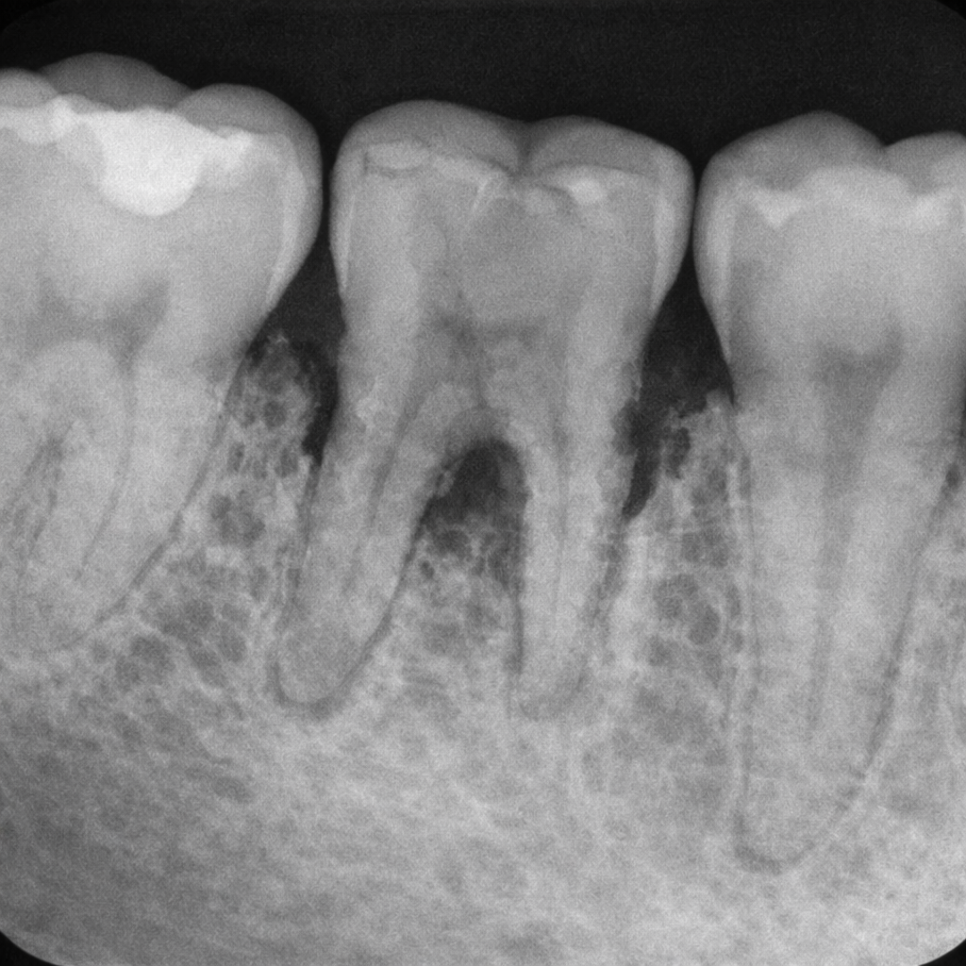
As the toxins produced by bacteria
and the body’s immune response interact,
the bone supporting the teeth is gradually destroyed.
Because once lost, alveolar bone does not naturally recover,
the key point is that, unlike gingivitis,
it leaves irreversible changes.
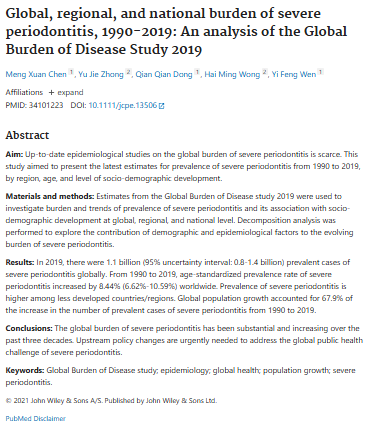
https://pubmed.ncbi.nlm.nih.gov/34101223/
As a result of tracking data over the past 30 years (1990–2019),
the prevalence of severe periodontitis
was found to have increased by 8.44%
worldwide.
Similar figures are currently being seen in 2026 as well.
Symptoms include root exposure due to gum recession,
increased spaces between teeth,
and discomfort while chewing,
and in severe cases,
it can even lead to loose teeth.
In addition, periodontitis has also been steadily reported
in relation to diabetes and cardiovascular disease,
so it is drawing attention as a condition
that is not unrelated to overall health.
Wujangsan Dental Clinic Oral Information
- Diagnostic Criteria and Stage-by-Stage Treatment for the Two Conditions
The key test for distinguishing gingivitis from periodontitis
is probing to measure pocket depth.
A thin probe is inserted into the space
between the gum and the tooth
to check the depth numerically,
and the normal range is within 1–3 mm.
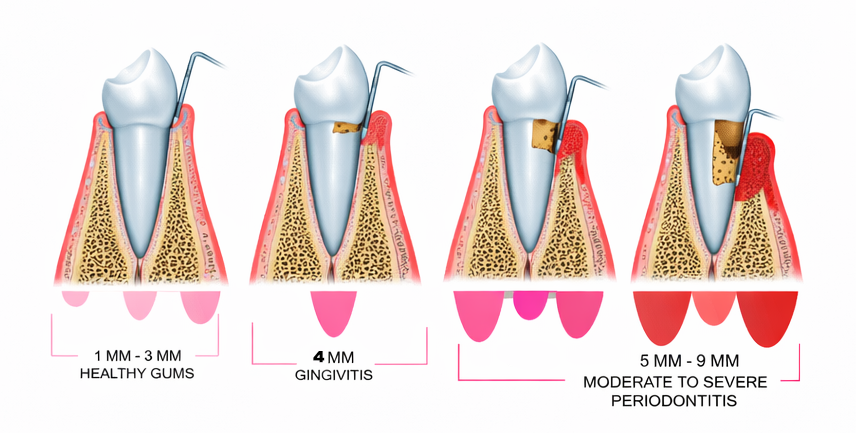
From 4 mm or more,
it is considered that pathological changes
have occurred in the periodontal tissues,
and if it is 5–6 mm or more,
it is judged to be periodontitis
that requires active treatment.
If it is at the gingivitis stage,
inflammation can be completely resolved
through scaling and oral hygiene instruction,
but if it has progressed to periodontitis,
root planing is needed to remove tartar
and contaminated tissue from deep within the periodontal pockets,
and depending on the condition,
surgical periodontal treatment may also be considered.
At the first visit, the pocket depth is recorded numerically,
and each tooth’s condition is examined closely,
then a treatment plan is established according to each stage
to respond early and prevent gingivitis
from progressing to periodontitis.
Wujangsan Dental Clinic Oral Information
- In Closing
Gum disease is easier to reverse
the earlier it is found,
and the longer it is left untreated,
the more likely it is to lead to losing the tooth itself.
The basics of prevention are brushing properly twice a day
and using dental floss or interdental brushes together
to thoroughly remove plaque.
If gum bleeding or swelling keeps recurring,
even if there is no pain,
it is important to get a professional examination
to accurately determine whether your current condition
is gingivitis or periodontitis.
Please continue regular scaling and oral checkups every six months
and maintain healthy gums.
This was Lee Soo-kyung from Wujangsan Dental Clinic. Thank you.