Hello, this is Lee Soo-kyung, a specialist in integrated dentistry, working in collaboration with an orthodontic specialist at a dentist in Magaok-dong.
After finishing orthodontic treatment and looking in the mirror,
have you ever noticed a dark-looking space
because the gums between the teeth have not filled in?
This space is called a
black triangle, or
an open gingival embrasure.
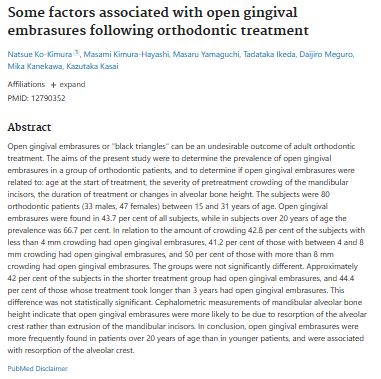
Source: https://pubmed.ncbi.nlm.nih.gov/12790352/
It is an issue that is reported more often than expected
among patients who have undergone orthodontic treatment.
According to a related research paper,
when 80 orthodontic patients were analyzed,
black triangle prevalence was found to be
about 67% in adults aged 20 and older.
It is easy to think of it as only a cosmetic issue,
but understanding what causes it makes a clear difference
in prevention and management.
Magaok-dong Dentist Oral Health Information
- Why do black triangles occur?
The core of the black triangle lies in the triangular gum tissue
that fills the space between teeth,
called the interdental papilla.
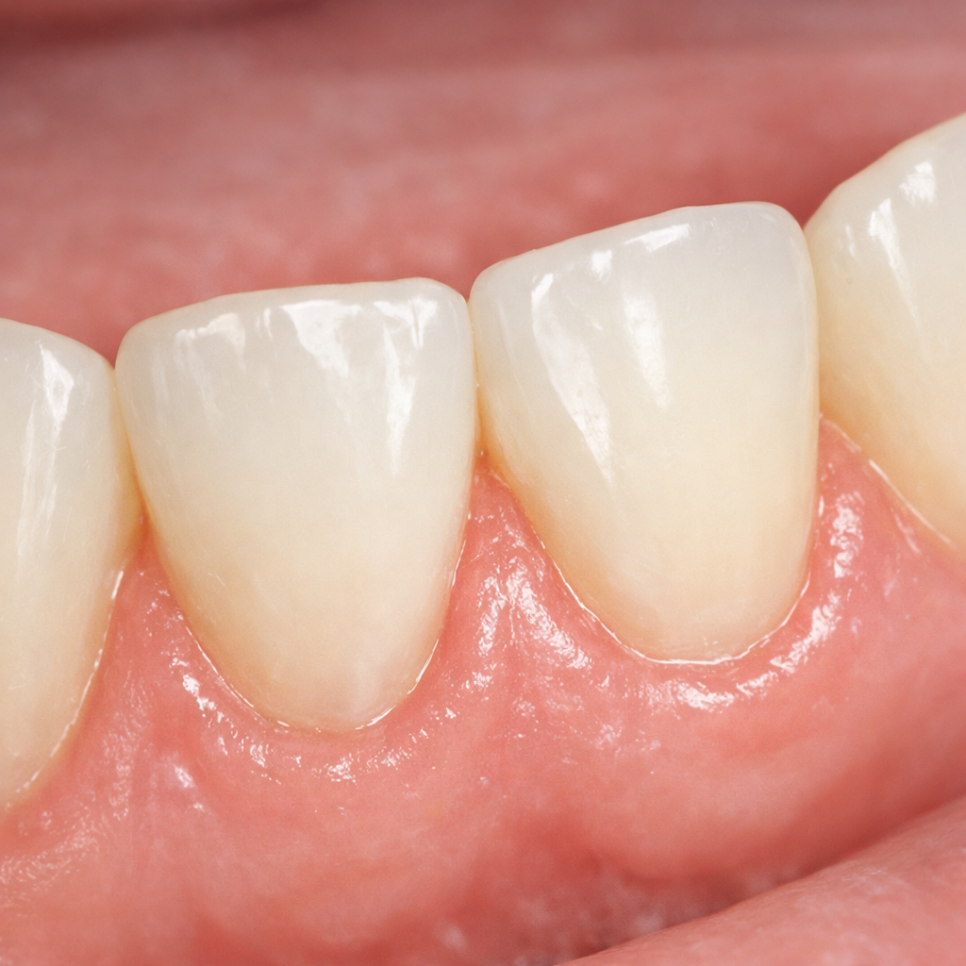
This tissue has limited blood supply
and is structurally delicate,
so once it is lost,
it is very difficult to recover naturally.
When teeth move during treatment,
the gums that were previously pressed by the teeth
may not adapt to the new alignment
and can remain as empty spaces.
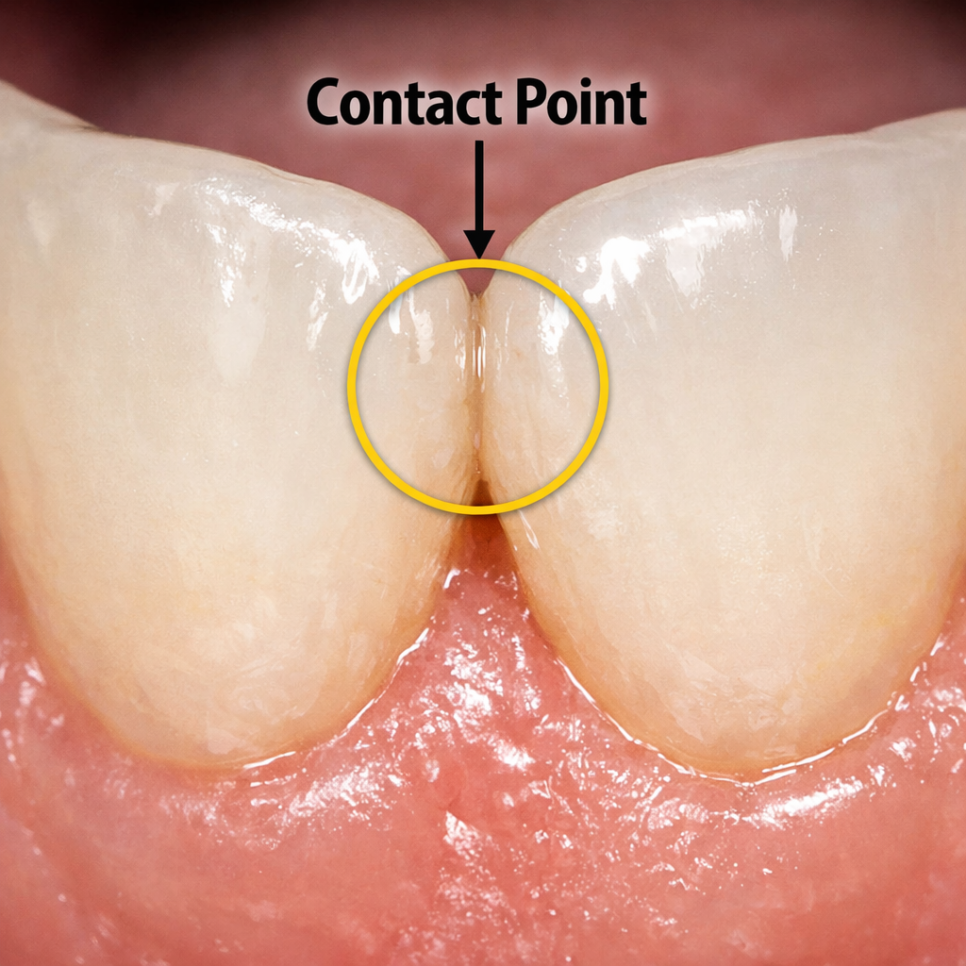
In particular, when the distance between roots is wide,
or when the contact point between teeth is positioned too far from the gum line,
the interdental papilla cannot fill the space,
so the black triangle becomes more noticeable.
Also, as people age,
the elasticity of gum tissue decreases,
so this phenomenon is observed more often in adult orthodontic treatment than in adolescents.
Magaok-dong Dentist Oral Health Information
- Factors that cause black triangles
Orthodontics is not the only cause.
Due to periodontal disease,
if the bone supporting the teeth,
that is, the alveolar bone, is lost,
the gums covering it also recede,
and black triangles may appear.
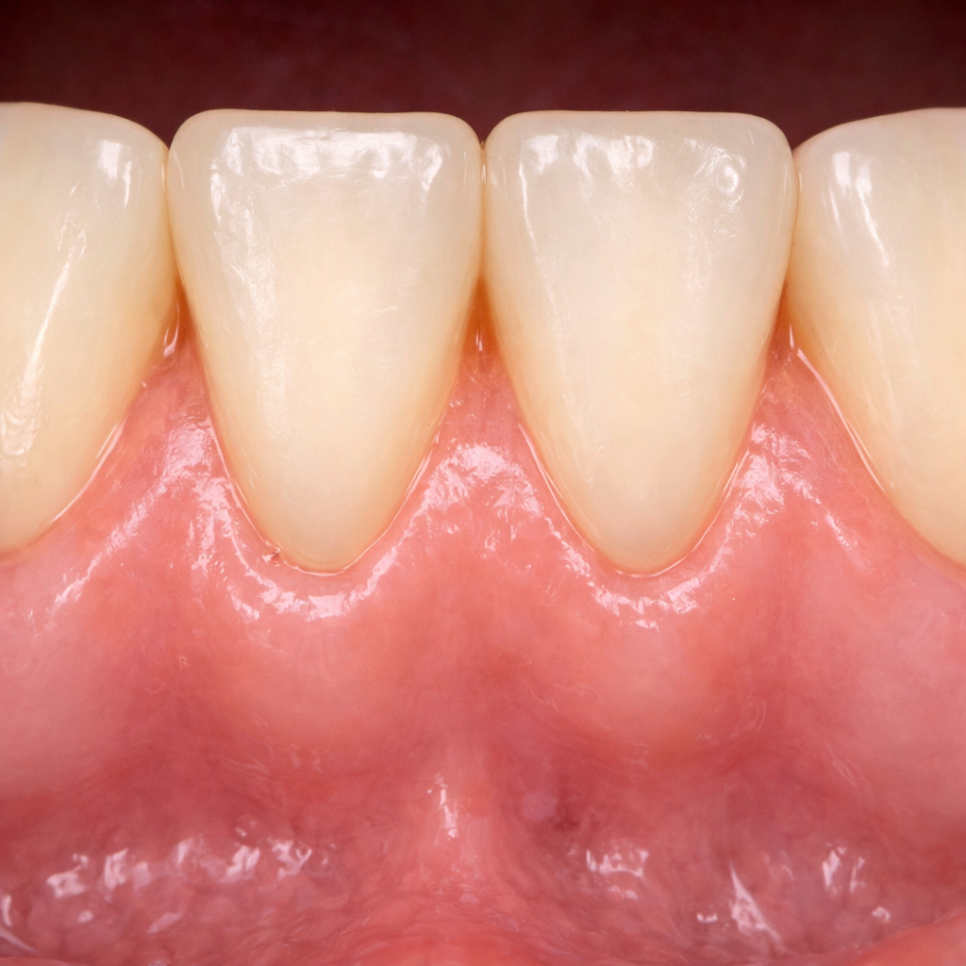
The shape of the teeth themselves also has an effect.
The closer the tooth cross-section is to an inverted triangle,
that is, the narrower it is toward the root and the wider it is toward the crown,
the narrower the interproximal contact area becomes,
making gaps more likely to form.
Improper toothbrushing habits
or excessive use of interdental brushes can also
cause the gums to gradually recede due to repeated irritation.
Magaok-dong Dentist Oral Health Information
- How are black triangles approached?
There are limited ways to completely eliminate
an already formed black triangle,
but depending on the situation,
several approaches are possible.
The most conservative method is IPR (interproximal reduction),
which involves slightly reshaping the adjacent tooth surfaces
so that the contact point moves closer to the gums,
thereby visually reducing the space.
Another method is to complement the shape with resin
and fill the empty space,
and if the cause of the black triangle is related to periodontal issues,
treatment to first stabilize the gum condition
should be performed.
The important point is that
black triangles are not a failure of orthodontic treatment,
but rather a result that reflects an individual's anatomical characteristics and gum condition.
During the orthodontic planning stage,
it is important to review the characteristics of tooth shape and gum tissue together
so that any changes that may occur after treatment
can be identified in advance.
Magaok-dong Dentist Oral Health Information
- In closing
Black triangles are one of the changes that may be encountered
after completing orthodontic treatment,
but if the cause is understood accurately
and managed appropriately,
they can be addressed sufficiently.
In daily life, when using interdental brushes or a water flosser,
be careful not to apply excessive pressure to the gums,
and maintain periodontal health through regular gum checkups,
which can help slow the progression
of black triangles.
This was Magaok-dong Dentist. Thank you.