Hello, I’m Lee Su-gyeong,
a specialist in Integrated Dentistry at a Mabalsan-dong dental clinic.
Have you ever experienced tooth sensitivity
when you took a sip of cold water in the morning?
Or while looking in the mirror,
felt like your front teeth had become
shorter than before.
These changes may not simply be due to aging
or just your imagination.
Once teeth wear down,
they do not naturally recover.
Because tooth wear progresses slowly
and quietly,
many people end up visiting the clinic only
after the symptoms have already advanced significantly.
Today, let’s look at why tooth wear happens
and what changes it can bring.
Mabalsan-dong Dental Clinic Oral Information
- Why does tooth wear happen?
The causes of tooth wear can be broadly
classified into three types.
The first is bruxism.
It is the unconscious habit of grinding
or clenching the teeth during sleep,
and it places much stronger force on the teeth
than when chewing during the day.
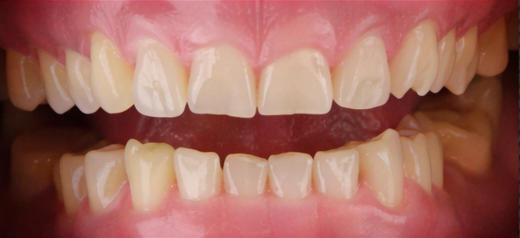
It is like repeatedly rubbing stone against
another hard stone,
the occlusal surfaces (the surfaces where the upper and lower teeth meet)
become gradually worn flat.
The second is erosion.
This is when acidic components from carbonated drinks,
fruit juice,
or reflux esophagitis dissolve the enamel.
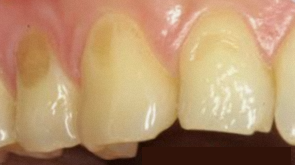
Enamel is the outermost layer that protects the teeth,
and once it is damaged, it does not regenerate on its own.
The third is excessive brushing abrasion.
If you brush too hard
or use a toothbrush with hard bristles,
the cervical area of the tooth may wear down.
This type is especially common in people
who have a side-to-side scrubbing brushing habit.
Mabalsan-dong Dental Clinic Oral Information
- What changes occur as wear progresses?
In the early stage, it may start with the surface becoming slightly shiny
or smoother.
At this stage, it is often difficult for people
to notice on their own.
As wear progresses further,
the teeth become shorter,
and the tips of the front teeth may become
flat, like a straight line.
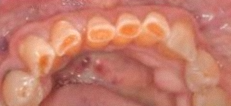
In addition, as the enamel becomes thinner,
the dentin underneath begins to be exposed,
and because dentin is a much more sensitive tissue than enamel,
a strong sensitive feeling is triggered by cold or hot foods.
In severe cases,
the overall shape of the teeth can become distorted,
leading to unstable bite alignment,
and this may also affect the temporomandibular joint.
At Every Dental Clinic,
we consider it important to regularly check whether wear is progressing
and to understand the direction appropriate for the current condition.
Mabalsan-dong Dental Clinic Oral Information
- Can children and teenagers also develop tooth wear?
Because tooth wear is a change that accumulates
over a long period of time,
it is often thought of only as a problem for middle-aged and older adults.
However, children and teenagers
are not free from tooth wear either.
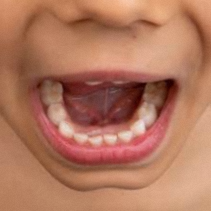
Primary teeth and newly erupted permanent teeth
have thinner enamel and lower density than adult teeth.
This means that, under the same conditions,
wear can progress much faster.
In particular, as carbonated drinks and sports drinks become part of everyday life among growing children,
wear caused by erosion continues to be reported.
Also, bruxism in children occurs more often than in adults,
and in many cases it is easy to dismiss it as something that will
"naturally go away as they grow."
While it may resolve temporarily,
the wear placed on the teeth during that time remains.
If the shape of the teeth is damaged during growth,
it can also affect bite development,
so it is recommended to check for tooth wear in pediatric patients
as part of regular checkups as well.
Mabalsan-dong Dental Clinic Oral Information
- How is tooth wear managed?
Management of tooth wear begins with identifying the cause.
If bruxism is the cause, a night guard worn during sleep
can help distribute excessive force.
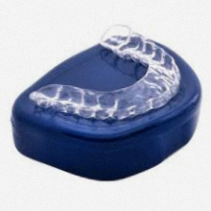
This can help slow down the process
so that wear does not progress any faster.
If erosion is the main cause,
dietary habits need to be adjusted.
Rather than brushing immediately after consuming acidic foods or drinks,
it is better to rinse the mouth with water and then wait about 30 minutes before brushing.
This is to prevent the toothbrush from irritating enamel that has been temporarily weakened by acid.
If wear has already progressed,
restoration with composite resin or ceramic laminate
can be considered to restore the lost tooth shape.
Tooth wear is not a problem limited to a specific age group.
Once enamel is damaged,
it does not come back,
but the care you begin now determines how fast it progresses in the future.
While practicing the preventive measures mentioned earlier,
not simply ignoring the recurring morning stiffness in the jaw.
That alone is a good enough start.
Through regular checkups,
carefully confirming invisible changes in advance—
that is the wisest way to deal with tooth wear.
This was Lee Su-gyeong from a Mabalsan-dong dental clinic.
Thank you.