Hello, Gangseo Dental Clinic.
I’m Lee Soo-kyung, a specialist in integrated dentistry.
Most people have experienced the feeling of sensitive teeth at least once.
When drinking cold water,
or biting into something sweet,
that sudden, sharp twinge.
But if the tips of your front teeth
look thinner than before,
or appear slightly see-through when held up to the light,
it may not be simple tooth sensitivity.
It could be a sign that the tooth surface is
literally being dissolved by acid.
This is called dental erosion.
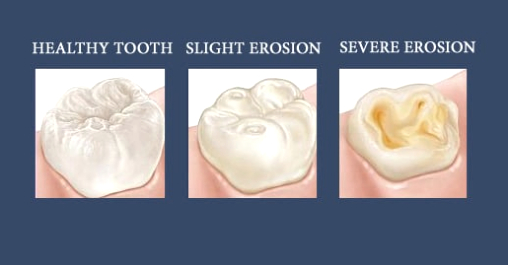
Acidic stimuli such as food or stomach acid
directly dissolve the enamel.
According to domestic and international studies,
a mild degree of erosion is observed in a large proportion of adults,
and with changes in eating habits, its frequency
is gradually increasing.
In clinical practice,
we often hear questions like,
"They said I don't have cavities, so why are my teeth this sensitive?"
Today at Gangseo Dental Clinic, we’ll look at what dental erosion is,
why it happens, and how it can be managed in daily life.
Gangseo Dental Clinic Oral Health Information
- Why does dental erosion occur?
Water with lemon juice, probiotic drinks,
salads with vinegar dressing.
Eating habits chosen for health may instead
slowly dissolve the enamel.
The key is pH (acidity).
When an acidic environment of pH 5.5 or lower
persists,
the hydroxyapatite crystals that make up the enamel
begin to dissolve.
Unlike cavities, which occur locally due to
bacterial byproducts,
dental erosion is distinguished by the fact that it
progresses widely and evenly across the teeth.
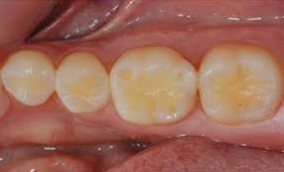
In some cases, it can also come from within the body,
not just from external factors.
People with reflux esophagitis often experience repeated
aid reflux into the mouth during sleep,
and in many cases, tooth damage progresses
without them even noticing it.
This is also why we check for factors outside the mouth
when we see signs that the enamel in a particular area
has become unusually thin.
Gangseo Dental Clinic Oral Health Information
- How does dental erosion progress?
What makes dental erosion tricky is that
it does not send early signals.
Cavities (dental caries) make themselves known
with pain at some point.
But with dental erosion,
symptoms only begin to be felt after the enamel
has already dissolved,
and until then, it progresses quietly
and broadly.
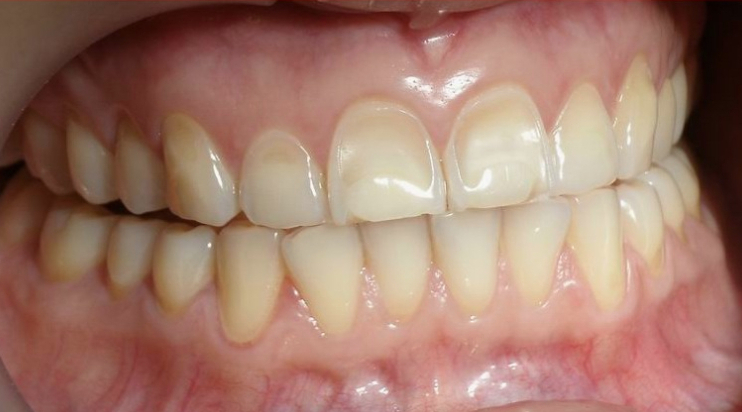
The first change to appear is visual.
The tips of the front teeth become thinner
or look translucent,
and the overall shine of the teeth seems to decrease.
As the enamel surface wears smoothly,
the teeth may also appear flatter.
By this stage, enamel loss has already begun,
but most people simply think,
"Have my teeth always looked like this?"
and let it pass.
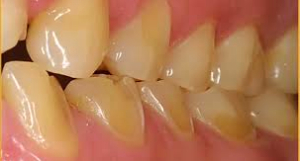
Once the dentin is exposed,
the sensitive feeling begins in earnest.
Because dentin contains tiny channels (dentinal tubules)
connected to the nerves,
it responds sensitively to cold or hot stimuli.
This is why, when diagnosing dental erosion,
we check both the thickness of the enamel
and whether the dentin is exposed.
One important point to note is that
once enamel is lost,
it does not naturally regenerate.
It is only possible to slow its progression;
it cannot be reversed.
Gangseo Dental Clinic Oral Health Information
- How should it be managed in daily life?
The first habit to change is, surprisingly,
the timing of tooth brushing.
Right after consuming acidic foods, the enamel is in a
temporarily softened state.
Brushing immediately at this time can
wear down the weakened surface even more.
It is recommended to wait at least 30 minutes after eating
before brushing,
and in the meantime, rinsing your mouth with water
helps dilute the acidic environment.
From a dietary standpoint,
the way you consume foods and how often you do so matter more.
Using a straw can reduce direct contact with the teeth.
Also, sipping drinks little by little over and over is not ideal,
because it increases the total time the teeth are exposed to acid.
After meals, using cheese or sugar-free gum can stimulate
saliva production and help restore the oral pH
to neutral.
If you have reflux esophagitis,
it is difficult to prevent dental erosion through oral care alone.
In such cases, treatment needs to be carried out in parallel
with internal medicine care,
and we provide guidance on the appropriate management
direction according to the degree of damage.
Gangseo Dental Clinic Oral Health Information
- In closing
Dental erosion is not fine just because it does not hurt.
The fact that it progresses without any signal is,
in fact, the reason to be even more careful.
Do not brush immediately after acidic foods,
make it a habit to rinse with water,
and drink acidic beverages through a straw.
Small changes make a real difference
in protecting the enamel.
This has been Lee Soo-kyung from Gangseo Dental Clinic. Thank you.