Hello,
I am Lee Soo-kyung, a specialist and the director of Every Dental Clinic.
Have you ever visited the dentist thinking you had a small cavity,
only to be told that, rather than simply filling it with resin,
an inlay or crown might be necessary,
leaving you surprised?
“Why does the treatment become more extensive when the cavity looks small on the outside?”
You may have wondered about this.
Today, I would like to explain a topic that many patients ask about in the consultation room:
when a cavity can be treated with a simple filling,
and when a prosthetic restoration is necessary.
I would like to introduce a patient who visited Every Dental Clinic today for cavity treatment.
The first photo shows the tooth as seen with the naked eye. It looks like a normal tooth, doesn’t it?
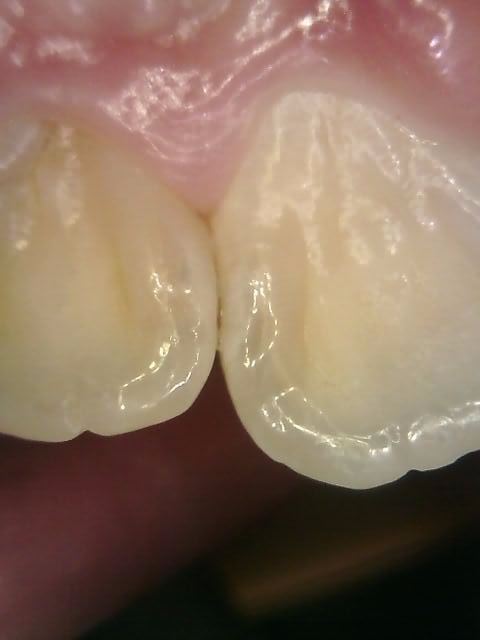
However, when a small amount of the surface is removed, the cavity inside becomes visible like this.
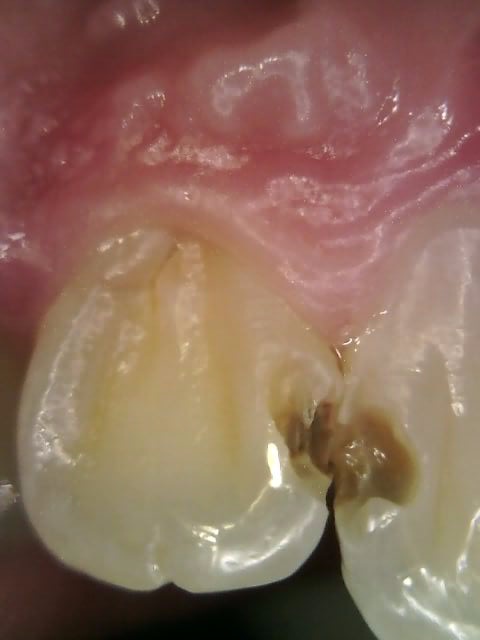
The cavity needs to be removed, right?
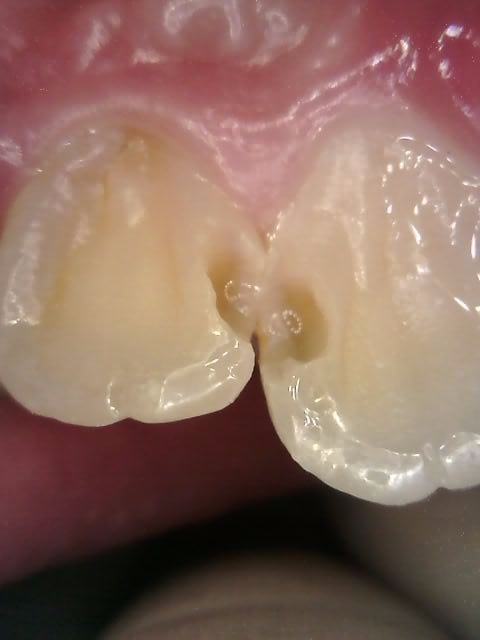
What we can see in the mirror is only the outer surface of the tooth.
However, a cavity can spread more extensively inside the tooth.
In particular, once it passes through the enamel, the tooth’s outermost layer, and reaches the dentin,
it tends to spread sideways within the tooth.
In cross-section, it often appears triangular.
In other words, even if the opening on the surface looks small, the actual extent of the cavity may be larger.
Therefore, a visual examination alone is not enough to determine the extent of a cavity.
X-rays must also be reviewed.
Let’s take a look at the X-ray of the patient mentioned above.
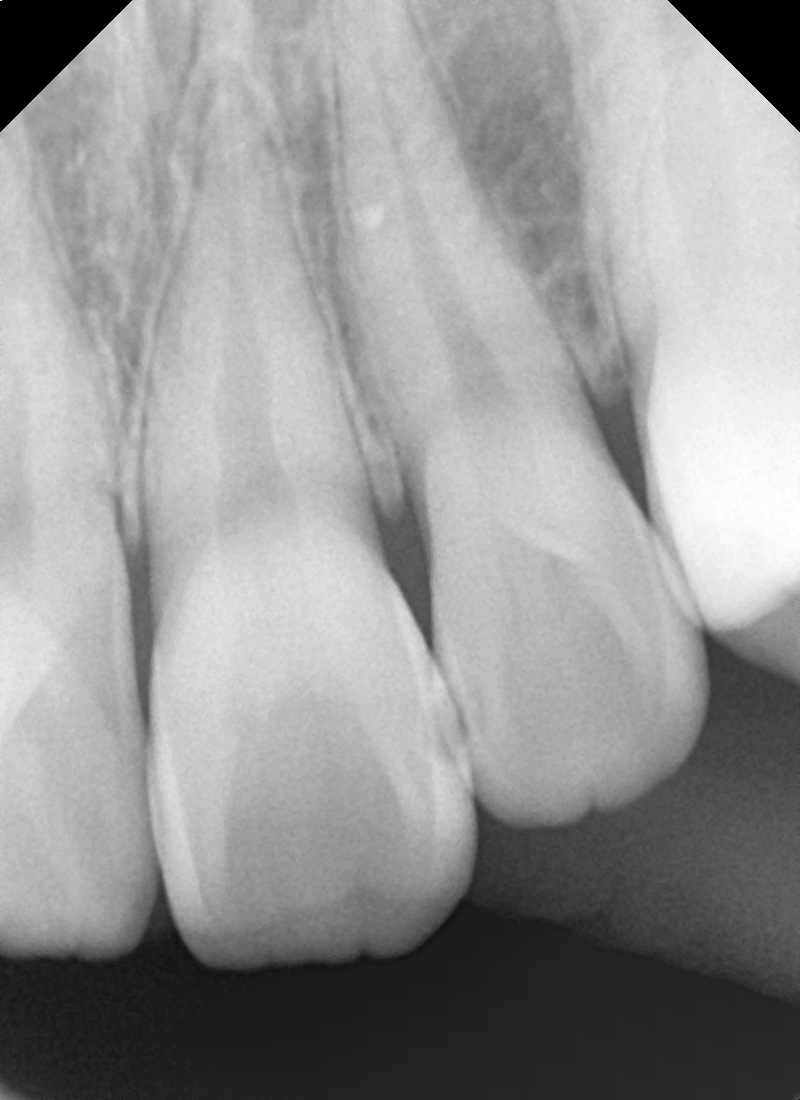
You can see the radiolucent area between the teeth, right?
The final treatment area is also determined after removing the cavity and assessing the amount and strength of the healthy tooth structure that remains.
Today, I will explain separately when treatment with resin is possible,
when an inlay or onlay may be necessary,
and when a crown may be needed.
- If the cavity is small and enough healthy tooth structure remains: resin
Resin treatment involves removing only the decayed area and directly filling it with a tooth-colored material.
If the cavity is small and the surrounding tooth structure remains sufficiently strong,
this may be the most conservative treatment option.
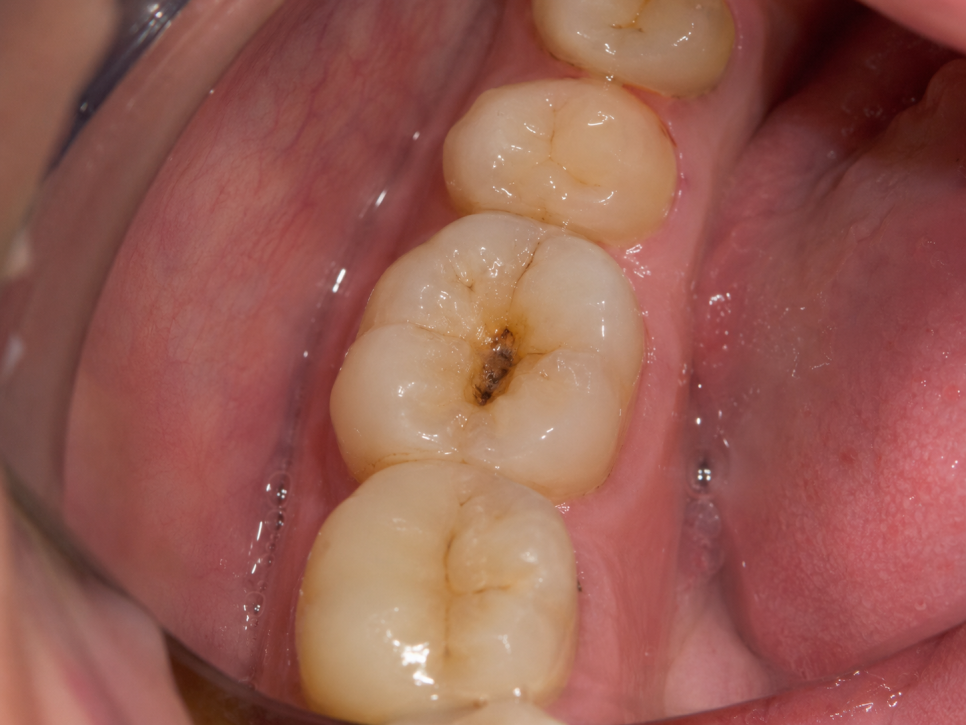
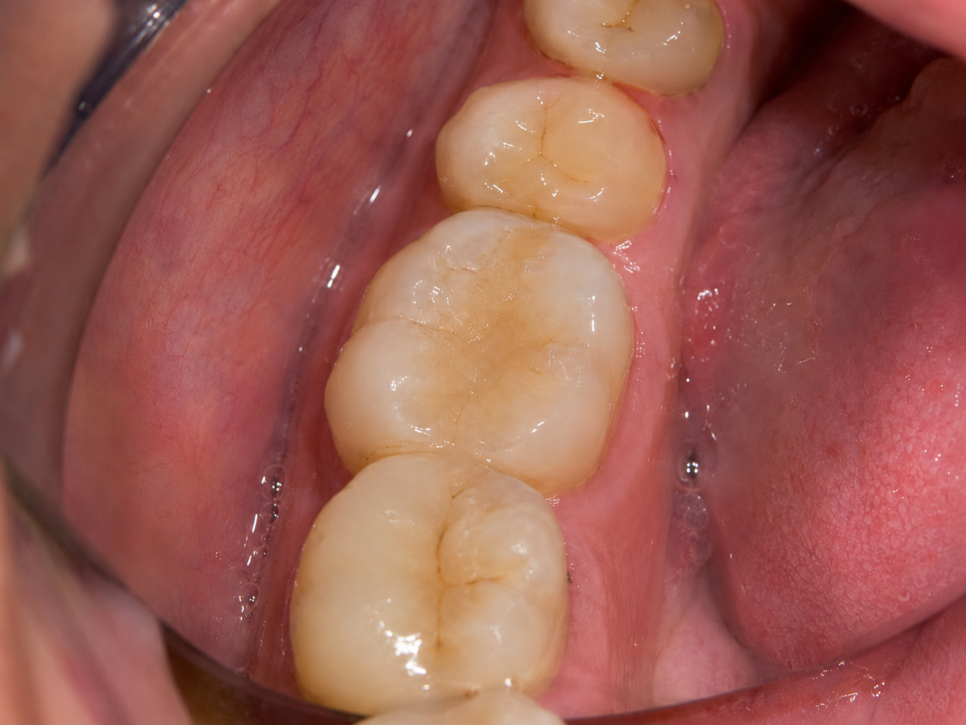
Relatively little tooth structure needs to be removed, and treatment is usually possible in a single visit.
Its similar color to natural teeth also offers aesthetic advantages.
At Every Dental Clinic, when planning cavity treatment,
we first check whether treatment with resin is possible.
This is because preserving as much healthy natural tooth structure as possible is our priority.
However, not every cavity that looks small on the outside can be treated with resin.
A cavity may have spread deeply and extensively beneath a small groove on the tooth’s surface.
In particular, cavities between teeth are sometimes discovered only after they have progressed considerably inside the tooth.
Resin treatment is possible if, after removing the entire cavity, the tooth walls remain sufficiently thick.
Conversely, if the remaining tooth walls are thin or a broad area of the chewing surface has weakened,
an extensive resin filling may have difficulty withstanding chewing forces over a long period.
Over time, the resin may fracture or come out.
Even when the resin itself remains intact, cracks may develop in the surrounding natural tooth structure.
Resin is an excellent material for filling small defects.
However, it is not a treatment that reinforces an entire tooth that has already become weakened.
Therefore, whether resin treatment is appropriate should be determined not by the apparent size of the cavity,
but by the amount and thickness of the tooth structure remaining after the cavity is removed.
- If the cavity is extensive, an inlay or onlay may be necessary.
If a broad defect remains after removing the cavity,
an inlay or onlay may be considered.
An inlay is made to fit the shape of the tooth
and then bonded into the area where the cavity was located.
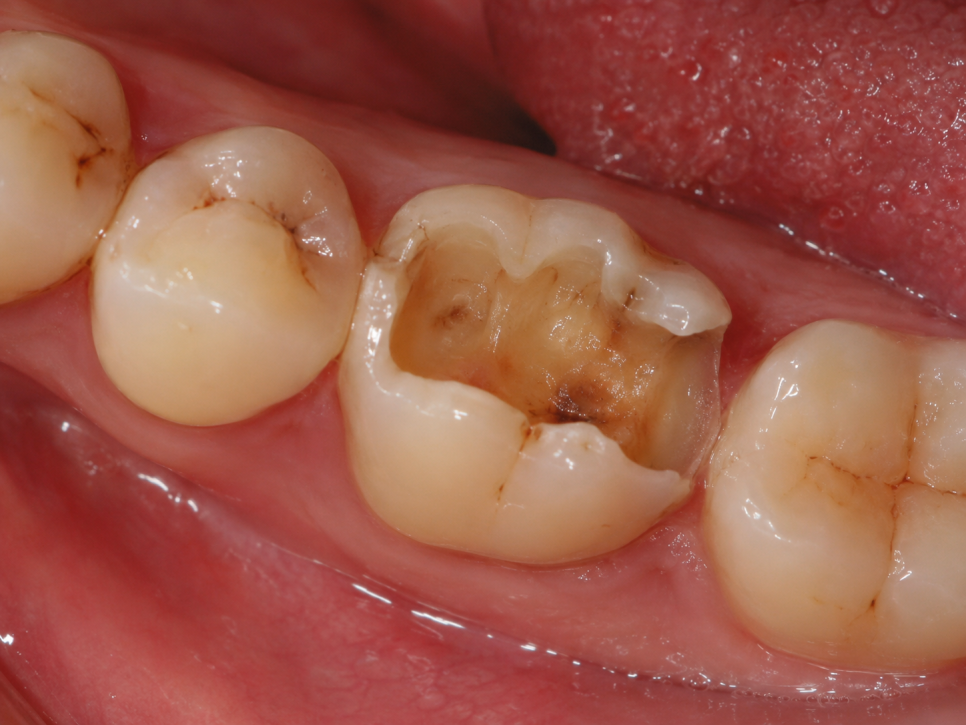
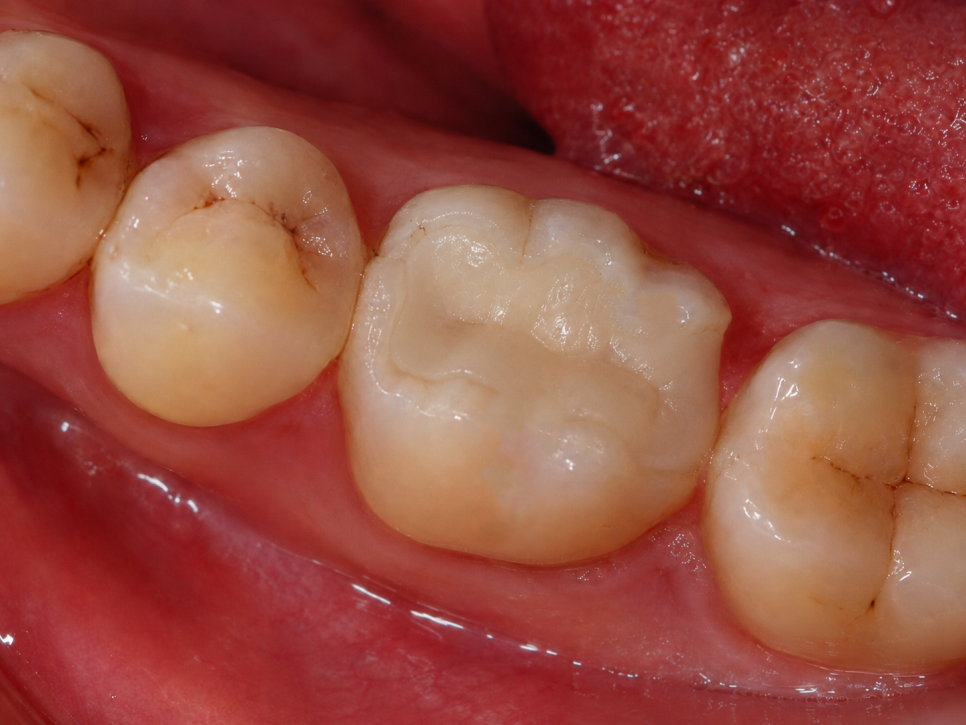
An onlay covers a larger area than an inlay.
It protects the weakened chewing surface or the cusps of the tooth by covering them.
Patients often ask, “Can’t you just use a larger resin filling?”
In some cases, this is possible.
However, when the resin extends over too large an area, it may have limitations in withstanding repeated biting forces.
In particular, molars receive strong forces countless times each day.
The burden is even greater if you clench your teeth or grind them.
If the remaining tooth walls are thin after removing the cavity,
microscopic cracks may develop even when the tooth looks normal on the outside.
If these cracks enlarge under repeated force, the tooth may fracture extensively.
Inlays and onlays are not simply more expensive treatments than resin.
They are selected to reinforce a widened defect more reliably.
When deciding on a treatment method, we do not look only at the size of the cavity.
We also assess the cavity’s location and depth, the thickness of the remaining tooth walls, the presence of cracks, biting forces, and any teeth-grinding habit.
At Every Dental Clinic, before covering the entire tooth with a crown,
we first examine whether the tooth can be preserved with an inlay or onlay.
It is important to find a balance that avoids removing more tooth structure than necessary
while ensuring that the tooth maintains sufficient strength after treatment.
- If the tooth has become significantly weakened, it should be protected with a crown.
A crown is a treatment that covers and protects the entire tooth.
-
It is mainly considered when the cavity is very extensive,
-
when the tooth has fractured substantially,
-
or when little tooth structure remains after root canal treatment.
-
It may also be necessary when a deep crack is suspected
-
or when the tooth walls remain extremely thin.
When patients are advised to get a crown, many worry, “Will too much of my tooth be shaved down?”
This is a completely understandable concern.
Because a crown involves a larger treatment area than resin or an inlay, it should be chosen only when necessary.
Conversely, repeatedly performing small treatments on a tooth that is already severely weakened may not be safe either.
Thin remaining tooth walls can split under chewing forces.
If the crack extends to the tooth root, it may become difficult to save the natural tooth.
A crown is not a method for treating a tooth extensively without reason.
It is a treatment used to cover an already weakened tooth from the outside and distribute chewing forces.
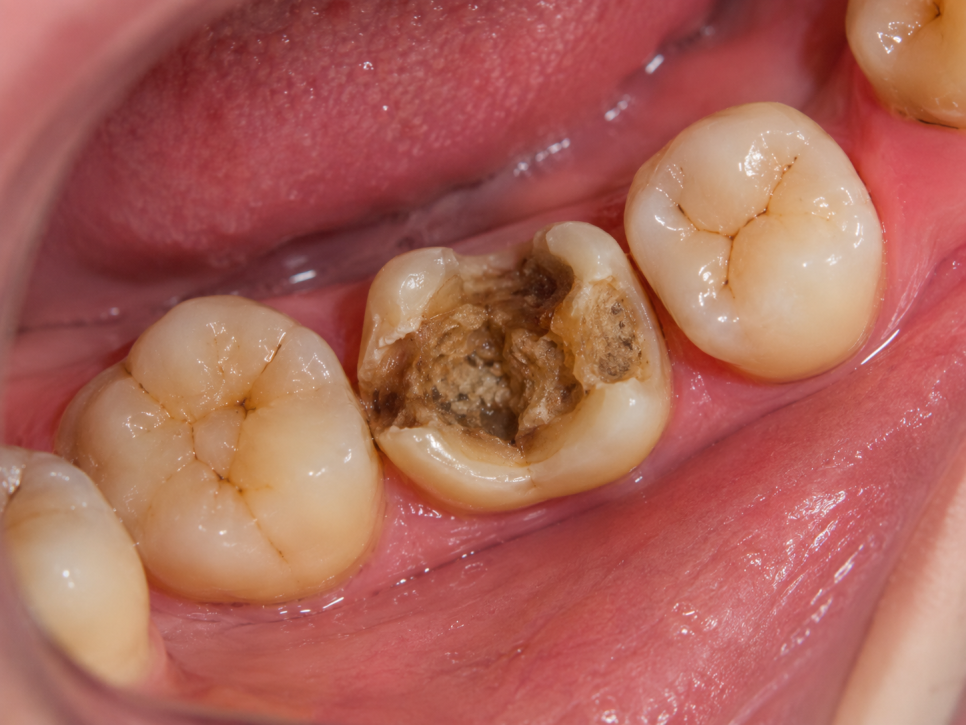
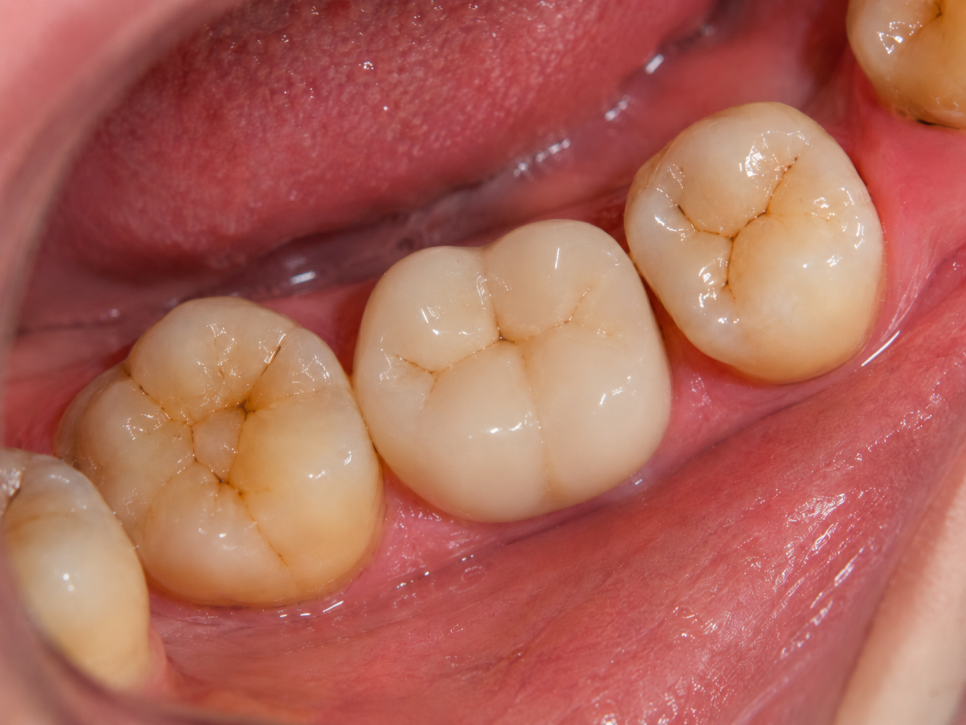
At Every Dental Clinic, we do not automatically recommend a crown first.
We first check whether the tooth can be treated with resin.
We also assess whether it can be preserved with an inlay or onlay.
We use X-rays to check the cavity’s depth and its distance from the nerve,
and, when necessary, examine the tooth under magnification for signs of cracks.
We then remove the cavity and assess the actual amount and strength of the remaining tooth structure.
If a crown is necessary, we do not simply explain that “extensive treatment is needed.”
We provide a thorough explanation of why the tooth has weakened and what risks the treatment is intended to prevent.
Cavity Treatment
This is the process of choosing a treatment appropriate for the tooth’s current condition.
A cavity that looks like a small spot on the outside may have spread extensively inside in a triangular shape.
Cavities between teeth, in particular, are often detectable only through X-rays.
Therefore, both a visual examination and X-ray examination should be performed before cavity treatment.
X-rays allow us to check the cavity’s location and depth, as well as its distance from the nerve.
We also determine whether the cavity definitely requires treatment.
However, the treatment area is not determined solely from an X-ray.
More important is how much healthy tooth structure remains after removing the cavity.
We must also assess whether the remaining tooth can withstand future chewing forces
and whether there is a risk of cracking or fracture.
Every Dental Clinic does not automatically recommend extensive treatment first.
However, if insisting on a small treatment could instead weaken the tooth,
we will explain the reason thoroughly.
The smallest treatment is not always the most conservative treatment.
The treated tooth must be able to withstand chewing forces for a long time
without removing more tooth structure than necessary.
Every Dental Clinic in Naebalsan-dong carefully determines the extent of cavities that truly require treatment
based on X-rays and oral examinations.
We preserve as much natural tooth structure as possible
and calmly explain the reasons and extent of treatment so that you can make your choice with a full understanding.