Hello.
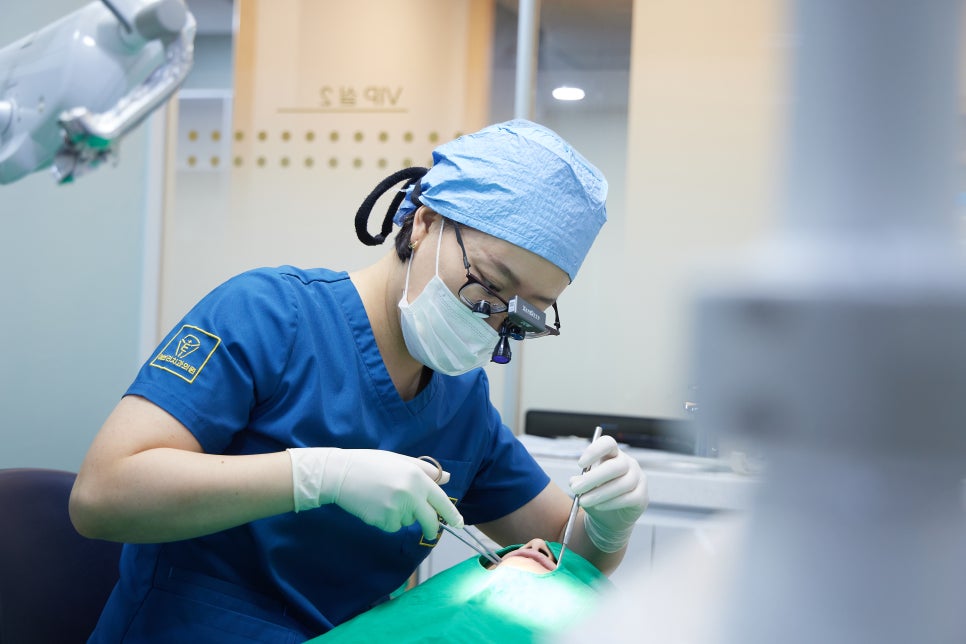
I am Lee Su-gyeong, the director of Every Dental Clinic.
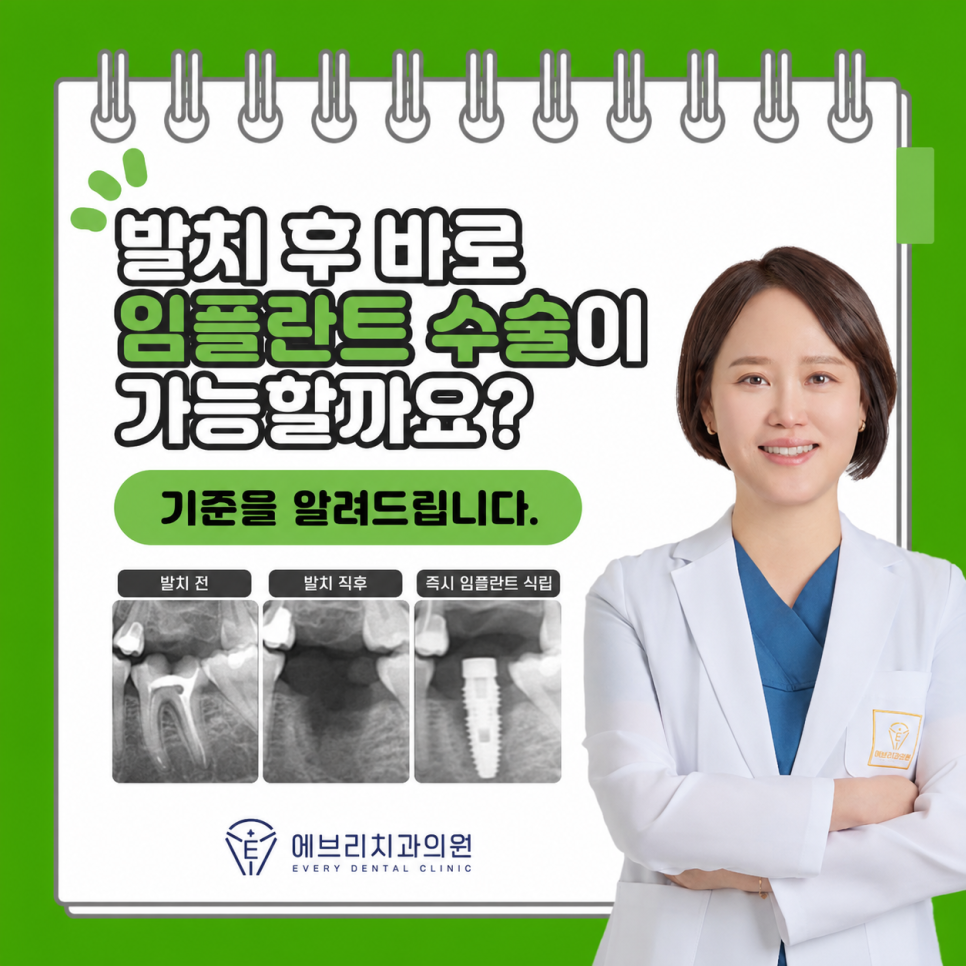
“Can an implant be placed on the same day the tooth is extracted?”
This is the first question patients often ask when they are told that a tooth needs to be removed.
“Then when will the implant be placed?”
“Do I have to go without a tooth for a long time?”
“Can it be placed immediately on the day of extraction?”
These are questions we hear very often in the treatment room.
In the past, it was common to extract the tooth, wait for the gums to heal, and then place the implant several months later.
However, these days, when the conditions are suitable, an implant may be placed immediately on the day the tooth is extracted.
This is called immediate implant placement after extraction.
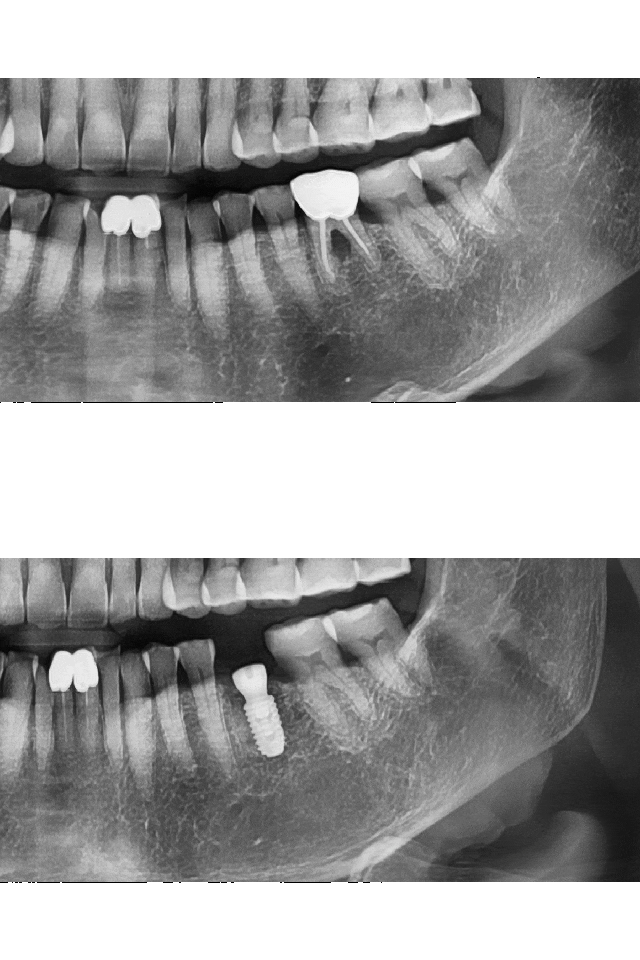
An implant placed immediately on the day of tooth extraction
The procedure may sound simple from its name alone.
Extract the tooth.
Place the implant right away.
It may seem that the treatment period will also be shortened.
However, immediate implant placement is not simply “a treatment in which an implant is placed immediately in the empty space.”
Rather, it requires more careful judgment.
The area left after a tooth is extracted is more complex than you might expect.
Inflammation may remain.
There may not be enough bone.
There may not be enough bone to firmly support the implant.
The important question is:
“Can it be placed immediately and still be used for a long time?”
Today, Every Dental Clinic in Naebalsan-dong will explain in simple terms when immediate implant placement is possible, when it is better to wait, and what criteria must be checked before surgery.
1. When immediate implant placement is possible and when it is better to wait
Immediate implant placement is a method of placing an implant on the same day the tooth is extracted.
However, it is not possible for every tooth.
The most important condition is primary stability.
Primary stability refers to the force that allows the implant to remain firmly secured in the bone from the beginning after it is placed.
When a tooth is extracted, an empty space remains where the root was. This space is called the extraction socket.
An implant is not simply inserted into this empty space.
It must be stably secured in the surrounding jawbone.
Therefore, enough jawbone must remain.
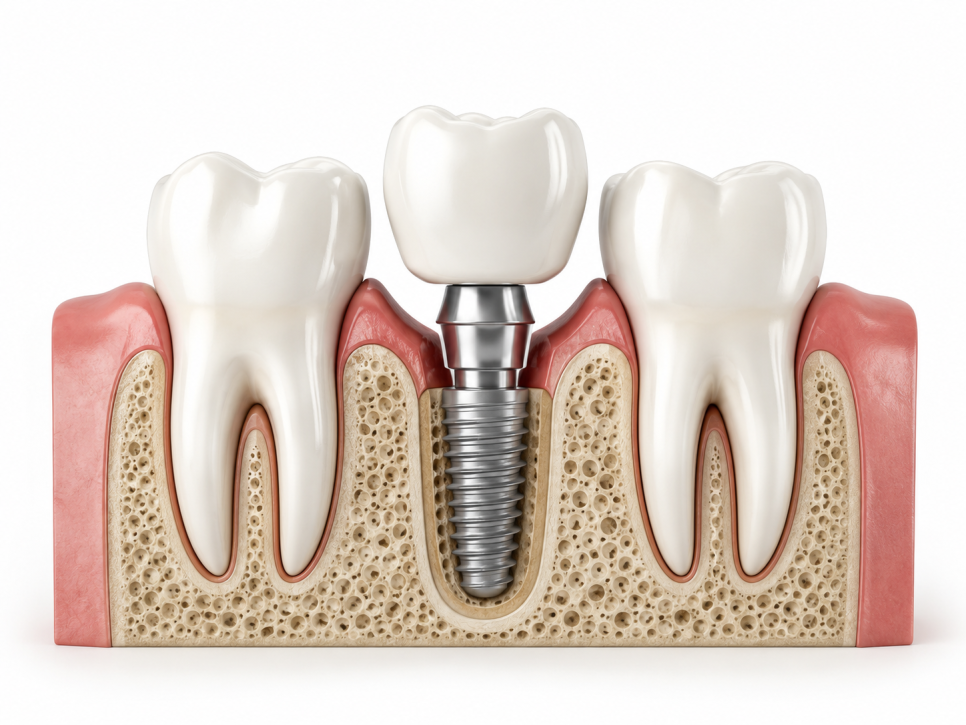
We check whether the bone has sufficient width.
We also check the height of the bone.
It is also important to determine whether the outer bone wall has been well preserved.
The condition of any inflammation must also be assessed.
If there is severe inflammation around the tip of the tooth root or pus has been present for a long time, immediate placement may be difficult.
Of course, the presence of inflammation does not automatically make the procedure impossible.
The following criteria must be considered together:
How extensive the inflammation is.
Whether it can be thoroughly removed after extraction.
Whether the remaining bone can support the implant.
Immediate implant placement is relatively more feasible when:
- There is not much inflammation around the tooth.
- Sufficient jawbone remains.
- The bone walls are well preserved during extraction.
- Good primary stability can be achieved when the implant is placed.
Conversely, there are also cases in which it is better to wait.
- When inflammation is severe,
- when a significant amount of bone has been lost,
- when the bone walls are severely damaged during extraction,
- or when the implant site is too close to the maxillary sinus or a nerve.
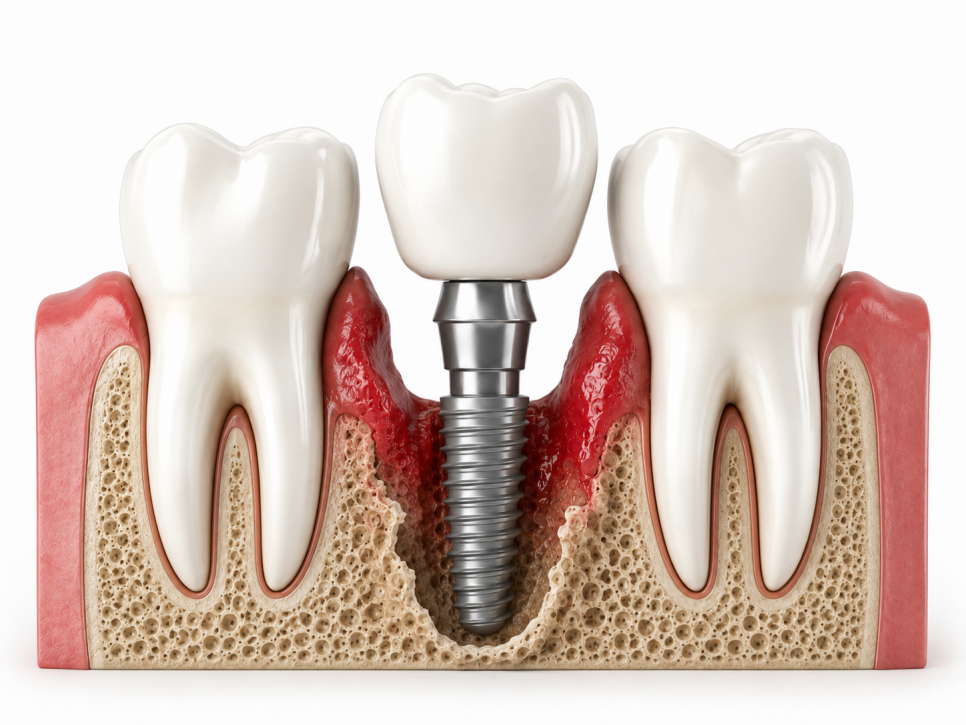
In these cases, rather than forcing immediate placement, it may be safer to remove the inflammation and allow time for the bone to recover.
When necessary, bone grafting may be performed first.
In some cases, we wait for a certain period after extraction before planning implant placement.
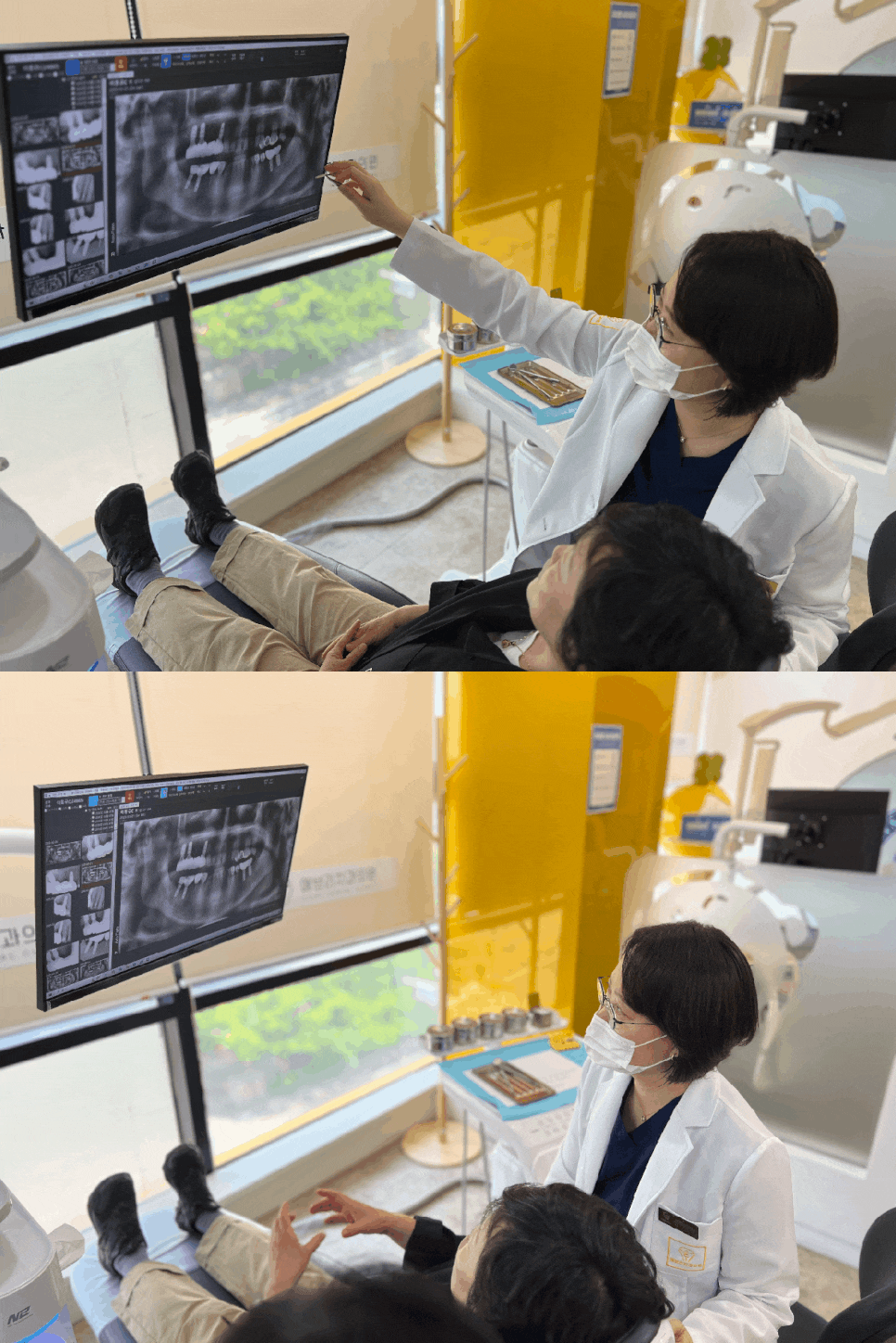
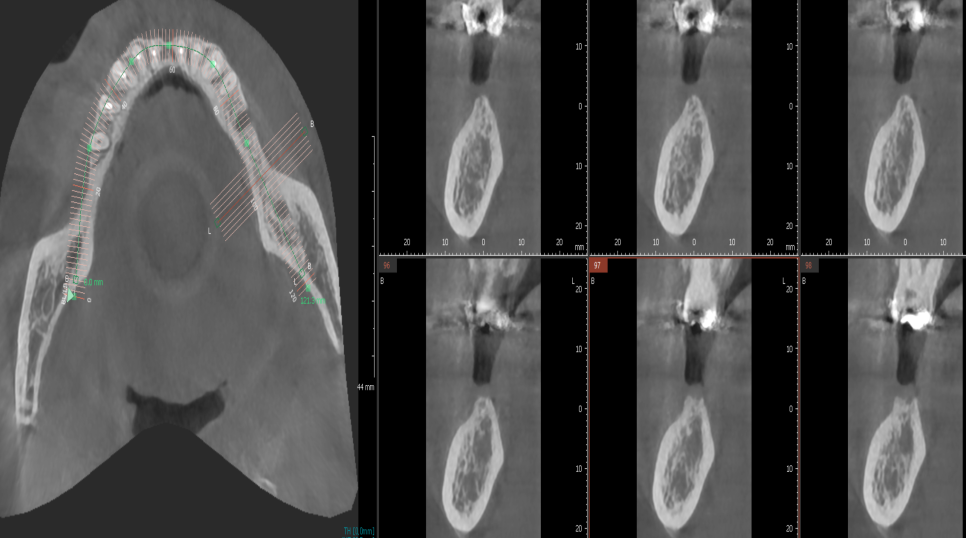
At Every Dental Clinic, we take a 3D-CT scan before extraction to examine the jawbone and surrounding structures.
We do not make a decision based only on the tooth visible to the eye.
This is because we need to anticipate what bone will remain after the tooth is removed, even before extraction takes place.
Immediate implant placement is not a treatment focused on finishing quickly.
It is a treatment focused on determining whether the conditions are suitable for starting immediately.
2. When placing an implant immediately, its direction and depth are important
The important point in immediate implant placement is not that “it was placed right away.”
What matters is where it was placed, in what direction, and at what depth.
The space where the tooth root was located is different from the shape of an implant.
Front-tooth roots are often long and thin.
Molars have roots that divide into several branches.
The space remaining after extraction also differs from tooth to tooth.
If the surgical position is not ideal, the shape of the crown may be unfavorable later.
It may result in a shape where food becomes easily trapped.
The chewing forces may also become concentrated on one side.
Therefore, the final prosthetic restoration must be considered from the time of surgery.
When placing an implant, I consider it not as “filling an empty space,” but as “first determining the position of the tooth that will be used for chewing later.”
The front teeth require particularly delicate treatment.
Even a slight deviation in the implant direction can make the gum line look unnatural.
The tooth may also appear too long or too thick.
For molars, the direction of the chewing forces is important.
The implant must be positioned where it can properly withstand those forces.
If it is tilted too far outward or inward, stress may be placed on the prosthesis and screw.
The placement depth is also important.
If it is too shallow, the shape of the prosthesis may be unfavorable.
If it is too deep, gum care may become difficult.
Once an implant is placed, its direction cannot easily be changed.
That is why the initial planning is important.
When necessary, digitally guided surgery may be used.
A digital guide is a device that uses 3D-CT images and oral information to plan the implant’s position and direction in advance and help implement that plan during surgery.
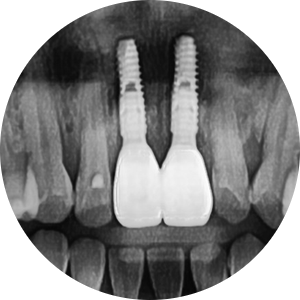
An implant placed in the precise direction using a guide
A guide is not equipment that replaces surgery.
However, it can help reduce deviations from the planned position.
It is particularly useful when the distances from nearby nerves, the maxillary sinus, and adjacent teeth must be carefully considered.
At Every Dental Clinic, we believe that implants should not be placed merely where they “can be placed,” but where they can support comfortable chewing for a long time.
3. The advantage of immediate implant placement is that it can shorten the treatment period

The greatest advantage is that the number of treatment steps may be reduced.
The process of extracting the tooth, waiting several months, and then undergoing implant surgery again may be shortened.
Extraction and implant placement can be performed as part of a single surgical procedure.
From the patient’s perspective, this may reduce the burden of the number of visits and the length of treatment.
It can also reduce the amount of time spent without a tooth.
This is especially important in the front-tooth area.
The front teeth are important not only for function but also for appearance.
They are visible when speaking and when smiling.
When the conditions are suitable, immediate implant placement may be considered together with a plan for a temporary tooth.
Of course, it is not possible to provide a temporary tooth immediately in every case.
Immediate implant placement has the advantage of being a “faster treatment,” but if the conditions are not suitable, the result may instead be less stable.
If an implant is placed forcefully when inflammation is severe, healing may not proceed well.
If it is placed forcibly when there is insufficient bone, the implant position may be unfavorable.
If primary stability is weak, problems may occur during the process in which the implant bonds with the bone.
Therefore, immediate implant placement is a good option when the conditions are suitable.
Stable treatment is more important than fast treatment.
The advantages of immediate implant placement are meaningful when the treatment period can be shortened while still achieving a stable result.
I want to reduce the time spent without a tooth.
I do not want to undergo surgery several times.
If possible, I would also like the treatment period to be short.
Immediate implant placement may help reduce these burdens.
Is there enough jawbone?
Is the inflammation not too severe?
Can primary stability be achieved?
Can the implant be placed in a direction favorable for the prosthetic restoration?
At Every Dental Clinic, we first examine the condition of the bone and surrounding structures using a 3D-CT scan before extraction.
When immediate placement is advantageous, we explain why.
When it is better to wait, we also explain why waiting is necessary.
Implant treatment is not all about speed.
An implant that allows you to chew comfortably for a long time is more important than one that is placed quickly.
Every Dental Clinic in Naebalsan-dong will first examine your tooth condition and jawbone characteristics, then develop a treatment plan in the most stable direction.