Among people who have had thread lifting, some say the contour lasts for more than a year, while others feel it has returned to how it was before after only a few months.
Of course, when the type of thread differs, the rate at which it dissolves, the stimulation it gives to the skin, and its ability to induce collagen also differ, so the duration of the results naturally varies as well.
For example, PDO threads, which absorb quickly, have good tension and show clear immediate effects, but they also dissolve and disappear faster than other types of threads.
Threads that dissolve slowly, such as PCL threads, may retain their effects for a long time, but the pulling sensation right after the procedure tends to be relatively mild.
So why do these differences occur even when the same type of thread is used in the same area?
The effect of thread lifting depends not only on the procedure method, but also greatly on how the skin responds and is managed afterward.
 Thread lifting aftercare
After thread lifting, the first few days are a very important stage as the threads settle into the skin tissue.
How you care for your skin during this time affects not only how long the results last, but sometimes even the final outcome.
The most basic and important thing is not to rub or press the face too hard.
When washing your face, avoid applying too much force, and especially if you have a habit of lying on one side after sleeping or resting your chin on your hand, you should be extra careful, as the position of the threads may shift or asymmetry may occur.
Excessive facial movement can also have an effect.
Right after the procedure, it is better to avoid laughing too broadly or opening your mouth too widely.
Another thing to be careful about is exposure to high temperatures.
Saunas, Korean steam rooms, and radiofrequency procedures may destabilize the structure of the threads or cause inflammation due to excessive stimulation, so it is better to avoid them for at least two weeks.
Ultraviolet rays are also one of the factors that interfere with skin recovery.
During this period, it helps to apply sunscreen consistently and keep the skin well hydrated.
In particular, it is also important during this time to improve the body's recovery ability.
This is because lack of sleep, smoking, and excessive stress negatively affect collagen production and can ultimately reduce the long-term effects of thread lifting.

What is more important than aftercare?
Even if you take meticulous care after thread lifting, the results will not last long if the procedure itself was not precise in the first place.
If the thread was not properly anchored in the skin, or if the pulling direction was not set to match the structure of the face, the thread may not hold within the tissue and can quickly loosen or shift position.
Therefore, the facial structure must be analyzed in three dimensions, and the thread length, depth, and direction should be designed accordingly before the procedure is performed.
Each person’s skin thickness, fat distribution, muscle movement, and even facial expression habits must be considered.
To do this, you should receive a thorough diagnosis and sufficient consultation from medical staff who have a systematic understanding of facial anatomy and extensive experience with lifting procedures.

Thread lifting
How can side effects be reduced?
Thread lifting is known as a relatively safe procedure, but as with other procedures, the possibility of side effects can never be completely ruled out.
In particular, the face is an area with a lot of expression movement, and the structures of the skin, muscle layer, and fat layer are intricately intertwined, so unexpected reactions can occur.
Common side effects that may appear after thread lifting include dimpling, thread visibility, and rippling.
Dimpling is a phenomenon in which the skin becomes indented at the point where the thread pulls, and it is more likely to occur when the thread is placed too superficially or becomes entangled with the muscles that move when making facial expressions.
Thread visibility refers to cases in which the blue outline of the thread appears on the skin surface.
This is a side effect that can occur when thread lifting is performed on skin that is too thin, or when the layer into which the thread is inserted is too shallow.
Rippling is a phenomenon in which the skin becomes uneven as it folds slightly along the path of the thread, and it can occur when the direction of pull or the depth of the thread is inappropriate.
To prevent these side effects, the practitioner's skill and anatomical understanding are more important than anything else.
They must be able to accurately determine which layer the thread should go into and in which direction, and careful adjustments are needed to modify the thread tension or anchoring points according to the condition of the skin.
The practitioner should identify in advance which parts of the face move more and which areas are more sensitive to foreign-body sensation, and plan the procedure so that such issues can be avoided from the design stage.
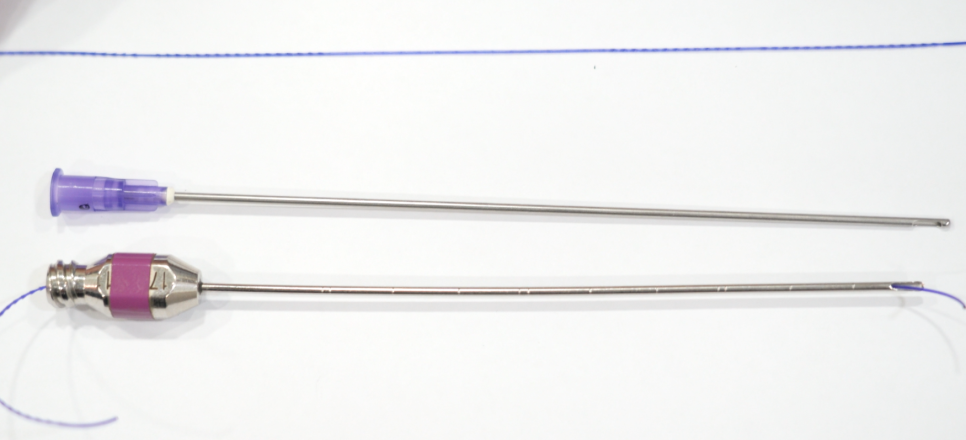
However, the practitioner's skill alone cannot prevent all side effects.
This is because how the patient manages the area after the procedure also has a significant impact.
For example, if you rub the area strongly before the threads have settled or continue a habit of sleeping on your side, the threads may move and cause asymmetry or dimpling.
Also, if you overuse facial expressions immediately after the procedure or are frequently exposed to high-temperature environments, it becomes harder for the threads to settle properly.
As a result, the lifting effect you expected may be reduced.
In the end, to achieve the desired results from thread lifting, the practitioner must create a precise plan suited to the facial structure, and the patient must carefully manage recovery afterward.
Because it is difficult for the overall result to be satisfying if only one side is perfect, if you decide to undergo the procedure, please check both the practitioner’s experience and your own lifestyle habits and precautions.
Today, I talked about aftercare following thread lifting.
Thank you for reading this long post.
| This post was written for informational purposes in compliance with Article 56, Paragraphs 1 to 15 of the Medical Service Act. All treatments carry the risk of side effects and complications depending on the individual. Before treatment, please make sure to have a thorough consultation with medical staff who have extensive experience before making your decision. |