Three years ago, after having nasal surgery at a famous large hospital,
this is a photo inside the nose of a patient who said breathing was difficult.
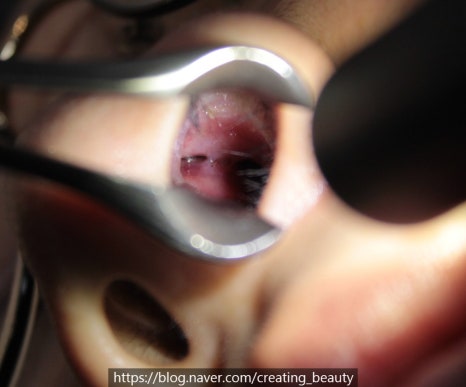
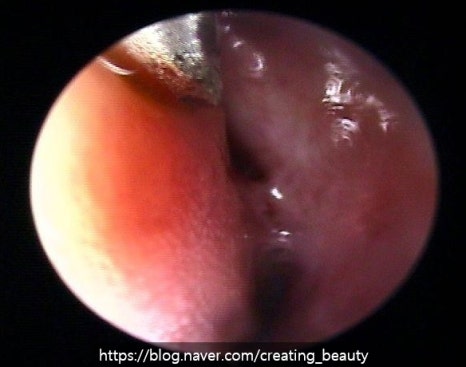
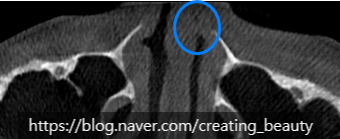
It can be seen that the nasal mucosa is attached on both sides.
The medical term for this is synechia (mucosal adhesion).
If you search for synechia on Google,
you can see photos like the ones below.
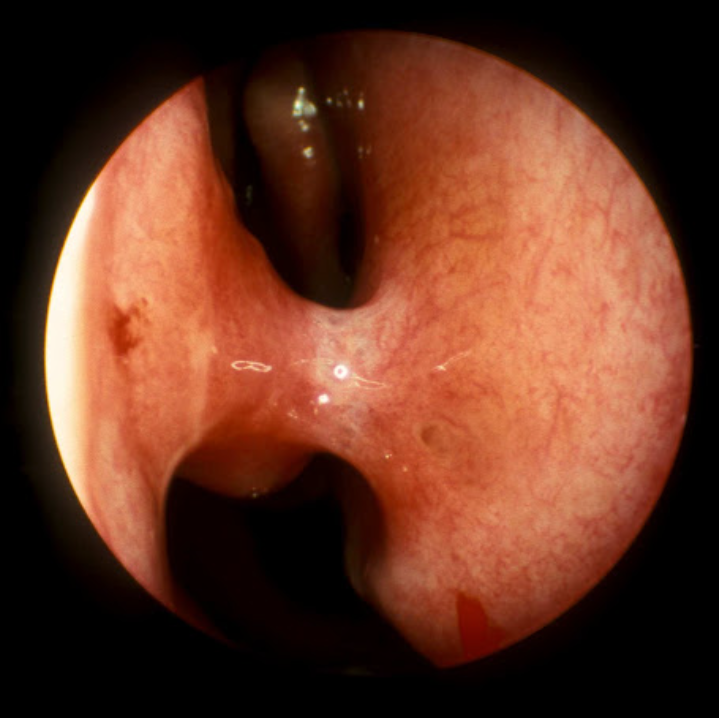
http://nosephotographs.hawkelibrary.com/slideshow.php?set_albumName=album66&mode=low&slide_index=7&slide_full=1&slide_loop=0&slide_pause=3&slide_dir=1
The patient said this was the first time they had learned about the problem when I showed it to them,
and that at the hospital where the surgery was performed,
they had only continued injection treatment for the nasal congestion.
Of course, there was no improvement.
First, the solution for mucosal adhesion is simple.
Separate the adhered tissue and give each mucosal surface
enough time to heal without touching each other.
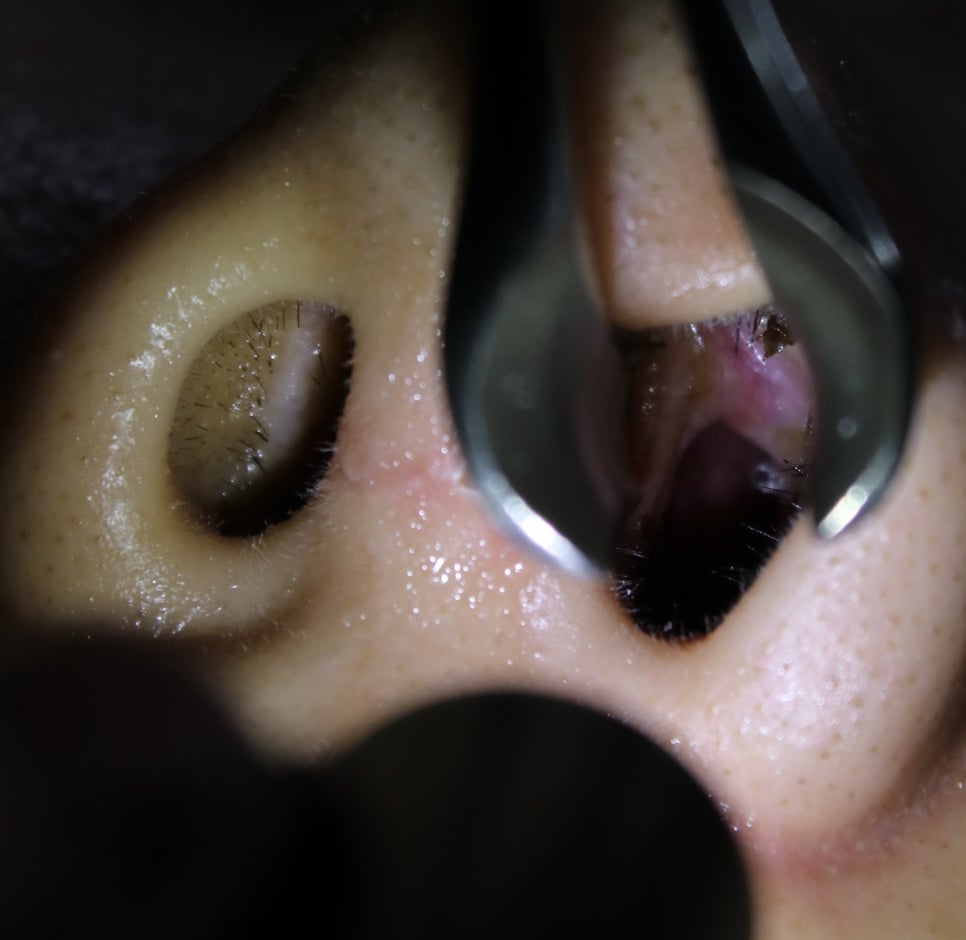
This shows the mucosa that had been stuck together successfully resolved.
Going back to the basics!
If the symptom of a blocked nose is due to
chronic rhinitis,
then treating the rhinitis is the solution.
If it is allergic rhinitis,
then the allergens
must be avoided or eliminated.
Also, if the septum is severely deviated to one side,
straightening the septum is
the solution.
And there is one more thing.
You may have heard of the nasal valve.
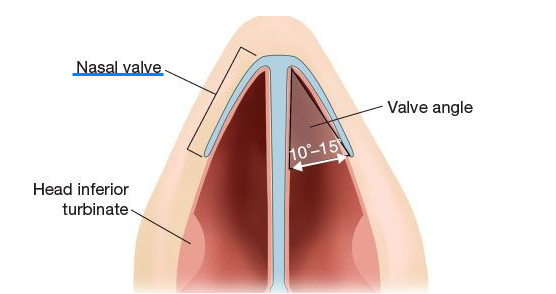
https://www.graphyonline.com/archives/IJSSP/2016/IJSSP-110/index.php?page=figure&num=1
This is in the passage inside the nose through which air comes and goes when breathing,
and the angle of this valve should be 10 to 15 degrees
to avoid discomfort when breathing.
Valvuloplasty means
widening the narrowed valve angle
to secure enough space for air to pass through.
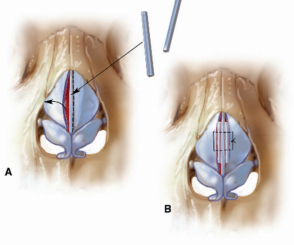
https://drsuleymantas.com/nasal-valve-collapse/
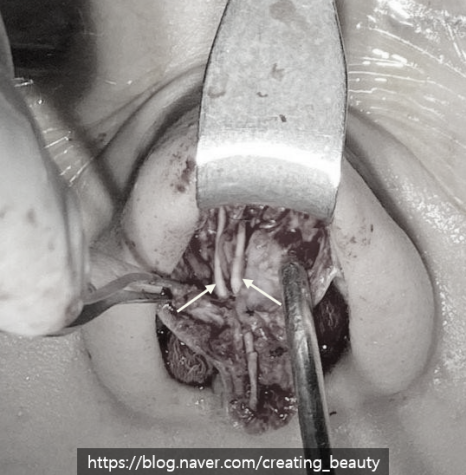
A spreader graft was used with autologous cartilage
to make the valve angle larger.
Not only that,
but there were also large amounts of donor rib cartilage
that the patient was not told about during the surgery.
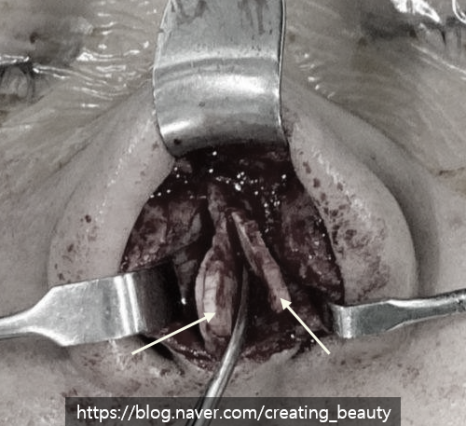
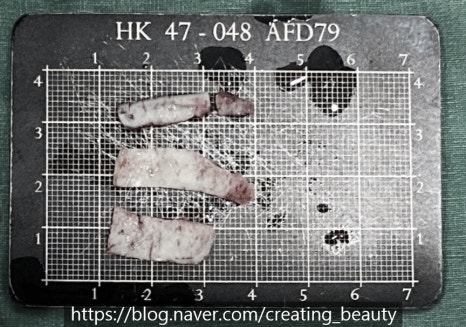
I sometimes use donor rib cartilage as well.
The issue is not with using it,
but that materials added without the patient's consent
should not be left inside.
The patient said they were glad they could breathe well.
We removed the thickly placed non-autologous tissues,
secured space with autologous tissue,
built a support structure,
and finished the procedure.
.
.
.
.
.
.
.
.
.
.
Out of the blue, I’ll end by showing you the mata mata turtle
I photographed when I visited Play Aquarium Bucheon.^^
<If you have additional questions, please leave them as a private comment,
and I will kindly answer them. Thank you.>