About Lateral Canthoplasty Revision
(Feat. Endoscopic Forehead Lift, Lower Canthoplasty)
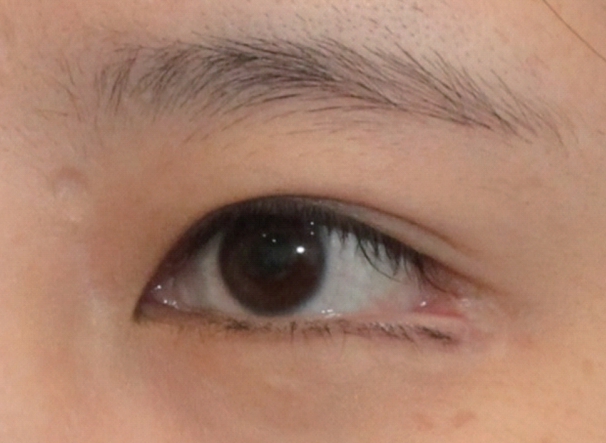
Fig.2 Kim MS, Effective Lateral Canthal Lengthening with Triangular Rotation Flap, Arch of Plastic surgery 2016;43(4):311-315
To make the eyes appear larger, canthoplasty procedures are often chosen.
In the past, medial canthoplasty was more commonly performed,
but now that lateral canthoplasty has also become a common procedure,
there are many cases in which its effect is insufficient.
On the other hand, complications such as overcorrection or a "D-shaped" deformity
from the lateral canthal ligament not being properly fixed are also not uncommon.
In this post, I will introduce a case in which,
for various reasons after lateral canthoplasty,
the outer corner of the eye remained open and did not close properly,
and how it was revised.
I have previously written a post about what lateral canthoplasty is.
I explained it in the post about how to make narrow-looking eyes look larger.^^
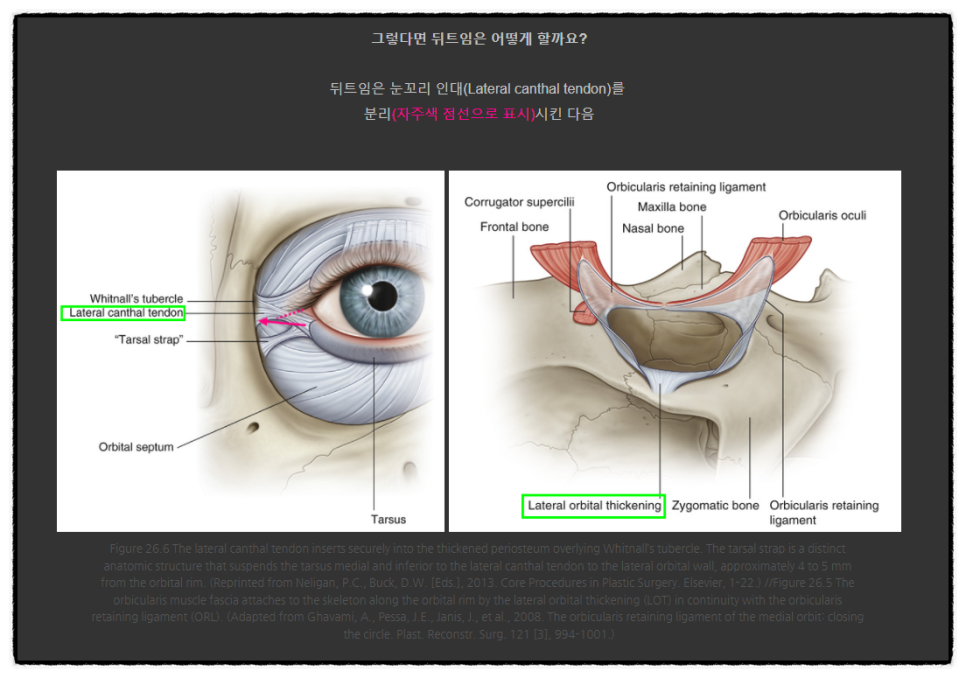
https://blog.naver.com/creating_beauty/222417821300
When performing lateral canthoplasty, the lower eyelid canthal ligament is fixed to a tissue called the lateral orbital thickening (LOT).
If the fixed area becomes loosened because the LOT tissue is weak,
or if repeated outward pulling forces occur, such as from wearing contact lenses,
deformation can develop.
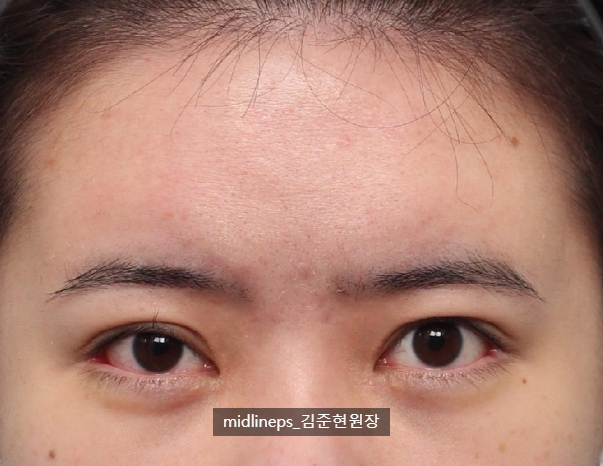
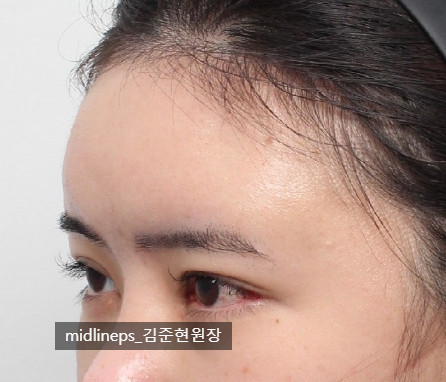
The canthal ligament has detached, and the conjunctiva is exposed in red.
In such cases, the eyes become dry,
and redness occurs frequently.
The double eyelid line is also asymmetrical, with the right front portion higher.
Because the space between the eyes and eyebrows is small, the eye area looks strong,
so while revising the lateral canthoplasty, we also performed a forehead lift
to soften the overall eye area.
Because the patient was worried that the eyes might look smaller after the lateral canthoplasty revision,
a lower canthoplasty was also performed.
Correction of the asymmetrical eyes can only be performed about one and a half months after the forehead lift.
One and a half months is the time needed for the forehead lift to settle into its proper position.
What is important when revising the lateral canthoplasty is
to lift the detached canthal ligament again and connect the elastic tissue where the upper and lower eyelashes grow, called the gray line,
to each other.
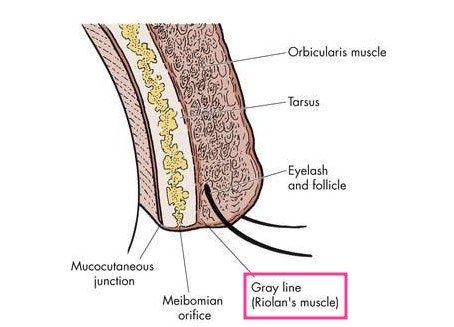
https://plasticsurgerykey.com/the-diagnosis-and-treatment-of-entropion/
By doing so, the exposed conjunctiva can be closed,
and the lower tarsus, which has moved away from the eyeball,
can be brought back closer to the eye.
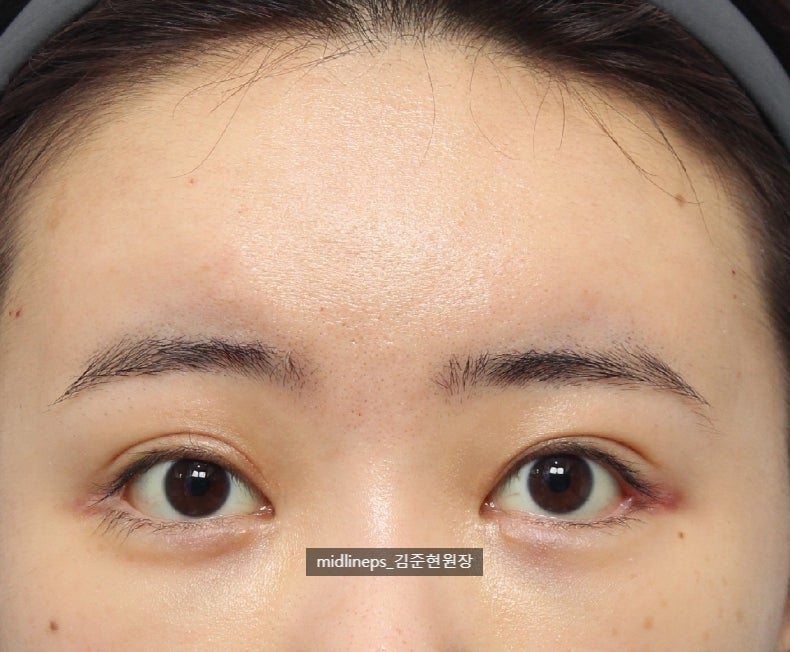
Like this.
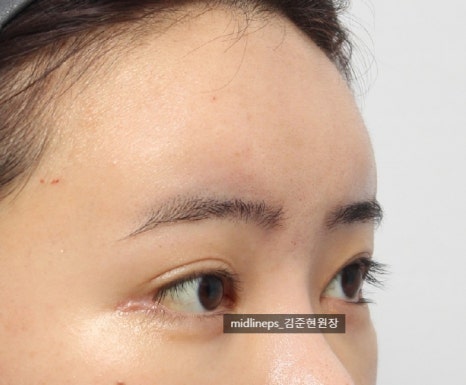
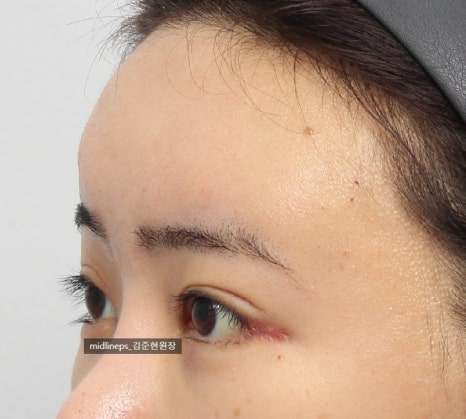
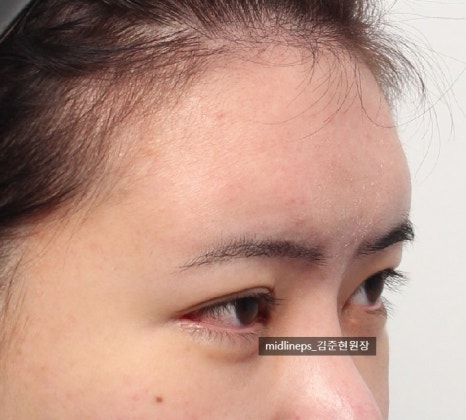
It was taken on the day the stitches were removed, so there is still some redness, but the result is satisfying.
After the lateral canthoplasty revision, the redness in the eyes has also almost disappeared.
The eye area, which looked compressed, has become more open after the forehead lift,
and although the lateral canthoplasty was revised, the lower canthoplasty was performed at the same time, so the eyes do not feel smaller.
I will show the photos side by side for easier comparison.^^
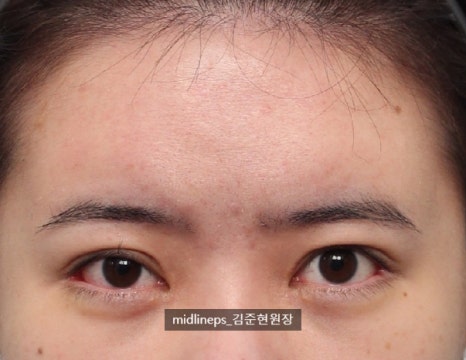
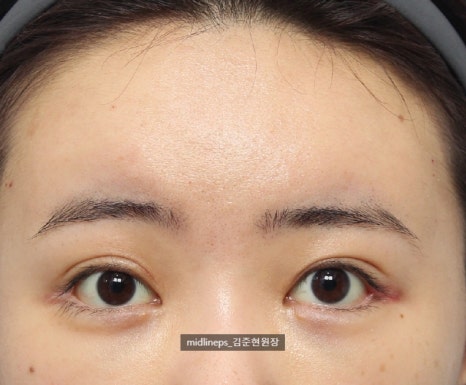
Before/after lateral canthoplasty revision
Before/after lateral canthoplasty revision photos
(Front)
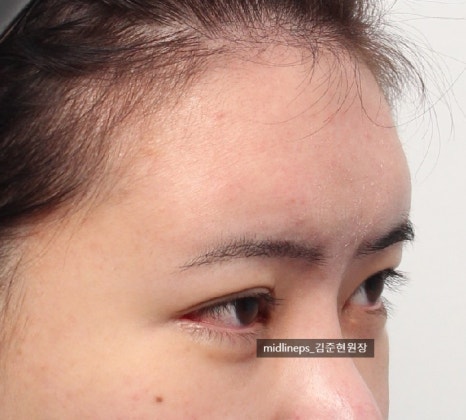
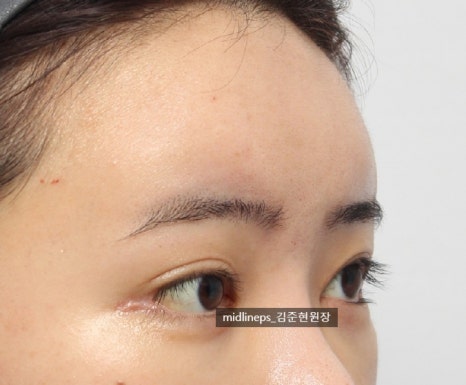
Before/after lateral canthoplasty revision
Before/after lateral canthoplasty revision photos
(45 degrees)
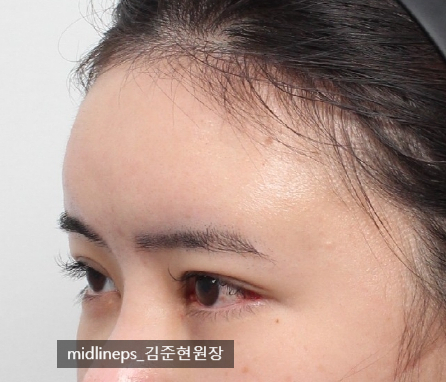
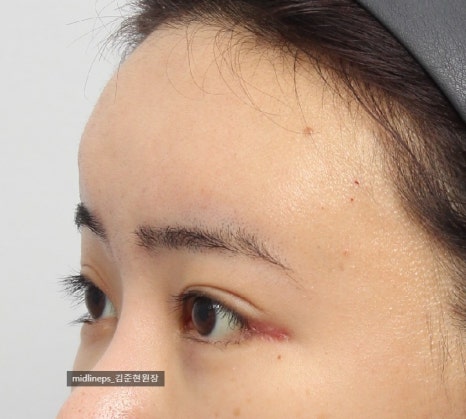
Before/after lateral canthoplasty revision
Before/after lateral canthoplasty revision photos
(45 degrees)
If you think the lateral canthoplasty has opened up,
or if you have a stinging sensation in the eyes,
there is no need to hesitate; revision is the right choice.
If you are concerned about discomfort but also worried that your eyes may look smaller,
performing a lower canthoplasty together with the lateral canthoplasty revision may be an option.
<If you have additional questions, please leave a private comment,
and I will kindly answer them. Thank you.>
I will always do my best, using the correct surgical methods and with the mindset of operating on my own family.