I visited Hong Kong Banjeom a little after lunchtime because I thought it would be crowded during the lunch rush. I’m not really someone who especially enjoys or likes Chinese food.
When it comes to Paik Jong-won’s chain restaurants, there doesn’t seem to be much chance of failure, so when I hear it’s one of his chains, I tend to trust it and go. Among them, I think Hong Kong Banjeom is probably the one with the most locations nearby.
You might think Chinese food can’t possibly taste bad, but there are actually more poorly tasting Chinese restaurants than you might expect, so I end up looking for Hong Kong Banjeom, a Paik Jong-won chain with a low chance of failure. Another downside is that while it’s good when you’re eating, after you finish... I think many people may feel the same way I do.
These days, people say that hiring part-timers can actually be a loss. Labor costs have risen that much, but why has my salary stayed the same?!
Even though it was a little after lunchtime, I visited at 12:30, so it wasn’t exactly the time when lunch service ends, but only one person was serving. I was about to mention that, but I ended up rambling about something strange earlier.
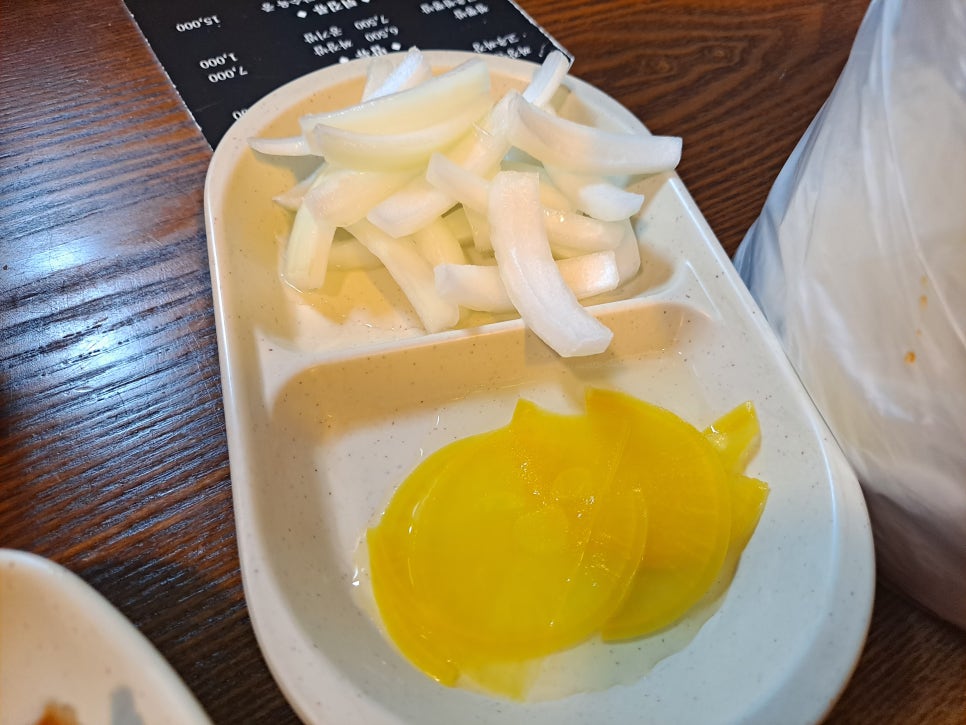
You can get the pickled radish and onions at the self-service corner. There wasn’t any pickled radish, so I could only bring a little, but since they were struggling alone, I couldn’t bring myself to ask them to refill it.
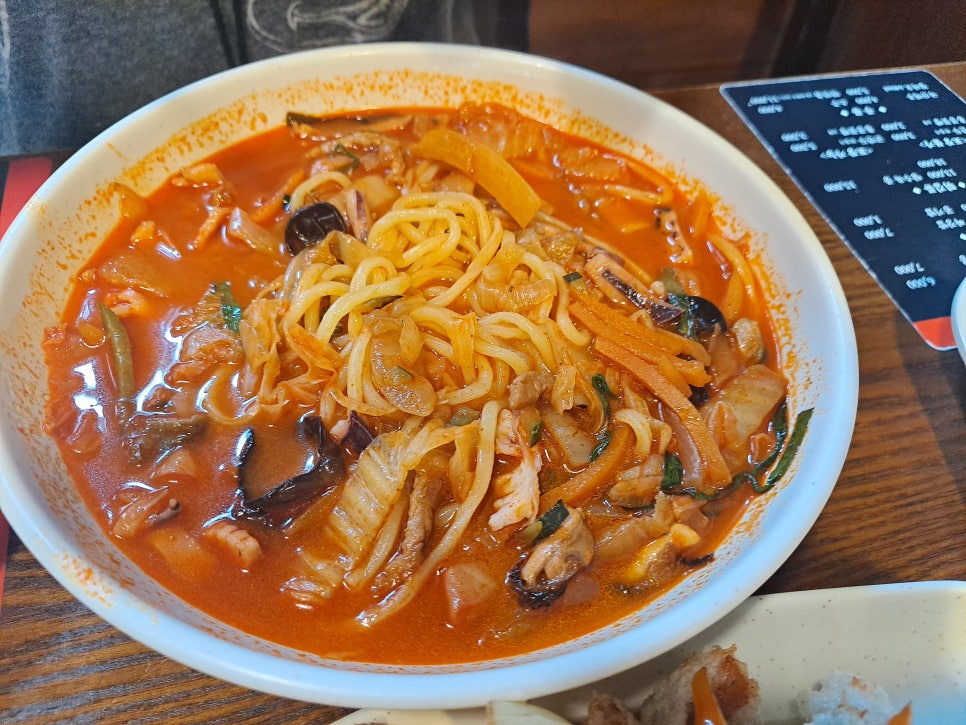
Was the kitchen also short-staffed? The food came out later than expected. Even after removing all the mussel shells before taking the photo, this jjambbong still feels abundant. When you think of Hong Kong Banjeom, you think of jjambbong.
There was a lot of napa cabbage in it. Maybe because vegetables are so expensive these days, it doesn’t feel quite as generous as before, but it’s still clear that it has a lot more vegetables than jjambbong at other Chinese restaurants.
When I eat jjambbong at Hong Kong Banjeom, I feel like I’m enjoying the noodles and vegetables more than the broth.
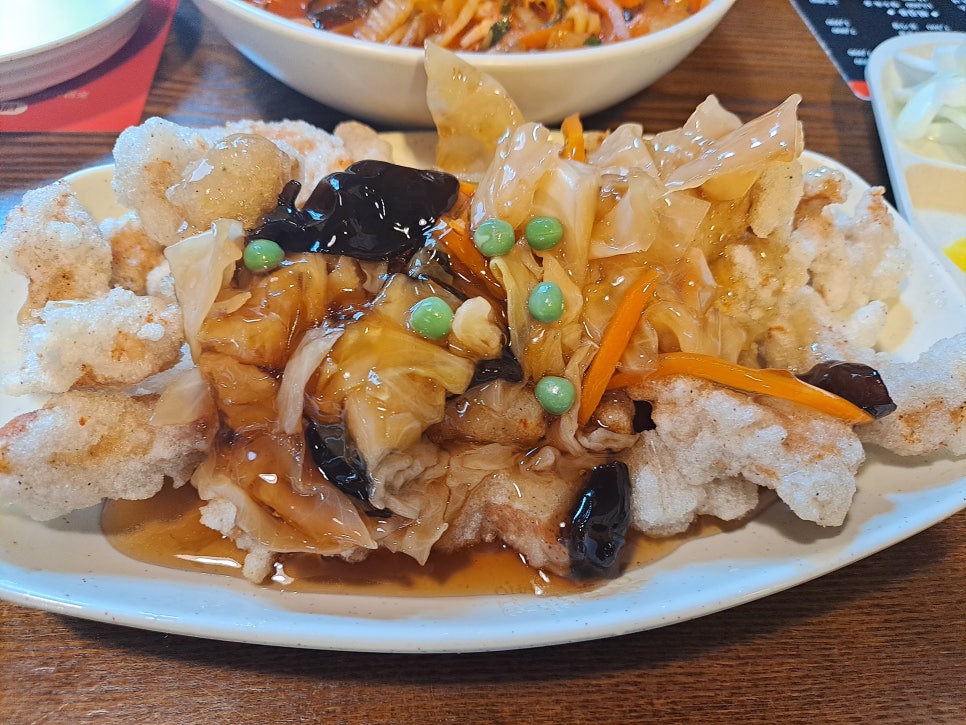
Since I visited Hong Kong Banjeom, I ordered sweet and sour pork as well. Why does it feel a little disappointing if I don’t eat sweet and sour pork? It’s not like that at other Chinese restaurants, but strangely, at Hong Kong Banjeom, sweet and sour pork feels like part of the set.
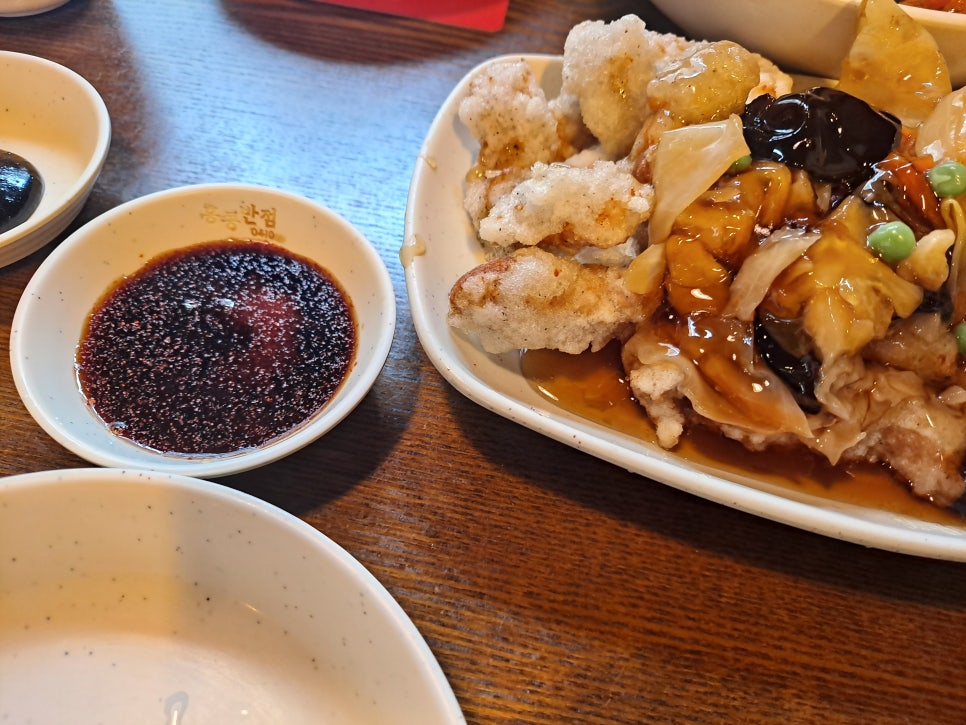
The sweet and sour pork was still delicious. The glutinous rice batter makes it chewy, and the pork is strongly seasoned, so it’s tasty enough even without dipping it in soy sauce, but if I don’t dip it, it still feels like something is missing, so I end up dipping it anyway. Those who prefer dipping sauce may not like Hong Kong Banjeom’s sweet and sour pork. It always comes covered in sauce.
Still, there are parts on the side that aren’t coated in the sweet and sour pork sauce, so I suppose you could use those as a substitute for dipping.
So today, I had a delicious lunch at Paik Jong-won’s chain restaurant Hong Kong Banjeom, which is absolutely impossible to fail.