I visited Boryeong, which is famous for the Mud Festival. Even if it’s not during the festival period, it seems like a great place to travel year-round because it has the sea. In particular, Muuchangpo Beach, known as the “mysterious sea road,” has the sea split apart by the tide four or five times a month, creating a path. If the timing is right, you may be able to see this scene. Even if you don’t get to see this mysterious sight, Boryeong is known for its beautiful sunsets, so I’d recommend visiting at least once.
Food is an essential part of any trip.
I’m going to introduce some great places to eat in Boryeong, and coincidentally, both of the places I’m introducing serve noodle dishes.
Heobeol Naengmyeon
Within 10 km of Muchangpo Beach, about a 10-minute drive
Within 10 km of Chungjangdae Beach, about a 10-minute drive
Heobeol Naengmyeon, located in the Jusanhanwoo Village in Boryeong, seems like it would only sell naengmyeon, but it also serves top-grade Korean beef sirloin, pork ribs, and herbal galbitang. I heard the herbal galbitang is simmered in a cauldron.
Since the word naengmyeon is in the name, it’s only natural to think this might be a famous naengmyeon spot.
As expected, this place has also been featured on TV as a famous naengmyeon restaurant.
And the food I’m introducing today in Boryeong is naengmyeon as well.
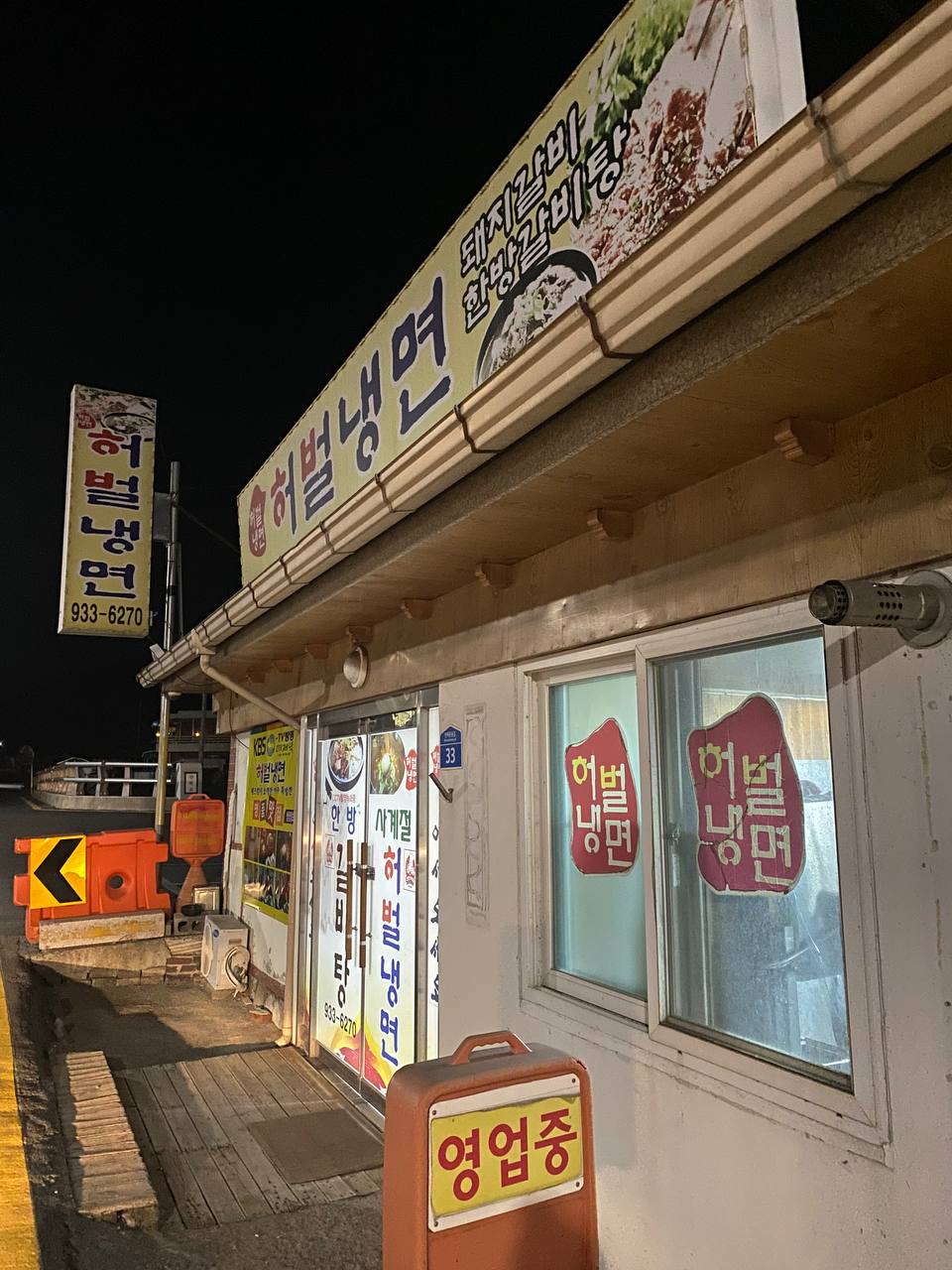
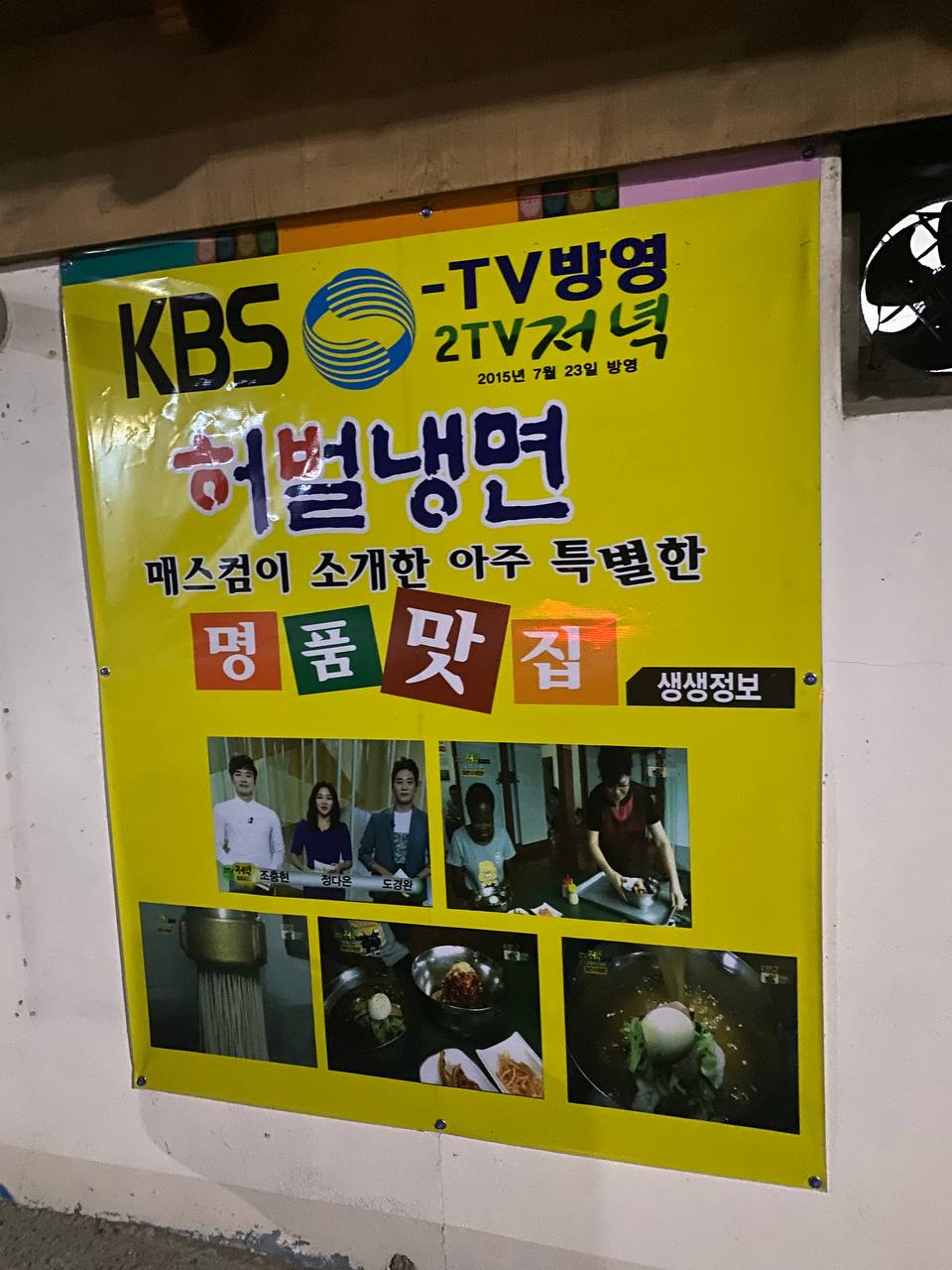
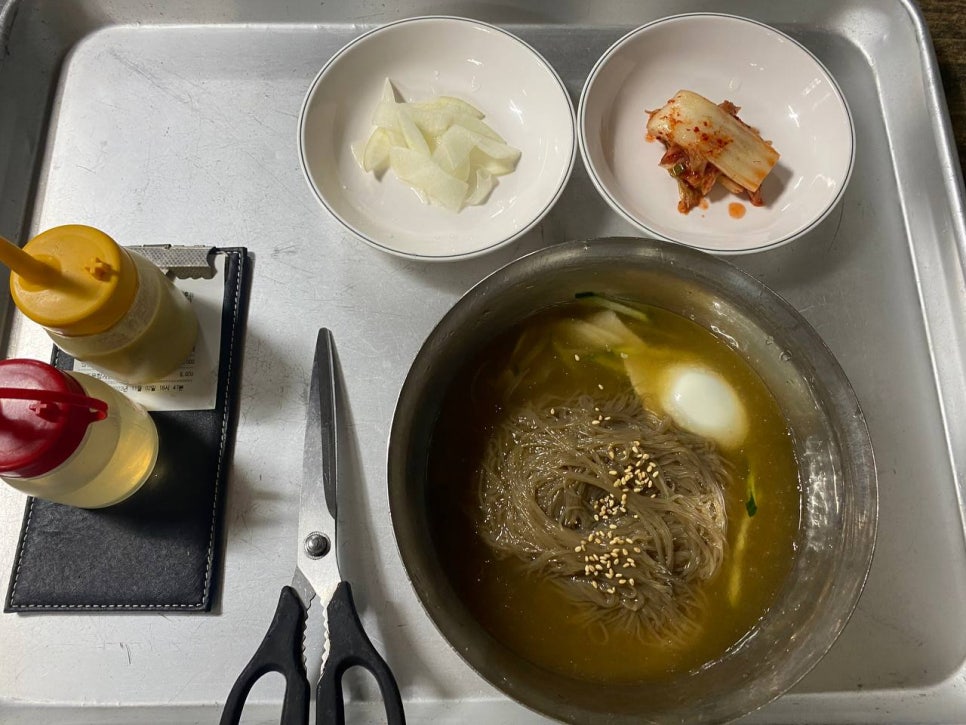
Boryeong Heobeol Naengmyeon definitely had something different from other places. They use naengmyeon broth made with hackberry tree and wisteria tree.
Just thinking about hackberry tea already brings to mind a very nutty flavor. The idea of a nutty taste in naengmyeon didn’t really seem like a good match, but the moment I tried it, I understood why this is considered a great restaurant in Boryeong.
Hackberry tree is said to be good for the liver, and wisteria tree is also known for helping liver function recover, cleansing the blood, breaking down fat, promoting urination, calming the nerves, and stopping diarrhea.
Heobeol Naengmyeon shows that naengmyeon can be enjoyed in a healthy way.
Even if a food is healthy, if it doesn’t taste good, you won’t want to eat it.
Perhaps because of the broth made with medicinal ingredients, it didn’t have the familiar refreshing seasoned flavor of regular naengmyeon, and instead had a clean, mild taste. But it was surprisingly addictive, and before I knew it, I kept drinking the broth.
If you want to try a broth that is unusual but keeps making you think about it, I recommend Heobeol Naengmyeon in Boryeong.
Nampojip Kalguksu
Nampojip Kalguksu, which I’m introducing as a Boryeong restaurant, serves a variety of dishes besides kalguksu. It seems to be a place many people visit just to have a simple drink.
You could say it’s a truly local, authentic restaurant.
The reason I’m introducing Nampojip Kalguksu in particular is that they use noodles made from dough they knead and prepare themselves.
Personally, I like noodle dishes, but there are places where, no matter how well the noodles are cooked, you can still taste flour. That’s because they dust the noodles with a lot of flour so they don’t stick together, and when those noodles are used, the taste of flour can be felt without you realizing it.
Sometimes I can ignore that taste, but at other times it suddenly becomes so noticeable that I can’t eat it. That’s why I prefer places that make and use their noodles themselves. Since they cut the noodles only after receiving an order, they use less flour, which makes it less likely for the food to taste floury.
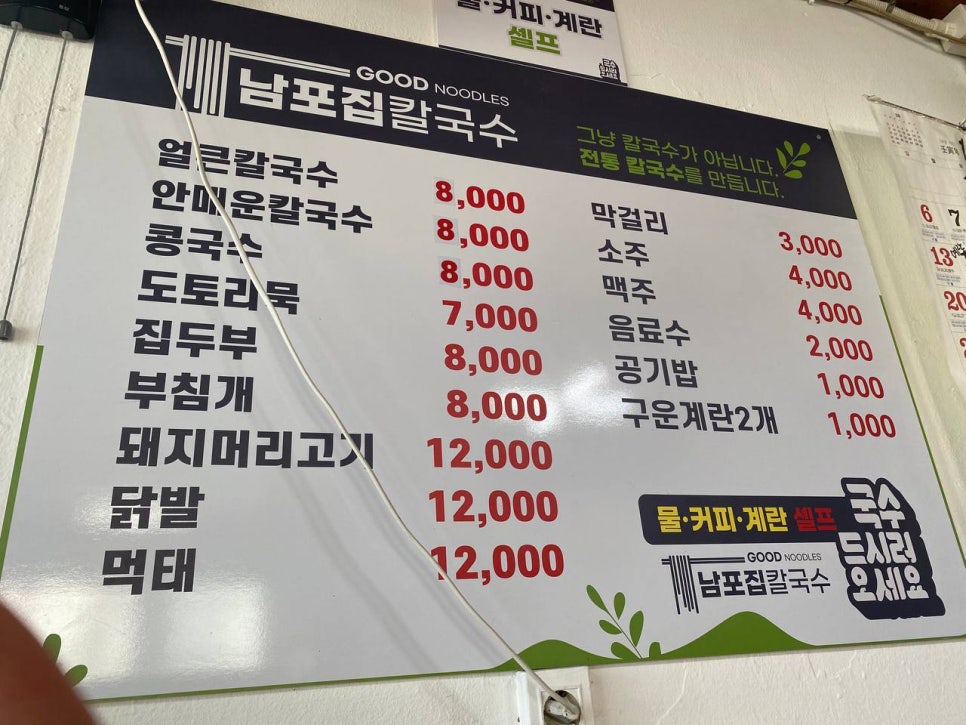
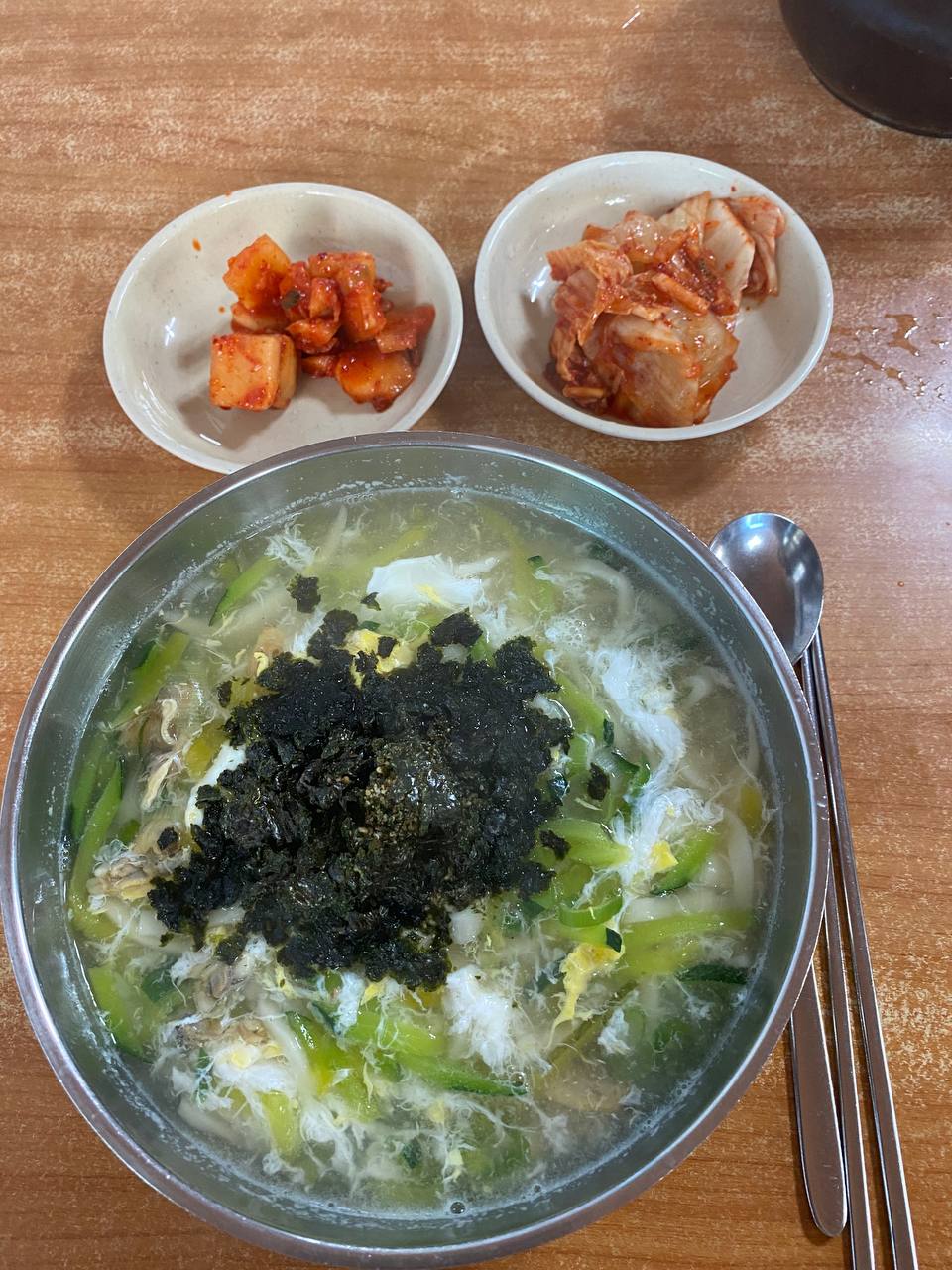
Nampojip Kalguksu has spicy kalguksu and regular kalguksu, and I ordered the original version.
That’s because it was my first visit, and I wanted to try the basic version to really know what it tasted like.
Since they make their noodles by hand using flour, I thought they would also take care to properly simmer the broth—and I was right.
The moment I took a sip of the soup, I couldn’t help but say, “Amazing.”
It was really incredibly refreshing, and I kept spooning up the broth.
And the cabbage kimchi and radish kimchi, which are such perfect matches for kalguksu, were so delicious.
Everyone’s taste is different, but I found the radish kimchi even tastier than the cabbage kimchi, so I kept reaching for the radish kimchi without even realizing it. In the end, I asked for more radish kimchi only.
Since it’s hand-cut kalguksu, the noodles are inevitably thick. Still, the chewiness was definitely there.
I introduced two Boryeong restaurants here: Heobeol Naengmyeon and Nampo Kalguksu.
Both places clearly have their own distinct characteristics, so people may naturally have different preferences, but there’s no doubt they are worth trying when in Boryeong.