From Garnet Plastic Surgery, Director Insoo Baek
DOCTOR'S NOTE
Hello ^^ I’m Insoo Baek, a board-certified plastic surgeon and the lead director of Garnet Plastic Surgery.
Today, I’d like to introduce a lower blepharoplasty case involving a woman in her late 50s who was preparing for her child’s wedding.
In general, when an engagement meeting or wedding is approaching, concerns about facial imperfections or aging that may not have been noticeable until then tend to become more apparent. Of course, the bride and groom are the stars of the wedding, but the parents who raised them into such handsome and beautiful adults can also, in a sense, be the “second stars” of the wedding. Since it is a moment when they will meet more people and take many photos, mothers especially may want to look their best at that time.
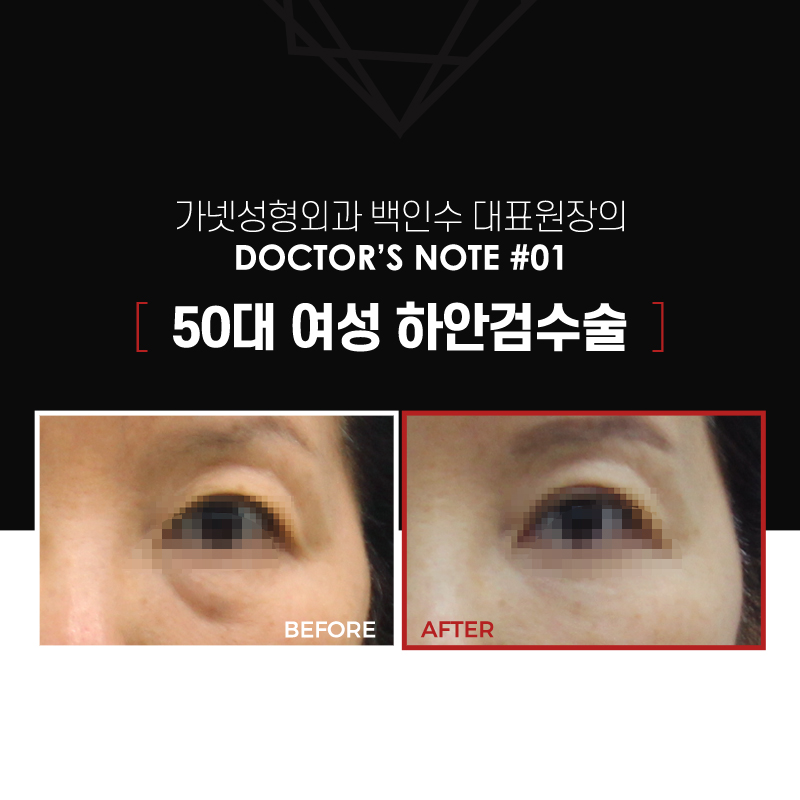
The person introduced today also visited our clinic because the under-eye concerns that had not bothered her much in everyday life became more noticeable ahead of her child’s wedding.
I will explain everything from the preoperative diagnosis, to the surgical procedure, and the postoperative progress.
Preoperative Diagnosis
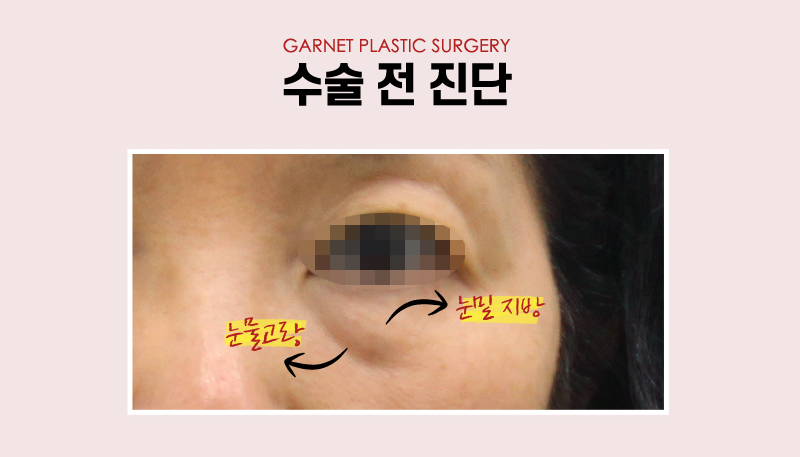
Looking at the preoperative photos, the skin and muscle under the eyes have lost elasticity, and the fat pads are bulging outward, making the tear trough beneath them appear hollow.
Surgical Procedure
Let’s take a look at how lower blepharoplasty is performed.
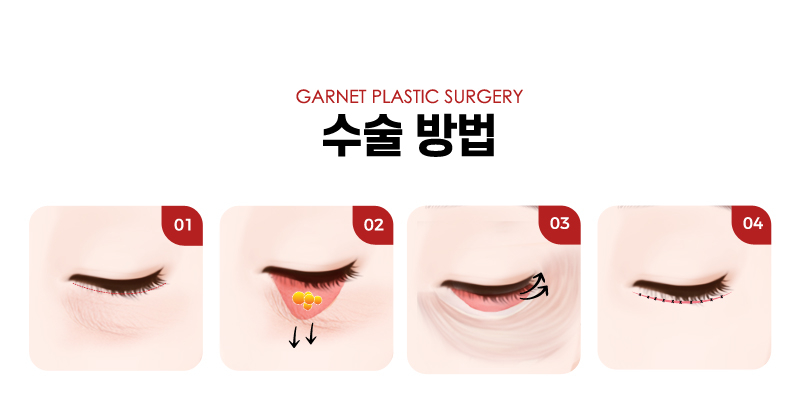
During lower blepharoplasty, an incision is made below the lower lash line, and the protruding fat pads are separated and moved downward to fill the hollow tear trough area. This process is called “under-eye fat repositioning.”
After repositioning the under-eye fat and performing fixation to give the under-eye muscles more support, the procedure is completed by removing the excess skin and carefully suturing the area. Lower blepharoplasty is performed comfortably under sleep anesthesia, and the surgery takes about 30 to 40 minutes.
One Week After Surgery
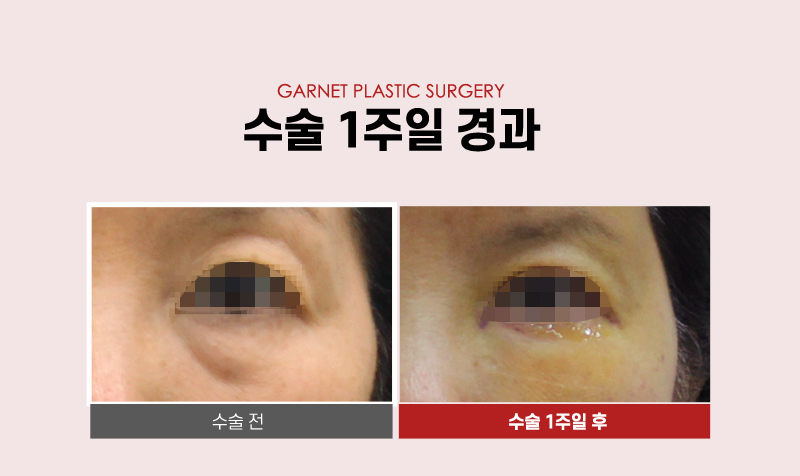
This is how it looked one week after surgery, after the stitches were removed. The area shown is after applying ophthalmic ointment following treatment, and the scar at the incision site is not very noticeable.
The previously bulging under-eye fat pads have disappeared, and the hollow tear trough has also been well corrected. At this stage, there may still be a little postoperative swelling, and bruising may remain in some areas. This is the period when the color of the bruising turns yellow, which is a natural part of the recovery process, so there is no need to worry. After stitch removal, both face washing and makeup are possible, so daily life can continue normally.
One Month After Surgery
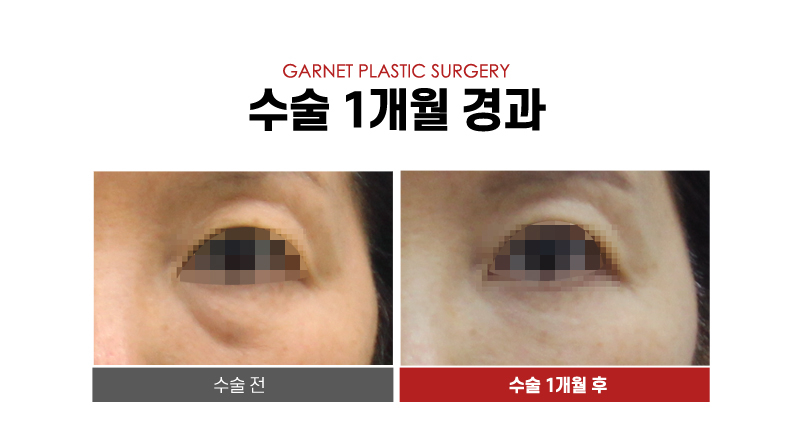
This is the result one month after surgery. The postoperative progress has been maintained well, the under-eye area looks much brighter, and she says that people around her often tell her she looks younger.
At this stage, there is generally not much discomfort, but the area where the under-eye fat was repositioned may feel a little firm. This is a normal part of recovery as the scar tissue matures, and it gradually improves over time. The scar under the eyes is not visible, and as time passes, it becomes almost unnoticeable. At the initial consultation, she was worried that recovery might be slow because the wedding was not far away, but she recovered faster than expected, and in fact, after stitch removal, she was able to go about her daily life without major discomfort.
So far, we have introduced a lower blepharoplasty case for a female patient in her late 50s who visited our clinic because of under-eye aging concerns ahead of her child’s wedding.
I hope this has been helpful for those in a similar age group to this patient and who are worried about under-eye aging.
Thank you!