I will explain a case of nose revision surgery for a patient who had previously undergone rhinoplasty with an L-shaped silicone implant about 10 years ago.
�a0
Among patients who had surgery in the past, there are occasionally cases with an L-shaped silicone implant. Some people live without any problems, but many do not.
They visited for consultation because of issues such as movement of the nasal implant, visibility through the skin, and thinning of the nasal tip skin.
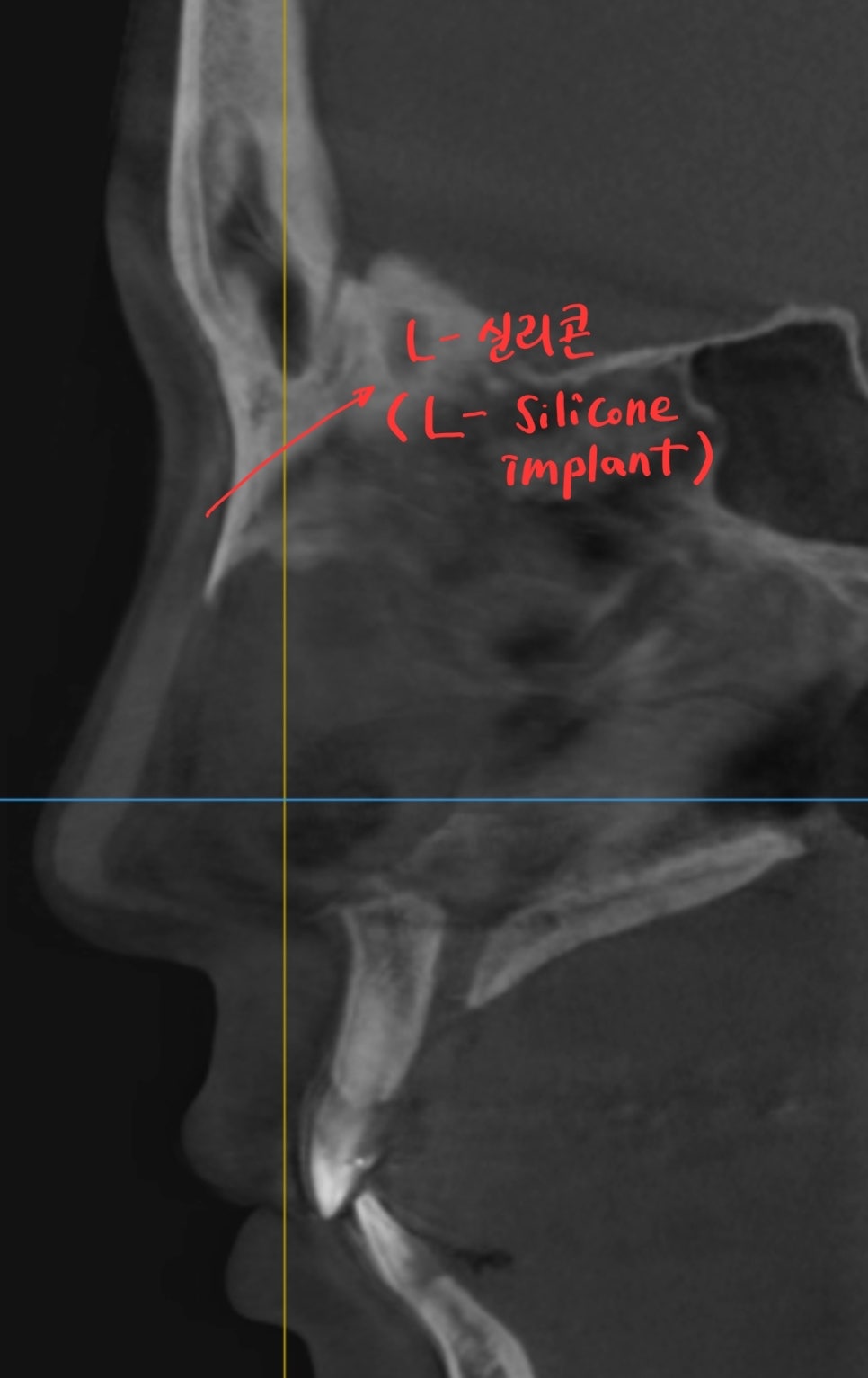
CT scan of the nose with an L-shaped silicone implant
A CT scan was performed for consultation, and an L-shaped implant with a height of 4 to 5 mm was present inside.
There were concerns such as the nasal implant moving and appearing bent, and there was also a symptom of silicone being felt at the nasal tip.
Of course, the shape and height were also not quite satisfactory.
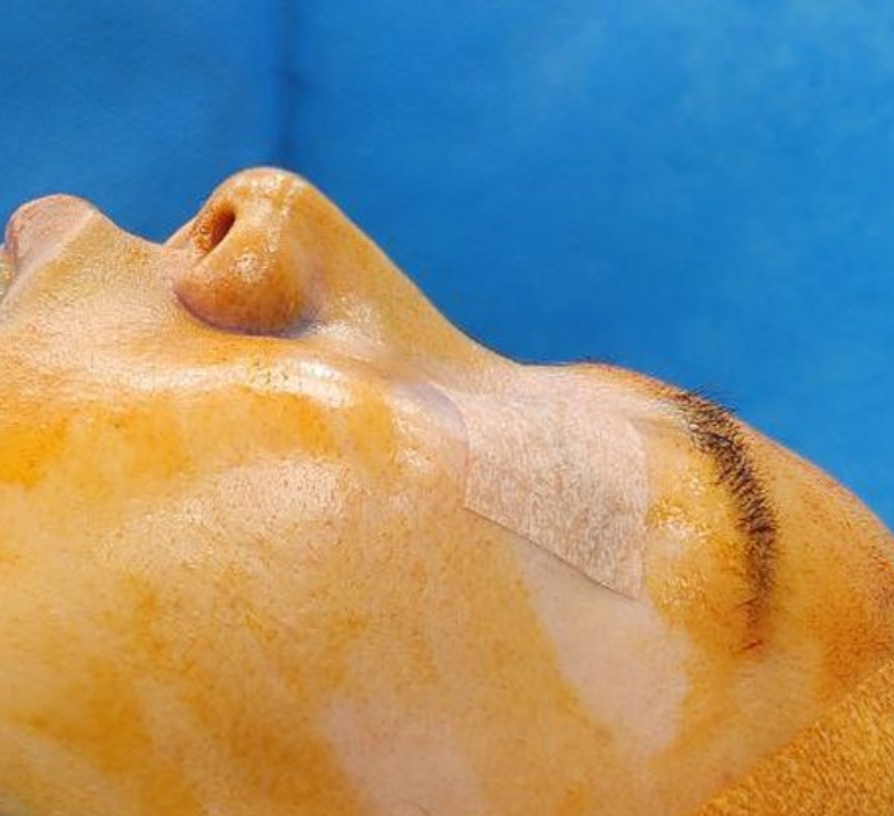
Appearance before surgery
The patient wanted the nasal tip to be raised in a more dramatic way and also wanted improvement of the nasolabial angle, so autologous rib cartilage was recommended, and a plan was made to perform rhinoplasty using autologous rib cartilage.
Harvesting autologous rib cartilage is usually done by making an incision at the inframammary fold of the chest, and an incision of about 2.5 cm is needed. Dissection is performed along the muscle fibers around the costal cartilage to reduce postoperative pain, and the layers must be sutured carefully to minimize scarring.
The postoperative scar gradually fades over time, and the incision is placed in an area that can be covered by underwear.
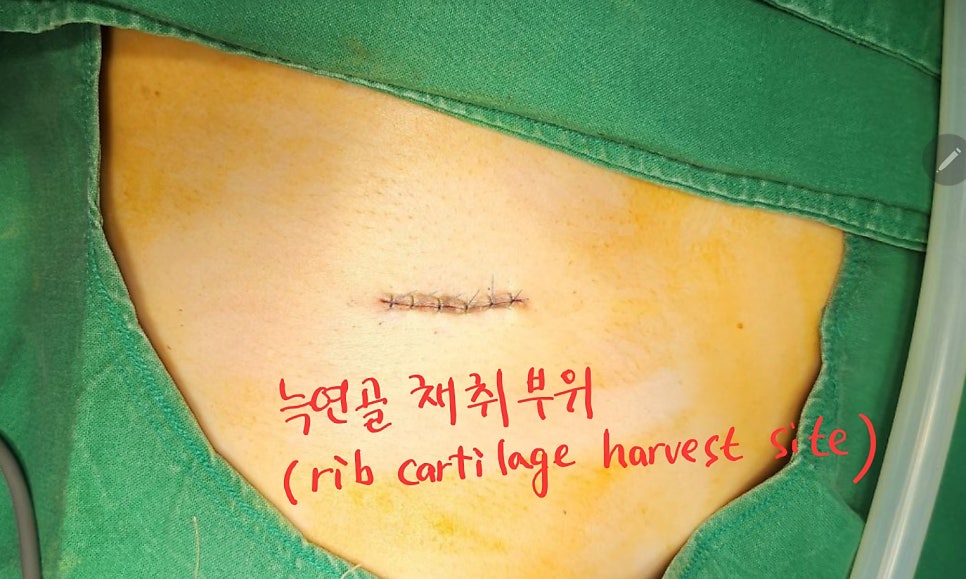
Costal cartilage harvested from the inframammary fold on the right chest
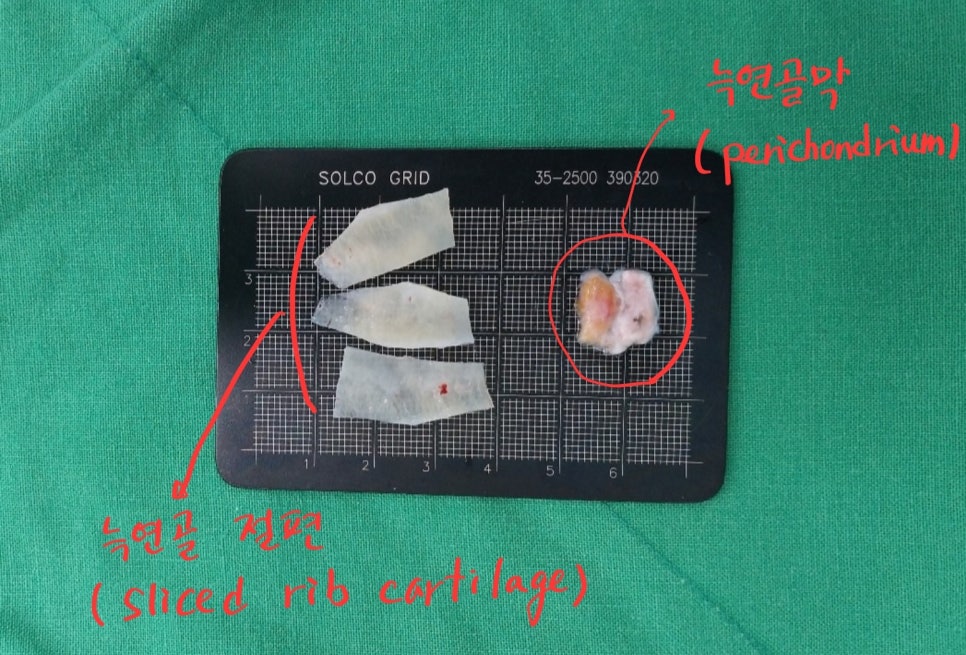
The perichondrium and costal cartilage were harvested, and the cartilage was processed into segments
The harvested costal cartilage is processed into segments to be used as support for the nasal tip. When building the support for the nasal tip, the warping tendency of the costal cartilage must be considered. Taking into account its tendency to bend to one side, it should be grafted with a balanced point on both sides. If there is a deviated septum, correction of the deviated septum must also be performed.
The harvested costal perichondrium is used to reinforce thin skin, including the nasal tip.
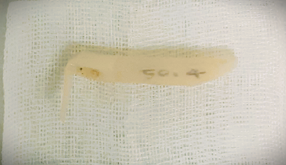
Removed L-shaped silicone implant
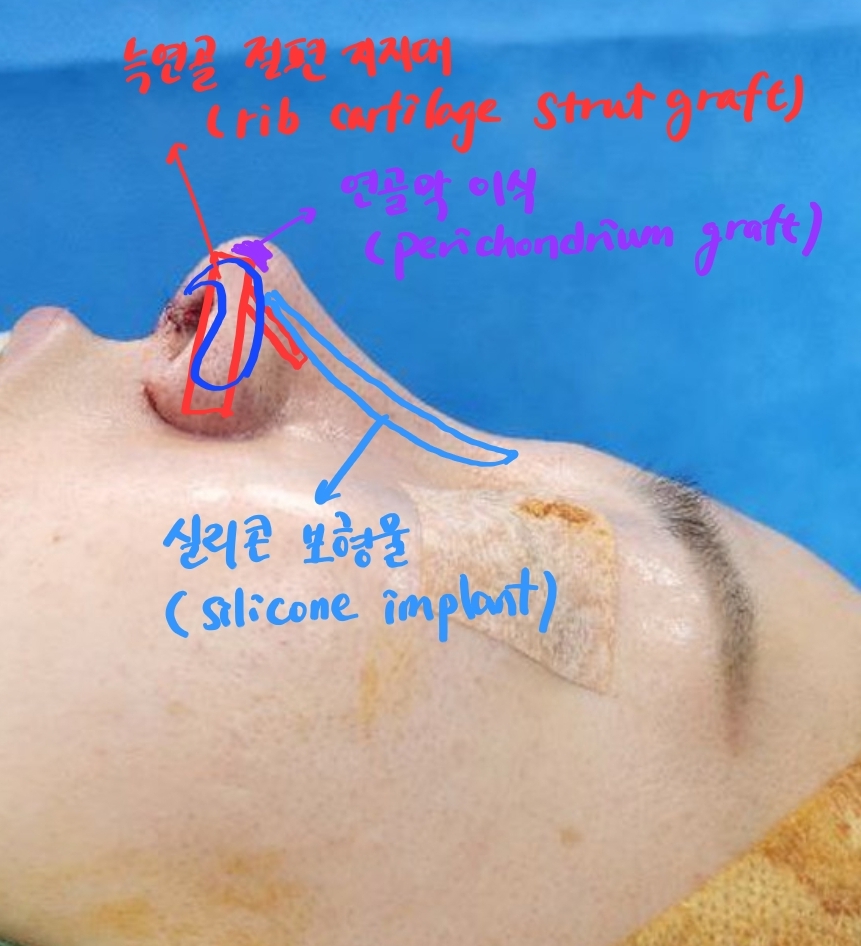
Diagram of nose revision surgery using costal cartilage
The L-shaped silicone is removed and replaced with I-shaped silicone, and the nasal tip is made more prominent using autologous rib cartilage.
The thinned skin is reinforced by covering it with the costal perichondrium.
The nasolabial angle is also raised using an appropriate graft, a procedure sometimes referred to as a so-called "cat surgery."
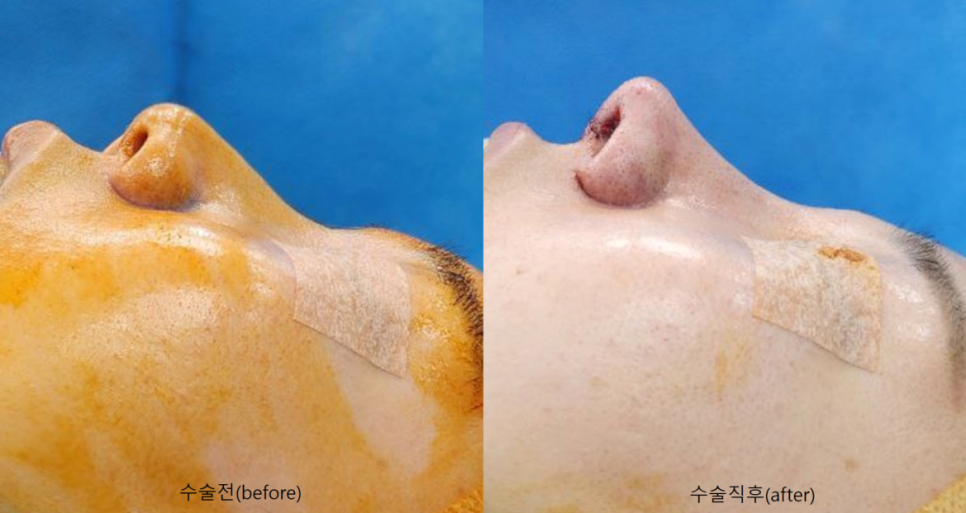
Before-and-after comparison
The previously low nasal tip was raised well, and the sunken nasolabial angle and columella were also nicely corrected.
Because the plan was to increase the height of the bridge by only about 1 mm, the 4 mm implant was replaced with a 5 mm implant. The skin that had thinned due to the L-shaped silicone was reinforced, and the implant was made to sit snugly against the nasal bridge without moving.
The side profile looks much more feminine than before surgery.
Although rib cartilage is not always necessary in nose revision surgery, if you want a more dramatic nasal tip projection or a more refined look by raising a sunken nasolabial angle, it is a good idea to consider rhinoplasty with rib cartilage.